Foreword
"Are there two types of all-in-one PCs? What's the difference between stackable and standalone models?"
When people learn about integrated solar power systems, they often find two different product forms on the market: one is a large cabinet that houses everything, and the other consists of three or four modules stacked together. The former looks neater, while the latter seems more flexible. Which one is better?
There's no absolute answer to this question. Both types of all-in-one PCs have their own advantages and applicable scenarios. Choosing the right one provides a great experience, while choosing the wrong one might result in wasting money. This article will clarify the differences between stackable and all-in-one PCs to help you make the best choice for your needs.

I. Appearance and Structure: Differences that are immediately noticeable
Stackable all-in-one PCs and single-unit all-in-one PCs are most easily distinguished by their appearance.
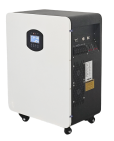
An all-in-one server is typically a complete floor-standing cabinet, approximately 1.2 to 1.5 meters high, 60 centimeters wide, and 20 to 40 centimeters deep. The cabinet resembles a large electrical control box or a standing air conditioner. All components—inverter module, battery module, BMS, EMS, control panel—are sealed inside the same cabinet, making the internal structure invisible from the outside; only a display screen or indicator light panel is visible. The design philosophy of the all-in-one server is to "hide everything," pursuing a clean and unified look.
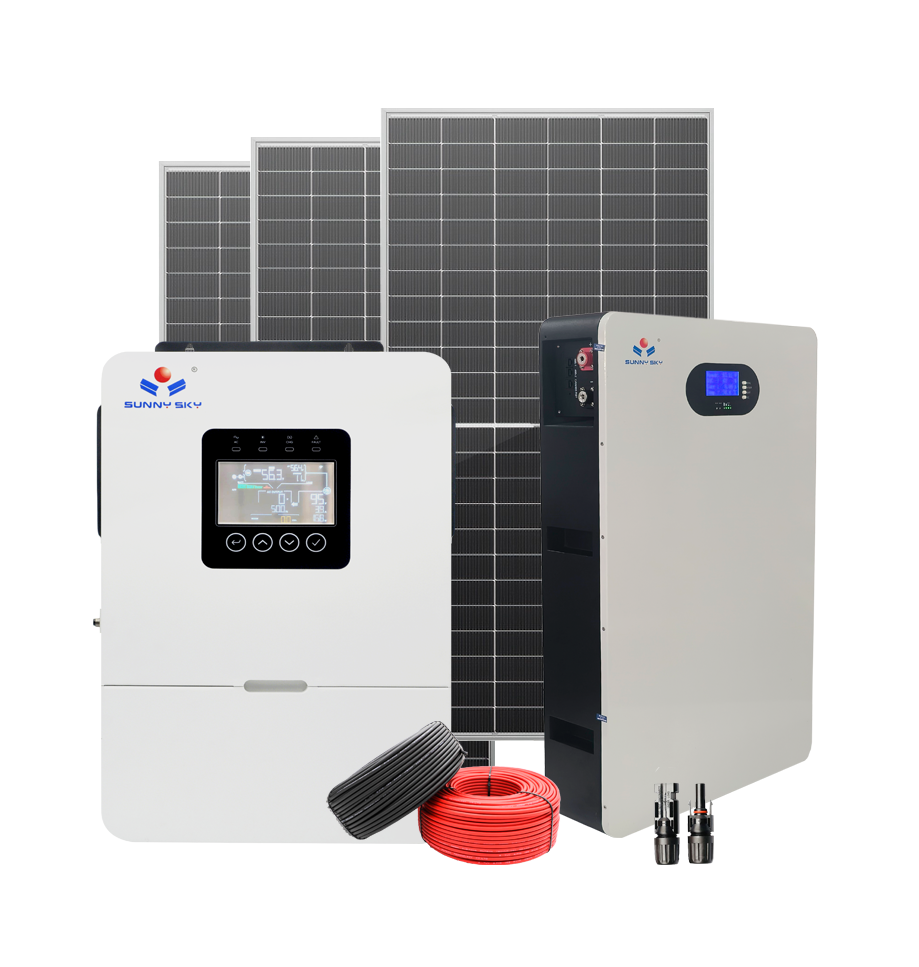
Stackable integrated units are composed of two to four independent modular units stacked together. The most common configuration is as follows: the top layer is a control module (similar to a small box, containing an inverter and control unit), below which are one or two battery modules (each module is an independent battery cabinet), and the bottom layer may also contain a power distribution or switching module. The modules are connected by standardized connectors, and the total height after stacking can reach 1.5 to 1.8 meters. The design concept of stackable integrated units is "modular combination," with each module having independent functions and capable of individual maintenance and replacement.
From a visual perspective, all-in-one PCs are closer to "a single home appliance," blending seamlessly into the home and complementing the overall design. Stackable all-in-one PCs, on the other hand, resemble "a small stack of equipment," with each module having a relatively independent size, color, and style. While they take up slightly more space when stacked, they give a more "professional equipment" feel.
II. Scalability: This is the most fundamental difference between the two.
The most fundamental difference between stackable and all-in-one PCs lies in their design philosophy regarding system scalability.
Integrated solar power systems have their total capacity predetermined at the factory—for example, a 10kW inverter paired with a 15 kWh battery. If users want to increase battery capacity or solar panel power in the future, their options are very limited. Some integrated solar power systems support external parallel connection—that is, adding another integrated solar power system to work in parallel with the original system to expand capacity. However, this expansion method is costly, requiring two complete inverter and control systems, and coordination and debugging between the two systems. For users who only want to add a few kWh of battery power, this expansion cost is not worthwhile.
The expansion logic of stacked all-in-one PCs is much more flexible. Take a typical stacked system as an example: the initial configuration can be a 6kW inverter plus a 10 kWh battery. Users can purchase additional battery modules separately as needed, stack them using a standard interface, and the system automatically recognizes the increased capacity. It's like adding RAM to a computer—simple, convenient, and cost-effective. This modular expansion method is the core competitive advantage of stacked all-in-one PCs compared to monolithic systems.
However, the expansion of stacked integrated systems is not unlimited. Each stacked system has a power limit for its inverter and a limit on the number of battery modules—for example, it can only support a maximum of four battery modules. When purchasing, it's essential to understand the system's maximum expandable capacity to allow for future needs.
From a practical standpoint, scalability has different implications for different users. If your goal in installing solar power is to "get it right the first time" and you don't plan to expand it in the future, then choosing a single-unit system is fine. If you hope to gradually expand it in the future based on rising electricity prices or increased demand for electric vehicle charging, a stacked system is a more flexible option.
III. Repair Experience: Which is Easier to Maintain?
Solar energy systems are meant to last 20 to 30 years, so maintenance is a crucial consideration. The two types of integrated systems offer significantly different maintenance experiences.
All components of a single-unit all-in-one PC are housed in a single rack. In case of a malfunction, the troubleshooting logic is to first locate the faulty module, then repair or replace the entire unit. Some brands support on-site repair, with technicians opening the rack to inspect the specific module; others require the entire unit to be sent back to the factory or replaced, resulting in a longer processing time. While waiting for repair, the entire system may become inoperable. Compared to single-unit all-in-one PCs, stacked all-in-one PCs have a clearer repair logic: replace the faulty module while the others continue to function normally. Battery degradation only requires replacing the battery module, and a control unit malfunction only requires replacing the control module, significantly reducing system downtime.
The modular design of stackable all-in-one PCs also brings another benefit: simpler spare parts management. If a user of a standalone all-in-one PC encounters a motherboard failure, they may need to wait for the manufacturer to send an entire rack, resulting in long delivery times and high costs. Spare parts for stackable all-in-one PCs are standardized modules, and distributors typically keep some commonly used modules in stock, allowing for quick replacement in case of problems.
However, there are some things to be aware of when repairing stacked all-in-one PCs. Because the modules are connected via connectors and communication cables, troubleshooting can be more complex than with monolithic PCs if the fault is related to a connector or communication protocol. This requires repair personnel to have a deeper understanding of the system architecture. Therefore, when choosing a stacked all-in-one PC, the brand's after-sales service capabilities are more important.
IV. Space Occupancy: Which Saves More Space?
Installation space is a concern for many urban users. Both types of all-in-one PCs have their own characteristics regarding space requirements.
All-in-one PCs, being a single server rack, theoretically have the smallest footprint. Common floor-standing racks are approximately 60 cm wide and 40 cm deep, easily fitting into a corner or a small area of the equipment room. The racks for all-in-one PCs are typically aesthetically pleasing and can be integrated into the furniture; some users even place them in their living rooms without feeling they are out of place.
Stackable all-in-one PCs, being composed of multiple modules stacked together, are taller than single-unit PCs, typically ranging from 1.5 to 1.8 meters. While their projected floor area is similar to single-unit PCs, the increased height necessitates higher ceilings for installation. Furthermore, space needs to be reserved between stacked modules for heat dissipation, and a certain gap must be maintained between the modules and the wall, resulting in a slightly larger actual footprint than the nominal dimensions.
If the installation location is indoors and space is limited (such as an apartment's equipment room), the advantages of an all-in-one PC are more obvious. If installed in a dedicated server room or outdoors, the space disadvantage of stacked PCs is not significant, and better heat dissipation can be achieved.
V. Price Comparison: Is the stacked type more expensive or the single-piece type more expensive?
In terms of price, the two types of all-in-one PCs are positioned slightly differently.
Because all-in-one PCs are standardized, mass-produced products, R&D and mold costs can be spread out, and their appearance design is often more sophisticated, making them more competitively priced. For example, a 6kW all-in-one PC with a 10 kWh battery typically costs between 25,000 and 35,000 yuan.
Because each module of a stacked integrated unit requires independent structural design, connector and communication protocol development, coupled with the material costs associated with modularity, the price is usually slightly higher than that of a single integrated unit of the same specifications. Taking the same 6kW unit with a 10 kWh battery as an example, the price of a stacked integrated unit is approximately between 28,000 and 40,000 yuan, a price difference of about 10% to 20%.
However, this price difference makes sense. The stacked modular design offers better scalability and ease of maintenance, resulting in higher long-term value. If we extend the timeframe to 10 to 15 years, the overall replacement cost savings achieved through modular expansion via stacking may be worthwhile.
VI. Purchase Recommendations: Who should choose stackable models, and who should choose integrated models?
Having said all that, how should we choose?
Users who prioritize stackable all-in-one systems typically exhibit the following characteristics: First, they anticipate future expansion needs, such as plans to purchase electric vehicles, a significant increase in household electricity consumption, or a desire to reserve more battery capacity to cope with power outages. Second, they have relatively ample installation space, with a dedicated equipment room or server room and sufficient ceiling height to accommodate a 1.8-meter stacked system. Third, they prioritize ease of maintenance, desiring the highest possible system availability at all times and avoiding system downtime due to minor malfunctions. Fourth, they have a relatively generous budget and are willing to pay a premium for the flexibility of modularity.
Users who prioritize integrated solar panels typically have the following characteristics: First, they aim for a "one-stop solution," meaning they don't plan to expand or replace the system within the next 5 to 10 years. Second, they have limited installation space and need to minimize floor space usage. Third, they prioritize a clean appearance, preferring the solar equipment to be discreet and blend seamlessly into their home environment. Fourth, they have limited budgets and want a more competitively priced solution that meets their needs.
Finally, one more point needs special emphasis: regardless of the type of all-in-one PC you choose, brand selection is crucial. Some smaller brands or generic products exist on the market, offering very low prices but lacking quality and after-sales service guarantees. The core value of an all-in-one PC is "peace of mind"; if you buy a cheap, unreliable product, the subsequent repair hassles may outweigh the money saved. It's recommended to prioritize brands with a long history in the industry, a large user base, and a wide service network.
Conclusion
The debate between stackable and all-in-one PCs is essentially a debate between "flexible expansion" and "simple and compact".
If you view your solar system as a long-term asset that you may expand to meet future household electricity demands, then the modular design of a stacked all-in-one system better suits your needs. If you're looking for a one-stop solution with simple installation, a clean appearance, and a controllable budget, then a fully integrated all-in-one system is a more practical choice.
Both product forms utilize mature technologies, and there's no absolute good or bad; it's simply a matter of suitability. Before purchasing, prioritize your needs in terms of expansion, maintenance, space, and budget, and compare the advantages and disadvantages of each form before making a choice. This approach has a much higher chance of success than blindly following trends.
Hopefully, this article will help you understand the differences between the two and choose the product that best suits your needs.
Please contact Simon immediately to discuss your project:
- WeChat: TY530643572
- Telephone: +86 137 1166 0041