Foreword
Is installing solar panels really worthwhile?
In Africa, this is probably the first question everyone considering installing a solar PV system will ask. The answer isn't simply "cost-effective" or "not cost-effective"—it depends on where you live, how much your monthly electricity bill is, whether you use grid electricity or a diesel generator, and how you plan to use the generated electricity after installation.
The electricity situation in Africa differs greatly from that in China. In China, most urban households are connected to a stable national power grid, and electricity is relatively cheap. However, in Africa, the electricity situation is much more complex—electricity prices are exorbitant in some places, frequent power outages require diesel generators for supplemental power, and some areas have no grid coverage at all, forcing people to live completely off-grid. In such cases, how much money solar energy can save, and specifically in what areas, requires a case-by-case analysis.
This article will help calculate the costs for three typical African families: urban middle-class families, industrial and commercial users, and remote rural families without electricity. The data will be presented using local African parameters to help you estimate your own situation .
I. Current Status of Electricity Prices in Africa: Why Electricity Bills Are a Major Household Expenses
Before calculating how much money solar energy can save, let's first look at the electricity prices in Africa.
Electricity prices vary greatly across African countries, ranging from very cheap to very expensive. In Egypt, residential electricity prices are approximately US$0.05 to US$0.10 per kilowatt-hour (about RMB 0.35 to 0.70), similar to prices in China. However, in Nigeria, residential electricity prices are as high as US$0.15 to US$0.25 per kilowatt-hour, and in some areas of Lagos, they even exceed US$0.30 per kilowatt-hour. In Kenya, residential electricity prices are approximately US$0.10 to US$0.18 per kilowatt-hour. In South Africa, residential electricity prices are approximately US$0.10 to US$0.15 per kilowatt-hour.
But the high price of electricity isn't the most critical issue. The most critical issue is that in many places, even if you're willing to pay the price, the power supply is unreliable. According to data from the International Energy Agency, sub-Saharan Africa experiences an average of over 100 days of power outages per year, with some countries exceeding 200 days. This means that many households and businesses must rely on both grid power and backup power, and the cost of backup power is often several times that of grid power.
For households and businesses using diesel generators, the price of diesel fuel varies considerably across African countries, but generally ranges from $1 to $2 per liter. A typical 5- to 10-kilowatt diesel generator consumes approximately 2 to 4 liters of diesel fuel per hour of operation, costing about $3 to $8 per hour. An 8-hour power outage can result in fuel costs of $25 to $65, leading to an additional monthly expense of $750 to $2000.
It is against this backdrop of high electricity prices and unstable power supply that the value of solar energy systems for African households and businesses becomes particularly prominent. Solar-powered electricity can not only replace some grid power, but more importantly, it can provide backup power during grid outages, avoiding the use of expensive diesel fuel.
II. Urban Middle-Class Families: The Shift from High Electricity Bills to Stable Power Supply
Let's first look at the first typical family: an urban middle-class family living in the city center of Lagos, Nairobi, or Johannesburg. They have a stable power grid connection but often face power rationing and outages, resulting in high monthly electricity bills. They also have a diesel generator as a backup power source.
Take, for example, a middle-class family of four in Lagos, Nigeria. Their main appliances include: a refrigerator (running 24 hours a day), two air conditioners (1.5 horsepower each, running for 8 hours each night in summer), lighting and electrical outlets (for a TV, washing machine, phone chargers, etc.), and an electric water heater. During the peak summer months, their monthly electricity bill is approximately $350 to $450 (about 250,000 to 320,000 Naira). For a middle-class family with a monthly income of about $1,000 to $2,000, this represents 20% to 40% of their income.
The core pain point for this family isn't the high electricity bill, but the power outages. Lagos experiences an average of 2 to 3 power outages per week, each lasting 2 to 4 hours. If a 5-kilowatt diesel generator is started during each outage, at the current diesel price of about $1.50 per liter, the fuel consumption is about 2.5 liters per hour, costing approximately $3.75. Assuming 8 hours of power outages per week, the diesel cost would be about $30 per week, or $120 per month. The annual fuel cost for backup power alone would approach $1500.
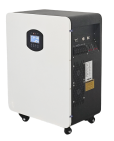
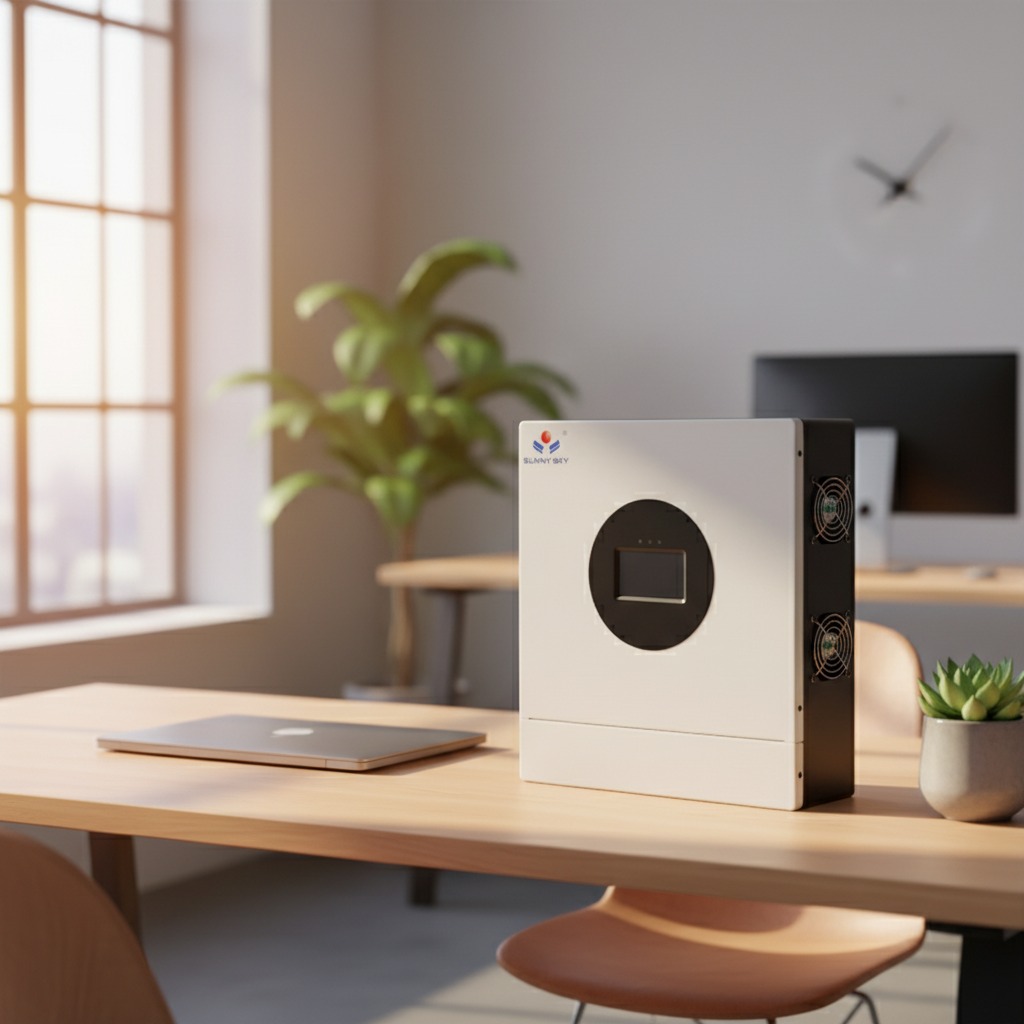
The initial cost of installing a 6 kW hybrid solar system (with a 10 kWh battery storage) is approximately $7,000 to $10,000. The system can generate about 25 to 30 kWh of electricity per day (Lagos has about 2,200 hours of sunshine per year, and on sunny days, each kW can generate 4 to 5 kWh per day). This power generation can basically cover a household's main daytime electricity needs, while the battery storage can provide about 8 to 10 hours of backup power during grid outages.
Let's do the math: After installing solar power, monthly electricity bills can drop from $400 to around $150 (primarily during nighttime electricity use and peak hours when batteries can't cover the load), saving about $250 per month. That's about $3,000 per year. Meanwhile, the frequency of diesel generator use is significantly reduced, changing from daily backup to a last resort in extreme situations. Annual diesel costs can drop from $1,500 to around $300, saving another $1,200 per year. Combined, these two savings amount to about $4,200 per year. The system investment is approximately $8,000, with a payback period of about 2 years.
Of course, there are several prerequisites: the system configuration must be reasonable, the battery capacity must be sufficient to cover the power demand during power outages, the installation quality must be reliable, and the inverter and battery must be of high quality. If you buy cheap and inferior products, the actual power generation and lifespan may be greatly reduced, and the money-saving effect will be far less than expected.
III. Industrial and Commercial Users: The Dual Urgent Need for High Electricity Prices and Stable Power Supply
The second typical user group is industrial and commercial users—factories, workshops, shopping malls, offices, and hotels. These users consume much more electricity than households, and electricity expenses are a significant part of their operating costs. They also have higher requirements for power stability because power outages mean production stoppages or business interruptions, directly causing economic losses.
Take, for example, a small garment factory in Nairobi, Kenya. The factory covers approximately 500 square meters and its main equipment includes 30 industrial sewing machines (each approximately 0.3 kilowatts), 5 air conditioners, lighting, and other equipment. The factory's monthly electricity bill is approximately US$2,000 to US$3,000 (about 250,000 to 370,000 Kenyan shillings). The industrial electricity price in Kenya is approximately US$0.10 to US$0.15 per kilowatt-hour, but with transformer costs and demand charges, the actual average price may reach US$0.15 to US$0.20 per kilowatt-hour.
Kenya's power supply is relatively stable, but there are still approximately 50 to 80 days of power rationing or unplanned outages each year. For a garment factory, each power outage without a backup power source means a complete halt to production. With 30 sewing machines generating about $50 per hour, a 4-hour power outage results in a loss of $200. Assuming 8 power outages a month, the monthly loss is about $1600. If the factory has its own 10-kilowatt diesel generator, operating for 4 hours during each outage would cost about $30 in fuel, totaling $240 per month. The direct and indirect losses related to power outages alone approach $22,000 per year.
The initial cost of installing a 30 kW commercial/industrial solar system (with 20 kWh of battery storage) is approximately $25,000 to $35,000. The system can generate about 120 to 150 kWh of electricity per day (Nairobi receives approximately 2,600 hours of sunshine annually). Most of the daytime production can be powered by solar energy, with surplus electricity stored in the battery. The battery storage can provide approximately 4 to 5 hours of backup power during grid outages, covering most unplanned power outage periods.
Let's do the math: After installing solar power, daytime electricity is primarily covered by solar energy, reducing monthly electricity bills from $2,500 to approximately $800, a monthly saving of about $1,700. This translates to annual savings of approximately $20,400. Simultaneously, power outage losses decrease from approximately $22,000 annually to approximately $5,000 (residual losses in extreme circumstances), a reduction of approximately $17,000 annually. The total savings are approximately $37,400. The system investment is approximately $30,000, with a payback period of approximately 9 to 10 months.
For commercial users, in addition to direct economic benefits, there are also tax incentives. Countries like Kenya, Uganda, and Rwanda offer tax breaks or accelerated depreciation for commercial and industrial solar systems. Nigeria exempts imported renewable energy equipment from value-added tax. South Africa provides a tax rebate of $205 per kilowatt for commercial solar systems. Taking these policy benefits into account, the actual payback period can be further shortened to less than eight months.

IV. Remote rural households without electricity: Solar energy makes kerosene lamps a thing of the past.
The third typical user group consists of remote rural households with no access to electricity whatsoever. In sub-Saharan Africa, approximately 600 million people live without power. These people are primarily concentrated in rural and remote areas, where extending the power grid is extremely costly—according to World Bank data, the average cost of connecting unpowered rural populations in Africa to the grid is approximately $3,000 to $5,000 per household, and due to their dispersed populations, many villages are simply not eligible for grid access.
For these families, kerosene lamps and dry cell batteries have traditionally been the primary means of lighting and communication. A kerosene lamp consumes about 0.5 to 1 liter of kerosene per day, costing about $15 to $30 per month. Charging a mobile phone requires going to a town with electricity, incurring a charging fee of about $0.5 to $1 each time. These seemingly small expenses add up to a surprisingly large proportion for families with a daily income of only $2 to $3.
More importantly, the lack of electricity directly limits these families' opportunities for development. Children cannot study at night, relying only on the dim light of kerosene lamps. They cannot use power tools for handicrafts and agricultural processing. They cannot access information online or conduct distance education and medical consultations. The power shortage creates a poverty trap—no electricity means no development opportunities, and without development opportunities, the affordability of electricity becomes even more unaffordable.
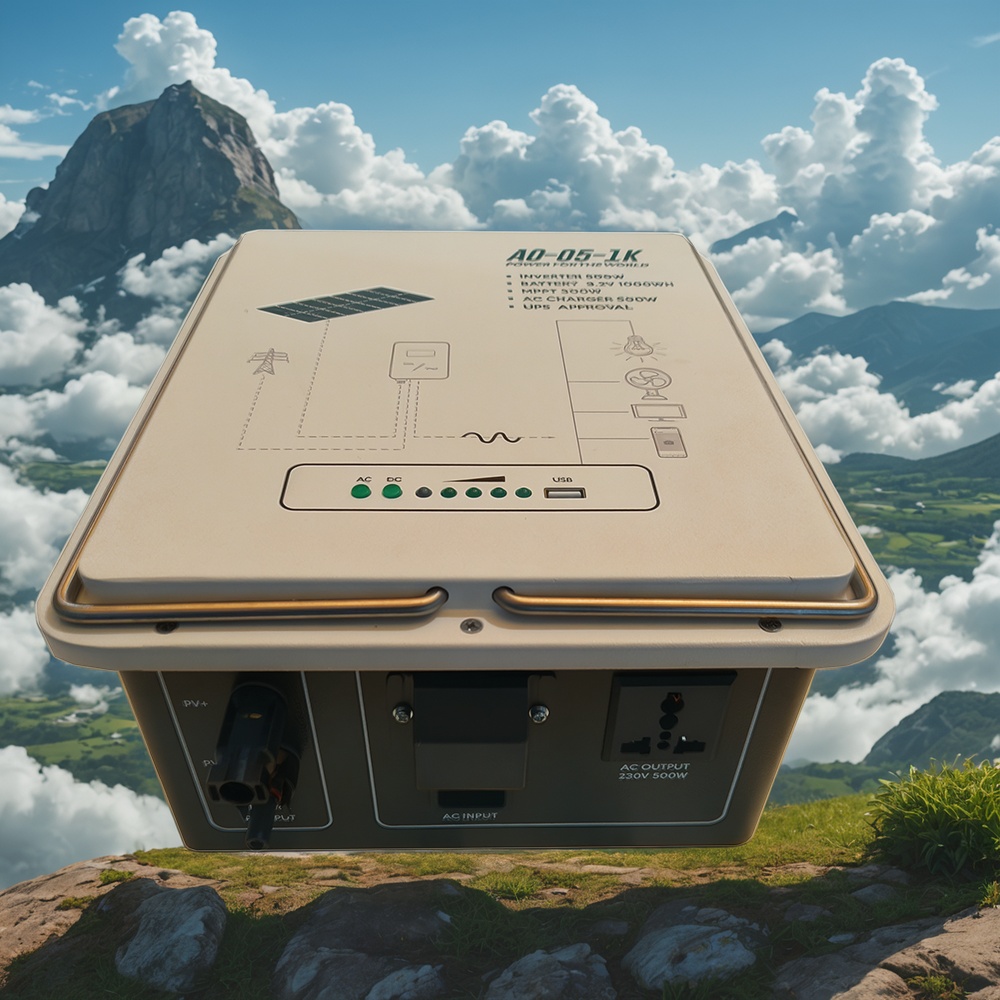
Solar energy offers a viable solution for these households without electricity. A basic 1-kilowatt off-grid solar system (including two 550-watt photovoltaic panels, a 5-kWh lithium-ion battery pack, a hybrid inverter, and LED lighting) has an initial installation cost of approximately $800 to $1,200. This price is still high for a single household, but for village-level microgrid projects where multiple households share a system, the cost can be spread to approximately $200 to $400 per household.
Take, for example, a microgrid shared by five households in Oromia State, Ethiopia. Each household generates approximately 3 to 4 kilowatt-hours of solar power per day (based on about 2,500 hours of sunshine per year), with about 0.6 to 0.8 kilowatt-hours distributed among the households. This amount of electricity can power four LED lights per household (each 5 watts, providing 5 hours of lighting per day), one radio or small television, and two mobile phone chargers. It completely replaces the original kerosene lamps and dry-cell batteries.
Let's do the math: Previously, each household spent about $20 per month on kerosene and about $10 on phone charging, totaling about $30. With solar power, this expense is completely eliminated, saving approximately $360 annually. Assuming an amortized system investment of $300, the payback period is less than one year. Furthermore, the light quality of LED lights is far superior to kerosene lamps, causing less eye strain and significantly improving the lighting conditions for children studying at night.
Of course, the limitations of such a small system are also obvious. 0.6 to 0.8 kilowatt-hours of electricity per day is only enough for basic lighting and communication, completely insufficient to support high-power appliances such as refrigerators, washing machines, and electric water heaters. To upgrade to a "decent electricity" level (defined by the International Electricity Council as more than 1 kilowatt-hour per household per day), the system cost would increase exponentially. This is also the core challenge facing the energy transition for Africa's unelectrified population—solar technology is mature and its cost is continuously decreasing, but providing reliable modern electricity to hundreds of millions of unelectrified people still requires substantial financial investment and policy support.
V. Key Factors Affecting Money-Saving Results
After calculating the costs for three typical households, you'll find that how much money solar energy can save depends on many specific variables.
Electricity price is the most direct factor. The higher your home or business's electricity price, the faster you'll recoup your investment in solar power. If your electricity price is $0.05 per kilowatt-hour, it might take 5 to 7 years to break even; if it's $0.25 per kilowatt-hour, it might only take 2 to 3 years. This is why, in countries with high electricity prices like Nigeria and South Africa, the market penetration rate of solar power is significantly faster than in countries with low electricity prices.
Sunlight conditions are the second key factor. While Africa as a whole has abundant sunshine resources, there are significant differences between countries and regions. The Sahara region receives over 3,500 hours of sunshine annually, and each kilowatt of photovoltaic panels can generate over 1,800 kilowatt-hours of electricity per year; while the Congo Basin may receive less than 1,200 kilowatt-hours of sunshine annually, generating only about 600 kilowatt-hours per kilowatt-hour. The same 5-kilowatt system will generate about 7,000 kilowatt-hours annually in Lagos, over 9,000 kilowatt-hours in Cairo, and only 3,500 kilowatt-hours in Kinshasa. The difference in power generation naturally leads to different annual electricity cost savings.
Electricity usage patterns are also crucial. If your peak electricity consumption occurs during the day, the self-consumption rate of solar energy is higher, resulting in greater cost savings. However, if your peak consumption occurs at night (without energy storage), most of the electricity generated by solar power must be sold back to the grid. The selling price is often much lower than the purchase price, significantly reducing economic benefits. This is why hybrid systems (with energy storage) are becoming increasingly popular in urban households—generating electricity during the day and storing it in batteries, then using the battery's power at night, achieving a self-consumption rate of over 80%.
System quality directly impacts lifespan and long-term cost savings. A high-quality solar system can last over 25 years, while a cheap, inferior system may show significant degradation after only 5 years. While it may seem to save money in the first few years, it can actually lead to losses later. The inverter is the most prone to problems in the system. Major brands typically have a conversion efficiency of 97% to 98%, while smaller brands may only achieve 93% to 95%. Although the difference may seem small, over 25 years, the cumulative difference in power generation due to this efficiency difference is substantial. The same applies to batteries. Lithium iron phosphate batteries typically have a cycle life of 4,000 to 6,000 cycles, while low-quality ternary lithium batteries may only have 1,000 to 2,000 cycles.

Conclusion
The amount of money saved by installing solar power varies greatly among different types of households and businesses in Africa.
Urban middle-class families can save approximately $3,000 to $5,000 annually in electricity and diesel costs, with a payback period of 2 to 3 years. Industrial and commercial users can save approximately $30,000 to $50,000 annually in electricity costs and losses from power outages, with a payback period of less than one year. Remote rural households without electricity can save approximately $200 to $400 annually in kerosene and charging costs, with a payback period of 1 to 2 years, provided that microgrids or other sharing solutions are available to reduce initial investment.
But saving money is only part of the value of solar energy. For users in Africa, the increased productivity from a stable power supply, the elimination of diesel generator noise and air pollution, and the improved conditions for children to study well at night—these values, which cannot be fully quantified in monetary terms, are sometimes more important than the numbers on a ledger.
The solar energy market in Africa is growing rapidly, with more and more households and businesses shifting from "whether to install" to "when to install." If you're also considering this question, hopefully the cost-benefit analysis in this article will help you make a more informed decision.
Please contact Simon immediately to discuss your project:
- WeChat: TY530643572
- Telephone: +86 137 1166 0041