Foreword
What comes to mind when you think of Africa? Wild animals, savannahs, the Sahara Desert?
What you may not know is that Africa is one of the world's richest regions in solar energy resources, but it also has the largest population without electricity. More than 600 million people lack access to electricity, with an average of over 390 days without power each year. At the same time, some parts of Africa boast some of the world's strongest solar radiation—the Sahara Desert receives over 3,500 hours of sunshine annually, and its annual power generation is more than twice that of China's best-performing northwest region.
This contrast between abundant resources and scarce energy makes Africa one of the most watched emerging regions in the global solar energy market. What does the African market mean for solar product suppliers? Where are the opportunities? What are the risks? This article will provide an in-depth analysis.
I. The Current Energy Situation in Africa: The Plight of 600 Million People Behind Power Shortages
To understand the logic of the African solar energy market, one must first understand Africa's energy dilemma.
Africa is the world's second most populous continent, with a total population of approximately 1.45 billion in 2024, accounting for more than 18% of the global population. However, Africa's electricity penetration rate is alarmingly low—approximately 600 million people in sub-Saharan Africa have no access to electricity at all, with an overall electricity penetration rate of only about 50%, and in some rural areas even less than 20%.
The impact of power shortages on African countries is multifaceted. First, it restricts economic development. Insufficient power prevents factories from operating normally, deteriorates the investment environment, and hinders manufacturing development. In most African countries, industrial electricity prices are as high as $0.15 to $0.25 per kilowatt-hour, two to three times that of China. Second, it severely impacts people's livelihoods. No electricity means no refrigerators to store food and medicine, no lighting at night, and no access to modern communication equipment. The direct economic losses caused by power shortages in Africa amount to tens of billions of dollars annually.
Africa's power structure also has its own characteristics. Thermal power (oil, natural gas, coal) accounts for about 60%, hydropower about 25%, and other renewable energy sources less than 15%. However, Africa's hydropower resources are extremely unevenly distributed, mainly concentrated in a few countries in East and West Africa, and are becoming increasingly unstable due to the impact of climate change—the power generation of major river systems such as the Congo River and the Nile River has fluctuated significantly in recent years.
In this context, solar energy, as a "distributed, modular, and increasingly cost-effective" form of energy, is becoming an important option for solving Africa's power shortage problem.
II. African Solar Energy Resources: The Overlooked Golden Belt of Photovoltaics
When it comes to solar energy resources, many people think Africa should have a good chance, since the equator passes through the center of Africa and there is sunshine everywhere. However, the distribution of solar energy resources in Africa is much more complex and of much higher quality than people imagine.
Africa's solar resources can be broadly divided into several regions. The Sahara and North Africa region (including Morocco, Algeria, Tunisia, Libya, and Egypt) is one of the world's sunniest areas, with 3,000 to 3,500 hours of sunshine annually, and some areas exceeding 4,000 hours, with an average annual solar irradiance exceeding 2,500 kilowatt-hours per square meter. To put this into perspective, Tibet, China's sunniest region, receives approximately 3,000 hours of sunshine annually, with an average annual irradiance of about 2,000 kilowatt-hours per square meter. In other words, the Sahara region's solar resources are more than 20% higher than those of the best areas in China.
East and South Africa (including Kenya, Tanzania, South Africa, and Ethiopia) also have good sunshine conditions, with annual sunshine hours between 2,500 and 3,200 hours and an average annual irradiance between 1,800 and 2,400 kilowatt-hours per square meter. This level is similar to that of Gansu and Ningxia in China, making them fully capable of building large-scale photovoltaic power plants.
The coastal areas of West Africa (including Nigeria, Ghana, and Côte d'Ivoire) have slightly less sunshine, with about 1,800 to 2,500 hours of sunshine per year and an average annual irradiance of 1,500 to 2,000 kilowatt-hours per square meter. However, compared to Germany in Europe (1,600 hours of sunshine per year and an irradiance of about 1,000 kilowatt-hours per square meter), it is still a good place.
The Congo Basin region (including the Democratic Republic of Congo, the Republic of Congo, and Gabon) is the region with the worst sunshine in all of Africa, with less than 1,200 hours of sunshine per year, making it unsuitable for large-scale photovoltaic development. However, small-scale off-grid systems still have application value.
Industry data shows that Africa added approximately 5 gigawatts of photovoltaic (PV) capacity in 2023, bringing its cumulative installed capacity to over 20 gigawatts. While this figure is still significantly lower than that of leading countries like China (approximately 260 gigawatts added in 2023) and Europe (approximately 60 gigawatts added in 2023), the growth rate is very impressive. The International Energy Agency predicts that Africa's PV installations will increase more than tenfold by 2030.
III. Opportunities in the African Solar Energy Market: Four Key Areas to Watch
The African solar energy market is developing rapidly; which areas deserve the most attention?
First, there are large-scale ground-mounted solar power plants. African governments are actively promoting the construction of ground-mounted solar power plants. South Africa plans to achieve 41% renewable energy capacity by 2030, with solar power accounting for about half. Morocco's renewable energy strategy aims to have 52% of its electricity come from renewable sources by 2030. Egypt, Kenya, Ethiopia, and other countries are also actively planning large-scale solar power projects. These projects typically range from tens to hundreds of megawatts and require a large number of solar modules and supporting equipment.
Secondly, there's the commercial and industrial distributed photovoltaic (PV) sector. The unstable power grid and high electricity prices in Africa create a market opportunity for commercial and industrial distributed PV. Factories, mines, shopping malls, hotels, and office buildings—these large electricity consumers—can significantly reduce their electricity costs by installing PV systems while ensuring a stable power supply. The commercial and industrial distributed PV market is rapidly taking off, especially in relatively developed countries like Nigeria, South Africa, and Kenya.
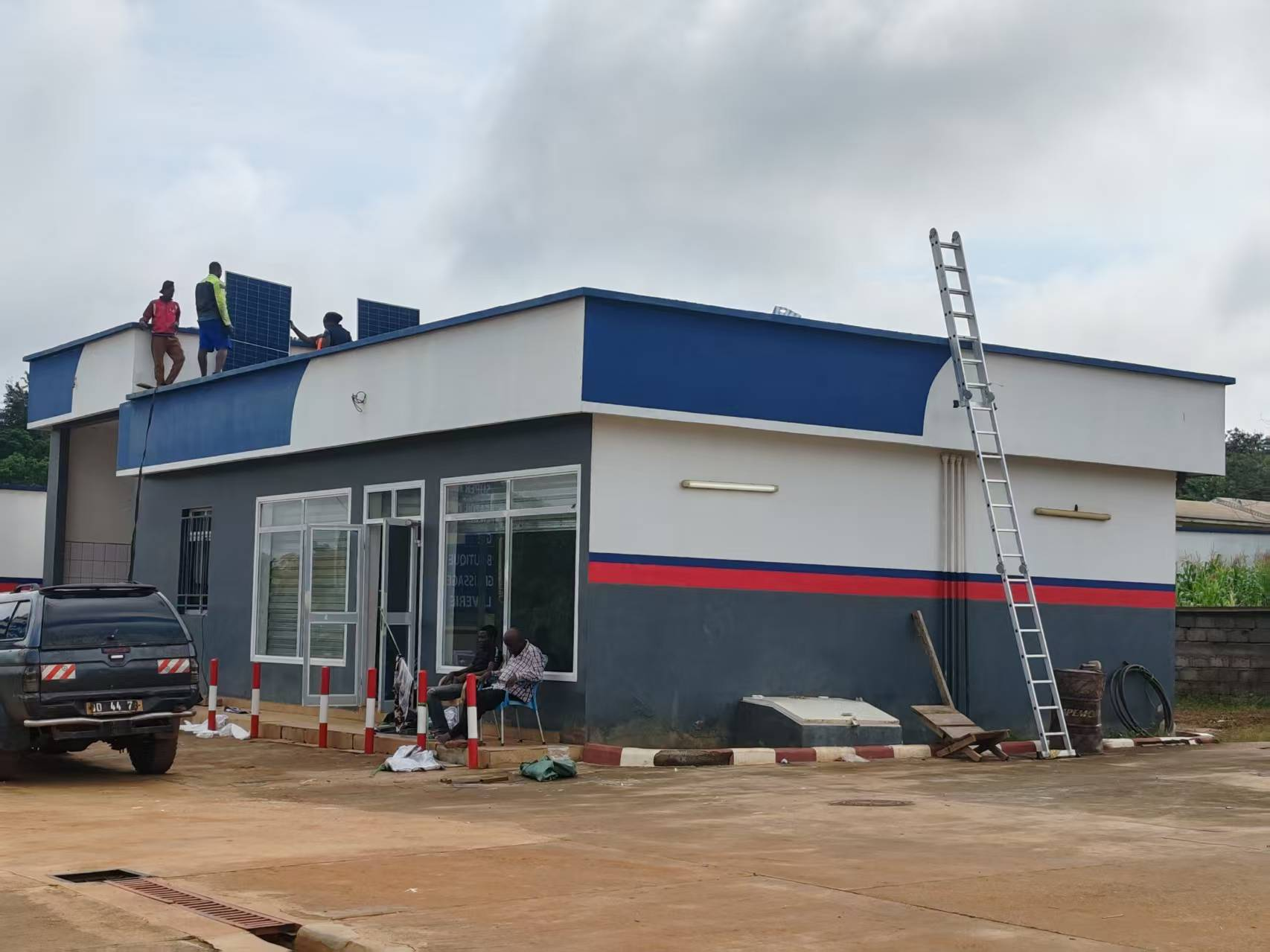
Thirdly, there are off-grid microgrids and residential systems. These are key approaches to solving the problem of unelectrification in Africa. In rural and remote areas not covered by the main grid, building off-grid microgrids is a more economical and faster solution than extending the grid. A village-level microgrid, consisting of solar panels, energy storage batteries, a diesel generator (for backup), and a smart control system, can provide basic electricity to hundreds of households. Residential systems are more suitable for scattered rural households and are typically small systems of a few hundred watts, equipped with one or a few solar panels and a small battery bank.
Fourthly, there are solar irrigation and agricultural applications. About 70% of Africa's population is engaged in agriculture, but most farmland lacks irrigation systems and relies entirely on rainfall. Solar water pumps are an ideal solution to this problem—the more sunlight there is, the more efficiently the pumps work, perfectly aligning with the laws of agricultural production. Applications such as solar refrigeration, solar grain drying, and solar livestock farming are also gradually being rolled out.
IV. Characteristics of the African Market: What You Need to Know to Understand This Market
To enter the African solar energy market, it is necessary to understand the unique characteristics of this market.
From a policy environment perspective, African countries vary greatly. Morocco, Tunisia, and Egypt in North Africa have relatively well-developed policies, with clear renewable energy targets and subsidy mechanisms. Kenya and Tanzania in East Africa have relatively mature renewable energy legislation and feed-in tariff mechanisms. South Africa and Nigeria in West and South Africa are also gradually establishing their policy frameworks. However, overall, the policy stability of African countries is not as good as that of mature markets, and this needs to be considered.
From a payment terms perspective, payment risks in the African market require close attention. Due to strict foreign exchange controls and the impact of sanctions on some banks, many African clients are unable to use USD for settlement or letters of credit for payment. In many cases, T/T prepayment or payment via a third country is required. For new clients, it is recommended to start with small orders to build trust and gradually increase the transaction volume.
In terms of certification requirements, different African countries have different requirements for solar energy products. South Africa has NRCS and SABS certifications, and relevant certificates are required to enter the South African market. North African countries such as Morocco and Egypt usually accept IEC standard certification. Some East African countries have relatively lenient certification requirements, but are gradually establishing their own standard systems. Some African countries (such as Kenya and Uganda) require products to meet specific energy efficiency labeling requirements.
In terms of logistics costs, freight rates from China to major African ports have fluctuated significantly in recent years. The ocean freight cost for a 40-foot container from China to East Africa (Moombasa or Dar es Salaam) is approximately US$3,000 to US$5,000, and to West Africa (Accra or Lomé) it is approximately US$4,000 to US$6,000. Inland transportation costs in landlocked African countries are often higher than ocean freight costs and must be fully considered when quoting prices.
In terms of the competitive landscape, the African solar energy market is dominated by competitors from around the world. Chinese manufacturers (such as LONGi, Jinko, Trina Solar, and JA Solar) are among the major players, offering high-performance, cost-effective products. European brands (such as Victron and Schneider) are competitive in the high-end market. Turkish and Indian manufacturers are also actively expanding into the African market. With price transparency in place, service capabilities and long-term reputation are key to competitiveness.
V. Recommendations for Developing the African Market
Here are some practical tips for solar energy suppliers looking to enter the African market.
First, choose key countries to enter the market. Africa has 54 countries with vastly different markets. It is recommended to start with middle-income countries with relatively stable policies and large markets. South Africa, Kenya, Nigeria, Morocco, and Egypt are preferred markets. These countries have relatively developed economies, strong purchasing power, and relatively sound policy frameworks.
Second, prepare for localization. African clients value face-to-face communication and long-term relationships. Companies with the resources are advised to establish local partnerships or assign personnel in key countries. Product materials should ideally be available in English, although some markets (such as Francophone Africa) require materials in French. Quotations and contracts should be settled in US dollars to avoid exchange rate risks.
Third, prioritize after-sales service capabilities. The African market relies more heavily on after-sales service than mature markets. Customers often lack the ability to maintain products themselves after purchase and require suppliers to provide remote technical support, installation guidance, troubleshooting, and other services. Suppliers capable of providing comprehensive after-sales support are more popular in the African market.
Fourth, control payment risks. For new customers, insist on T/T prepayment or 30% prepayment + 70% payment before shipment. For customers with whom you have a certain level of cooperation, you can appropriately relax payment terms, but it is recommended to use China Export & Credit Insurance Corporation (SINOSURE) or similar export credit insurance tools to mitigate risks. Absolutely avoid conducting credit transactions with new customers you do not know well.
Fifth, participate in industry trade shows. Major solar energy industry trade shows in Africa include: Solar Power Africa (Cape Town, South Africa), Future Energy East Africa (Nairobi, Kenya), and Energy Down West Africa (Lagos, Nigeria). Participating in these shows allows direct access to a large number of African buyers, enabling the establishment of business contacts and providing an efficient channel for entering the African market.
Conclusion
The African solar energy market is a market full of challenges but also full of opportunities.
The challenges lie in: policy uncertainty, payment and settlement risks, high logistics costs, difficulties in after-sales service, and language and cultural differences. The opportunities lie in: a huge population facing power shortages, rapid market growth, relatively less intense competition compared to European and American markets, and enormous long-term market potential.
For prepared, patient, and dedicated suppliers, the African market offers the potential for long-term returns. The key is to choose the right market, find the right partners, manage risks effectively, and provide excellent service.
The Sahara sun is being converted into electricity, illuminating more and more African homes and factories. It is hoped that more Chinese solar energy companies will participate in Africa's energy transition, realizing both commercial value and contributing to Africa's development.
Please contact Simon immediately to discuss your project:
• WeChat: TY530643572
• Telephone: +86 137 1166 0041