What buyers usually mean when they ask about a solar storage inverter system
A solar storage inverter system is often the missing piece in a project that already has panels, but still lacks usable, controllable energy after the sun goes down. In practice, buyers are usually comparing a solar inverter with battery storage, a hybrid solar inverter, or a larger battery energy storage system that can support backup power, load shifting, or peak shaving. The terminology gets loose fast, which is one reason sourcing teams end up comparing very different products as if they were the same.
If you are planning a new site or retrofitting an existing one, the real decision is not just “Do we need storage?” It is “What kind of storage architecture fits the load profile, the operating hours, and the electrical risks of the site?” That question matters whether you are buying for a factory, a telecom site, a commercial building, or a home solar storage system.
FAQ: Is a solar storage inverter system the same as a hybrid solar inverter?
Not always. A hybrid solar inverter usually refers to an inverter that can manage inputs from solar, batteries, and sometimes the grid in one control platform. A solar storage inverter system may describe a broader setup that includes the inverter, battery bank, cabinet, controls, and protection devices. In buyer conversations, the phrase can also cover a photovoltaic inverter system paired with storage cabinets.
The practical difference is scope. A hybrid unit may be one component in a larger project. A storage system, especially in industrial settings, is often a packaged solution with cabinet assembly, electrical integration, and battery-pack integration already handled at the enclosure level.
FAQ: When does an all-in-one cabinet make more sense than separate components?
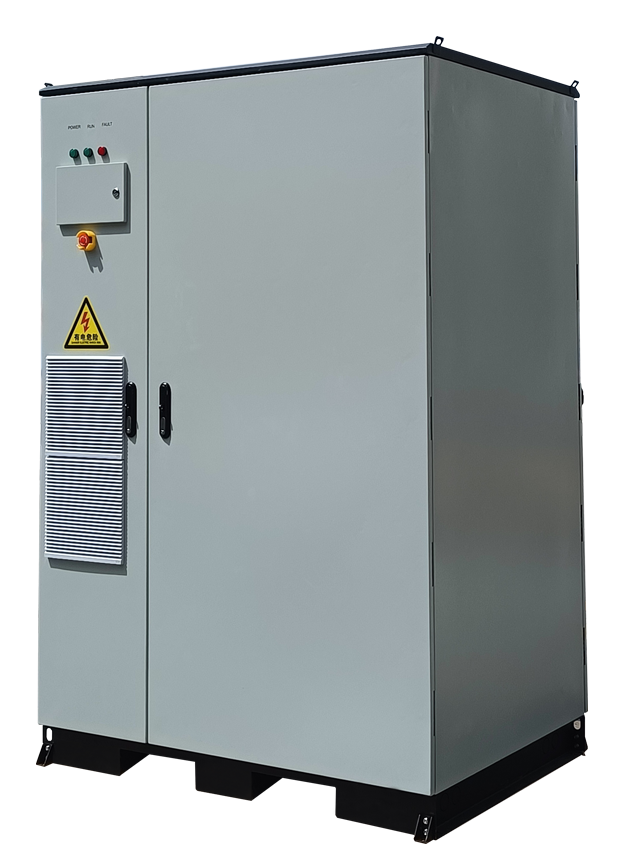
For larger projects, an integrated floor-standing cabinet can simplify installation and reduce coordination headaches. The product category described here looks like a large industrial energy storage cabinet with a rectangular sheet-metal enclosure, access doors, ventilation openings, indicator lights, and an emergency stop button. Those visible details suggest a system designed for controlled power storage and site-level energy management rather than a small consumer appliance.
That matters because industrial buyers usually value serviceability, safety access, and tidy power architecture. A modular cabinet can be easier to position in a plant room or utility area than a collection of separate boxes, cables, and supports. The downside is that you need to be very clear on internal configuration, because the exterior can look standardized while the inside varies widely.
FAQ: What applications are these systems actually used for?
Most buyers are trying to solve one of four problems: backup power, renewable energy buffering, load shifting, or peak shaving. In a commercial site, a commercial solar inverter paired with storage can smooth demand spikes and help support critical loads. In an industrial site, the same basic architecture may be used to stabilize power supply for equipment that does not tolerate interruptions well.
In telecom or infrastructure projects, stable electricity supply can matter more than raw capacity. A cabinet-based system also has a place in solar-plus-storage projects where intermittent generation needs to be buffered before it reaches the load. If the site is remote, an off grid solar inverter arrangement may be part of the design, but that should be treated carefully; off-grid and grid-interactive systems are not interchangeable.
FAQ: What should sourcing teams check before they buy?
Start with the load profile, not the catalog photo. Ask how much power the site needs at peak, how long backup is required, and whether the system must support grid-tied operation, islanding, or both. Then review the electrical integration details: battery chemistry, storage capacity, voltage, power rating, cooling method, protection devices, and controller architecture. If those details are missing, you are not yet comparing real options.
It is also worth asking how the enclosure is built. The visible cabinet here appears to use a metal enclosure with a painted industrial finish, front-access doors, and an emergency stop control. Those are sensible features, but they do not tell you everything about internal wiring quality or the control logic. A buyer should request drawings, single-line diagrams, and service access notes before approving a commercial solar inverter package.
FAQ: What mistakes do buyers make most often?
The most common mistake is buying on name alone. A residential energy storage inverter and a large industrial cabinet are not the same procurement problem, even if both sit under the broader storage umbrella. Another common issue is treating power rating and energy capacity as if they were interchangeable. They are not. One tells you how much load the system can support at a moment in time; the other tells you how long it can support that load.
A second mistake is ignoring maintainability. A locked cabinet with ventilation and indicator lights is useful only if technicians can inspect, isolate, and service it without unnecessary downtime. That sounds obvious, but in the field, it is often where projects slow down.
FAQ: How should buyers evaluate a supplier?
Look for suppliers that can speak clearly about R&D, cabinet assembly, and system integration, not just panels or batteries in isolation. Guangzhou Tianyuan Solar Equipment CO.,LTD, for example, presents itself as a solar equipment company with independent R&D, patented technologies, and a global reach across more than 50 countries. That kind of background can matter when you need both product stability and practical project support.
The company also notes its location near Guangzhou Baiyun International Airport and offers factory visits with airport pickup, which is useful for overseas buyers who want to inspect the site before placing orders. That said, a factory visit should still be used to verify the details that matter to your project: build quality, enclosure finishing, documentation, and the level of electrical integration actually offered.
FAQ: What should a buyer ask for next?
Ask for the system architecture, a clear list of included components, and the exact use case the supplier intends the product to serve. If you are planning solar-plus-storage, ask whether the solution is intended as a solar power storage inverter package, a site backup system, or a broader battery energy storage system. The answer will shape the controls, protections, and installation scope.
If you want to compare options properly, request side-by-side technical data and a simple explanation of what is included inside the cabinet. That one step prevents a lot of wasted time. A neat enclosure is a good start, but in storage projects the real value sits behind the doors.
FAQ: What is a sensible next step for buyers?
Define the load, decide the operating mode, and ask suppliers to match the architecture to the job. If your project is commercial or industrial, treat the solar storage inverter system as an engineered power platform, not just a product box. That mindset usually leads to better sourcing decisions, fewer surprises during installation, and a system that is easier to maintain over time.