What buyers usually mean by a solar storage inverter system
A solar storage inverter system is the part of a solar installation that makes generated power usable, then keeps it available when the sun drops or the grid becomes unreliable. For engineers and sourcing teams, the phrase can cover several related configurations: a solar inverter with battery storage, a hybrid solar inverter, or a larger battery energy storage system tied to a photovoltaic inverter system. The exact architecture matters more than the label. A residential energy storage inverter and a commercial solar inverter may both convert DC to AC, but they are rarely specified the same way, and they do not solve the same operating problem.
If you are choosing equipment for a home solar storage system or a site with industrial loads, the real question is not “Does it work with solar?” It is “Can it manage the site’s power profile safely, efficiently, and with enough flexibility for the next few years?” That is where design details start to matter.
Why this system matters in real projects
Solar generation is uneven by nature. Load is not. A factory may need stable power during shift changes, peak demand periods, or short grid interruptions. A commercial site may want to reduce demand charges. A remote facility may need an off grid solar inverter arrangement that can carry essential loads without relying on utility power.
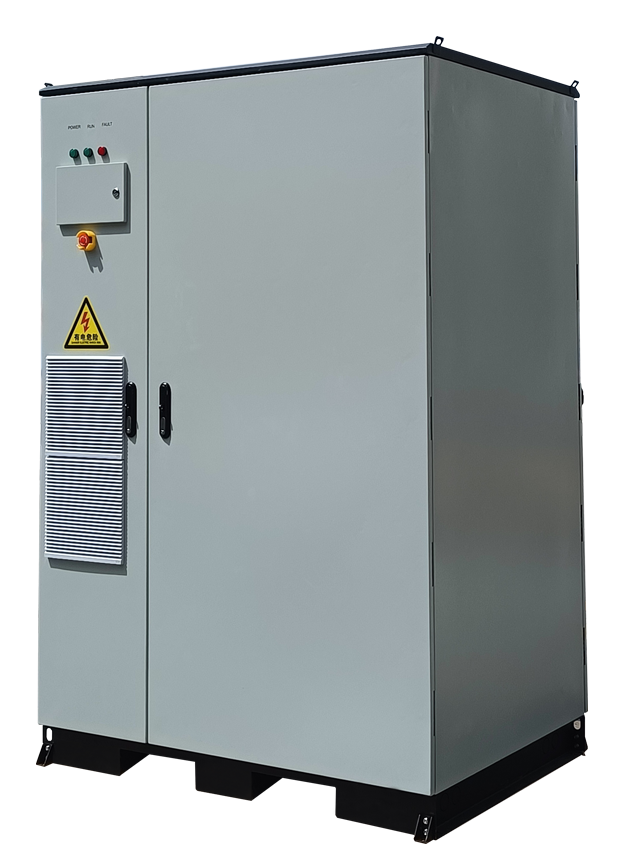
That is why a solar power storage inverter is often chosen not just for backup, but for control. It helps shift energy from noon production to evening use, buffer fluctuations, and support continuity when utility quality is weak. In larger projects, it may sit inside a cabinet or integrated energy storage unit that combines battery management, protection, and access controls in one enclosure. The industrial cabinet shown here, with its floor-standing metal housing, ventilation grille, front access doors, warning label, and emergency stop button, is a good reminder that safety and serviceability are not afterthoughts. They are part of the product.
Quick reference: common system types
Hybrid solar inverter
Combines solar input, battery charging, and grid interaction in one platform. Often used where the installation needs both backup and self-consumption optimization.
Off grid solar inverter
Built for systems that run without utility support. Selection depends heavily on battery sizing, load profile, and acceptable downtime.
Commercial solar inverter
Usually specified for higher load diversity, longer duty cycles, and tighter control over energy management. Integration with storage is often project-specific.
Battery energy storage system
A broader term that can include batteries, enclosure, inverter, BMS, protection devices, and monitoring. In practice, this is where many buyers end up when the project is larger than a simple rooftop installation.
What to look for in the cabinet and assembly
A lot of buying mistakes happen because people focus only on electrical ratings and ignore the physical package. The enclosure is not just sheet metal. It affects safety, maintainability, airflow, cable routing, and service access.
For an industrial energy storage cabinet, check whether the front access layout supports inspection without disrupting nearby equipment. Note the presence of latches, indicator lights, and a clearly marked emergency stop. Those details suggest the system was built with operational use in mind, not just lab conditions. Ventilation is visible here, but buyers should still confirm cooling strategy, installation environment, and clearance requirements during specification review. Do not assume an attractive cabinet means it is suitable for outdoor exposure or harsh dust conditions unless that is clearly documented.
Selection criteria that actually influence performance
Start with the load profile. Peak power, daily cycling, and backup duration all shape the inverter and battery choice. Then look at integration: will the unit be paired with a photovoltaic inverter system, a site microgrid, or a more conventional grid-tied architecture?
A few practical points matter more than many brochures admit:
The battery chemistry should match the duty cycle and safety requirements, but if the supplier has not disclosed it, do not guess.
Thermal management affects life and stability. Ventilation alone is not the same as a full cooling design.
Protection features must fit the installation context. High-voltage warnings, emergency stop access, and service doors are helpful, but they are not a substitute for proper engineering and code compliance.
Monitoring and communication features can save a project later, especially if the system will be used for peak shaving or remote management.
Common buyer mistakes
The most common mistake is overspecifying the inverter and underspecifying the system around it. A second mistake is choosing a residential energy storage inverter for a commercial duty cycle because the initial price looks simpler. Another is assuming all hybrid solar inverter products can handle the same grid conditions, battery interfaces, or operating modes. They cannot.
There is also the practical issue of service access. An integrated energy storage unit may look compact on a drawing, but if the doors cannot open cleanly or the control panel is awkward to reach, field maintenance becomes slow and expensive.
FAQ
Is a solar storage inverter system only for backup power?
No. Backup is only one use. Many systems are installed for load shifting, renewable buffering, and energy cost control.
Can one product fit both residential and commercial projects?
Sometimes in concept, rarely in exact form. Residential and commercial needs differ in load size, service expectations, and compliance requirements.
Does a visible cabinet tell me the full system capability?
Not by itself. The enclosure shows useful clues such as access, safety labeling, and floor-standing design, but capacity, chemistry, power rating, and protection class must come from the technical documentation.
What should sourcing teams ask a supplier first?
Ask for the system architecture, battery configuration, thermal approach, protection scheme, and installation constraints. If the project is global, also confirm service support and factory capability.
Where SUNNYSKY fits into the discussion
Guangzhou Tianyuan Solar Equipment CO.,LTD says its SUNNYSKY brand combines independent R&D and patented technologies, with a presence in more than 50 countries. That kind of background matters if you are evaluating a supplier for long-term energy equipment, because the difference between a decent cabinet and a dependable power solution is often in the engineering discipline behind it. The company also notes that clients can visit its Guangzhou factory, which can be useful when buyers want to inspect manufacturing capability rather than relying on brochures alone.
If you are comparing storage options, the next step is simple: define the load, define the operating mode, and then request a system proposal that matches both. A well-chosen solar storage inverter system should make the site easier to run, not harder to explain.