Foreword
Which emerging markets globally are best suited for developing solar energy businesses?
This is a question every solar energy company aiming to succeed in overseas markets is pondering. The Chinese domestic market is fiercely competitive, with price wars driving profits to zero, leading more and more companies to turn their attention overseas. But with such a vast overseas market—Southeast Asia, Africa, the Middle East, South America, Central Asia—which markets are worth investing in? Which markets require caution? And which markets present the best entry opportunity now?
To answer this question, we can't just look at the surface market size; we also need to consider multiple dimensions such as the policy environment, payment capacity, competitive landscape, entry barriers, and cultural compatibility. This article will create a "Global Solar Emerging Market Opportunity Map," helping you find the most suitable direction in the complex emerging market by examining the market characteristics, opportunities, and risks of each region.
I. African Market: Energy Demand Driven by Power Shortages
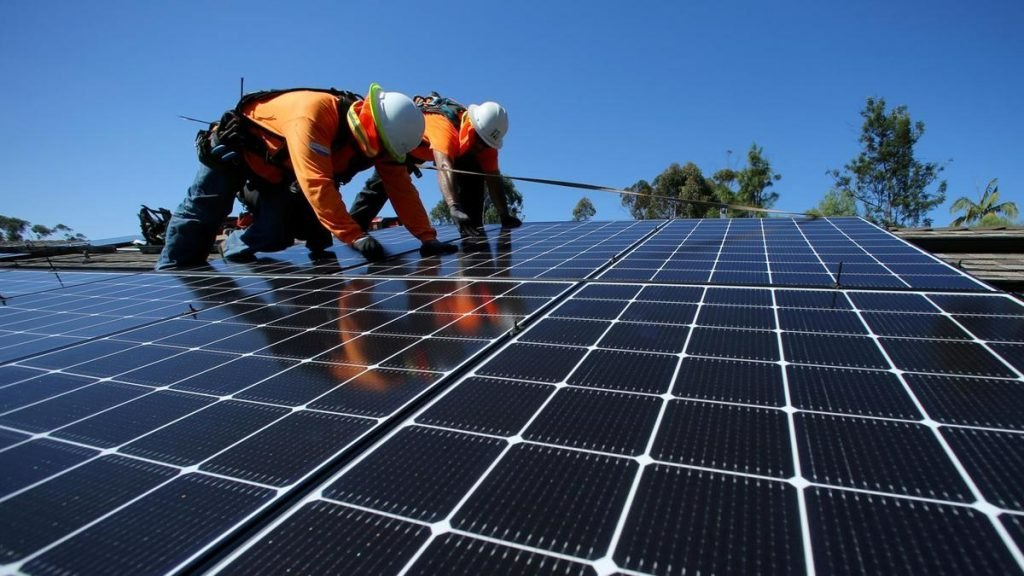
Africa is one of the emerging markets I am most optimistic about, for a simple reason—a large population lacking electricity, strong demand for alternatives, and relatively less competition.
In sub-Saharan Africa, approximately 600 million people lack access to electricity, with an overall electrification rate of only around 50%. Even in areas with electricity, power supply stability is generally poor, with power outages occurring several times a week being commonplace. Many factories and households are forced to rely on their own diesel generators. This "power shortage + instability" energy situation makes solar energy a necessity—not a question of "whether to install it," but rather "how to solve the power supply problem."
From a market opportunity perspective, several areas of the African solar energy market deserve attention. First, large-scale ground-mounted power plants. African governments are actively promoting renewable energy development; South Africa plans to achieve 41% renewable energy generation by 2030, and Morocco's target is 52%. These large-scale projects require a large number of photovoltaic modules and supporting equipment. Second, industrial and commercial distributed photovoltaic systems. Industrial and commercial electricity prices in Africa are generally high, and power supply is unstable, leading to a strong desire among large electricity consumers such as factories, mines, and hotels to install solar power. Third, off-grid microgrids and residential systems. This is a major solution to address the problem of unelectrification among the population, and international organizations such as the United Nations and the World Bank provide substantial financial support in this area.
In terms of country selection, South Africa, Kenya, Nigeria, Morocco, and Egypt are the preferred key markets. The South African market is well-regulated and has strong payment capabilities, but competition is also the most intense. The Kenyan and Nigerian markets have strong demand, but payment risks and logistics costs need to be controlled. Morocco and Egypt offer strong policy support and serve as gateways to the North African market.
The risks in the African market mainly manifest in several aspects. First, there is the risk of payment and settlement. Some African countries have foreign exchange controls or are affected by international sanctions, narrowing payment channels. It is recommended to prioritize T/T payment or use credit insurance to mitigate risk. Second, there are logistics costs. The sea freight from China to major African ports, plus inland transportation costs, can account for 15% to 25% of the value of goods, which needs to be fully considered when quoting prices. Third, there are certification requirements. South Africa requires SABS certification, and some East African countries have specific energy efficiency labeling requirements for products; these need to be clearly confirmed before entering the market.
II. Southeast Asian Market: Explosive Growth Driven by Manufacturing Relocation
Southeast Asia is another region that I think deserves close attention, driven by both rising manufacturing costs and increasing energy demand.
In recent years, countries such as Vietnam, Thailand, and Indonesia have absorbed a large number of manufacturing industries that have been transferred from China. This influx of manufacturing has brought two direct results: first, a rapid increase in electricity demand, with Vietnam's industrial electricity consumption growing at an average annual rate of over 10% in the past five years, leading to power shortages in some areas; and second, a large number of industrial parks and factories being built, creating excellent scenarios for rooftop solar power.
The market characteristics of Southeast Asian countries vary considerably. Vietnam is currently the hottest market, with strong policy support, a large influx of foreign investment, a dense concentration of industrial parks, and rapid development of distributed photovoltaic power. However, competition is also fierce, with Chinese, South Korean, and local companies all vying for market share, and a price war has already begun. Indonesia has the largest market size, but due to its numerous islands, logistics costs are high, the market is relatively fragmented, and development is more difficult. The Philippines and Malaysia have relatively smaller markets, but competition is less intense, potentially making them better entry points for small and medium-sized enterprises (SMEs).
From a product demand perspective, the Southeast Asian market has several noteworthy characteristics. First, it exhibits high price sensitivity. Southeast Asian buyers possess strong negotiating power, making lower-priced products more competitive. However, it's crucial to understand that low price does not equate to low quality. Many buyers, after comparing prices, prioritize "best value for money" over "cheapest," making a balance between product quality and price essential. Second, it demands high-quality after-sales service. Southeast Asian customers generally value suppliers' responsiveness and problem-solving capabilities; suppliers capable of providing rapid technical support are more likely to secure long-term partnerships. Third, there is a demand for product localization, such as requiring products to withstand high temperatures and humidity, and including multilingual instruction manuals.
The main risks in the Southeast Asian market lie in market fragmentation and price wars. Due to its numerous islands, Indonesia faces high logistics and development costs. The Vietnamese market is highly competitive, with profit margins already squeezed low. The Thai market has higher brand recognition among Japanese and Korean brands, requiring Chinese brands to invest more time in building trust. It is recommended that before entering the Southeast Asian market, brands clearly define their core competencies and target market segments, avoiding blindly rushing in and engaging in price wars.
III. The Middle East Market: A New Track for Energy Transition in Oil-Rich Countries
The Middle East is an easily overlooked market with huge potential. Many people think that the Middle East is full of oil, so why would it need solar energy? But the fact is, Gulf countries such as Saudi Arabia, the UAE, and Oman are vigorously promoting energy transition, and solar energy is one of the core directions.
Saudi Arabia has put forward its "Vision 2030," in which energy transition is a key component, with a plan to achieve 58 gigawatts of renewable energy generation capacity by 2030. The UAE's clean energy strategy has even more ambitious goals, aiming to have 50% of its electricity generated from clean energy sources by 2050. These policy commitments have generated enormous market demand, and this demand is not just on paper—sovereign wealth funds and government departments in the Gulf states are investing real money.
The Middle Eastern market is characterized by its deep pockets. Compared to African and Southeast Asian buyers, Middle Eastern buyers have significantly stronger purchasing power and are less price-sensitive. They prioritize product quality, supplier qualifications, project portfolios, and long-term partnership capabilities. A Saudi buyer might not choose a small supplier just because it's $5,000 cheaper, but they will develop trust in a supplier based on its portfolio of landmark projects in Oman or Saudi Arabia.
However, the Middle Eastern market also has its own barriers to entry. First, certification requirements are stringent. Entering the Saudi market requires SASO certification, and entering the UAE requires ESMA certification. These certification processes are lengthy and require advance preparation. Second, there are localization requirements. Some Middle Eastern countries require suppliers to have local partners or establish local companies, which poses a challenge for Chinese companies entering the market for the first time. Third, there is cultural compatibility. Middle Eastern buyers highly value relationships and networks; establishing business cooperation requires time and face-to-face communication, and remote development is often ineffective.
From a product demand perspective, the Middle East market has a strong demand for high-efficiency monocrystalline silicon modules, high-power inverters, and hybrid systems combined with energy storage. Because of the extremely strong sunlight in the Middle East (over 3500 hours of sunshine annually in the Sahara), the requirements for high-temperature resistance of products are also very high. Suppliers preparing to enter the Middle East market are advised to fully consider these special requirements during the product selection and certification stages.

IV. South Asian Market: Explosive Energy Demand Driven by Demographic Dividend
South Asia (including India, Pakistan, Bangladesh, Sri Lanka, Nepal, etc.) has a population of nearly 2 billion, making it one of the most densely populated regions in the world and one of the fastest growing regions in terms of electricity demand.
India is the undisputed protagonist of the South Asian market. The Indian government has set ambitious renewable energy development goals, planning to achieve 500 gigawatts of installed renewable energy capacity by 2030, with photovoltaics (PV) being the core. Currently, India is the world's third-largest PV market and is still growing rapidly. However, it's worth noting a key characteristic of the Indian market—domestic manufacturing protection policies. The Indian government imposes high tariffs on imported PV products to encourage local manufacturing. For Chinese suppliers, directly exporting finished products to India faces tariff barriers; a better strategy might be to partner with local Indian factories or establish production lines in India.
The Pakistani and Bangladeshi markets are much smaller than India's, but they have good growth potential. Pakistan frequently faces energy shortages, and the government is actively promoting the development of renewable energy. Bangladesh's labor-intensive manufacturing sector is developing rapidly, driving up industrial electricity demand. Both markets have relatively weaker payment capabilities; therefore, it is recommended to prioritize transactions with credit guarantees or mitigate risk through credit insurance instruments.
While the Sri Lankan and Nepalese markets are relatively small, they offer opportunities for suppliers focused on niche markets. Sri Lanka has been promoting off-grid solar projects in recent years to address power shortages in rural areas. Nepal has abundant but unevenly distributed hydropower resources, with a strong demand for off-grid solar in remote mountainous regions.
The cultural characteristics of the South Asian market also need to be considered. South Asian buyers generally place great emphasis on relationship building and price negotiation in business negotiations, and the decision-making chain can be relatively long, so patience is crucial. At the same time, South Asian buyers generally have a good command of English, resulting in fewer communication barriers, which is a significant advantage for developing this market.
V. Latin American Market: Resource Endowment and Payment Risk Coexist
The Latin American market is a love-hate relationship. It's loved for its abundant natural resources—Brazil, Mexico, Chile, and other countries have excellent sunshine conditions, resulting in high-efficiency photovoltaic power generation. However, it's hated for the relatively high payment and exchange rate risks, requiring careful management.
Brazil is the largest market in Latin America and one of the top ten photovoltaic (PV) markets globally. With over 2,500 hours of sunshine annually in most areas, Brazil boasts excellent PV resources. The Brazilian government has been actively promoting renewable energy development in recent years, aiming to achieve 45% of its electricity from renewable sources by 2030. However, the Brazilian market has high barriers to entry—it imposes high tariffs on imported products, and the certification process is complex, making it difficult for cross-border e-commerce and small and medium-sized sellers to enter.
Mexico is another Latin American market worth noting. Mexico has excellent sunshine conditions and the government provides substantial support for renewable energy. However, payment risks in the Mexican market require close monitoring, as some Chinese suppliers have encountered issues with buyers defaulting on payments. It is recommended to conduct thorough background checks on Mexican buyers and prioritize transactions secured by letters of credit.
Chile is one of the most "regulated" countries in the Latin American market. Its business environment is relatively transparent, its legal system is sound, and its certification requirements for imported products are clear. Chile also boasts some of the best sunshine conditions in the world (the Atacama Desert receives over 3,500 hours of sunshine annually), making photovoltaic projects highly economical. For suppliers with the potential to cultivate a deep presence in the market, Chile is a worthwhile investment opportunity.
While the Argentine and Colombian markets are relatively small, they offer good growth potential and are suitable for development as a supplement to the Latin American market. Overall, developing the Latin American market requires substantial financial strength and a high risk tolerance; therefore, thorough market research and risk assessment are recommended before entry.
Conclusion
After completing this "Global Solar Emerging Market Opportunities Map," let's summarize a few key takeaways.
First, there is no "best" market, only the "most suitable" market. The African market offers great opportunities but also carries high risks; the Middle Eastern market has strong payment capabilities but high barriers to entry; the Southeast Asian market is growing rapidly but highly competitive; and the Latin American market is regulated but geographically distant. You should choose the market that best suits your needs based on your product positioning, financial strength, and risk appetite.
Secondly, developing emerging markets requires patience and investment. You can't expect to secure orders by making one or two phone calls, nor can you judge the worth of a market after a single trial. Expanding into emerging markets typically requires one or two years, or even longer, of sustained investment before seeing returns.
Third, risk control is more important than seizing opportunities. Emerging markets offer many opportunities, but also many pitfalls. Payment methods, exchange rate fluctuations, logistics costs, certification requirements, cultural differences—any of these can lead to problems. It is recommended to thoroughly understand the risk factors and prepare contingency plans before entering any emerging market.
Opportunities in emerging global solar energy markets are real and growing. Hopefully, this article will help you understand the characteristics and opportunities in different regional markets and find your own "blue ocean."