Foreword
Can electricity be generated on rainy days?
This is one of the most frequently asked questions I get about solar energy systems. Whenever a customer expresses interest in solar power but is still hesitant, the installer often gives an expectant reply: "Of course it can generate electricity! It's just that the efficiency will be a bit lower." But the customer still has doubts: How low will the efficiency be? How many cloudy or rainy days a year will affect the power generation?
These questions are entirely understandable. After all, a solar system is a significant investment, and if it generates almost no electricity during prolonged periods of cloudy or rainy weather, then the cost-effectiveness of that investment needs to be reassessed. Understanding its actual performance on cloudy or rainy days is essential before deciding whether to install a solar system.
Africa's climate varies greatly, from the scorching heat of the Sahara Desert to the year-round rainfall of the Congo rainforest, resulting in uneven distribution of solar energy resources. In this article, I will start by explaining the working principle of solar panels, demonstrating why electricity can be generated even on cloudy days. Then, I will provide data for reference based on the climate characteristics of different regions in Africa, analyzing the impact of cloudy and rainy days in East Africa, West Africa, South Africa, and North Africa. Finally, I will offer some suggestions for coping strategies.
I. Photovoltaic Power Generation Principle
To understand why solar panels can still generate electricity on cloudy days, we first need to understand how solar panels generate electricity. The basis of solar panel power generation is the "photovoltaic effect".
The principle of the photovoltaic effect is as follows: when photons shine on a semiconductor material, their energy is absorbed by electrons in the semiconductor. Once the electrons gain enough energy, they break free from the atomic nucleus, forming free electron-hole pairs. These free electrons move within the semiconductor, generating an electric current. This is the basic principle behind solar panel power generation. This process does not require sunlight to be "very hot" or "very strong"; it only requires photons to shine on the solar cells.
This principle illustrates a key point: solar panels generate electricity based on photons, not temperature. Some people mistakenly believe that "the bigger the sun, the more electricity it generates," but the opposite is true—excessive temperature actually reduces the power generation efficiency of solar panels. Under standard testing conditions, the efficiency of solar panels is tested at 25 degrees Celsius. For every 1-degree increase in temperature, the power generation efficiency decreases by approximately 0.4% to 0.5%. Therefore, in the hot and dry Sahara region, although the sunlight is strong, excessively high temperatures may actually reduce power generation efficiency; while on cool, cloudy days, although the sunlight is weaker, the moderate temperature may result in higher power generation efficiency than under intense sunlight.
On cloudy days, sunlight does penetrate the clouds to reach the ground, and the intensity of sunlight does decrease. However, the intensity of sunlight on a cloudy day is not zero. According to meteorological data, the intensity of sunlight on a cloudy day is approximately 10% to 25% of that on a sunny day. This means that the intensity of sunlight on a cloudy day is still one-tenth to one-quarter of that on a sunny day, and solar panels do not completely stop generating electricity.
It's important to distinguish between direct and diffused sunlight. On a sunny day, most of the sunlight comes directly from the sun; on a cloudy day, direct sunlight is significantly reduced due to cloud cover and scattering, but diffused sunlight may actually increase. Solar panels can utilize both direct and diffused sunlight, but the power generation efficiency of diffused sunlight is lower than that of direct sunlight. Therefore, while power generation is significantly reduced on a cloudy day, it will not be zero.
The characteristics of cloudy days vary greatly across different regions of Africa. North Africa, in its arid regions, experiences very few cloudy days with a high proportion of direct sunlight; coastal areas of West Africa, such as Lagos, see more rainy and cloudy weather; the East African highlands, such as Nairobi, have a relatively mild climate; and the Congo Basin is one of the regions in Africa with the most rainy and cloudy days. In most parts of Africa, the power generation of residential monocrystalline silicon solar panels on cloudy days is approximately 10% to 30% of that on sunny days.
II. Real Data from Various Parts of Africa
Having understood the principles of power generation, let's now look at specific data from different regions of Africa regarding differences in power generation on cloudy days.
Let's start with North Africa. The Sahara region south of Egypt, Libya, and Algeria boasts the richest sunshine resources in all of Africa, with over 3,500 hours of sunshine annually. Sunny weather prevails throughout the year, with very few cloudy or rainy days. In these regions, the annual power generation loss due to cloudy or rainy days is approximately 5% to 10%, a negligible impact. A 5-kilowatt system in these areas can generate 25 to 30 kWh on sunny days and maintain 5 to 8 kWh on cloudy days. However, it's important to note that summer temperatures in these regions are extremely high, and the impact of high temperatures on efficiency needs to be considered.
The situation in East Africa is more diverse. The highland regions of Kenya, Tanzania, and Ethiopia receive approximately 2,500 to 3,000 hours of sunshine annually, providing excellent sunlight conditions. Taking Nairobi as an example, the rainy season is from March to May and October to December. During the rainy season, there are many cloudy days, but it doesn't rain every day; it's usually showers. A 5-kilowatt system generates about 20 to 25 kilowatt-hours on sunny days and about 3 to 8 kilowatt-hours on cloudy days. While power generation does decrease significantly during the rainy season, sunny days still account for the majority of the year, and the overall loss due to rain and overcast skies is about 15% to 20%.
The coastal regions of West Africa are characterized by frequent overcast and rainy days. Coastal cities in countries such as Nigeria, Ghana, and Côte d'Ivoire, including Lagos and Accra, experience high rainfall throughout the year, with approximately 1800 to 2200 hours of sunshine annually. These regions have two rainy seasons per year, characterized by frequent and prolonged rainfall. A 5 kW system in these areas might generate about 15 to 20 kWh of electricity on a sunny day, but during prolonged overcast and rainy weather, power generation could drop to as low as 2 to 5 kWh. Annual power generation losses due to overcast and rainy weather are estimated at 25% to 35%. Under these circumstances, the installation of energy storage batteries is almost a necessity.
South Africa's situation is relatively better. Most of South Africa receives approximately 2,500 to 3,200 hours of sunshine annually, with abundant sunshine resources. Rainfall in major cities like Johannesburg and Cape Town is concentrated in the summer (November to March), with the rest of the year characterized by sunny weather. A 5-kilowatt system in most parts of South Africa generates approximately 20 to 28 kilowatt-hours of electricity on sunny days and 3 to 8 kilowatt-hours on cloudy days. Annual losses due to rain and overcast skies are approximately 15% to 25%.
The Congo Basin represents another extreme. Countries along the equator, such as the Democratic Republic of Congo, Cameroon, and Gabon, experience year-round high temperatures and heavy rainfall, with less than 1200 hours of sunshine annually. Under these conditions, the application of pure solar power systems is severely limited, typically requiring large-capacity energy storage batteries or diesel generators. Installing solar systems in these regions necessitates more conservative power generation projections and larger energy storage configurations.
In general, most African countries possess considerable solar energy resources. Overall, Africa enjoys higher solar radiation levels than most parts of Europe and Asia. Even in West Africa and the Congo, regions with more frequent rainfall, solar conditions are better than in European countries like the UK and the Netherlands. The key is to design system configurations and expected power generation based on the specific climate characteristics of the region.
III. The Real Impact of Rainy Days
How much electricity is lost in a year? Using several typical scenarios as examples, we estimate the actual losses caused by rainy days.
Scenario 1: Nairobi, Kenya, East Africa, a 5 kW system. The total annual power generation is approximately 12,000 kWh. Rainy days result in a loss of about 20%, or approximately 2,400 kWh. Based on the local electricity price of about US$0.15 per kWh (residential electricity price is about US$0.1 to US$0.2), the annual loss is about US$360. This figure needs to be considered in the context of overall benefits—electricity prices in Nairobi are high, and solar power can save about US$0.15 per kWh, resulting in annual savings of about US$1,800. Rainy days account for about 20% of the total savings.
Scenario 2: In Lagos, Nigeria, a 5 kW system generates approximately 9,000 kWh of electricity annually. Rainy weather results in a loss of about 30%, or approximately 2,700 kWh. At a Lagos electricity price of about $0.08 per kWh, this translates to an annual loss of about $216. While the cost savings from solar power are relatively limited due to the low local electricity price, the unreliability of the local power grid and frequent power outages mean that the value of the power supply guarantee provided by the solar system far outweighs the cost savings.
Scenario 3: Johannesburg, South Africa. A 5 kW system generates approximately 14,000 kWh of electricity annually. Rainfall losses are about 15%, or approximately 2,100 kWh. With local residential electricity prices at approximately US$0.12 per kWh, the annual loss is about US$252. South Africa has abundant sunshine and high power generation; even after deducting rainfall losses, the revenue is still considerable.
These calculations show that the impact of cloudy and rainy weather is relatively small in North and South Africa, but larger in tropical rainforest regions. However, even in areas with the most cloudy and rainy days, the power generation performance of solar systems remains good most of the time. Losses caused by cloudy and rainy weather are acceptable in most cases; the key is to consider this factor during the system design phase.
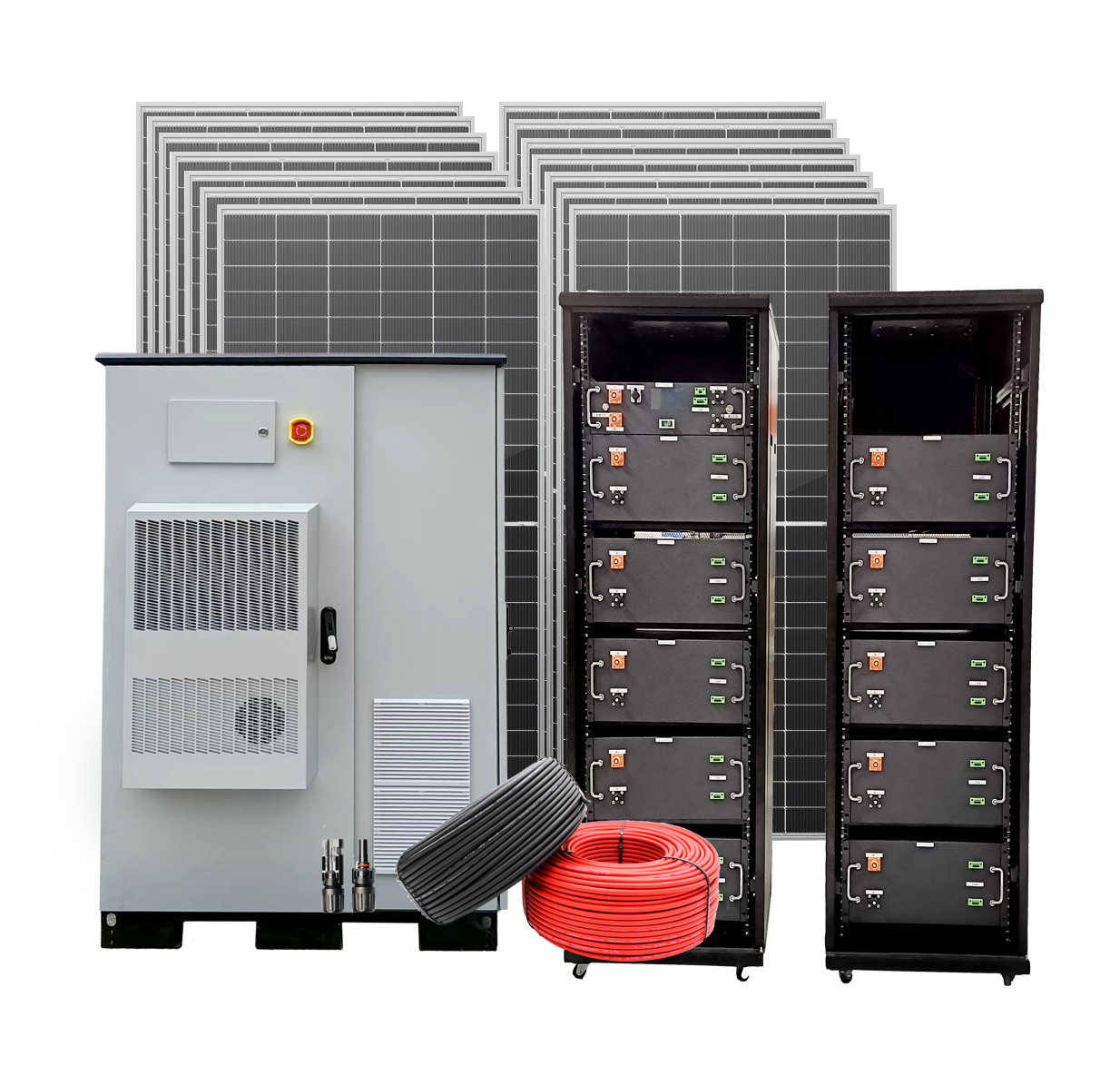
Configuring energy storage batteries is the most effective way to cope with rainy days. In areas with frequent rain, it is recommended to configure energy storage batteries with enough power for at least two to three days to ensure that there is still power available during periods of continuous rain. Of course, energy storage batteries will significantly increase system costs, which need to be weighed based on actual needs and budget.
IV. Coping with Rainy Days
Practical suggestions for improving the power generation of solar power systems in Africa: Although cloudy and rainy days have an impact on solar power generation, certain measures can be taken to minimize the impact and improve the overall performance of the system.
Keeping solar panels clean is the most basic and crucial practice. In many parts of Africa, dust storms are a major factor affecting power generation. In the Sahel region south of the Sahara, frequent sandstorms make it easy for dust to accumulate on the surface of solar panels. If the panels are cleaned promptly after the first heavy rain during the rainy season, power generation can significantly increase. Some installers recommend installing low-pressure flushing devices above the solar panels for regular cleaning; this is a small investment but yields noticeable results.
Properly designing system capacity is also crucial. In areas with frequent rainy days, it's recommended to design the system capacity to be 20% to 30% higher than the theoretical demand, based on local sunlight data. This will ensure that electricity demand is generally met even during rainy seasons. Of course, this will increase initial investment, requiring a balance to be struck between cost and benefit.
Energy storage batteries are almost essential in regions like West Africa and the Congo Basin. Lithium iron phosphate batteries are recommended due to their long cycle life and high safety. Based on local historical records of rainy days, the energy storage capacity should be designed to ensure basic household electricity needs can be met even during prolonged periods of rain. The battery capacity is typically recommended to be configured for two to three days of usage.
Considering a hybrid energy solution is also a pragmatic option. In Africa, where the power grid is unstable, a hybrid solution combining solar energy, energy storage, and diesel generators can balance the advantages of clean energy with reliable power supply. Solar energy is the primary source of power on sunny days, with energy storage supplementing nighttime electricity use, and generators are activated to supplement power during prolonged periods of cloudy or rainy weather. This solution has the highest system cost, but also the strongest reliability and adaptability.
Finally, before purchasing a solar system, it is recommended to consult local historical climate data and solar resource data. Many African countries' meteorological or energy departments publish relevant solar resource assessment reports, which can help more accurately predict the system's annual power generation and the impact of cloudy or rainy days. You can also consult installers with local experience, as they have firsthand experience and data on local climate conditions and system performance.
Conclusion
While cloudy and rainy days do affect the power generation of solar panels, they don't render the solar system useless. Even in the most rainy areas, solar panels can still generate electricity on cloudy days, typically reaching 10% to 30% of the power generated on sunny days. Although this amount of electricity is not high, it still adds up to a significant amount of clean electricity throughout the year.
Most of Africa enjoys abundant sunshine and mostly sunny weather throughout the year. Even in the West African coast and the Congo Basin, where cloudy and rainy days are relatively more frequent, the sunshine conditions are better than many people traditionally believe. The key is to design the system configuration and expected power generation based on the specific climate characteristics of the region before installing a solar power system.
In regions with frequent rainy days, the deployment of energy storage batteries is an important means of improving system usability. It can store excess electricity on sunny days and release it for use on rainy days, ensuring that basic electricity needs are met. Although energy storage batteries increase initial investment, this investment is worthwhile from a long-term perspective.
Hopefully, this article will help readers in Africa better understand the actual performance of solar systems on cloudy or rainy days, enabling them to make more informed installation decisions. Whether you are on the edge of the Sahara Desert in North Africa, on the humid coast of West Africa, or on the highlands of East Africa, solar energy can be a great option for improving your living and working conditions.
Please contact Simon immediately to discuss your project:
• WeChat: TY530643572
• Telephone: +86 137 1166 0041