Foreword
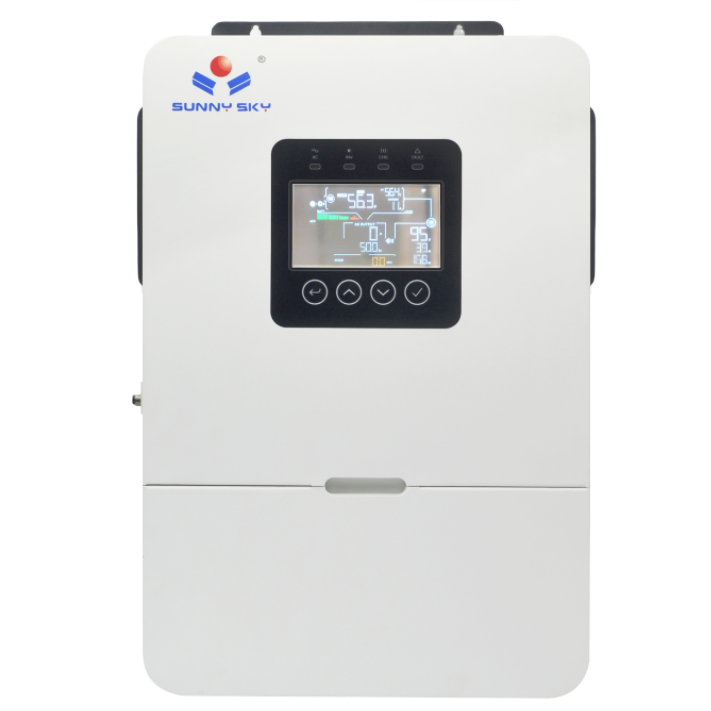
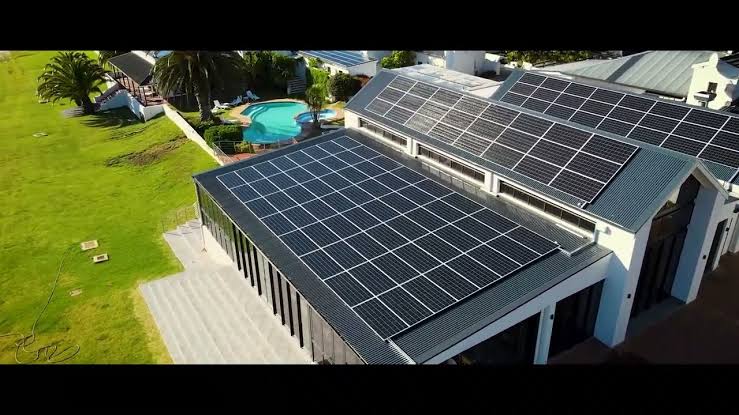
If solar panels are the "generator" of a photovoltaic system, then the inverter is the "heart" and "brain" of the entire system. It not only converts the direct current (DC) generated by the solar panels into alternating current (AC) usable by homes and businesses, but also undertakes core functions such as system monitoring, maximum power point tracking (MPPT), grid protection, and energy management. A high-quality inverter can maximize the power generation efficiency of the solar panels, extend the system's lifespan, and ensure electrical safety. In this article, we will comprehensively analyze all the key knowledge points of solar inverters, from principles and classifications to selection and maintenance, to help you make an informed purchasing decision.
I. What is an inverter? What are its core functions?
An inverter is a power electronic device that converts direct current (DC) into alternating current (AC). In solar photovoltaic systems, solar panels capture sunlight and generate DC, while most household appliances require AC to operate—the inverter is the crucial bridge connecting these two. From a working principle perspective, an inverter typically contains the following core components: IGBTs or MOSFET power switches are the inverter's "engine," responsible for high-speed switching of DC, cutting it into high-frequency pulse signals. Transformers or inductors smooth the high-frequency pulse signals into standard sinusoidal AC. The control chip is the inverter's "brain," responsible for generating precise switching timing, monitoring operating status, and executing protection logic. Filters remove harmonics and electromagnetic interference, ensuring a clean and stable output current waveform.
In a solar energy system, the inverter performs six core functions. DC to AC conversion is the most basic function, converting the DC power generated by the solar panels (e.g., 48V, 600V) into 220V/380V AC power for use in homes or industrial equipment. **Maximum Power Point Tracking (MPPT)** is a key technology in modern photovoltaic inverters. Since the output power of solar panels fluctuates with changes in sunlight intensity, temperature, and load, the MPPT algorithm can track the optimal operating point of the solar panels in real time, ensuring the system outputs maximum power under any conditions, improving efficiency by more than 20%. Grid protection functions include anti-islanding, over/under voltage protection, over/under frequency protection, and harmonic detection. When grid anomalies occur, the inverter quickly disconnects from the grid to protect equipment and personnel. Data monitoring functions can monitor system parameters such as power generation, voltage, current, and power in real time, displaying them to users through an LCD screen, app, or web interface to help users understand the system's operating status. Energy management features are becoming increasingly common in mid-to-high-end inverters. They can automatically optimize energy flow based on factors such as electricity price, time of day, electricity demand, and battery status, enabling applications such as peak-valley arbitrage and peak shaving/valley filling. Remote control and upgrade functions allow maintenance personnel to remotely diagnose problems, adjust parameters, and even push firmware upgrades, significantly reducing maintenance costs.
II. What are the main types of inverters?
Depending on the application scenario and system architecture, solar inverters are mainly divided into the following types.
String inverters are currently the most widely used product type, especially in distributed photovoltaic (PV) projects. They consist of multiple solar panels connected in series to form a "string," which is then connected to an inverter. String inverters have a wide power range, from 3kW to 350kW. Residential projects typically use 3-15kW, commercial projects typically use 20-100kW, and large ground-mounted power plants can use products exceeding 100kW. The advantages of string inverters include high technological maturity, relatively low cost, easy installation, convenient maintenance, and a small impact range from a single unit failure. They also have high MPPT tracking accuracy and can adapt to string designs with different orientations and tilt angles. Major brands include Huawei, Sungrow Power, GoodWe, Growatt, Ginlong, Schneider Electric, SMA, and Fronius.
Microinverters are a rapidly developing product type in recent years. Unlike string inverters, microinverters are installed directly on the back of each solar panel, with each panel inverting independently. The advantages of microinverters are: each panel operates independently, so shading or a malfunction of one panel will not affect others; MPPT tracking is accurate to individual panels, resulting in higher overall power generation; AC outputs can be directly connected in parallel, allowing for flexible system expansion; and high-voltage DC cables are eliminated, reducing safety hazards. The disadvantages are higher cost (approximately 2-3 times that of string inverters), inconvenient maintenance due to installation on the back of the panels, and smaller power output per inverter (typically 200W-500W). Major brands include Enphase, HoloMatic, and Yunneng. Microinverters are particularly suitable for scenarios with complex roof shapes, partial shading, and where maximizing the power generation of each panel is desired.
A power optimizer is a compromise between string inverters and microinverters. Installed on the back of each solar panel, the power optimizer performs MPPT tracking and DC optimization, then feeds the optimized DC power to the string inverter for DC-to-AC conversion. Power optimizers retain the cost advantages of string inverters while addressing some shading issues, making them ideal for users seeking cost-effectiveness and safety. Major brands include SolarEdge and Huawei (power optimization solutions).
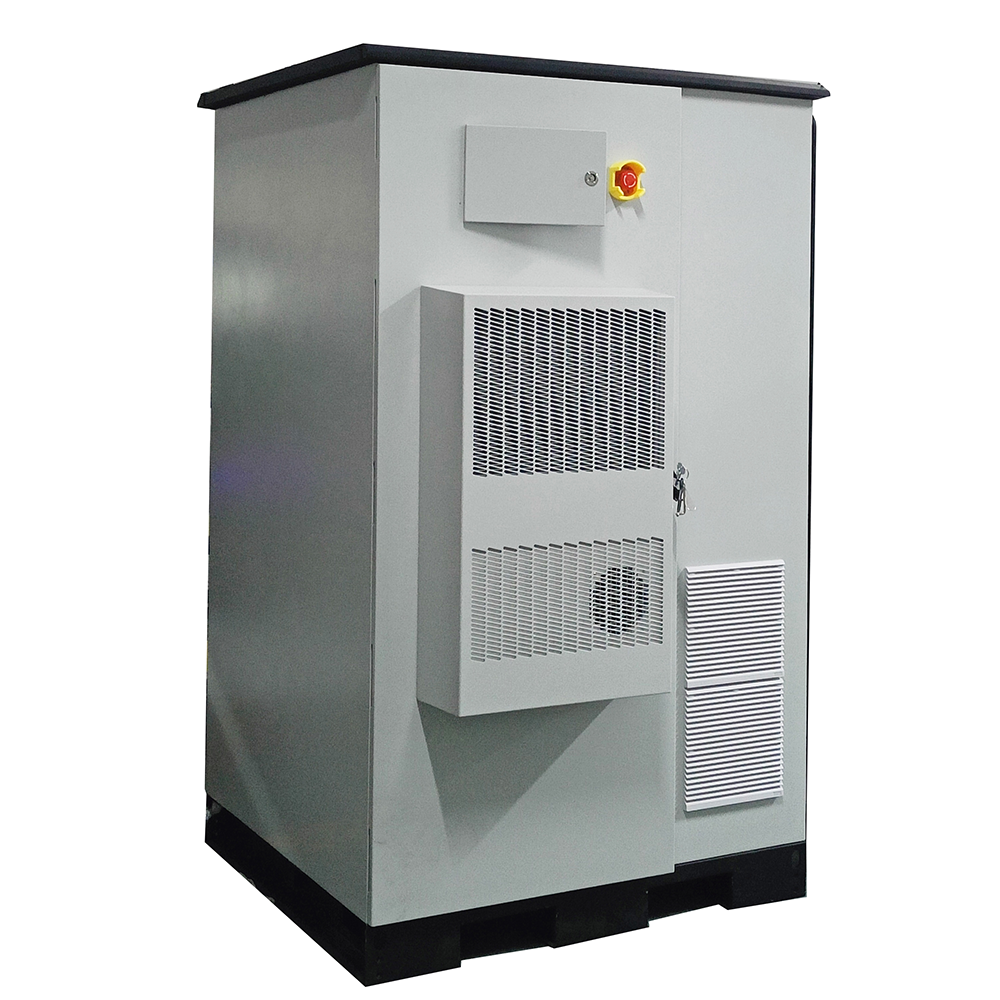
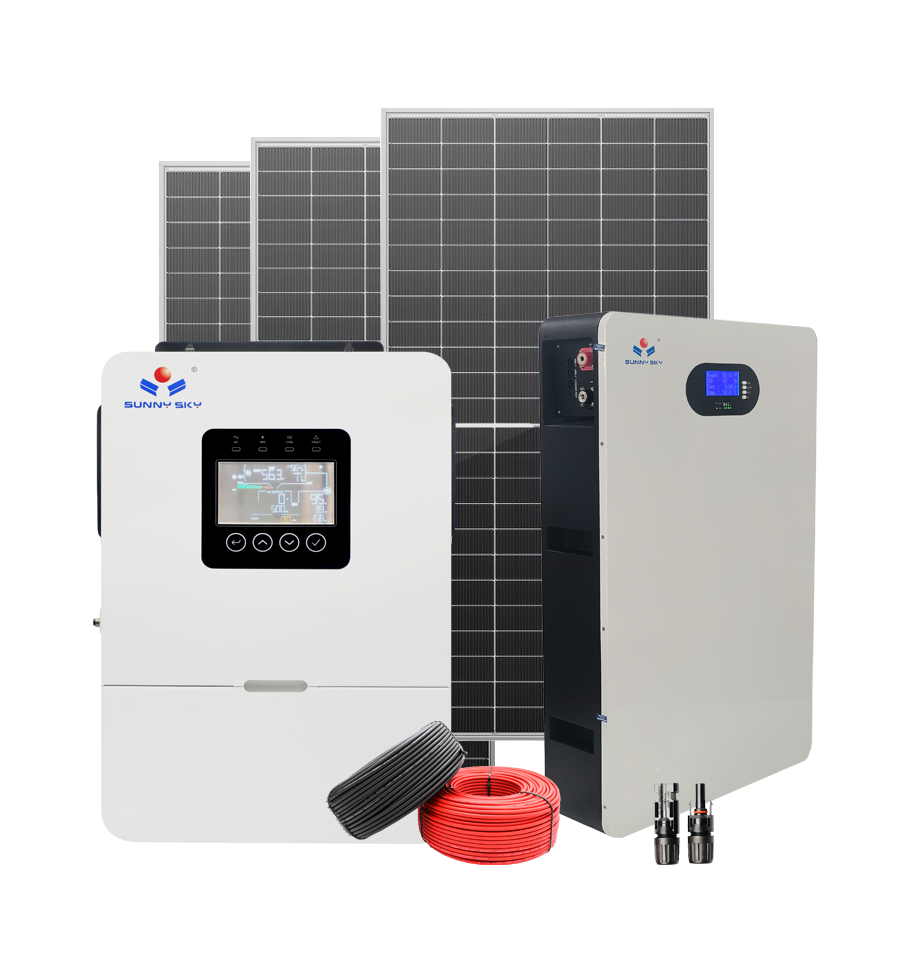
A hybrid inverter, also known as an energy storage inverter or grid-connected energy storage inverter, is a type of inverter that supports the integration of battery energy storage systems. It can convert direct current (DC) generated by solar energy into alternating current (AC) for home use, store excess energy in batteries, and switch to off-grid mode during grid outages to provide backup power. Hybrid inverters are typically compatible with multiple battery brands (BYD, LG Chem, Turbo Power, etc.) and support functions such as setting charging and discharging strategies, peak-valley arbitrage, and UPS switching. For users looking to install an energy storage system, a hybrid inverter is an essential core device. Power ranges from 3kW to 20kW, with 5kW, 8kW, 10kW, and 15kW models being the mainstream choices for residential use.
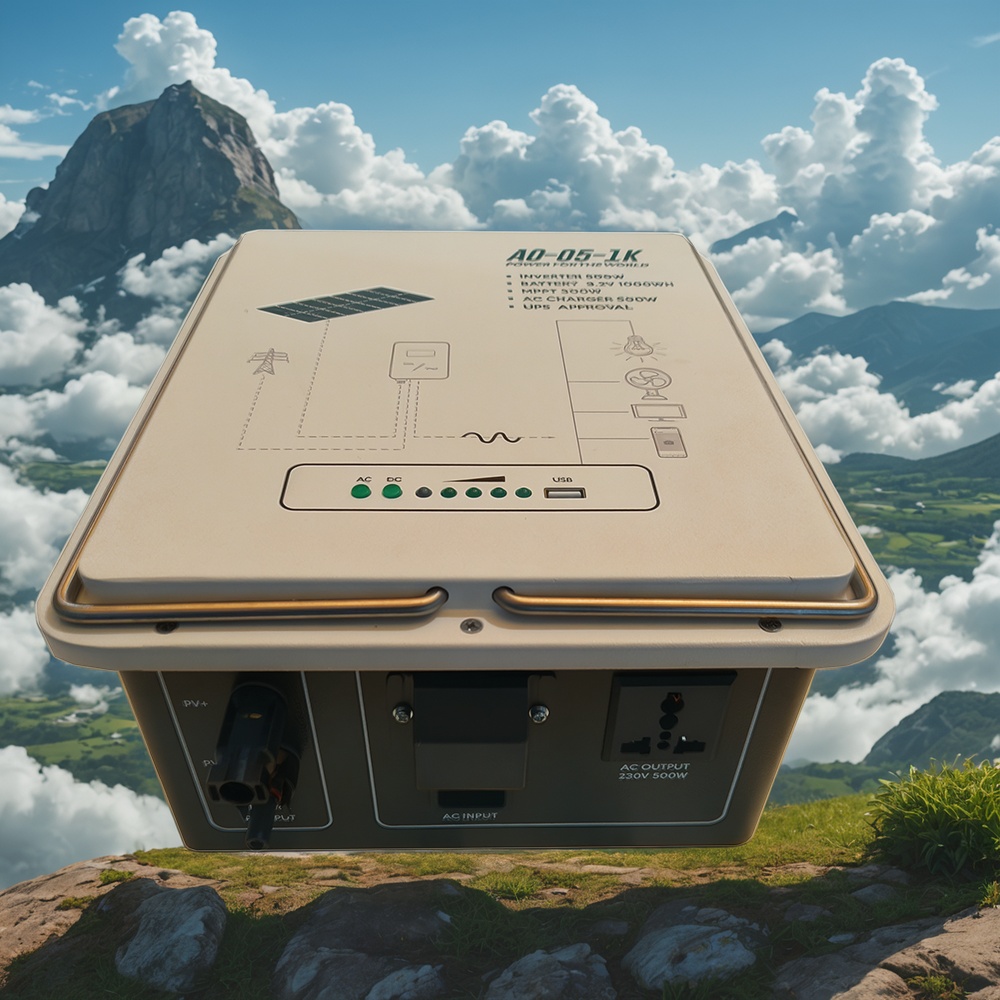
Off-grid inverters are designed for independent systems that are disconnected from the power grid, and are commonly used in remote areas, islands, RVs, and ships. Off-grid inverters must be used with a battery pack of sufficient capacity and cannot sell electricity to the grid. Some high-end off-grid inverters also support generator start signals, allowing them to be used with diesel generators to solve power supply problems during prolonged cloudy days. Off-grid systems are complex to design and require professional personnel for capacity calculations and system configuration.
The difference between a three-phase inverter and a single-phase inverter lies in the number of AC phases output. Single-phase inverters output 220V/230V single-phase power, suitable for ordinary households and low-power systems; three-phase inverters output 380V/400V three-phase power, suitable for commercial and industrial buildings and medium to large-scale systems. The advantages of three-phase inverters are: more balanced three-phase load, suitable for high-power equipment (such as industrial motors, air conditioning systems, etc.); higher efficiency for long-distance power transmission; and better suitability for three-phase meters and industrial power environments. Three-phase hybrid inverters are the standard configuration for commercial and industrial energy storage projects, with power typically ranging from 15kW to 50kW.
III. How to choose a suitable inverter?
Choosing an inverter requires considering multiple factors; the following are key decision points.
Power matching is a primary consideration. The inverter's power should match the installed capacity of the solar panels. There are generally two strategies: one is "positive over-configuration" (inverter power less than the total solar panel power), allowing the inverter power to be 80%-100% of the total panel power. This is suitable for areas with average sunlight or where power generation is mainly concentrated in the early morning and evening, and its advantages are lower cost and higher inverter efficiency. The other is "full-load configuration" (inverter power equal to or greater than the total solar panel power), suitable for areas with excellent sunlight, ensuring full system power output during periods of peak sunlight. For example, with a 5kW solar panel: choosing a 3-5kW inverter (80%-100% configuration) results in lower costs; choosing a 6kW inverter (120% over-configuration) may result in higher power generation under average sunlight conditions, but also higher costs.
The number of MPPTs (Maximum Power Point Tracking) determines the flexibility of the system design. More MPPTs allow for adaptation to roof designs with different orientations and tilt angles, maximizing power generation. Typical residential string inverters usually have 1-2 MPPTs, while high-end products have 3-4. If the roof faces only one direction, one MPPT is sufficient; if it faces multiple directions (such as a villa roof with solar panels on all four sides), it is recommended to choose a product with multiple MPPTs.
Conversion efficiency directly impacts power generation revenue. Inverter conversion efficiency refers to the ratio of direct current (DC) to alternating current (AC). Currently, the maximum efficiency of mainstream products is between 97% and 99%, while European efficiency (average efficiency under comprehensive operating conditions) is between 96% and 98%. For large-scale projects, every 1% increase in efficiency translates to several thousand additional kilowatt-hours of electricity generated annually. When purchasing an inverter, focus on European efficiency rather than just maximum efficiency, as it better reflects performance in real-world usage scenarios.
Brand selection is crucial for a user experience spanning over 25 years. Solar inverters typically operate for 10-25 years, making the choice of a reliable brand paramount. Leading brands include Huawei (number one in global shipments, a leader in digital technology), Sungrow Power (a long-established domestic brand with strong technical capabilities), GoodWe (a leader in energy storage inverters), Growatt (high market share in residential applications), and Ginlong Technologies (a professional manufacturer of string inverters). International brands include SMA (a long-established German brand known for its reliable quality), SolarEdge (Israel, a leader in microinverter and optimizer solutions), Enphase (USA, a leader in microinverters), and Fronius (Austria, known for its superior quality).
Warranty terms are an often overlooked but crucial factor when making a purchase. Mainstream brands typically offer 5-10 years of warranty, with some offering extended warranties (for an additional fee). It's essential to understand the repair methods during the warranty period (on-site service or factory return for repair), spare parts policy, and response time. For commercial and industrial projects, it's also important to consider the brand's local after-sales service network and spare parts supply capabilities.
Certification standards are a fundamental guarantee of product quality. When purchasing, you should confirm that the inverter has the following core certifications: IEC 62109-1/2 is the safety standard for photovoltaic inverters; VDE-AR-N 4105 is the grid connection standard for Germany and other European countries; UL 1741 is the grid connection standard for the US market; CE is a mandatory certification for the EU market; and Chinese products should also have CQC certification or Golden Sun certification.
Communication methods are crucial to the system monitoring experience. Mainstream products typically support multiple communication methods such as WiFi, 4G, RS485, and Ethernet. When purchasing, you should confirm that the product's supported methods are compatible with your home network environment. Some brands also offer free cloud platforms and mobile apps, allowing you to view power generation data anytime, anywhere.
IV. Installation, Use and Maintenance of Inverters
Proper installation, use, and maintenance can extend inverter life, ensure safe system operation, and maximize power generation benefits.
Choosing the installation location is the first step in installing an inverter. The inverter should be installed in a well-ventilated environment, away from direct sunlight, and in a dry place free of corrosive gases. Direct sunlight can cause the inverter to overheat and reduce its frequency, affecting power generation efficiency; for every 10°C increase in temperature, the inverter's lifespan is reduced by approximately half. For residential string inverters, they are typically installed in basements, garages, tool sheds, or on north-facing walls; avoid installing them in bedrooms, living rooms, or other areas where people spend a lot of time, as the inverter will emit slight noise during operation. If a hybrid inverter is used with batteries, the weight and size of the batteries should also be considered, and the installation location should be planned in advance.
Regarding installation specifications, the inverter must be reliably grounded, and the grounding resistance should be less than 4 ohms; the DC side cable should use a dedicated photovoltaic cable (high temperature resistant and UV resistant), and the AC side cable cross-sectional area should be selected according to the current (usually 4-10mm²); all connections must be tightened to avoid loosening that could lead to overheating or even fire; the connections between the inverter and solar panels, batteries, the power grid, and the distribution box must comply with local electrical codes, and it is recommended that the installation be carried out by a certified electrician.
In daily use, inverters typically operate fully automatically without manual intervention. However, users can periodically check power generation data via a monitoring app to watch for any abnormal alarms or significant drops in power generation. If a fault code appears on the inverter display, consult the instruction manual or contact customer service immediately. Some inverters have an ECO or energy-saving mode, which is generally recommended to keep enabled to reduce self-consumption. Some hybrid inverters support timed charging and discharging functions, allowing users to take advantage of peak and off-peak electricity price differences to save on electricity bills.
Regarding troubleshooting common faults, here are some common problems and solutions: If the inverter does not start, first check if the DC switch is closed, if the DC cable is properly connected, and if the solar panel has voltage output; if the inverter displays "grid fault," check if the grid has power (it may be a planned power outage) and if the AC cable is properly connected; if the power generation is significantly lower than expected, check if the solar panel is obstructed or contaminated, if the MPPT setting is correct, and if there is any shading (such as newly grown trees); if the inverter frequently starts and stops, it may be due to grid instability or incompatibility between the inverter and the local grid standard. If you encounter problems that you cannot resolve, contact after-sales service promptly; do not attempt to disassemble or repair it yourself.
For regular maintenance, it is recommended to conduct a professional inspection every 1-2 years, including: cleaning the inverter heatsink and fan (if applicable) to ensure good heat dissipation; checking that all cable connections are secure; checking that the grounding system is intact; checking that the inverter firmware is the latest version (some brands support remote upgrades); and recording the inverter's operating data and fault logs to provide a reference for subsequent fault diagnosis.
Conclusion
Inverters are the heart and brain of a solar energy system; their quality and performance directly determine the power generation efficiency, safety, and lifespan of the entire photovoltaic system. From string inverters to microinverters, from ordinary grid-connected inverters to hybrid energy storage inverters, different types of products are adapted to different application scenarios and user needs.
When selecting an inverter, multiple factors should be considered, including power matching, MPPT (Multi-Level Photovoltaics) capacity, conversion efficiency, brand reputation, warranty terms, and certification standards, to choose the product best suited to your needs. At the same time, proper installation, use, and maintenance are equally important, as they ensure the inverter remains in optimal condition and maximizes return on investment.
Please contact Simon immediately to discuss your project:
• WeChat: TY530643572
• Telephone: +86 137 1166 0041