Foreword
Every weekend or holiday, many people like to drive to the suburbs with their family and friends for camping and barbecues.
But one problem always gets to the chagrin: not enough power. Phones need charging, speakers need power, lights are needed at night, and some people even want to bring a small refrigerator or electric grill. Initially, everyone used power banks and outdoor power supplies, but power banks have limited capacity, and outdoor power supplies only last a few uses, meaning you have to go home if you want to continue camping the next day. Is there a way to make the camping and barbecue experience more flexible?
In recent years, integrated solar panels have become popular in the outdoor community. This type of device integrates solar panels, batteries, and inverters all together. It generates electricity during the day using solar power and uses batteries for power at night. It does not need to be connected to the power grid, does not need to carry a fuel tank, and does not need to worry about running out of power.
This article will discuss the synergy between solar-powered air conditioners and camping/barbecuing, and whether it's right for you.
I. Electricity Consumption Issues During Camping and Barbecues
Before discussing integrated solar power systems, let's talk about the common problems associated with electricity use when camping.
The most common problem is that the devices run out of power. A dead phone means you can't take photos or post them on social media; a dead Bluetooth speaker makes the atmosphere less lively; without lights at night, you can't even see where you're grilling; some people like to bring portable projectors to show movies at night, which drains the battery even faster. Power banks have limited capacity, usually only enough to fully charge a phone two or three times before running out of power, which is simply not enough if you're with a large group.
Another issue is distance limitation. Without solar power or outdoor power, campsites must not be too far from the city, otherwise the equipment will run out of power the next day. Wanting to go to farther, quieter places often means giving up due to power issues. Some people bring car inverters to solve this problem, but generating electricity while the engine is idling wastes fuel, is noisy, pollutes the environment, and negatively impacts the camping experience.
Another issue is the nighttime experience. Many camping enthusiasts enjoy barbecuing and chatting under the stars, but around 8 or 9 pm, they face a dilemma: the lights aren't bright enough, gaming devices are out of power, and they want to stay a little longer but the lighting isn't sufficient. The traditional solution is to use gas lamps or candles, but gas lamps pose safety hazards, and candles extinguish in strong winds, diminishing the experience.
These pain points can be summarized in one sentence: difficulty in accessing electricity off-grid. Electricity, readily available in cities, becomes a scarce resource in the countryside. Integrated solar power systems are designed to solve this problem.
II. What is a solar integrated machine?
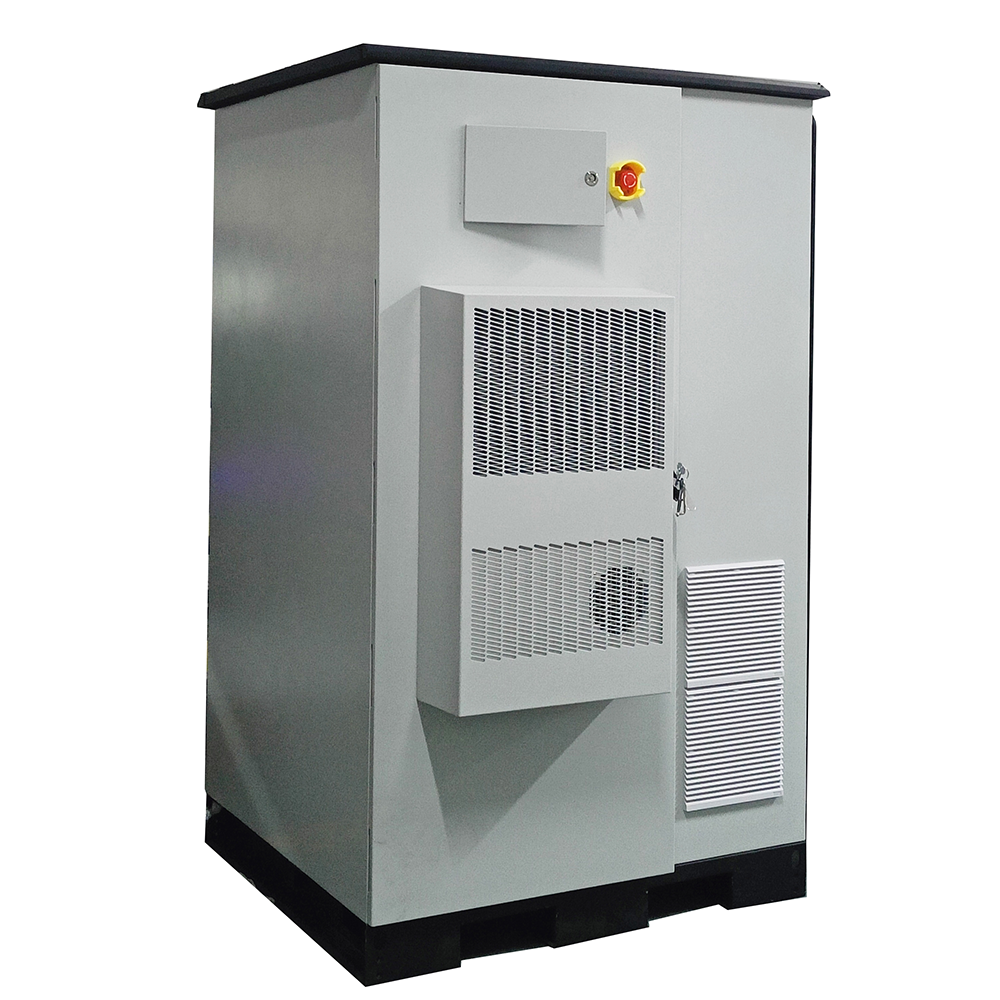
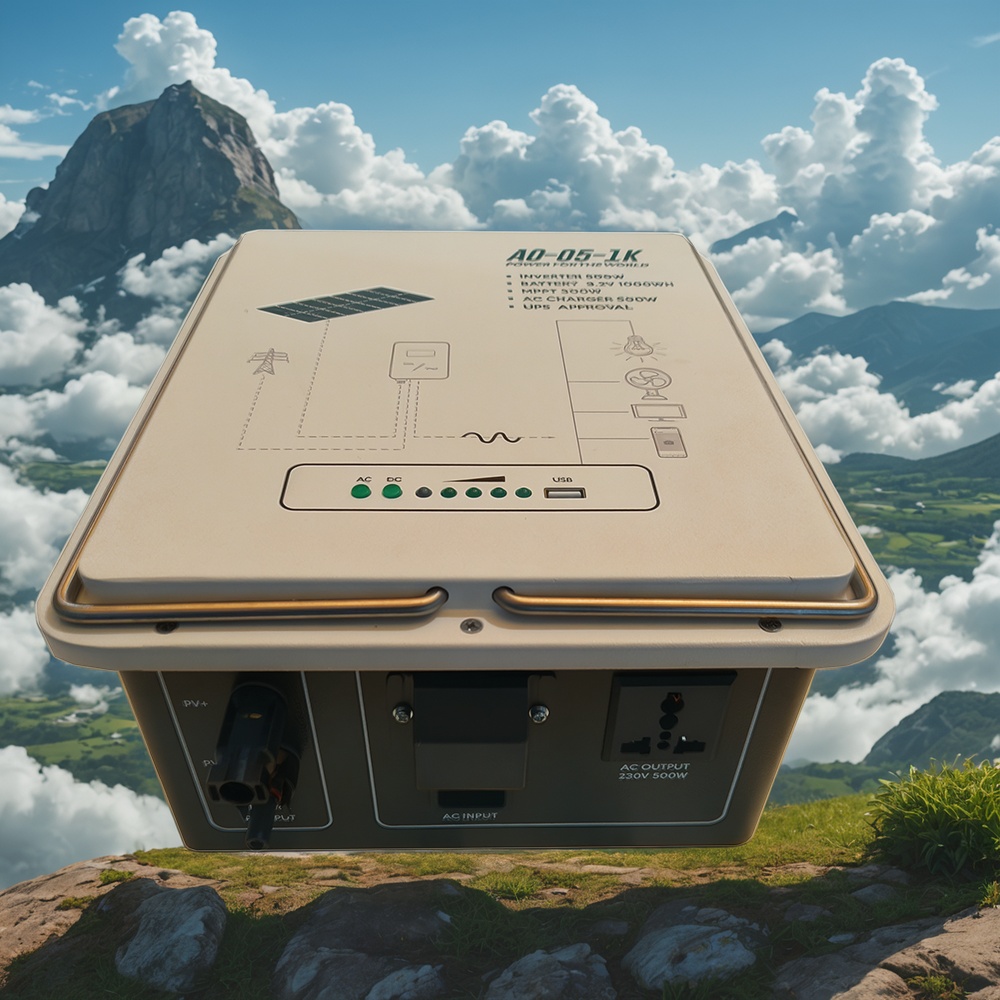
A solar integrated unit is a device that combines solar panels, energy storage batteries, and a charging inverter. It works on the same principle as a large residential solar system, but is much smaller and more portable, making it specifically designed for mobile environments.
Structurally, a solar power system mainly consists of three parts: solar panels, a lithium battery pack, and an inverter controller. The solar panels generate electricity and can be folded or disassembled for easy storage; the lithium battery pack stores electricity, with capacities ranging from hundreds to thousands of watt-hours; and the inverter controller converts direct current (DC) to alternating current (AC) and provides multiple interfaces such as USB, Type-C, and car cigarette lighter sockets. Outdoor power supplies are typically also a combination of a storage battery and an inverter; the key difference is that a solar power system adds solar charging functionality, enabling a truly green and sustainable energy cycle.
Small integrated solar power units typically have a power output of several hundred watts to around two kilowatts. What kind of devices can they power? Taking a common 1000W solar integrated solar power unit as an example, it can charge a mobile phone hundreds of times, power a speaker for dozens of hours, keep LED lights on for several days, run a portable refrigerator for one or two days, and power a portable electric oven for several hours. With properly configured photovoltaic panels, in sunny locations, the electricity generated daily can supplement a significant portion of the energy consumed.
This device is particularly suitable for activities such as weekend outings, short road trips, outdoor barbecues, fishing, and camping, where people do not need to be offline for extended periods but still require a certain level of power supply.
III. Enjoy camping and barbecue with a solar-powered integrated machine
So, after all that, what exactly can a solar-powered air purifier do during camping and barbecues? Let me describe a few common scenarios.
During the day, the solar-powered power bank can charge the batteries for phones, tablets, drones, and cameras. Several people can sit together and use their phones without worrying about battery life. If you bring a portable refrigerator, put drinks and meat in before setting off in the morning, connect it to the solar-powered power bank, and it will keep food chilled all day, preventing spoilage. For photography enthusiasts, drone and camera batteries are always charged, allowing them to shoot as much as they want without conserving power.
The afternoon is the liveliest time. Bluetooth speakers are connected to the solar-powered generator, playing favorite music as people eat and chat. LED string lights hang from the canopy, creating a wonderful atmosphere in the evening. Someone nearby uses a portable projector to show sports games or cartoons, and children gather around, watching with great interest. These scenarios, which were unthinkable before due to electricity issues, can all be realized with the solar-powered generator.
At night, the value of the solar-powered appliance becomes even more apparent. Camping lights, LED light strips, camping lights—all sorts of lights can be connected, providing continuous illumination until late at night. If you bring a portable electric grill or hot pot, you can use the solar-powered appliance to power it, allowing you to grill and eat simultaneously without having to pack up early. Your phone will always have power, making it easy to post on social media or navigate home.
If you're spending the night in a more remote area, a solar-powered unit paired with a car refrigerator or a small refrigerator with a compressor, along with LED lights and phone chargers, should be sufficient for a full night's electricity needs. The next morning, when the sun comes out, the solar panels start charging, completing another full-charge cycle.

IV. What are the advantages compared to traditional solutions?
Some might say, "Can't I just bring an outdoor power source? Why does it have to be a solar-powered unit?"
Outdoor power is indeed an option, but integrated solar power systems have several distinct advantages.
First is battery life. Outdoor power supplies have a fixed capacity; once it's used up, it's gone, and you have to find a place to recharge to continue using it. In the suburbs, it's fine; you can find an outlet and fully charge it in two or three hours. But in remote areas, charging is a hassle. Solar-powered generators can be used and charged simultaneously during the day; as long as there's sunlight, the power is constantly replenished. On cloudy days, efficiency might be lower, but at least it won't run out of power completely. On a good day, the amount of electricity generated might even exceed the amount consumed.
Secondly, it's quiet and environmentally friendly. No noise is a major feature of integrated solar power systems. It operates almost silently, unlike a diesel generator which roars and makes it difficult to hear each other. Camping is about being close to nature and enjoying tranquility; a quiet device won't disturb anyone. Furthermore, the solar power generation process produces no exhaust emissions, so it won't pollute the air or environment in the countryside.
Thirdly, there's the cost of use. Gasoline generators require refueling, and with current gasoline prices, a liter of gasoline doesn't generate much electricity. Solar-powered generators, on the other hand, generate electricity as long as there's sunlight, making their electricity costs virtually zero. Although the initial purchase price is slightly higher than a regular outdoor power source, the long-term cost of use is actually lower.
Fourthly, it provides emergency power. Essentially a large power bank, a solar-powered generator can also provide emergency power to electric vehicles. If a vehicle battery dies while driving, a sufficiently powerful solar-powered generator can offer jump-start assistance—a function that ordinary outdoor power supplies cannot provide.
V. What kind of camping enthusiasts is it suitable for?
While solar-powered integrated machines are good, not everyone needs them.
If you only occasionally pitch a tent in a city park or suburb, staying for an hour or two before heading home, a power bank will suffice. A solar-powered generator might be overkill for you; you probably won't use it more than a few times.
But if you are one of the following types of camping enthusiasts, a solar-powered integrated unit might be exactly what you need:
The first type is for those who enjoy in-depth camping. They drive to remote mountainous areas, lakesides, or beaches, staying for two or three days, or even longer. In this case, the demand for electricity is high, and charging facilities are limited. A solar-powered integrated machine can greatly enhance the experience.
The second type is for those who enjoy camping and barbecuing. When barbecuing, people often bring a lot of equipment—lights, speakers, refrigerators, electric grills—which consume a considerable amount of electricity overnight. A solar-powered integrated machine can power multiple devices simultaneously, and it continuously lights up and plays music at night, creating a completely different atmosphere.
The third type is for families traveling with children. Kids use phones during the day and watch projectors at night, which consumes a lot of electricity. Bringing a solar-powered projector allows both adults and children to enjoy themselves without having to restrict the children's use to save electricity.
The fourth type is for fishing or outdoor work. When spending long periods outdoors, various devices need power, and solar-powered generators are a quieter and more environmentally friendly option than diesel generators.
The standard for determining whether you need one is simple: think about whether your biggest worry when camping is not having enough electricity. If so, then it's worth considering a solar-powered integrated unit.
VI. Purchase Recommendations and Precautions
If you decide to buy a solar power system, here are some key points to consider when making your purchase.
The wattage you choose depends on what devices you're using. If you're just charging your phone or using a small light, 300W to 500W is sufficient. If you need to power high-power devices like car refrigerators, electric ovens, or projectors, it's recommended to choose one with 1000W or more. A wattage that's too low won't be enough, while a wattage that's too high will be expensive, heavy, and reduce portability.
Battery capacity determines battery life. Capacity is expressed in "watt-hours" (Wh), with 1000Wh being approximately one kilowatt-hour (kWh). Larger capacity means longer battery life, but also greater weight. If each trip lasts no more than one day, 500Wh to 1000Wh is generally sufficient; if you need to travel overnight or for several consecutive days, choose a capacity of 1000Wh or more.
The power output of a solar charger affects the charging speed. Higher power output and better sunlight conditions result in faster charging. However, it's important to note that the power output of the solar panel and the power output of the device are two different things. The solar panel is responsible for charging the battery, not directly supplying power to the appliance. Devices can be used simultaneously while charging, but the charging speed will be slower.
The interface type must match your device. Common types include AC outlets, USB, Type-C, DC, and car cigarette lighter sockets. Before buying, make sure your device can connect, especially since some high-power devices may require a dedicated outlet.
Brand and quality are crucial. Solar integrated systems involve batteries and inverters, so safety cannot be compromised. Choose brands with proper certifications; batteries should have overcharge and over-discharge protection, and inverters should have short-circuit protection. Substandard products can lead to anything from short lifespans to serious safety hazards.
Conclusion
For those who enjoy camping and barbecuing, a solar-powered air purifier is a piece of equipment that can significantly enhance the experience.
It solves the problem of power shortages in the wild, ensuring that mobile phones are always charged, speakers are always playing, and lights are always on. It is quieter and more environmentally friendly than a gasoline generator, and has a longer battery life than ordinary outdoor power supplies. As long as there is sunlight, the power will never run out.
Of course, it's not a panacea. Even the most powerful solar-powered generator can't power high-powered appliances like air conditioners or induction cookers. Its power generation efficiency will also decrease during prolonged periods of cloudy or rainy weather. However, for most weekend outings, camping trips, and barbecues, it's more than sufficient.
If you're tired of the anxiety of running out of power while camping, and if you want to make your outdoor experience more free, you might want to learn about integrated solar power systems.
It might turn your next camping trip into a completely different experience.
Please contact Simon immediately to discuss your project:
• WeChat: TY530643572
• Telephone: +86 137 1166 0041