Foreword
Why must off-grid solar systems be equipped with inverters?
Many users new to solar energy systems have this question. In their minds, solar panels generate electricity, batteries store electricity, and the devices can be directly connected, so why is there a separate device called an "inverter"?
To answer this question, we need to start with the basic working principle of solar energy systems. Solar panels generate direct current (DC), while the appliances we use at home require alternating current (AC). Although both are called "electricity," their properties are completely different. Just like water can be transported in liquid or gaseous states, although both are water, the pipes and equipment used are completely different.
The role of inverters in solar power systems goes far beyond simply "converting current." They are the brain, dispatcher, and safety guardian of the entire system. An off-grid system without an inverter is like a car without a steering wheel—no matter how powerful the engine, it cannot drive properly.
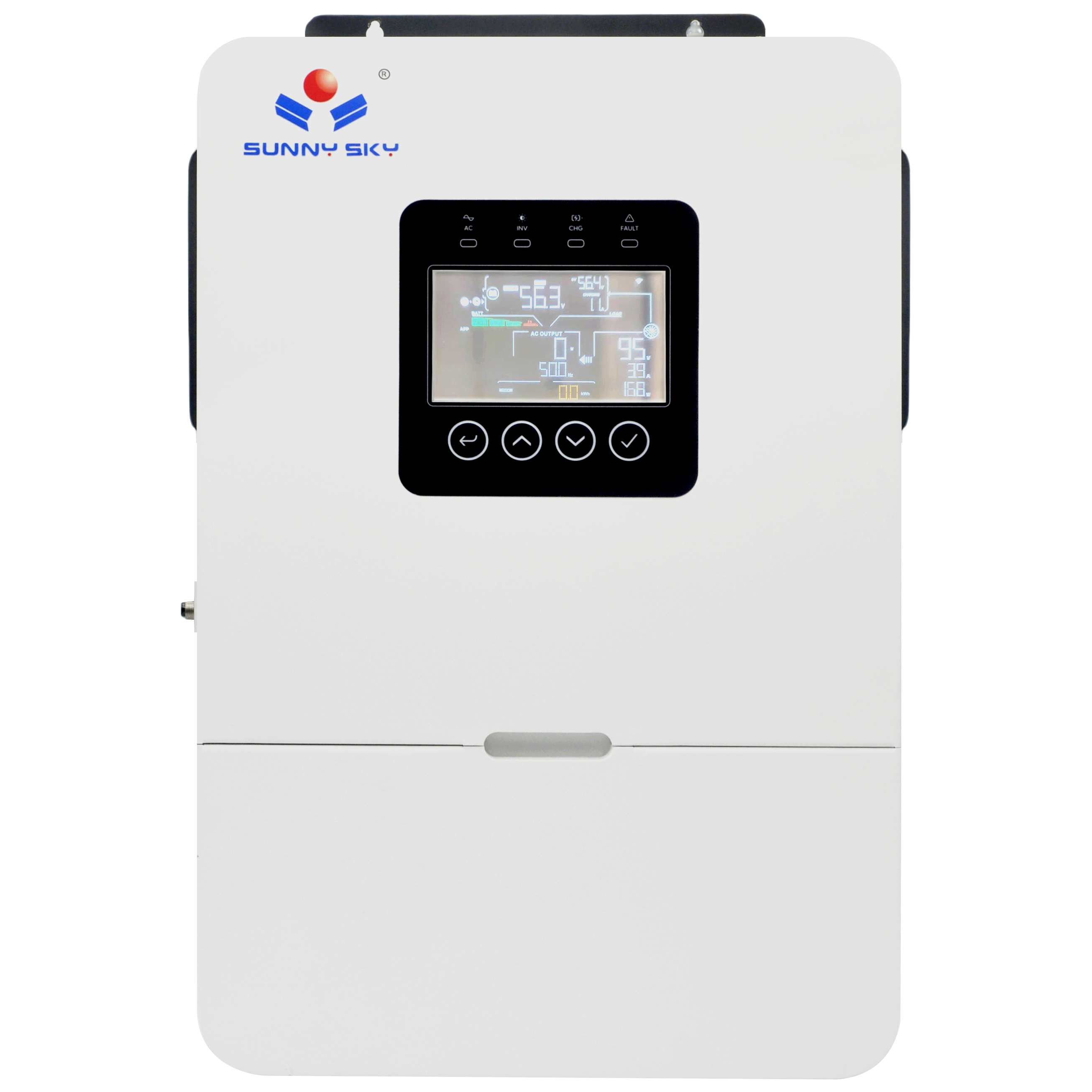
This article will explain in detail why off-grid systems must be equipped with inverters, and the specific working process of inverters in the entire energy storage system. After reading it, you will understand that inverters are not just "converters," but the core guarantee for the efficient and safe operation of the entire system.
I. Direct Current and Alternating Current
To understand why inverters are essential, we must first understand the difference between direct current (DC) and alternating current (AC).
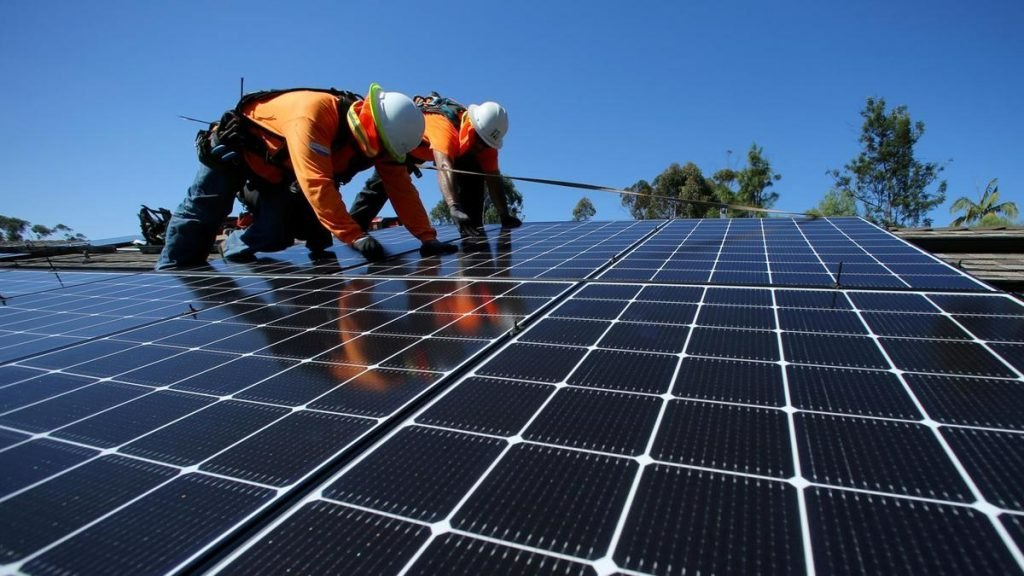
Direct current (DC) is an electric current whose direction remains constant. The electricity generated by batteries and solar panels is DC. Taking a solar panel as an example, its working principle is the photovoltaic effect—photons strike a semiconductor material, causing electrons to move in a specific direction, forming an electric current. This current flows out from the positive terminal of the solar panel, is transmitted through wires, and flows back from the negative terminal after being consumed by an appliance, forming a current with a fixed direction. This is DC.
Alternating current (AC) is a type of electric current whose direction changes periodically. Household electricity in my country uses 220 volts at 50 Hz AC, meaning the current changes direction 50 times per second, completing 50 full sine waves per second. AC has become the standard for the power grid because of its unique advantages in transmission and transformation: voltage can be easily stepped up or down using transformers, transmission losses are low, and power generation and distribution equipment is simple.
Solar panels generate direct current (DC), while most of the appliances we use every day—lights, refrigerators, air conditioners, washing machines, and computers—require alternating current (AC) to function. This is the fundamental reason why inverters are necessary: without an inverter to convert DC to AC, the electricity generated by solar panels cannot be used by ordinary household appliances.
Besides voltage conversion, inverters also play a crucial role in voltage regulation. Different countries have different grid voltage standards, some 110 volts, some 220 volts, some 50 Hz, and some 60 Hz. Inverters can output AC power that meets the local requirements based on the standards of the target market. Without the regulation of inverters, solar energy systems cannot adapt to different market demands.
Another easily overlooked issue is the difference in transmission characteristics between direct current (DC) and alternating current (AC). DC experiences greater heat loss during transmission and cannot be transmitted long distances using transformers. AC, on the other hand, can reduce transmission losses by increasing the voltage, which is why power grids use AC transmission. For off-grid systems requiring long-distance power transmission, the overall system efficiency is actually higher after the inverter converts DC to AC.
II. Specific Working Process of Inverters in Energy Storage Systems
Having understood why inverters are needed, let's look at the specific workflow of inverters in energy storage systems. The operation of an off-grid energy storage system can be divided into four main stages: charging stage, energy storage stage, discharging stage, and switching stage.
The charging phase is the process by which the system absorbs solar energy and converts it into electrical energy. During the day, when there is ample sunlight, the solar panels convert light energy into direct current (DC) electricity. This DC power is first fed to the inverter, where the MPPT controller tracks the maximum power point of the solar panels to ensure they operate at peak efficiency. Then, the inverter converts the DC power from the solar panels into a voltage and current suitable for charging the battery. During this process, the inverter also needs to regulate the charging current to prevent overcharging. Currently, mainstream lithium iron phosphate batteries require constant current and constant voltage charging, and the inverter must precisely control this process.
The energy storage phase is where the battery conserves electrical energy. When the solar panels generate more electricity than the load, the excess energy is stored in the battery pack. During this phase, the inverter's main task is to monitor the battery's SOC (State of Charge), commonly referred to as the "percentage of charge." The inverter uses a BMS (Battery Management System) to monitor battery parameters such as voltage, temperature, and current in real time, ensuring the battery operates within safe limits. SOC displays how much charge is left, much like a fuel gauge in a gasoline car. Based on the SOC and predicted electricity demand, the inverter also needs to determine whether to limit charging or prematurely discharge the battery.
The discharge phase is when the system releases electrical energy to supply the load. When the solar panels' power generation is insufficient to meet electricity demand, or when there is no solar energy at night, the energy storage battery begins to discharge. The DC power output from the battery first enters the inverter, which converts it into 220V 50Hz AC power, which is then delivered to various electrical appliances in the home. This conversion process requires the inverter to precisely control the output voltage and frequency to ensure that appliances can operate normally. For some devices sensitive to power quality, such as precision instruments, medical equipment, and computers, the inverter also needs to provide a high-quality sine wave output to avoid harmonic interference.
The switching phase is when the system responds to grid or generator connection. Many off-grid systems do not operate completely in isolation; they are equipped with backup power sources, such as diesel generators or grid connections. Inverters need to enable intelligent switching between these power sources. For example, when the battery is depleted and sunlight is insufficient, the system automatically starts a diesel generator or connects to the grid. The inverter is responsible for converting the AC power from the generator or grid into DC power to charge the battery or directly supply the load. This switching process must be fast and smooth; otherwise, it may cause appliances to restart or be damaged. High-quality off-grid inverters can now switch in less than 20 milliseconds, making the power outage almost imperceptible to humans.
These four stages are not separate, but are coordinated and managed by the inverter. Modern inverters are equipped with intelligent energy management systems that can pre-adjust charging and discharging strategies based on factors such as weather forecasts, electricity usage habits, and electricity price signals, thereby achieving efficient operation of the entire system.
III. Key Functions of Inverters in Off-Grid Systems
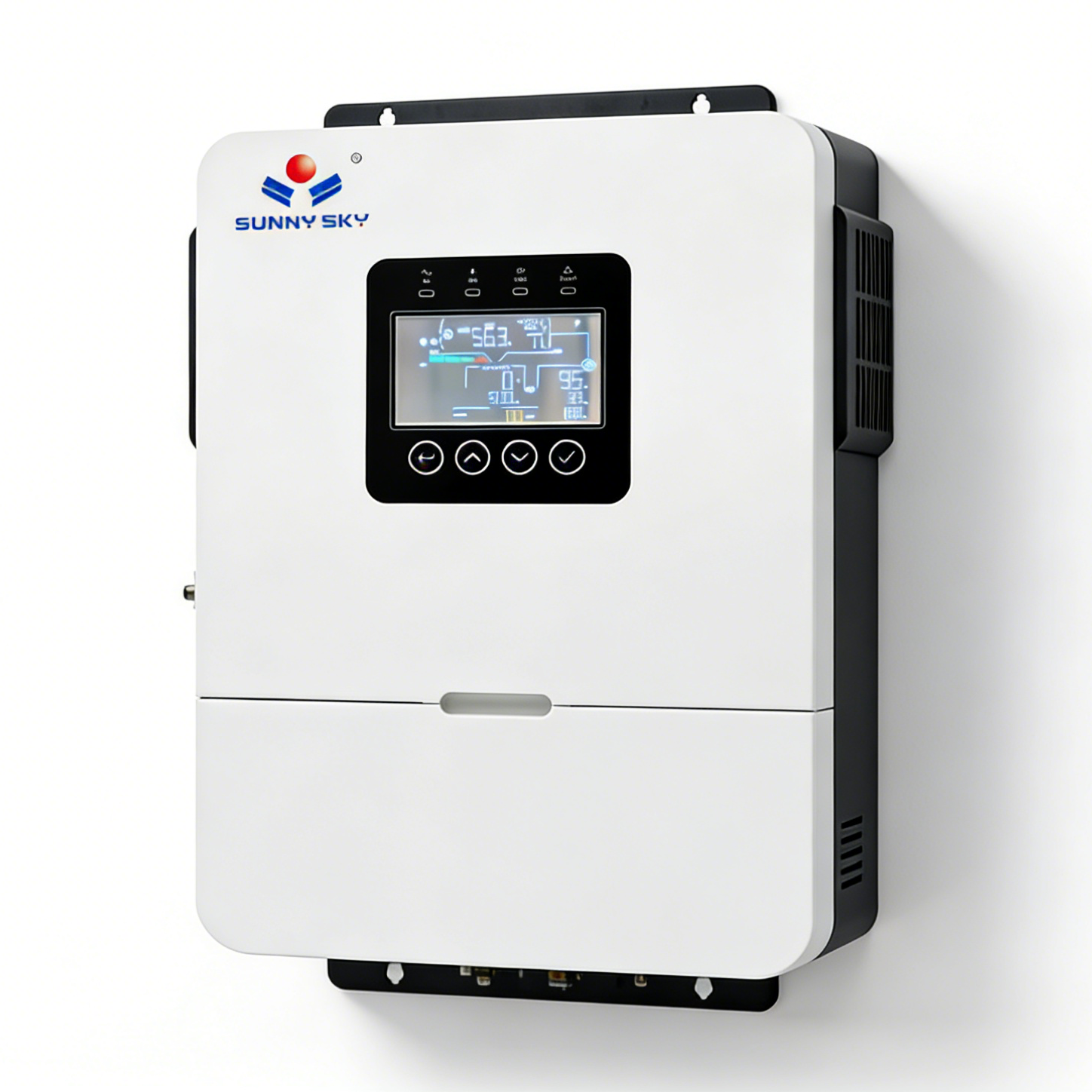
In addition to basic current conversion, inverters in off-grid systems also perform several key functions that directly affect the system's reliability and user experience.
Maximum Power Point Tracking (MPPT) is one of the most important functions of an inverter. The output power of solar panels varies with factors such as sunlight intensity and temperature. The optimal operating point of the solar panels also differs throughout the day. The MPPT controller calculates the current maximum power point by monitoring the output voltage and current of the solar panels in real time, and then adjusts the equivalent load inside the inverter to ensure the solar panels always operate at their highest efficiency. Inverters without MPPT may experience a 20% to 30% loss in solar panel power generation. This function is particularly important for off-grid systems, as their power generation is inherently limited, and every bit of loss directly impacts the system's self-sufficiency.
The Battery Management System (BMS) is a crucial function in inverters to protect battery safety. The energy storage battery is the most expensive and also the most prone to failure in the entire system. The BMS monitors parameters such as battery voltage, current, and temperature to prevent abnormal conditions such as overcharging, over-discharging, overcurrent, and overtemperature. When an abnormality is detected, the BMS sends a command to the inverter, which immediately adjusts its operating state or disconnects the circuit to protect the battery from damage. Although lithium iron phosphate batteries are now safer than ternary lithium batteries, they still require a robust BMS for protection. A good BMS can fully realize the battery's cycle life beyond its design life, while a poor BMS may cause premature battery failure.
Islanding protection is a crucial safety feature for both grid-connected and off-grid hybrid inverters. When the grid experiences a sudden power outage, if a grid-connected inverter continues to generate electricity and supply power to the grid, it can pose a risk of electric shock to electricians repairing the grid—this is known as the "islanding effect." Inverters can quickly detect grid outages using methods such as frequency detection, phase detection, and voltage detection, and immediately stop supplying power to the grid. While pure off-grid inverters lack grid-connected functionality, they still require similar protection logic to prevent power backflow under abnormal conditions.
Overload and short-circuit protection are fundamental protection functions of inverters. Household appliances often generate significant inrush currents upon startup; for example, the starting current of refrigerators and air conditioners can be three to five times their rated current. Inverters must be able to withstand such short-term overloads without tripping. Simultaneously, when a short circuit occurs at the output, the inverter needs to disconnect the circuit within milliseconds to prevent electrical fires and equipment damage. These protective functions, though seemingly insignificant, are crucial for the safe operation of the system.
Communication and monitoring functions are standard features in modern inverters. Through communication methods such as WiFi, Bluetooth, and 4G, inverters can upload system operating data to cloud servers, allowing users to view information such as power generation, power consumption, battery level, and historical data anytime via a mobile app. Some high-end products also support remote diagnostics and firmware upgrades, enabling manufacturers to troubleshoot faults and push updates remotely. For off-grid systems installed in remote areas, this remote monitoring capability significantly reduces maintenance costs.
IV. How to select an inverter suitable for off-grid systems
Since inverters are so important in off-grid systems, how do you choose a suitable off-grid inverter? Here are some key selection points.
Power matching is the most basic selection principle. The inverter's power should be equal to or slightly greater than the peak power of the expected load. If the expected load is 5 kW, a 5 kW inverter will meet the requirements; considering starting current and overload conditions, a 6 kW or 7.5 kW inverter would be more prudent. However, the inverter power should not be too high, otherwise it will reduce system efficiency and increase costs. It is also important to distinguish between the inverter's rated power and peak power—some low-priced inverters actually list their peak power, while their rated power for continuous operation is much lower.
The input voltage range needs to match the solar panel configuration. The inverter's MPPT input voltage range determines the power and voltage of the solar panels it can work with. Common residential off-grid inverters have an MPPT voltage range between 100V and 500V. The voltage after the solar panels are connected in series must fall within this range to operate normally. Too many solar panels connected in series will exceed the voltage limit, while too few will result in insufficient voltage, both affecting system efficiency. When selecting an inverter, it is necessary to verify the voltage range compatibility based on the specific configuration of the solar panels.
Battery type compatibility is crucial for selecting off-grid inverters. Different types of energy storage batteries—lead-acid, lithium iron phosphate, and ternary lithium—have different voltage characteristics, charge/discharge curves, and communication protocols. Not all inverters are compatible with all battery types. When selecting an inverter, it's essential to confirm whether it supports the planned battery types and ideally, it should be compatible with multiple brands. If using lead-acid batteries, it's necessary to confirm whether the inverter has a dedicated lead-acid battery charging curve; if using lithium batteries, it's necessary to confirm whether it has a matching BMS communication protocol.
Conversion efficiency directly impacts the overall performance of a system. Inverter conversion efficiency refers to the energy loss when converting direct current (DC) to alternating current (AC); higher efficiency means lower losses. Mainstream products have conversion efficiencies between 95% and 98%, with some high-end products reaching over 98.5%. While this difference may seem small, the cumulative power generation loss over the long term is considerable. For a 10-kilowatt system, a 2% difference in efficiency could result in a difference of three to four hundred kilowatts of electricity generated annually.
Brand and after-sales service are also important considerations. Off-grid inverters are long-term devices, typically with a lifespan of over ten years. Choosing a reputable and established brand ensures better product quality and more reliable after-sales service. Good brands usually have a comprehensive maintenance network and spare parts supply, enabling them to respond promptly to equipment problems. While cheaper, smaller brands or generic products may be attractively priced, after a few years, maintenance channels may become unavailable, and the entire unit may need to be replaced if problems arise.
Conclusion
Returning to the original question: Why must off-grid systems be equipped with inverters?
The answer is clear. The inverter is not just a component that "converts current," but the brain and core of the entire off-grid energy storage system. It converts the direct current generated by solar panels into alternating current that can be used by household appliances; it manages the charging and discharging of batteries to protect battery safety; it coordinates the work of various parts to ensure efficient system operation; and it monitors various parameters to protect equipment safety in case of abnormalities.
An off-grid system without an inverter is like an orchestra without a conductor—every musician plays, but the sound is chaotic and unable to produce a harmonious melody. With an inverter, solar panels, batteries, and loads can work in coordination, enabling the entire system to operate efficiently, stably, and reliably.
For those planning off-grid solar systems, choosing the right inverter is just as important as choosing the right solar panels and batteries. Hopefully, this article will help you understand the crucial role of inverters and make a more informed decision when purchasing one.
Please contact Simon immediately to discuss your project:
• WeChat: TY530643572
• Telephone: +86 137 1166 0041