Foreword
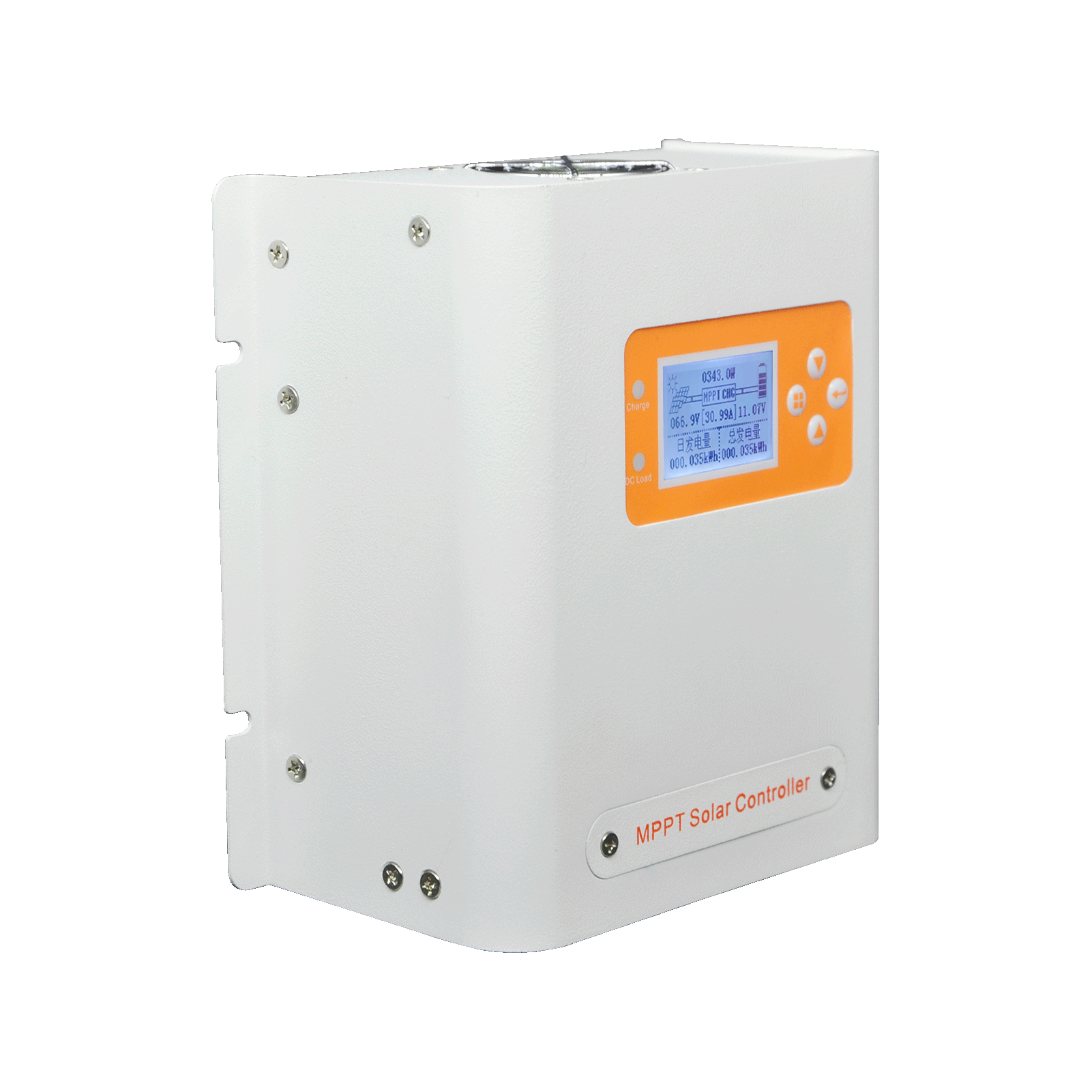
In a solar photovoltaic system, there is an inconspicuous yet crucial component. Its cost accounts for only a small percentage of the overall system cost, yet it has a decisive impact on power generation efficiency. This is the MPPT controller, also known as a maximum power point tracker. Many people, when purchasing a solar system, often only focus on the brand and specifications of the solar panels and inverter, neglecting this key device. However, the performance of the MPPT controller directly determines whether the solar panels can generate maximum power. It can be said that without an MPPT, there is no efficient operation of a solar system.
This article will explain the working principle of the MPPT controller in a simple and easy-to-understand way, explaining why it can increase solar power generation by more than 20%, and how to choose a suitable MPPT controller for practical applications. After reading this article, you will have a comprehensive and clear understanding of the core efficiency mechanism of solar systems, enabling you to be more professional and rational when purchasing and evaluating solar systems.

I. Output characteristics and maximum power point of solar panels
To understand the role of the MPPT controller, it's essential to first understand the electrical characteristics of the solar panel itself. Unlike ordinary power sources, the output power of a solar panel is not constant but exhibits a complex nonlinear relationship with changes in load conditions. This characteristic is fundamental to understanding the importance of MPPT technology.
The output voltage and current of a solar panel change with the load current, and their relationship can be described by a curve, which is the solar panel's current-voltage characteristic curve. When the solar panel is directly connected to a load, the magnitude of the load current depends on the load's impedance. If the load impedance is too low, the current increases, but the voltage drops sharply; if the load impedance is too high, the voltage increases, but the current becomes very small. In both cases, the output power is not at its maximum. Only under a specific load condition does the product of voltage and current reach its maximum value; this point is the maximum power point.
The location of the maximum power point (MPP) is not fixed; it shifts with changes in factors such as sunlight intensity, ambient temperature, and the aging of the solar panel. Stronger sunlight results in higher output power at the MPP, but the corresponding voltage remains relatively constant while the current increases accordingly. Temperature has the opposite effect on the MPP; as temperature rises, the solar panel's output voltage decreases, and although the current increases slightly, the overall power output significantly decreases. This explains why solar panels don't necessarily generate more electricity in the hot summer than in the cooler spring and autumn. Understanding these characteristics helps explain why a smart controller is needed to track the MPP in real time, rather than simply connecting the solar panel directly to the load or battery.
Solar panel specifications typically include open-circuit voltage and short-circuit current. Open-circuit voltage is the output voltage of the solar panel when there is no load, and short-circuit current is the current when the output terminals are short-circuited. These two parameters represent extreme values of the solar panel under specific test conditions; in actual operation, the voltage and current fall between 0 and these extreme values. The maximum power point (MPPT) is usually located around 70% to 80% of the open-circuit voltage, but the exact location varies depending on the panel and environmental conditions. The core task of the MPPT controller is to find this fluctuating maximum power point in real time and adjust the input power of the load or battery to exactly equal the current maximum output power of the solar panel, thereby ensuring that the solar panel always operates at its highest efficiency.
II. Working Principles and Technology of MPPT
Once you understand the output characteristics of a solar panel, the working principle of an MPPT controller becomes easier to grasp. MPPT stands for Maximum Power Point Tracker. Its basic idea is to continuously adjust the operating point by monitoring changes in the solar panel's output power in real time, gradually approaching and locking onto the maximum power point, thereby ensuring that the solar panel always outputs maximum power.
Currently, there are three main MPPT algorithms. The first is the perturbation-observation method, which is the simplest and most commonly used MPPT algorithm. Its basic idea is: the controller periodically introduces a small perturbation into the load voltage, such as a slight increase or decrease, and then observes the direction of change in output power. If the power increases after the perturbation, it means the current adjustment direction is correct, and the adjustment should continue in this direction; if the power decreases, it means the adjustment direction is wrong, and the adjustment needs to be reversed. This method is simple and easy to implement, but it has an inherent drawback: it produces small-amplitude oscillations near the maximum power point, resulting in some power loss. However, this loss is very small and usually acceptable.
The second method is the incremental conductance method, a more accurate MPPT algorithm. The output power P of a solar panel is equal to the product of voltage V and current I. By differentiating the power formula, we can find that the operating point is at the maximum power point when the derivative of the output power with respect to voltage is zero. The principle of the incremental conductance method is to determine the position of the operating point relative to the maximum power point by calculating the rate of change of conductance, thereby determining the adjustment direction. This method has higher accuracy and faster response speed, but also higher computational complexity and higher requirements for the controller's processor performance. Currently, mainstream MPPT controllers generally use this algorithm.
The third method is constant voltage point tracking (VPT), a simplified MPPT approach based on the premise that the voltage at the maximum power point (MPPT) and the open-circuit voltage have a fixed proportional relationship. Experimental studies show that for most solar panels, the MPPT is approximately 76% to 80% of the open-circuit voltage. VPT involves periodically disconnecting the load, measuring the open-circuit voltage of the solar panel, calculating a reference voltage, and then adjusting the load to near the reference voltage. This method is simple and reliable, but its accuracy is low, and periodically measuring the open-circuit voltage causes some power generation loss. Currently, this method is often used in conjunction with other algorithms as an initial positioning or backup strategy.
In practical applications, the performance of MPPT controllers is also affected by other factors. First is tracking speed. When lighting conditions change drastically (such as a sudden clearing after cloud cover), the MPPT controller needs to be able to quickly retrack to the new maximum power point. A controller with a slow response time will miss many power generation opportunities, causing unnecessary losses. Second is tracking accuracy. Under stable lighting conditions, the controller's tracking accuracy determines whether the system can continuously operate at its maximum power point. A high-accuracy controller allows the actual output power of the solar panels to be very close to the theoretical maximum power. Third is the design of multiple MPPTs. For large systems or systems with multiple groups of solar panels facing different directions, multiple independent MPPT tracking allows each group of panels to operate at its own maximum power point, avoiding power mismatch losses caused by series and parallel connections.
III. How much can MPPT increase power generation?
This is a question many people are most concerned about: How much can an MPPT controller actually increase solar power generation? The answer depends on the specific use case and the benchmark.
In systems without an MPPT controller, solar panels are typically directly connected to batteries for charging, with the charging voltage largely determined by the battery's current voltage. In this case, the solar panel's operating point is determined by the battery voltage, not its maximum power point. For example, a nominally 17V solar panel charging a 12V battery will only operate at a low voltage of around 12V if the battery's current voltage is 12V. While the current can be relatively high, the voltage is far below the optimal operating voltage, resulting in a significantly lower output power than the maximum. For instance, a common 12V/100W solar panel without an MPPT might only deliver 60W to 70W of power, a loss of 30% to 40%.
With an MPPT controller installed, the solar panel can operate at its optimal voltage point (e.g., 17V), which the MPPT controller then converts to a voltage suitable for battery charging. In this case, the solar panel can output close to 100W of power, increasing power generation by 30% to 40% compared to without an MPPT. In actual use, because the battery voltage changes with the state of charge, the operating point of the solar panel also changes without an MPPT, but it always deviates from the optimal power point, and the power generation efficiency is always lower than with MPPT control.
Based on extensive real-world test data and engineering project experience, MPPT controllers can increase solar power generation by 20% to 40% compared to direct charging without an MPPT, with most cases showing an increase of around 25% to 30%. This cumulative increase over a year is quite substantial. For example, a 5kW home photovoltaic system generates approximately 7000 kWh annually; the difference between having an MPPT and not having one is about 1750 kWh. At 0.5 yuan per kWh, this translates to an annual electricity cost difference of approximately 875 yuan. An MPPT controller costs approximately 1000 to 3000 yuan, allowing for cost recovery within one to two years, resulting in very considerable long-term returns.
The improvement effect of MPPT (Maximum Power Point Tracking) is affected by several factors. The first factor is temperature. At low temperatures, the optimal operating voltage of the solar panel is higher, allowing the MPPT to track a higher power point, resulting in a more significant improvement. At high temperatures, the optimal operating voltage decreases, and the improvement effect is relatively smaller. The second factor is sunlight intensity. On cloudy days or in weak sunlight, the actual output power of the solar panel is already low. In these situations, the absolute difference between having and not having an MPPT is small, but the relative percentage difference still exists. The third factor is the battery charging state. When the battery is nearing full charge, the charging current decreases, and the advantage of MPPT decreases accordingly. The fourth factor is the series/parallel connection method of the solar panels. Different connection methods affect the tracking performance of the MPPT; multiple independent MPPTs are generally more effective than a single MPPT.
Besides the direct increase in power generation, the MPPT controller also brings other indirect benefits. Firstly, it can accommodate longer solar panel strings. Without an MPPT, the number of panels in a series is limited by the battery voltage, while the MPPT controller can support higher input voltages, allowing for longer solar panel strings and reducing cable loss and current. Secondly, it improves system compatibility. Solar panels of different brands and specifications can be efficiently utilized through the MPPT controller, increasing the flexibility of system configuration. Thirdly, it extends battery life. The MPPT controller can perform more precise charging management of the battery, preventing damage such as overcharging and over-discharging.
IV. How to Choose a Suitable MPPT Controller
Having understood the importance of MPPT controllers, the key issue becomes how to choose the right product in actual purchase. There are numerous brands and specifications of MPPT controllers on the market, with prices ranging from several hundred to several thousand yuan, requiring consideration of multiple factors.
The first thing to consider is the input voltage and current specifications of the MPPT controller. The input voltage must be higher than the open-circuit voltage of the solar panels connected in series, with a margin of at least 10% to 20% to handle the increase in open-circuit voltage at low temperatures. For example, if the open-circuit voltage of the solar panels connected in series is 180V, a product with an input voltage of at least 200V should be selected. The input current needs to match the short-circuit current of the solar panels, and usually, a certain margin should also be allowed. It is particularly important to note that many low-priced controllers specify the maximum charging current, not the maximum input current. Input current and charging current are two different things, and you need to carefully distinguish between them when purchasing.
The second important factor to consider is the conversion efficiency of the MPPT controller. Conversion efficiency comprises two parts: MPPT tracking efficiency and DC-DC conversion efficiency. MPPT tracking efficiency refers to the accuracy with which the controller can adjust the solar panel to its maximum power point; high-quality products can achieve over 99%. DC-DC conversion efficiency refers to the efficiency in converting the high voltage of the solar panel into the battery charging voltage; high-quality products can achieve 95% to 98% conversion efficiency. The product of these two efficiencies is the overall efficiency of the controller. When purchasing, you should focus on the overall efficiency parameter, rather than a single number.
Thirdly, pay attention to the controller's functional characteristics. Basic MPPT functionality is present in all products, but advanced features vary. An LCD screen and buttons allow for easy viewing and setting of system parameters; products without a screen require Bluetooth or an app connection to view them. Serial communication (RS485/RS232) allows connection to monitoring systems or computers for remote management. A battery type selection function supports different battery types (lead-acid, gel, lithium iron phosphate, etc.). Temperature compensation adjusts charging parameters based on battery temperature, extending battery life. While these features are not essential, they provide a better user experience and more precise control.
Fourthly, pay attention to the brand and warranty of the controller. Choosing a well-known brand of MPPT controller ensures better quality and stability. Mainstream brands include excellent domestic brands such as Zhirong, Shuo Ri, Zhui Ri, and Maitian, as well as international brands like Morningstar and Victron. High-quality domestic brands offer good value for money and comprehensive after-sales service; international brands are more reliable, but also more expensive. Regarding warranty periods, mainstream products typically offer 2 to 3 years, with some high-end products offering 5 years. Choosing products with longer warranty periods and more comprehensive after-sales service networks can reduce any concerns.
Fifthly, pay attention to the heat dissipation design. MPPT controllers generate heat during operation, and poor heat dissipation can lead to decreased efficiency or even overheating protection. High-quality MPPT controllers typically use an aluminum alloy casing with heat sinks, and some products also have built-in fans for active cooling. When purchasing, pay attention to the product's heat dissipation structure and operating temperature range to ensure proper heat dissipation under the expected operating environment.
In actual system configuration, attention must also be paid to the compatibility between the MPPT controller, solar panels, and batteries. The total power of the solar panels should match the rated power of the controller. Controllers typically indicate their maximum supported solar panel power; for example, a 60A controller can support approximately 3 kW of solar panels in a 48V battery system. The battery voltage must match the controller's system voltage; common voltages include 12V, 24V, and 48V. If using 48V batteries, an MPPT controller supporting a 48V system must be selected. The output voltage range of the solar panels must be within the controller's input voltage range; voltages that are too high or too low will cause the controller to malfunction or experience a significant drop in efficiency.
Conclusion
The MPPT controller is an often overlooked but crucial component in solar energy systems. By intelligently tracking the maximum power point of solar panels, it can increase system power generation by 20% to 40%, making it a key guarantee for efficient solar energy utilization. Without an MPPT, solar panels often operate off-center from their optimal power point, resulting in a significant waste of potential power generation capacity.
Understanding the working principle and selection criteria of MPPT controllers is crucial for both solar system designers and users. Choosing the right MPPT controller can significantly increase the return on investment for your solar system; neglecting its importance can lead to unnecessary efficiency losses and wasted investment. This article aims to provide readers with a comprehensive and clear understanding of MPPT controllers, enabling them to make more informed decisions when purchasing and using solar systems in the future.
Please contact Simon immediately to discuss your project:
• WeChat: TY530643572
• Telephone: +86 137 1166 0041