Foreword
In today's world, with the accelerated global energy transition, lithium batteries, as one of the most important energy storage media, have become a critical infrastructure supporting the operation of modern society. From consumer electronics such as smartphones and tablets to electric vehicles, urban public transportation, solar energy storage systems, and grid peak shaving, lithium batteries are ubiquitous. Statistics show that the global lithium battery market size exceeded $70 billion in 2024 and is projected to surpass $200 billion by 2030, with a compound annual growth rate exceeding 15%. So, what exactly is a lithium battery? What types and advantages does it have? What role does it play in solar energy storage systems? This article will provide comprehensive answers.
I. What is a lithium battery?
A lithium-ion battery, also known as a lithium-ion battery, is a rechargeable battery that uses the intercalation and deintercalation of lithium ions between the positive and negative electrodes to achieve charging and discharging. Simply put, a lithium battery works like a rocking chair: during charging, lithium ions move from the positive electrode to the negative electrode and are stored; during discharging, lithium ions are deintercalated from the negative electrode and return to the positive electrode, releasing electrons to generate current for external devices. This unique working mechanism gives lithium batteries significant advantages such as high energy density, long cycle life, and low self-discharge rate. A complete lithium battery typically consists of the following core components. The positive electrode (Cathode) is one of the most critical components of a lithium battery, determining its capacity and voltage. Common positive electrode materials include lithium iron phosphate (LiFePO4), lithium cobalt oxide (LiCoO2), lithium manganese oxide (LiMn2O4), and lithium nickel cobalt manganese oxide (NCM/NMC). Different materials vary significantly in energy density, safety, and cost, and have different applications. The anode, typically made of graphite, is responsible for storing and releasing lithium ions. New anode materials such as silicon-carbon composites and lithium metal are gradually being commercialized, potentially further improving battery energy density. The electrolyte is the medium through which lithium ions migrate between the positive and negative electrodes, usually formed by dissolving lithium salts (such as lithium hexafluorophosphate) in an organic solvent. The separator is a porous membrane located between the positive and negative electrodes, allowing lithium ions to pass through but preventing direct electron flow, thus preventing internal short circuits. The case and BMS (Battery Management System) include the battery casing, safety valves, and positive temperature coefficient thermistors (PTCs), providing physical protection and safety management. The development of lithium batteries can be traced back to 1991 when Sony launched the world's first commercially available lithium-ion battery. Over the past 30 years, lithium battery technology has undergone continuous improvement and iteration: from the initial lithium cobalt oxide system to lithium iron phosphate and ternary materials, from liquid electrolytes to polymer electrolytes, and from single cells to module and PACK integration, the energy density, safety, and cost control of lithium batteries have been continuously optimized. Today, lithium iron phosphate and ternary materials have become the two mainstream technology routes, each occupying a significant share of the market.
II. What are the core advantages of lithium batteries?
The reason why lithium batteries have been able to go from the laboratory to every household in just thirty years is due to their many outstanding advantages.
First, the most significant characteristic of lithium batteries is their ultra-high energy density. Compared to traditional lead-acid batteries (energy density approximately 30-50 Wh/kg), lithium iron phosphate batteries can achieve an energy density of 100-160 Wh/kg, while ternary lithium batteries reach as high as 150-250 Wh/kg. This means that lithium batteries of the same weight can store more electrical energy. Taking electric vehicles as an example, if lead-acid batteries are used, a car needs to carry hundreds of kilograms of battery material, yet the range is only tens of kilometers; while with lithium batteries, the same range requires only tens of kilograms of battery material, significantly reducing the overall vehicle weight and significantly improving energy efficiency. In solar energy storage systems, high-energy-density lithium batteries can significantly reduce the footprint, making them particularly suitable for home users with limited space.
Secondly, the ultra-long cycle life is another major advantage of lithium batteries. Mainstream lithium iron phosphate batteries can achieve a cycle life of 3,000-6,000 cycles, with some high-quality products even exceeding 8,000 cycles. This means that if charged and discharged once a day, a lithium iron phosphate battery can be used for more than ten or even twenty years. In contrast, lead-acid batteries typically have a cycle life of only 300-600 cycles and need to be replaced after about three years. From a total life cycle cost perspective, although lithium batteries have a higher initial investment, their long-term operating costs are actually lower. For example, the total cost of ownership (TCO) of a 10kWh solar energy storage system using lithium iron phosphate batteries is more than 40% lower than that using lead-acid batteries.
Third, the low self-discharge rate allows lithium batteries to maintain a high level of charge even after prolonged periods of inactivity. The monthly self-discharge rate of lithium batteries is typically below 5%, while that of lead-acid batteries is as high as 15-30%. This is particularly important for solar energy storage systems, as these systems may need to rely on batteries for extended periods during cloudy or rainy days or in winter when power generation is insufficient. A low self-discharge rate ensures that the batteries have power available during critical moments.
Fourth, the flexibility and scalability of lithium batteries enable them to meet energy storage needs of various scales. Lithium battery systems employ a modular design, allowing users to flexibly configure capacity according to actual needs: from small 5kWh home systems to large-scale 100MWh grid energy storage projects, this can be achieved by adding or removing battery modules. This flexibility significantly reduces the complexity of system design and installation, and also facilitates future expansion and upgrades.
Fifth, the excellent high-temperature performance and safety of lithium iron phosphate batteries make them particularly suitable for operation in harsh environments. The chemical structure of lithium iron phosphate is very stable, with a thermal runaway temperature exceeding 800℃, far higher than the 200-300℃ of ternary materials. This means that lithium iron phosphate batteries are less prone to combustion or explosion under extreme conditions such as high temperatures, overcharging, and short circuits, ensuring greater safety. In recent years, with the widespread application of innovative processes such as BYD's blade battery and CATL's CTP technology, the safety performance of lithium iron phosphate batteries has been further improved, making them the preferred choice for new energy buses and energy storage systems.
Sixth, environmental friendliness is an inherent attribute of lithium batteries. Lithium batteries do not contain toxic heavy metals such as lead, cadmium, and mercury, resulting in minimal environmental pollution. More importantly, with the maturation of lithium battery recycling technology, precious metals such as lithium, cobalt, and nickel in lithium batteries can be efficiently recycled and reused. It is estimated that the recycling rate of lithium batteries can reach over 95%, and the recovered metal materials can be reused in the production of new batteries, forming a virtuous cycle economy. In contrast, although the recycling system for lead-acid batteries is mature, the potential harm of lead, as a heavy metal, to the environment and human health cannot be ignored.
III. Main Types and Application Scenarios of Lithium Batteries
Depending on the cathode material, lithium batteries are mainly divided into several types, such as lithium iron phosphate, ternary materials, lithium cobalt oxide, and lithium manganese oxide, each with its own characteristics and applicable scenarios.
Lithium iron phosphate (LiFePO4, LFP) is currently the mainstream choice for solar energy storage systems. Its main advantages include extremely high safety, ultra-long cycle life (3000-6000 cycles), good high-temperature performance, and relatively low cost. The disadvantages of LFP are that its energy density is slightly lower than ternary materials and its low-temperature performance is slightly inferior. In terms of applications, LFP is widely used in solar energy storage systems, UPS uninterruptible power supplies, communication base station energy storage, electric buses, and electric logistics vehicles. Especially in the home energy storage market, LFP has become the absolute mainstream choice due to its high safety and long lifespan. Representative products include BYD's Blade Battery, CATL's LFP energy storage cells, and Tesla's Megapack (some versions).
Ternary lithium-ion batteries (NCM/NCA) have the highest energy density and are the preferred choice for electric vehicles. Ternary materials are further divided into various specifications such as NCM333, NCM523, NCM622, and NCM811, depending on the ratio of nickel, cobalt, and manganese (or aluminum). Higher nickel content results in higher energy density, but may reduce safety and cycle life. Major applications of ternary materials include electric vehicles (especially long-range models), consumer electronics (smartphones, laptops, etc.), and high-end power tools. Representative products include CATL's NCM811 cells, LG Chem's NCMA cells, and Panasonic's NCA cells.
Lithium titanate (Li4Ti5O12, or LTO for short) is a relatively niche but unique technology. Its main advantages are extremely fast charging speed (up to 10C or higher), ultra-long cycle life (over 10,000 cycles), extremely wide operating temperature range (-30℃ to 60℃), and extremely high safety. Its disadvantages are low energy density (approximately 70-90Wh/kg) and high cost. Lithium titanate is mainly used in applications requiring rapid charging and discharging, extreme temperature environments, or long lifespans, such as electric buses, port machinery, and backup power supplies for rail transit.
Lithium manganese oxide (LMO) is a relatively low-cost and safe technology with an energy density between lithium iron phosphate and ternary materials. The main problems with LMO are its relatively short cycle life and its susceptibility to manganese dissolution at high temperatures, leading to capacity decay. LMO is often used in combination with other materials (such as NCM) to balance performance and cost. Applications include electric bicycles, low-speed electric vehicles, and power tools.
From an application perspective, the lithium battery market can be divided into three main segments. The consumer electronics segment includes smartphones, laptops, tablets, wearable devices, and electric toys; this is the area where lithium batteries first achieved large-scale commercial application. Although growth has slowed in recent years, with the rise of emerging categories such as foldable phones and AR/VR devices, the demand for lithium batteries in the consumer electronics segment will remain stable.
The power battery sector has been the fastest-growing area in recent years, mainly encompassing electric vehicles, electric bicycles, electric motorcycles, electric forklifts, and port AGVs. In particular, the electric vehicle market saw global sales of new energy vehicles exceed 15 million units in 2024, with power battery installations exceeding 700 GWh. China is the world's largest new energy vehicle market and also the largest producer of power batteries, with companies such as CATL, BYD, Zhongchuang Xinhang, and Guoxuan High-Tech holding leading global positions.
The energy storage battery sector represents the area with the greatest growth potential. With the increasing proportion of renewable energy generation, the demand for energy storage from the power grid is becoming increasingly urgent. Lithium-ion battery energy storage systems are becoming a core support for application scenarios such as grid peak shaving, renewable energy consumption, microgrids, and distributed energy systems. On the user side, the industrial and commercial energy storage market and the residential energy storage market are also developing rapidly, especially in countries and regions with high electricity prices or unstable grids, such as Europe, Japan, and Australia, where lithium-ion battery energy storage systems are entering thousands of households.
IV. How to select lithium batteries for solar energy storage systems?
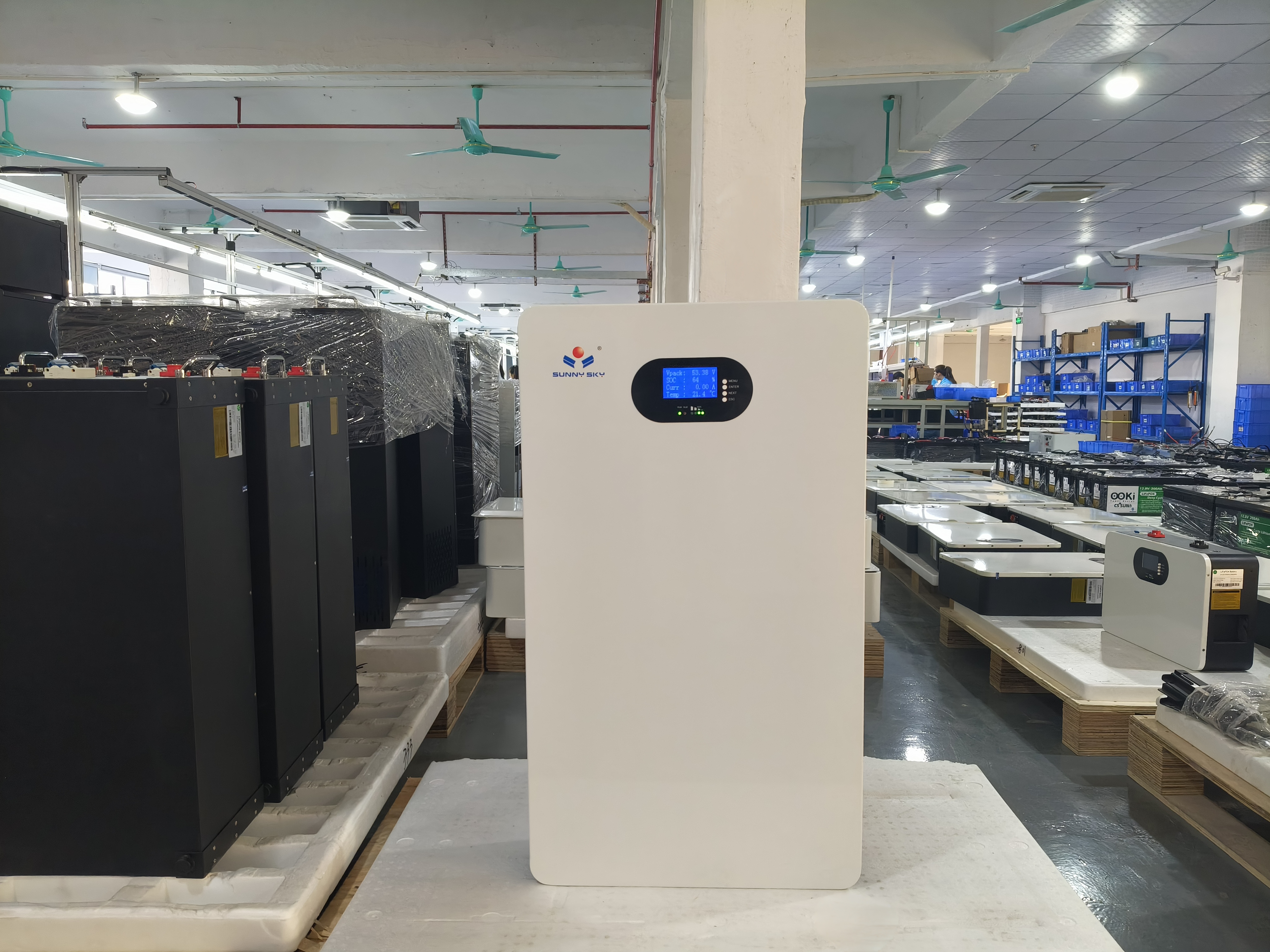
Choosing the right lithium battery energy storage product is crucial for both residential and commercial users. Here's a detailed analysis from multiple perspectives: Battery capacity is the primary consideration. Battery capacity, usually measured in kWh (kilowatt-hours), determines how long the system can operate without power or overnight. Several factors need to be considered when selecting battery capacity: the average daily electricity consumption of the household or business, the desired backup time, the installed capacity of the solar power system, and budget constraints. For example, a typical family of three uses about 15-20 kWh of electricity per day. If they want the system to last a full day without solar power, a capacity of 15-20 kWh or more is recommended. If they only need to power critical loads such as lighting, refrigerators, and routers, 5-10 kWh is usually sufficient. It's important to note that lithium batteries should not be fully discharged; a 10-20% safety margin should be maintained. Therefore, the actual usable battery capacity will be less than the nominal capacity.
The voltage level needs to be matched with the inverter. Lithium-ion battery energy storage systems typically come in various voltage levels, such as 48V, 96V, 192V, and 384V. Higher voltage levels generally result in higher system efficiency and lower line losses, but also increase safety risks. For residential users, 48V is the most common choice because it offers a high level of safety, can be operated without a professional electrician, and is compatible with most residential hybrid inverters. For larger systems (e.g., 10kWh or more), 96V or higher voltage levels can be considered to improve system efficiency.
Cycle life directly impacts return on investment. The cycle life of lithium batteries varies significantly between different brands and types, ranging from 1000 to 8000 cycles. When choosing a battery, pay close attention to the following indicators: cycle life testing conditions (some manufacturers specify the number of cycles at 100% depth of discharge, while others specify 80% depth of discharge; be careful to distinguish between them), cycle life testing standards (usually IEC 62660 or equivalent), and warranty terms (some manufacturers offer 10-year or 15-year warranties corresponding to a certain number of cycles or throughput). For solar energy storage applications, it is recommended to choose products with a cycle life of over 3000 cycles to ensure long-term economic benefits.
Safety certification is a crucial guarantee of product quality. When purchasing lithium battery energy storage products, you should ensure that the product possesses the following core certifications: UN38.3 is a mandatory certification for lithium battery transportation safety, proving that the product can pass safety tests for sea, land, and air transportation; IEC 62619 is the safety standard for industrial lithium batteries; UL 1973 is the safety standard for energy storage batteries in the North American market; CE is a mandatory safety certification for the European Union market; and RoHS is an environmental certification that ensures the product does not contain hazardous substances. In addition, some regions have localized certification requirements, such as JIS C 8715 in Japan and AS/NZS 5139 in Australia.
Brand selection is crucial for long-term user experience. Lithium batteries are durable goods intended for long-term use, making the choice of a reliable brand paramount. Leading brands such as CATL, BYD, EVE Energy, Guoxuan High-Tech, Zhongchuang Innovation, and SVOLT possess complete cell R&D and production capabilities, ensuring higher product quality and after-sales service. Brands focused on the energy storage market, such as Photon, GoodWe, and Growatt, typically offer complete energy storage solutions with higher system integration and a better user experience. When making a selection, it is recommended to prioritize companies with their own cell production capabilities, a large number of project cases, and a comprehensive after-sales service network.
In terms of price, the price of lithium battery energy storage systems is continuing to decline. In 2024, the cost of mainstream lithium iron phosphate batteries had dropped to approximately 0.6-0.8 yuan/Wh, meaning a 10kWh battery system would only cost 6,000-8,000 yuan (excluding inverter and installation costs). Compared to three years ago, the price has decreased by more than 50%. It is expected that the cost of lithium batteries will continue to decline in the coming years, but the rate of decline will gradually narrow. When purchasing, one should not simply pursue the lowest price, but should comprehensively consider performance, quality, and after-sales service to choose the product with the highest cost-performance ratio.
V. Precautions for the Use and Maintenance of Lithium Batteries
Proper use and maintenance can extend lithium battery life and ensure safe system operation. Here are some key points to note.
Regarding charging management, use a compatible charger or inverter with built-in charging functionality, and avoid using incompatible charging equipment. Lithium batteries do not require deep discharge before recharging like lead-acid batteries; in fact, over-discharge should be avoided as much as possible. Charge the battery promptly when its charge level drops below 20%, and maintain a charge level of around 50% for long-term storage. Temperature significantly affects charging efficiency; the optimal charging temperature range is 10-35℃, and charging should be avoided in environments below 0℃ or above 45℃.
Regarding discharge management, batteries should be kept away from high depth of discharge for extended periods. While lithium batteries can be deeply discharged, prolonged deep discharge accelerates battery aging. It is recommended to keep the depth of discharge below 80%, leaving a 20% safety margin. For solar energy storage systems, the battery can be protected by setting battery discharge depth limit parameters on the inverter. Some high-end energy storage systems support intelligent scheduling functions, which can automatically optimize charging and discharging strategies based on weather forecasts and electricity consumption predictions.
Regarding temperature management, the optimal operating temperature for lithium batteries is 15-35℃. High temperatures accelerate battery aging and reduce lifespan; low temperatures reduce usable capacity and affect performance. During installation, a well-ventilated location away from direct sunlight should be chosen. If the ambient temperature frequently exceeds the normal range, a temperature control system should be considered. For cold northern regions, lithium batteries with heating functions can be selected, or installation indoors is recommended.
For regular inspections, check the battery system's connection cables for looseness, corrosion, or damage; inspect the battery casing for deformation, bulging, leakage, or other abnormalities; and check the monitoring system data for normalcy and any fault alarms. If any abnormalities are found, contact after-sales service immediately. It is recommended to have a professional system inspection and maintenance every 1-2 years.
Regarding safety, although lithium batteries are generally very safe, thermal runaway or even fire can still occur under extreme conditions. Ensure that the battery is installed away from flammable and explosive materials; provide appropriate fire-fighting equipment (dry powder or CO2 fire extinguishers are recommended; water-based fire extinguishers are not recommended); do not disassemble or modify the battery without authorization; in case of emergencies such as battery smoke or fire, evacuate personnel immediately and call the fire department.
Conclusion
As the core energy storage medium in the era of clean energy, lithium batteries are profoundly changing the way humans obtain and use energy. From electric vehicles to solar energy storage, from consumer electronics to grid peak shaving, the application of lithium batteries is ubiquitous. They enable the widespread use of renewable energy and make energy use cleaner, more efficient, and more sustainable.
Choosing a suitable lithium battery product is not just about selecting a piece of hardware, but also about choosing a future-oriented lifestyle and a commitment to environmental protection. Understanding the basics of lithium batteries, mastering key selection points, and correctly using and maintaining them are essential knowledge that every user who wants to embrace clean energy should possess.
Please contact Simon immediately to discuss your project:
• WeChat: TY530643572
• Telephone: +86 137 1166 0041