1. What is the first step to purchase a solar power system?
2. How long does it take to get a formal quotation?
3. What is the payment term for first cooperation?
4. What are the subsequent processes after order confirmation?
5. Does your team provide after-sales support?
Why the solar power system purchase process matters before anyone signs off on equipment
The solar power system purchase process looks simple from a distance: ask for a quote, pick a product, book installation. In practice, it is where projects succeed or quietly go off track. A system that is undersized, poorly matched to the load, or ordered without a clear site check can create headaches long after the first panels are on the roof. For engineers, sourcing managers, and project teams, the real decision is not just how to buy solar panels, but how to buy the right system in a way that keeps the installation clean, predictable, and supportable.
That is why a structured buying flow matters. It helps buyers compare proposals on the same basis, spot missing assumptions, and avoid paying for hardware that does not fit the actual application. This is especially important for hybrid systems, where panels, inverter logic, batteries, and load behavior all need to work together rather than in isolation.
A practical view of the buying flow
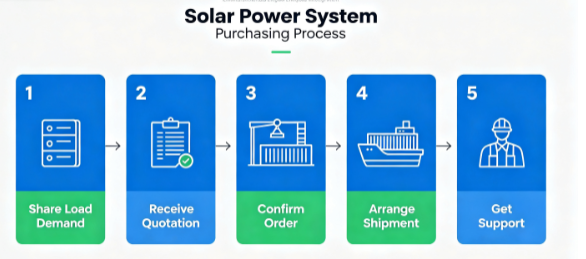
The clearest solar energy system buying guide is usually the one that follows the real project sequence. The workflow shown in many supplier graphics is a useful shorthand: share load demand, receive quotation, confirm order, arrange shipment, and get support. It is not fancy, but it reflects how a serious project is actually handled.
At the start, the buyer provides load details. That may include daily energy use, peak power demand, operating hours, and whether the system is intended for residential, commercial, or off-grid use. This first step sets the tone for everything that follows. If the load picture is vague, the quote will be vague too.
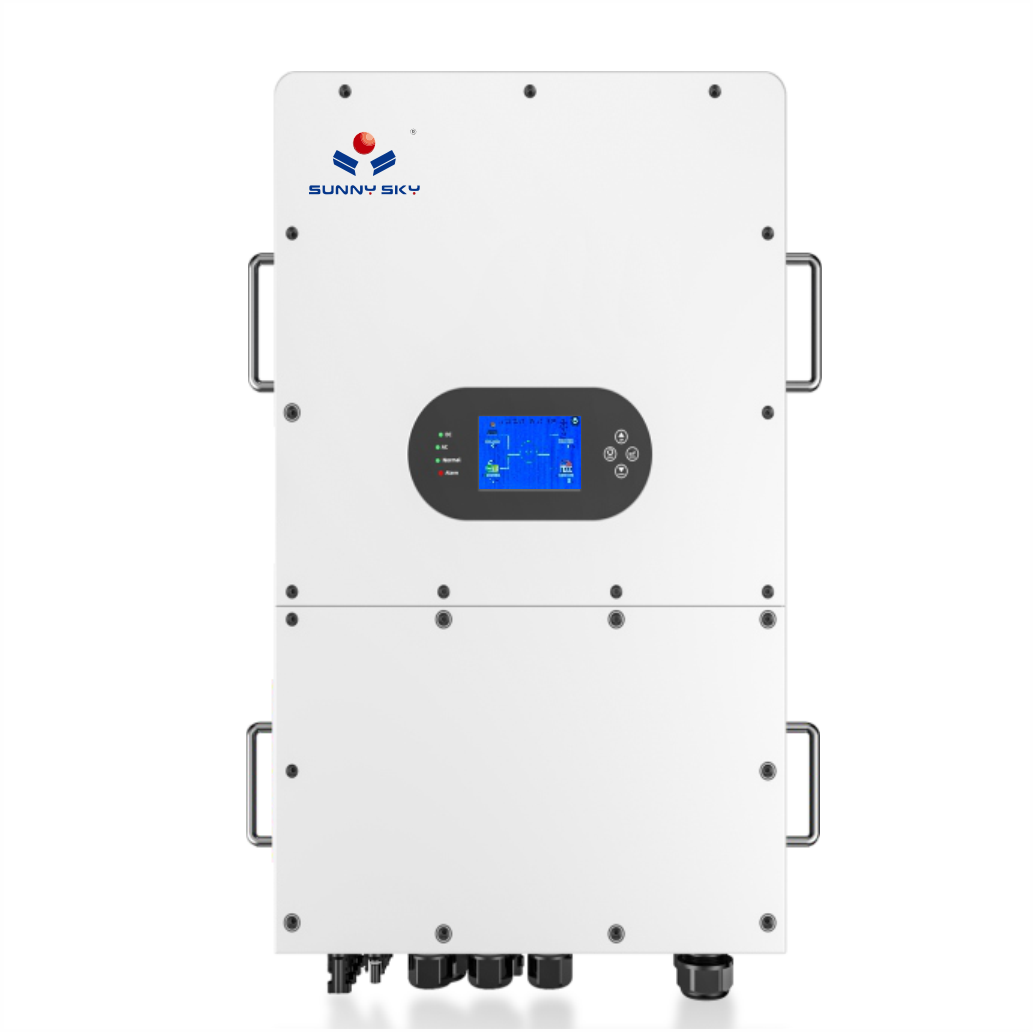
Next comes the quotation. A good quotation should show the proposed system size, the main components, and the service scope. For a hybrid solar inverter project, the buyer should be able to see how the inverter fits into the broader design, not just the headline price. If a supplier cannot explain the sizing logic, the proposal deserves a second look.
After order confirmation, shipment and documentation become more than routine paperwork. They are part of project control. Buyers want the right items, packed clearly, delivered on time, and accompanied by enough information for the installation team to move without guessing.
Where solar site assessment changes the outcome
A solar site assessment is often the difference between a tidy installation and a troublesome one. Roof condition, shading, available space, local weather, wiring routes, and mounting constraints all affect the final system. On paper, two projects may look similar; on the roof or in the field, they can behave very differently.
One practical caution: buyers sometimes treat site assessment as a formality and try to speed straight to price comparison. That is understandable, especially when procurement timelines are tight, but it can lead to mismatched hardware or unrealistic expectations. A supplier that asks careful questions about the site is not necessarily slow; it may simply be trying to reduce expensive surprises later.
What to compare when evaluating suppliers
Not every quote is built on the same assumptions, which is why comparison requires discipline. Look at component compatibility, system scope, and after-sales support rather than just the number at the bottom of the page. A lower quote may exclude installation support, shipping detail, or key accessories. A higher quote may include a more complete service package.
Guangzhou Tianyuan Solar Equipment CO.,LTD, operating under the SUNNYSKY brand, presents itself as a supplier with independent R&D and patented technologies, serving customers in more than 50 countries. The company also emphasizes stable performance, design, and first-class solar solutions, which is the kind of language buyers often see from solution providers rather than simple resellers. Just as notably, it states that global clients are welcome to visit the factory near Guangzhou Baiyun International Airport, with complimentary airport pickup. For some buyers, that kind of access makes technical discussion easier than a chain of email exchanges.
Quick buyer checks before confirming an order
Ask whether the quotation reflects your actual load profile. Confirm whether the proposed design is for a standalone system, a hybrid setup, or a broader solar PV package. Make sure the shipment scope is written clearly. And if your team is comparing suppliers across regions, ask for the same format from each one; otherwise the comparison becomes noise.
Common mistakes in the solar system installation steps
The most common mistake is buying components before the project is properly defined. Another is assuming that all solar panels or inverters can be swapped freely. They cannot. Even without getting into fine technical detail, the basic system logic has to hold together. A battery-based project needs different planning from a grid-tied one, and an off-grid system has its own habits and limits.
Another frequent problem is underestimating coordination. The sales team, engineering contact, logistics team, and installer each hold part of the puzzle. If those parts are not aligned, the handoff can turn messy. Buyers do themselves a favor when they keep one clean project record with all assumptions, drawings, and shipment details in one place.
FAQ buyers tend to ask
How to buy solar panels without overbuying?
Start with the load, then size the system from there. Do not begin with panel count and work backward unless you already know the target design.
Do I need a solar system consultation?
If the project is larger than a simple household setup, yes. Consultation helps translate a rough requirement into a workable system plan.
Can one supplier cover planning and shipment?
Many can, but the buyer should confirm that engineering support, order handling, and installation support are all part of the scope, not implied extras.
A sensible next step
If you are preparing a solar purchase, gather the load data first, document the site, and request a proposal that shows the full system logic. That is the shortest path through the solar power system purchase process without stepping on avoidable mistakes. For buyers who want a factory discussion rather than a generic brochure exchange, a direct consultation with a supplier like SUNNYSKY can be a practical next move.