Look for a wide operating window rather than just a high maximum PV voltage. A range like 60–500V keeps the array tracking across high cell temperatures and low-light periods, where narrow-window inverters drop out of tracking and lose production without any visible fault.
The Thermal Reality of Sizing Solar in African Climates
For EPC contractors and solar distributors deploying systems across Sub-Saharan and North Africa, specifying power electronics is rarely as straightforward as matching nameplate wattage. Ambient temperatures regularly surpass 40°C in regions ranging from the Sahel to the interior of Southern Africa, pushing rooftop module temperatures well beyond 65°C. In these harsh operating environments, the MPPT range for hybrid solar inverter in Africa becomes the defining specification between an installation that reliably delivers day-long power and one that repeatedly drops tracking when generation should be peaking.
A hybrid system must juggle unpredictable loads, weak-grid instability or outright blackout conditions, and battery management simultaneously. If the solar inverter MPPT voltage window is chosen purely from Standard Test Conditions (STC) listed on a panel datasheet, the system is doomed to underperform. Real field conditions demand that procurement teams prioritize the actual operating envelope rather than theoretical lab performance.
Why Voltage Drop at High Temperatures Breaks Standard Inverters
Every silicon photovoltaic cell loses operating voltage as its temperature climbs. In typical African rooftop installations, the temperature coefficient of maximum power voltage (Vmp) causes a module string to shed 10% to 18% of its rated voltage during peak midday hours. A string engineered to hit 360V at 25°C can easily plummet toward 290V under intense sun.
When selecting a hybrid solar inverter Africa installations require careful consideration of the lower MPPT threshold. If an inverter requires a minimum of 300V to maintain tracking, a thermal voltage sag will force the system out of its optimal power band. The inverter may cycle on and off, drop into idle charging, or clip energy production precisely when residential air conditioning or commercial cold-storage loads reach peak demand. Conversely, cool dry mornings in highland regions (such as the East African plateau) can cause open-circuit voltage (Voc) to spike toward the upper hardware limits. A narrow MPPT operating range simply does not provide the safety cushion required for these geographic extremes.
Selecting the Best MPPT Voltage Range for Africa: Wide vs. Narrow Windows
Determining the best MPPT voltage range for Africa depends largely on whether you are designing for high-voltage commercial strings or flexible residential setups. However, certain baseline rules apply across both categories:
- Low Startup Threshold: Systems operating in dust-heavy, high-haze, or monsoon seasons benefit heavily from a lower minimum tracking voltage. This allows the maximum power point tracking inverter to capture diffuse early-morning and late-afternoon irradiance before severe heat sets in.
- High-Temperature Voltage Cushion: Always calculate string Vmp at 70°C cell temperature. The calculated Vmp must remain at least 15% to 20% above the inverter's lower MPPT limit to prevent tracking dropout.
- Substantial Upper Margin: Ensure string Voc calculated at the regional minimum ambient temperature never exceeds the absolute maximum DC input voltage of the unit, even under cloud-edge spikes.
For small-to-medium residential systems, a wide solar inverter voltage range provides vital installation flexibility. Installers often need to design around fragmented roof layouts or phase string expansions over time as the homeowner's budget allows.
Physical Build and Thermal Management in Wall-Mounted Units
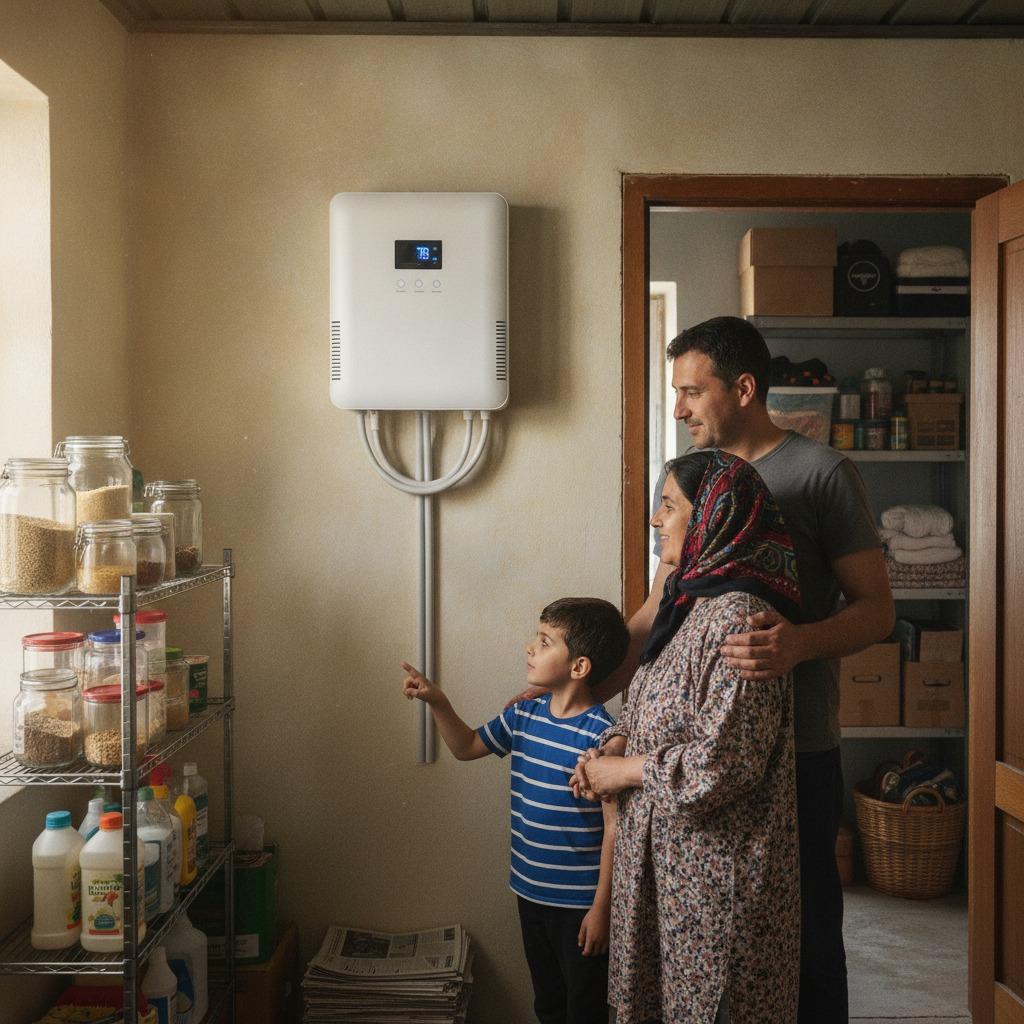
An inverter's electrical parameters are only as dependable as its physical enclosure and cooling topology. Power electronics that run hot will artificially throttle their tracking window to protect sensitive IGBTs and internal capacitors. When reviewing hardware, look closely at physical construction: integrated side ventilation slots, structured airflow channels, and robust rear heatsinks are mandatory for surviving utility rooms and shaded exterior walls across the continent.
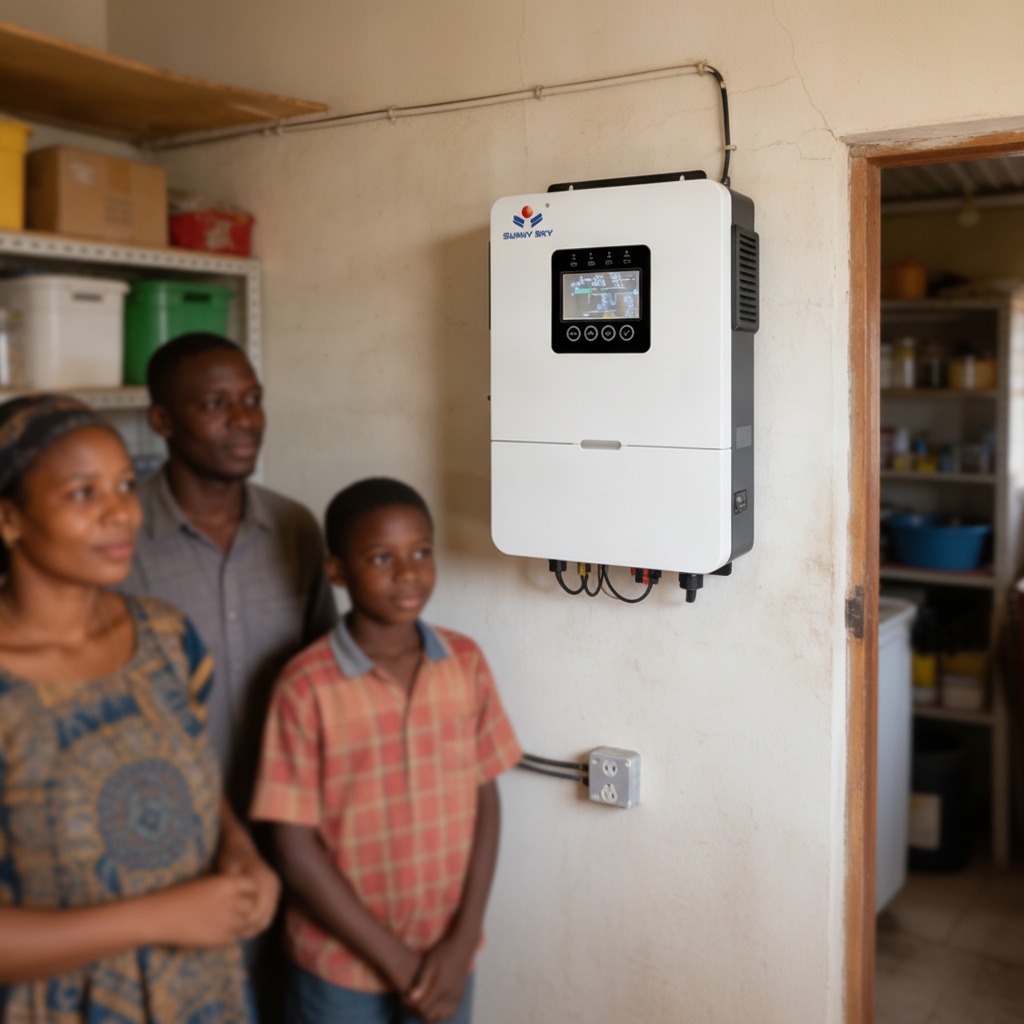
Wall-mounted hybrid units—such as those engineered by Guangzhou Tianyuan Solar Equipment CO.,LTD under the SUNNYSKY brand—emphasize practical field installation. Featuring durable rectangular enclosures, dedicated lower cable entry compartments for separated DC and AC routing, and front-panel status interfaces, these systems reflect the design priorities needed for residential and light-commercial weak-grid environments. A well-designed enclosure protects the internal power electronics from dust accumulation while dissipating the inevitable thermal buildup generated by continuous high-amperage battery charging.
Common Sizing Mistakes EPCs and Distributors Make
Even seasoned technical teams fall into predictable procurement traps when sourcing equipment for emerging solar markets:
- Treating Inverter Datasheets as Universal: An inverter rated for nominal efficiency in temperate Europe will exhibit entirely different thermal derating behavior in direct African sun. Always request thermal derating curves.
- Under-stringing Panels: In an attempt to reduce initial installation costs, installers sometimes connect short strings that hover right near the lower MPPT cutoff. As soon as ambient heat spikes, the array drops below the tracking threshold.
- Overlooking String Degradation: Factoring in seasonal dust or Sahara dust drift, potential-induced degradation (PID), and minor shading ensures that the inverter's operating window remains functional five years down the line, not just on commissioning day.