Foreword
Do you have your own factory?
This question is appearing more and more frequently in inquiries about solar energy products. More and more importers and traders are starting to focus on whether suppliers have their own factories, rather than simply comparing product prices.
This change is not without reason. The solar energy industry has undergone a major reshuffle in recent years. Many trading companies lacking core competitiveness have been eliminated, while companies with their own factories have demonstrated stronger resilience. For buyers, choosing a supplier with its own factory means more stable supply capabilities, more controllable quality management, and more reliable cooperation prospects.
This article will analyze in detail the practical benefits of choosing a solar energy supplier with its own factory. I will discuss this from multiple dimensions, including product quality, production capacity, customization capabilities, after-sales service, and long-term cooperation, to help importers and traders make more informed decisions when selecting suppliers.
I. Product Quality
By controlling suppliers with their own factories at the source, the core advantage lies in the control of product quality.
Owning a factory means that every step, from raw material procurement to production and processing to finished product testing, is conducted under your own management system. The selection, inspection, and warehousing of raw material suppliers, the control of process parameters during production, and the performance testing and aging screening of finished products—all these steps are under the direct management of the factory, eliminating information loss and shirking of quality responsibility in intermediate links.
To give a concrete example, the core raw material for solar panels is the solar cell. Companies with their own factories will select appropriate-grade solar cell suppliers based on their product positioning and establish long-term partnerships. After the raw materials arrive at the factory, there is a strict inspection process; substandard raw materials will not be used in production. However, some trading companies or contract manufacturers without their own factories may directly purchase solar cells from the market, resulting in much weaker control over the quality of raw materials.
Quality control during the production process is equally important. In our own factory, each process has clear quality standards and inspection points. Temperature and time control in the lamination process, EL testing for microcrack detection, and IV testing for power calibration—these are all critical steps to ensure product quality. Our own factory can set quality gates at each stage, preventing defective products from reaching the next stage. In contrast, under the OEM (Original Equipment Manufacturer) model, the contract manufacturer's production standards may differ from the brand's requirements, and the rigor of inspection processes may be compromised.
Testing before finished products leave the factory is the final quality checkpoint. Companies with their own factories will conduct sampling or full inspections of each batch of products, including power testing, EL microcrack detection, appearance inspection, insulation testing, etc. Only products that pass all tests are allowed to leave the factory. Although this "full inspection" model increases costs, it can ensure the consistency of product quality to the greatest extent.
For importers, product quality directly impacts their local reputation and return rates. Suppliers with their own factories can provide more consistent product quality, reducing customer complaints and after-sales costs due to quality issues.
II. Production Capacity
A stable supply guarantee means more stable production capacity, which is crucial for importers and traders.
Demand for solar energy products exhibits significant seasonal fluctuations. The second half of the year, particularly the fourth quarter, is typically the peak season, with buyers stocking up for next year's projects, and suppliers' production lines generally operating at full capacity. During this time, trading companies without their own factories face the risk of unstable supply—contract manufacturers may prioritize other customers or delay delivery due to insufficient capacity. Companies with their own factories, however, have greater autonomy in scheduling within their own production capacity, enabling them to better guarantee order delivery times.
Owning a factory also means greater flexibility in order adjustments. In actual collaborations, order volume adjustments are common – sometimes customers increase quantities, and sometimes they decrease them due to market changes. Companies with their own factories have greater flexibility in this regard, allowing them to quickly adjust production plans based on order changes. Suppliers relying on OEM manufacturing, on the other hand, need to coordinate with the OEM to adjust production plans, which is both time-consuming and difficult.
Production capacity is another factor to consider. Factories of a certain size are typically equipped with complete production lines and a sufficient number of production personnel. This means that during peak seasons, there is enough capacity to handle increased orders; while during off-seasons, the factory can maintain operations through other orders, keeping staff stable. A stable workforce is also crucial for consistent product quality—experienced workers and mature production processes are essential guarantees of product quality.
For importers, choosing a factory with sufficient production capacity has another practical advantage: it can handle larger orders. If your business grows rapidly and you need to increase your procurement volume, suppliers with their own factories can expand production along with your growth, without needing to find new OEM resources on the fly.
III. Customization Capabilities
In the highly competitive solar energy market, differentiation is a key competitive advantage for traders and distributors. Owning a factory often means stronger customization capabilities, which can help traders differentiate their products.
Customization of appearance is one of the most common customization requests. Consumers in different markets have different aesthetic preferences; some markets prefer minimalist styles, while others prefer brightly colored designs. Suppliers with their own factories can adjust the product appearance according to the trader's requirements, including colors, logos, and printing processes. For suppliers without their own factories, customized appearances usually require larger minimum order quantities and longer lead times, limiting flexibility.
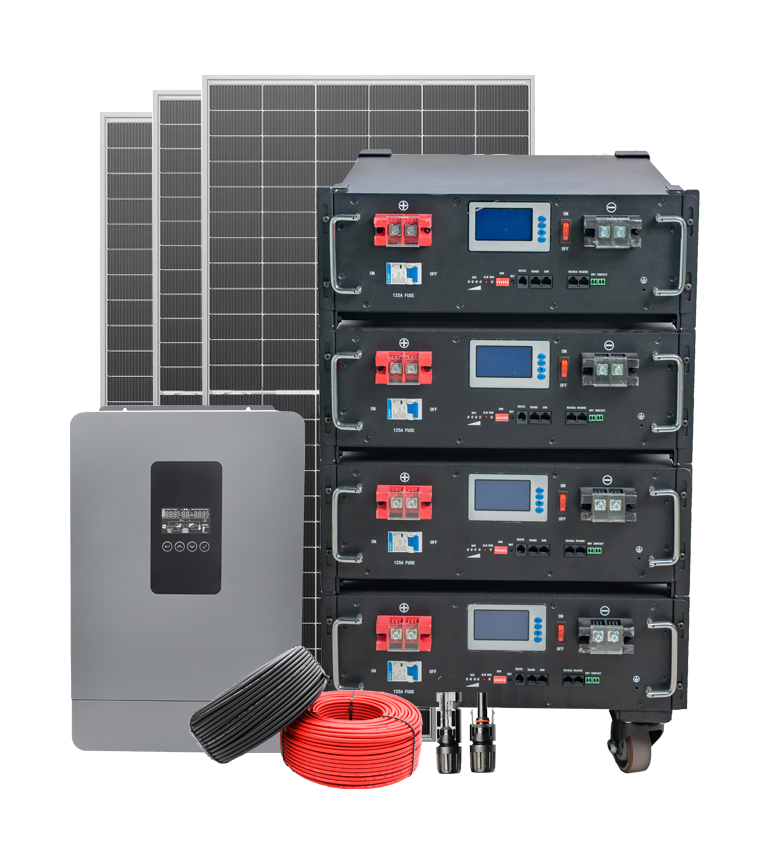
Parameter customization represents a deeper level of customization. Different countries and regions have varying requirements for the technical parameters of solar energy products, such as input voltage range, communication protocols, and display interface language. Companies with their own factories can adjust product parameter configurations according to the specific needs of the target market. This customization capability requires the support of a technical R&D team and is typically only achievable by companies with independent production capabilities.
Functional customization represents a higher level of customization requirement. For example, some traders may want to add specific functions to their inverters or require special protection logic. This type of customization requires in-depth development into the underlying software and hardware of the product, which is difficult for companies without independent R&D capabilities to achieve.
Customized packaging and accessories are also frequent needs in actual business operations. Products require instruction manuals and color boxes in different languages when shipped to different countries, and the specifications of accessories may be adjusted according to the standards of different target markets. Having your own factory allows you to respond to these customization needs more flexibly without having to go through complicated supplier coordination processes.
For traders with brand operation needs, the customization capabilities of their own factories are particularly important. OEM/ODM cooperation requires in-depth collaboration between both parties on multiple levels, including product design, functional definition, and packaging image. Companies with their own factories are better able to undertake this in-depth customization cooperation model.
IV. After-sales service
Clearly defined responsibilities for ensuring after-sales service of solar energy products are a common concern for buyers, and suppliers with their own factories have a clear advantage in this regard.
The primary benefit is clearer definition of responsibility. Traditional solar energy systems consist of multiple components such as solar panels, inverters, and batteries, which may come from different manufacturers. When a product malfunctions, determining which component or manufacturer is at fault often involves a lot of wrangling. With integrated machine or system suppliers that have their own factories, the selection and quality control of all component suppliers are under the same system. If a problem arises, you can directly contact one supplier, saving the hassle of coordinating with multiple parties.
More reliable spare parts supply is another practical benefit. Solar products have a long service life; over a ten- or twenty-year lifespan, some easily damaged parts may need to be replaced. Companies with their own factories typically maintain a certain amount of spare parts inventory, enabling them to provide replacement parts promptly when needed. However, some smaller trading companies or pure OEM suppliers may be unable to provide spare parts support after the product is discontinued.
After-sales response is also more reliable. A technical team with its own factory has the best understanding of product design and manufacturing processes, allowing them to pinpoint the cause and propose solutions more quickly when technical issues arise. In contrast, after-sales support from suppliers that outsource production relies on the contract manufacturer's cooperation, which may compromise response speed and cooperation.
For importers, a supplier's after-sales service capabilities directly impact their reputation in the local market. Good after-sales service not only resolves problems but also enhances customer trust in the brand. Suppliers with their own factories typically have more comprehensive after-sales service systems and longer warranty commitments, which is crucial support for importers in expanding their markets.
V. Long-term cooperation
Choosing suppliers for sustainable development partnerships is not just about selecting a source of products, but also about choosing a partner for long-term cooperation. Suppliers with their own factories have more advantages in long-term collaboration.
Price stability is the foundation of long-term cooperation. Raw material prices in the solar energy industry fluctuate significantly. Companies with their own factories can mitigate the impact of raw material price fluctuations on product costs to some extent through large-scale purchasing and inventory management. For trading companies without their own factories, both product prices and supply may be affected when raw material prices fluctuate sharply. Stable partnerships mean predictable costs and profit margins.
Product iteration capability reflects a supplier's development potential. The solar energy industry is characterized by rapid technological advancements and continuous introduction of new products and features. Suppliers with their own factories and independent R&D capabilities can consistently launch new products that meet market demands, helping them maintain product competitiveness. Suppliers relying on outdated products, on the other hand, may be eliminated from the market within a few years.
The stability of business relationships is also a concern. The solar energy industry experiences frequent staff turnover, with sales personnel often changing jobs. If cooperation relies solely on personal connections, the relationship may need to be re-established if one party leaves. Companies with their own factories, well-structured organizations, and streamlined management processes ensure that partnerships are based on contracts and agreements between businesses, rather than personal relationships, leading to more stable collaborations.
For traders with long-term development plans, choosing suppliers with strong, self-owned factories is also a way to diversify risk. Establishing partnerships with multiple reputable manufacturers can reduce business risk should a single supplier encounter problems.
Conclusion
Choosing a solar energy supplier with its own factory offers the core value of "certainty".
Certainty in product quality – each stage of production is carried out under its own management system; certainty in supply capacity – production capacity is visible and controllable; certainty in customization capability – able to flexibly respond to differentiated needs; certainty in after-sales service – clear responsibilities and guaranteed spare parts; certainty in long-term cooperation – stable cooperative relationships and continuous product iteration capabilities.
Of course, suppliers with their own factories are not necessarily high-quality suppliers, and suppliers without their own factories are not necessarily unreliable. In practice, a comprehensive evaluation is needed, considering factors such as factory size, management system, technical capabilities, and certifications. However, generally speaking, all other things being equal, choosing a supplier with their own factory is a more prudent option to reduce cooperation risks and improve cooperation quality.
Hopefully, this article will help importers and traders have a clearer evaluation framework when selecting solar energy suppliers.
Please contact Simon immediately to discuss your project:
• WeChat: TY530643572
• Telephone: +86 137 1166 0041