Foreword
Many users who have installed solar power systems have had this experience: one day they suddenly find that the power generation data is significantly lower than expected, and they immediately become anxious, worrying that there is a serious problem with the system. A drop in power generation can indeed be a sign of a malfunction, but sometimes it can be caused by normal environmental factors or accidental reasons. As ordinary users, if you know some basic troubleshooting methods, you can quickly determine the severity of the problem, avoid unnecessary anxiety, and prevent delays in repairs when they are truly needed.
This article will systematically introduce the common causes of sudden drops in solar system power generation, along with corresponding self-troubleshooting methods and solutions. The content includes analyses of several major categories of causes, such as weather and environmental factors, problems at the solar panel level, electrical connection faults, and inverter malfunctions. For each cause, I will explain how to identify it, whether immediate repair is necessary, and temporary countermeasures. Mastering this knowledge will not only help you save on unnecessary after-sales service costs but also enable you to handle actual faults promptly, minimizing losses. Without further ado, let's look at the various possible causes of decreased power generation.
I. Decline in power generation due to weather and environmental factors
Often, a sudden drop in power generation is not due to a problem with the system itself, but rather to changes in weather and environmental conditions. Understanding the impact of these natural factors can help you avoid unnecessary worry.
Cloudy and rainy days are the most common reasons for decreased power generation. The power generation capacity of solar panels is directly related to sunlight intensity. On cloudy days, 50% to 80% of solar radiation may be blocked by clouds, and the situation is even worse on rainy days. During consecutive rainy days, daily power generation may only be 20% to 30% of that on sunny days, which is perfectly normal. Determining if it's weather-related is simple: check the weather forecast to see if it's cloudy or rainy, or observe the cloud cover. If the sky is indeed overcast while power generation is decreasing, it's very likely due to weather factors, and there's no need to worry too much. In this case, the only thing to do is wait for the weather to improve; the system will automatically resume normal power generation on sunny days.
Seasonal changes also cause fluctuations in power generation. In winter, the sun's altitude is lower and the hours of sunshine are shorter; the same solar panel typically generates only 50% to 70% of the power it generates in summer. Furthermore, the varying levels of water vapor and dust in the air during winter also affect light transmittance. The period around the winter solstice is the lowest point in power generation throughout the year, a normal phenomenon determined by astronomical laws. While summer offers higher solar altitudes and longer hours of sunshine, the high temperatures can actually reduce the conversion efficiency of solar panels, so power generation in the height of summer is not necessarily significantly higher than in spring and autumn.
Dust storms and pollution are also significant factors affecting power generation. In areas with dry air and frequent dust storms, dust can adhere to the surface of solar panels, forming a shading layer that can reduce power generation by 20% to 30% in severe cases. In areas with severe air pollution, fine particulate matter also reduces atmospheric light transmittance. The decline in power generation is particularly noticeable during the frequent dust storms in northern regions during spring. To determine if dust storms are the cause, observe whether there is a layer of dust on the surface of the solar panels, or whether power generation recovers significantly after rainfall.
Changes in the surrounding environment can also cause shading. For example, newly grown trees, new buildings, and newly installed billboards can all shade solar panels at certain times of the day. This shading usually only occurs during specific periods, such as a certain time in the morning or afternoon, and patterns can be identified by reviewing historical power generation curves. If power generation is found to be particularly low during a certain period, it is necessary to check for new sources of shading.
Temperature is an easily overlooked factor. The conversion efficiency of solar panels is negatively correlated with temperature; for every 1-degree Celsius increase in temperature, efficiency decreases by approximately 0.4% to 0.5%. In the hot summer, solar panel temperatures can reach 60 to 70 degrees Celsius, resulting in significantly lower efficiency compared to the cooler spring and autumn seasons. This is why higher temperatures don't always equate to higher power generation. To determine if temperature is the cause, observe the relationship between power generation and air temperature; typically, power generation efficiency is higher during the cooler mornings and evenings.
II. Problems and Troubleshooting at the Solar Panel Level
If, after ruling out weather and environmental factors, the power generation is still significantly low, it is necessary to check whether there is a problem with the solar panels themselves. Below are common problems with solar panels and troubleshooting methods.
Surface dirt and obstructions are the most common problems. Solar panels, constantly exposed to the elements, accumulate dust, bird droppings, leaves, and air pollutants. These obstructions not only block sunlight but can also create localized hotspots, damaging the panel. The inspection method is simple: visually inspect the panel for obvious stains or obstructions. If it's safe to approach the solar panel, touch it to feel for any particles adhering to it. The solution is to gently wipe the panel surface with clean water and a soft cloth, after safely disconnecting the power, avoiding the use of hard objects or chemical cleaners. If the panel is installed in a hard-to-reach location, consider contacting a professional to clean it using specialized equipment.
Localized shading can cause a significant drop in the power output of an entire solar cell string. If a portion of a solar panel is shaded, such as by trees, chimneys, or parapet walls (blocking 20% of its area), the output power of the affected string of cells may decrease by more than 50% because the current in the series circuit is limited by the weakest cell. This situation can sometimes be difficult to detect because the shadow may only fall on the panel at a specific angle. You can observe whether shadows are moving across the panel at different times of day. If a source of shading is identified, consider adjusting the installation angle or removing the obstruction.
Hot spot effect is a phenomenon of localized overheating of solar panels, usually caused by partial shading, damaged cells, or poor soldering. The temperature of the cell with hot spots will be significantly higher than the surrounding area, which can accelerate aging and even cause safety hazards in the long run. Hot spot problems can be detected by infrared thermal imaging cameras, but are difficult for ordinary users to detect on their own. If hot spots are suspected, professional maintenance personnel should be contacted to inspect them using specialized equipment.
Damage to solar cells or panels is typically caused by hail, impact from heavy objects, or severe aging. Damaged cells will exhibit noticeable discoloration, cracking, or a significant drop in power. Inspection involves carefully visually inspecting the surface of each panel for any visible damage, cracks, discoloration, etc. If a single panel is found to be damaged, contact the supplier for replacement as soon as possible, as damage to a single panel can affect the performance of the entire string or even the entire system.
Solar panel aging is an inevitable problem after long-term use. All solar panels experience some power degradation; high-quality products typically experience less than 20% degradation in the first 25 years, meaning that even after 25 years, they still retain over 80% of their nominal power generation capacity. If the system has been in use for more than 10 years, compare historical data to see if there is a gradual decline in power generation. If the decline in power generation is due to normal aging, consider replacing some of the older panels when conditions permit.
III. Troubleshooting Electrical Connection Faults
Electrical connection problems can cause some or even all solar panels to fail to generate electricity, which is a type of fault that requires serious attention. Below are some common types of electrical connection problems.
DC cable faults are among the most common problems. The DC cables connecting solar panels to the combiner box and inverter are constantly exposed to the outdoors, enduring sun, rain, and temperature fluctuations, making them prone to insulation aging, core breakage, and loose connections. Cable faults manifest in various ways: a complete break will cause the solar panels on the corresponding branch to lose all power generation capacity; partial breaks or poor contact can lead to overheating, reduced power generation, and even triggering inverter protection. Inspect the cable surface for damage or cracks, especially at bends and joints. If you smell a burning odor or find signs of overheating, immediately disconnect the power and contact a professional for repair.
Poor connector connections are also a common problem. The MC4 connector is the standard connector for solar panels, and after prolonged use, it may become loose, oxidized, or experience plastic aging. Poor connections can increase contact resistance, causing overheating and reduced power generation efficiency, and in severe cases, may even lead to a fire. Check that the connector is tight and not loose, and observe whether the connector casing is intact and whether the pins are oxidized or discolored. If a problem is found with the connector, it should be replaced using professional tools; it is not recommended to try to use it by wrapping it with tape.
Combiner box problems are relatively common in large systems. Combiner boxes typically have fuses or circuit breakers for protection; if the protective components of a branch circuit fail, the solar panels on that branch will not generate electricity properly. Check the protective components inside the combiner box to ensure they are functioning correctly, and observe for signs of burning, discoloration, or tripping. Combiner box inspections should be performed by professionals; users should not open the combiner box casing themselves.
Grounding faults are another type of electrical problem that requires attention. If the grounding system of the solar panels or mounting brackets malfunctions, it may cause the leakage current protection to trip or the inverter to shut down. Inspecting the grounding system requires specialized instruments, and regular checks should be conducted by professional maintenance personnel.
Safety must be the top priority before troubleshooting any electrical problems. Any inspection of an electrical system should be performed with the power off first. If you are not qualified to perform electrical repairs, you should not disassemble electrical equipment or touch live parts. If you discover any problems, contact a professional immediately for repairs.
IV. Inverter Malfunctions and Power Generation Data Monitoring
Inverters are the core components of a solar power system and also one of the most prone to failure. Inverter failure can lead to a significant drop in power generation or even a complete shutdown. The following are common problems at the inverter level.
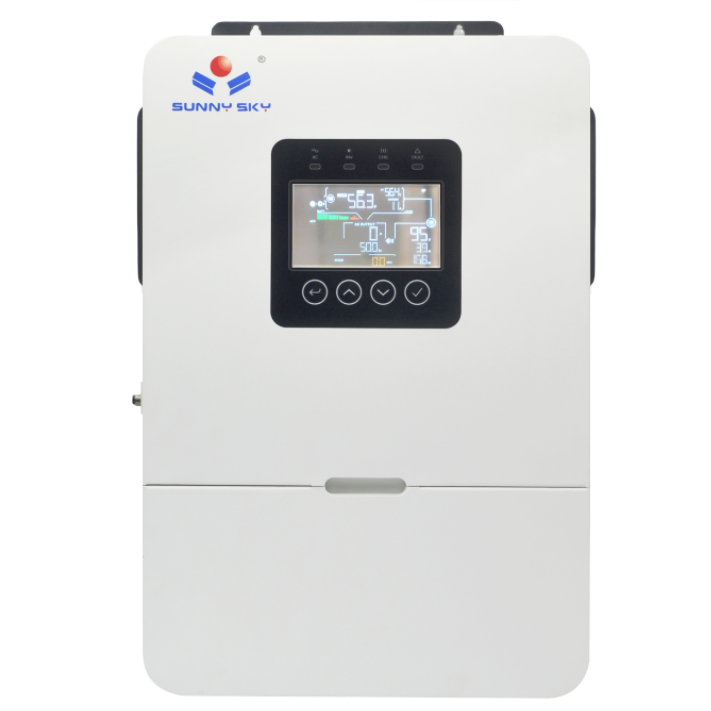
Inverter malfunction and shutdown are common causes of zero or significantly reduced power generation. Modern inverters typically have comprehensive protection functions, automatically shutting down when grid anomalies, internal faults, insulation failures, or other problems are detected. During shutdown, the inverter will usually display fault codes or show abnormal indicator lights. Common fault codes include overload protection, overtemperature protection, grid undervoltage, and DC-side insulation faults. If the inverter completely shuts down, power generation will show zero or near zero. In this situation, first check the fault message on the inverter's display screen or mobile app, and then refer to the instruction manual to determine whether immediate contact with after-sales service is necessary.
Over-temperature protection is the automatic load reduction or shutdown of the inverter when the temperature is too high. Inverters generate heat during operation. If the installation location is poorly ventilated, exposed to direct sunlight, or the ambient temperature is too high, the internal temperature of the inverter may exceed the allowable range. Excessive temperature not only reduces inverter efficiency but may also damage internal components. To determine if over-temperature is the cause, observe whether the inverter casing is hot to the touch, whether the operating environment is poorly ventilated, and whether it is installed in direct sunlight. Solutions include improving the inverter's heat dissipation conditions, such as installing a sunshade, increasing ventilation space, or relocating it to a cooler location.
Grid-side issues can also cause inverter malfunctions. Grid-connected inverters need to detect grid voltage and frequency. If the grid voltage is too high, too low, the frequency is abnormal, or there is a lack of grounding, the inverter may refuse to start or automatically shut down. This is more common in areas with unstable grids or insufficient grid capacity. If your neighbors are also experiencing power outages or voltage problems, it may be a regional grid fault; simply wait for the grid to be restored. If only your own inverter reports a grid fault, you may need to check your own electrical wiring and grounding.
MPPT tracking anomalies can cause some solar panel power to be inefficiently utilized. In a multi-MPPT inverter, if one MPPT malfunctions, the corresponding solar panel string will not generate electricity. The input power of each MPPT can be checked using monitoring software; if the power of a particular MPPT is significantly low or zero, an MPPT malfunction may be present. Such malfunctions require professional repair.
Regularly checking power generation data is crucial for early problem detection. Most modern inverters support data monitoring, allowing you to view real-time power output, daily power generation, monthly power generation, and annual power generation via a mobile app or webpage. It is recommended to develop a habit of checking power generation data daily or weekly and comparing it with historical data for the same period. If you notice a sudden and significant drop in power generation that does not recover after ruling out weather factors, you should troubleshoot according to the sections above or contact customer service.

Conclusion
A sudden drop in the power generation of a solar system can have many causes, ranging from simple weather changes to complex equipment malfunctions. In such cases, don't rush to conclusions. Follow the troubleshooting methods described in this article step by step; the cause can usually be found.
For ordinary users, the most important thing is to learn to distinguish between normal fluctuations and abnormal faults. Changes in power generation caused by factors such as weather, season, and temperature are normal and do not require special handling; simply observe and wait for them to recover naturally. However, problems such as solar panel obstruction, electrical connection faults, and inverter malfunctions require timely attention, otherwise they may cause further damage or safety hazards.
Developing a habit of regularly checking power generation data and establishing historical power generation curves for the system is fundamental to early problem detection. It is recommended to record monthly power generation data; any significant year-on-year or month-on-month decrease in power generation should be taken seriously. Simultaneously, regularly cleaning solar panels, checking electrical connections, and maintaining the inverter's operating environment are all important measures to reduce malfunctions and maintain efficient system operation.
If the cause cannot be determined after troubleshooting, or if signs of equipment damage are found, the installer or equipment manufacturer should be contacted promptly for professional repair. Professional maintenance personnel possess specialized testing equipment and extensive experience, enabling them to accurately locate problems and provide solutions, preventing minor issues from escalating into major malfunctions. This article aims to help solar system users remain calm, analyze situations rationally, and respond appropriately when encountering a decline in power generation, ensuring a continuous and stable supply of clean electricity to their homes.
Please contact Simon immediately to discuss your project:
• WeChat: TY530643572
• Telephone: +86 137 1166 0041