What buyers usually mean by a solar storage inverter system
A solar storage inverter system sits at the center of a battery-backed solar installation. It does more than turn DC into AC. It also manages how solar power, battery power, and grid power interact so the site can keep running when conditions change. For engineers, sourcing managers, and product teams, the real question is not whether the system “works,” but which architecture fits the load profile, site constraints, and operating goals.
That distinction matters. A solar inverter with battery storage can support backup power, peak shaving, renewable smoothing, and time-of-use shifting, but the value depends on the project type. A home solar storage system usually prioritizes compactness and simple operation. A commercial solar inverter setup may focus more on demand management and continuity. Industrial users often need durability, service access, and clear safety provisions first.
Why the cabinet form factor matters
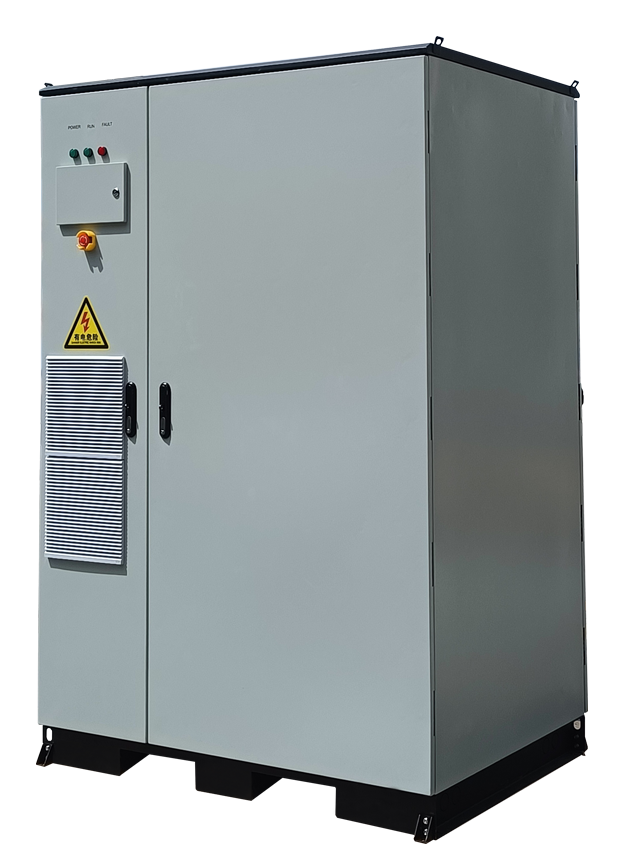
The product information here points to a large industrial energy storage integrated cabinet, which is a useful reminder that a solar storage inverter system is not always a wall-mounted box or a small household unit. In industrial and commercial settings, the enclosure itself becomes part of the buying decision. Lockable doors, warning labels, emergency stop access, ventilation openings, and service panels are not cosmetic details. They affect maintenance, safety, and how easily a technician can work on the site.
The visible cabinet design suggests a stationary battery energy storage system intended for floor-standing deployment. That makes it relevant for factory backup power, site power management, microgrids, and renewable-energy buffering. Buyers looking for a photovoltaic inverter system should pay attention to whether the cabinet is meant for indoor or outdoor use, but that point cannot be assumed here without specification data.
Quick buyer reference: what this kind of system usually needs to do
A battery energy storage system paired with solar should handle a few core jobs without making the operation staff fight the controls every day:
It should switch cleanly between grid, solar, and storage modes.
It should protect the battery and power electronics under abnormal conditions.
It should provide visible status feedback for troubleshooting.
It should support thermal management appropriate to the load and enclosure size.
It should offer safe isolation and maintenance access.
What the visible features tell you, and what they do not
From the cabinet image, a few practical points are visible. The enclosure is enclosed and lockable, which is important in shared industrial spaces. There is an emergency stop button, which is a good sign for operational safety. Status indicators near the top help technicians check operating state at a glance. The lower front ventilation grille suggests thermal management is built into the cabinet design, although the cooling method itself is not visible.
What you should not assume is equally important. Battery chemistry, capacity, voltage range, power rating, IP rating, and certification details are not visible. Those need to come from the datasheet, not from the photo. That is where many purchasing mistakes start: a system looks robust, but the electrical fit is wrong for the load or the site.
Selection criteria for engineering and sourcing teams
Start with the load profile
Before comparing a hybrid solar inverter against an off grid solar inverter, define the actual use case. Is the system expected to ride through outages, reduce peak demand, or absorb midday solar surplus? Each duty cycle changes the inverter and battery requirements.
Check integration depth
Some buyers want a solar power storage inverter that is tightly integrated with battery controls and safety logic. Others prefer more modularity. An all-in-one storage cabinet can simplify installation, but it may narrow future upgrade options. That trade-off is worth discussing early.
Look at serviceability
In industrial environments, the best-performing system is not always the easiest to ignore in daily life. Cabinets that allow quick access to service points, clear fault indication, and safe isolation often save more time than a slightly higher nominal efficiency rating, especially once the system is in operation.
Common mistakes buyers make
One common mistake is treating a residential energy storage inverter as if it could be scaled up by simple arithmetic. Another is choosing a solar inverter with battery storage without checking thermal conditions at the actual installation site. A third is overlooking cabinet access and cable routing, which can turn a neat specification into a frustrating install.
There is also a habit of over-focusing on the inverter alone. In practice, the battery energy storage system, controls, enclosure, and protection features must work together. If one of those pieces is underspecified, the whole project feels it.
Where Guangzhou Tianyuan Solar Equipment fits in
Guangzhou Tianyuan Solar Equipment CO.,LTD says it focuses on independent R&D, patented technologies, and reliable green energy solutions. The company also notes that its brand has reached more than 50 countries. For buyers, that suggests an organization oriented toward export markets and application-driven product development. If you are evaluating a commercial solar inverter platform or a larger storage cabinet program, that kind of experience can be useful, particularly when project requirements are changing quickly.
The company also invites clients to visit its factory in Guangzhou, which may be helpful for teams that want to review manufacturing discipline, assembly quality, and line capability before moving forward.
FAQ
Is a solar storage inverter system the same as a battery cabinet?
Not exactly. The cabinet is the physical enclosure and may house batteries, power conversion hardware, cooling, and controls. The inverter is one part of the overall system.
Can this type of system be used for commercial backup power?
Yes, that is one of the most common use cases for industrial storage cabinets, provided the electrical and safety specifications match the site.
What should I ask for before buying?
Request the full electrical specification, battery configuration, protection details, thermal management approach, installation requirements, and compliance documentation. A photo is useful, but it is not a substitute for the datasheet.
Next step for buyers
If you are comparing a solar inverter with battery storage for a factory, campus, or commercial site, start with the duty cycle first and the cabinet second. Then ask for the detailed specification package and service scope. That is the shortest path to avoiding a mismatch between the promise of the system and what your site actually needs.