Understanding 48V Solar Inverters: A Gateway to Efficient Solar Energy Solutions
In the realm of renewable energy, the 48V solar inverter stands out as a pivotal component for converting solar power into usable electricity. This technology enables efficient energy management in both residential and commercial settings, contrasting sharply with traditional grid-dependent systems by offering independence and cost savings. When compared to lower-voltage alternatives, 48V systems provide higher efficiency and reduced wiring losses, making them ideal for larger solar setups. As solar inverter technology evolves, these inverters integrate seamlessly with modern sustainable energy systems, powering everything from home appliances to business operations without the inefficiencies of outdated methods.
Comparing 48V Solar Inverters to 3.6KW Hybrid Inverters: Power and Versatility
A key comparison arises when evaluating the 48V solar inverter against the 3.6KW hybrid inverter, which is designed for smaller-scale applications. While the 3.6KW model excels in compact hybrid solar systems, delivering reliable power for modest homes with its bidirectional capabilities, the 48V solar inverter supports more demanding loads, often scaling up to 6KW or beyond. For instance, in off-grid scenarios, the 48V system's higher voltage minimizes energy dissipation over long cable runs, unlike the 3.6KW hybrid inverter that might require thicker wiring for equivalent performance. This contrast highlights the 48V's superiority in expansive solar energy solutions, where durability and output consistency are paramount. Hybrid solar systems incorporating 48V technology also allow for smoother transitions between solar, battery, and grid sources, providing a more resilient setup compared to purely grid-tied 3.6KW options that falter during outages.
Bidirectional Inverters vs. Traditional Solar Power Inverters: Innovation in Flow
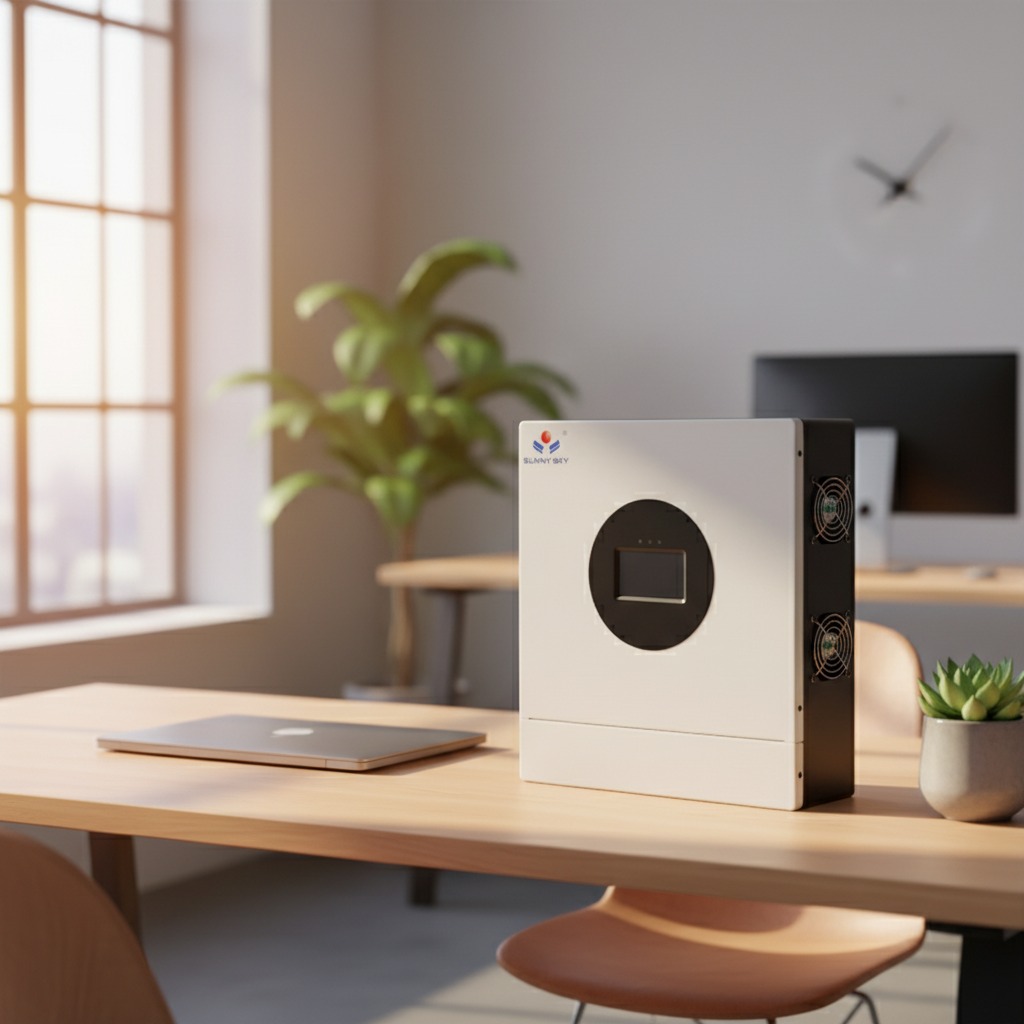
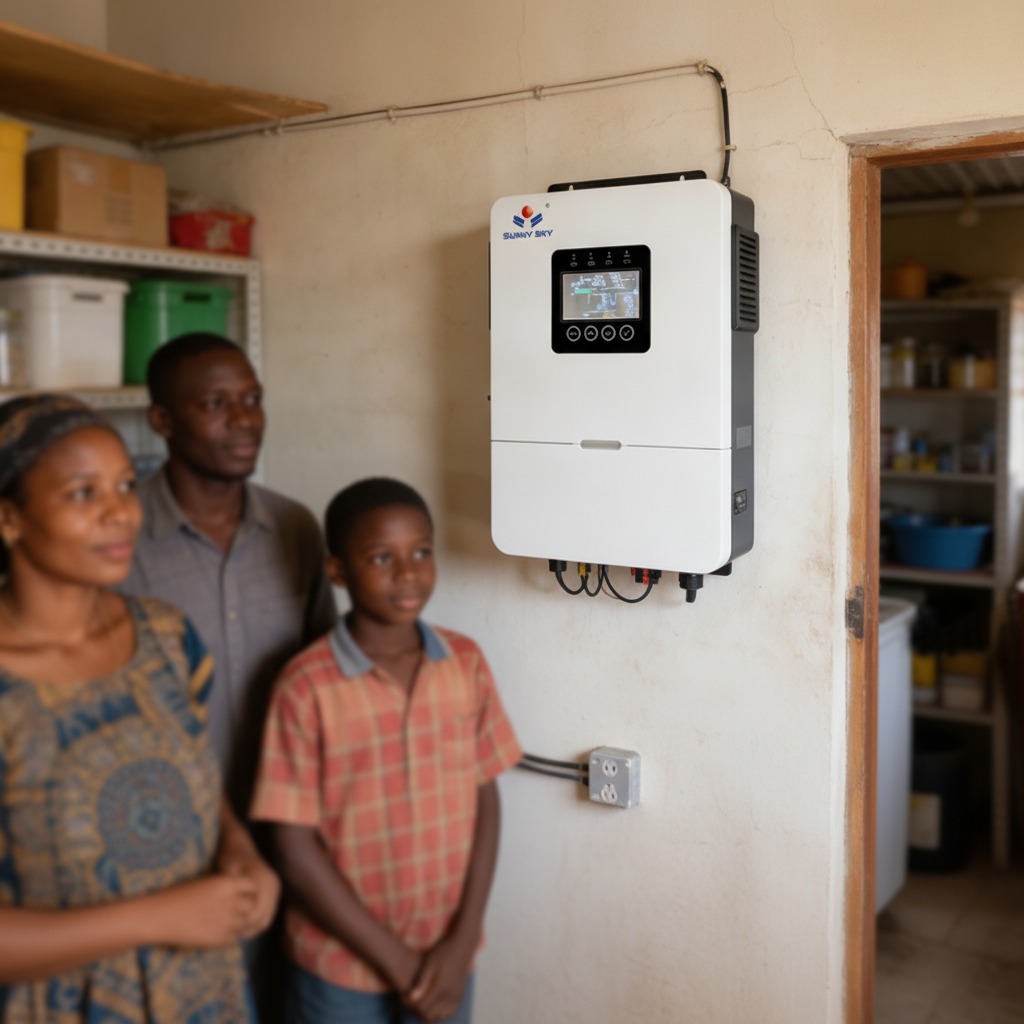
Delving deeper, bidirectional inverters represent a leap forward from conventional solar power inverters, particularly within 48V frameworks. Traditional solar power inverters primarily convert DC to AC unidirectionally, limiting their use in dynamic environments. In contrast, bidirectional inverters in 48V solar inverters enable energy flow in both directions, facilitating battery charging from the grid or solar panels while inverting for household use. This duality is especially evident in renewable energy inverters tailored for sustainable energy systems, where bidirectional models reduce peak demand charges by storing excess power— a feature absent in unidirectional designs. For off-grid solar inverters, this means greater autonomy, as users can harness stored energy during low sunlight periods, outperforming traditional setups that rely heavily on constant solar input. The Sunny Sky 6KW Hybrid Solar Inverter exemplifies this, with its intuitive LCD display and robust 6KW output, blending bidirectional efficiency with a sleek design for modern applications.
Hybrid Solar Systems and Off-Grid Solar Inverters: On-Grid Reliability Meets Off-Grid Freedom
When contrasting hybrid solar systems powered by 48V solar inverters with dedicated off-grid solar inverters, the differences in flexibility and integration become clear. Hybrid systems, often featuring the 48V solar inverter, intelligently switch between grid and solar sources, ensuring uninterrupted power and maximizing savings in urban settings. Off-grid solar inverters, however, prioritize complete independence, storing energy in batteries without grid fallback, which suits remote locations but demands larger battery banks. Solar energy solutions using 48V technology bridge this gap, offering hybrid versatility for those in semi-rural areas, whereas pure off-grid setups contrast by eliminating utility bills entirely at the cost of higher upfront investments. In sustainable energy systems, the 48V solar inverter's adaptability shines, as seen in products like the Sunny Sky 6KW model, which handles 6KW loads with real-time monitoring, far surpassing the limitations of rigid off-grid alternatives in scalability and user-friendliness.
The Future of Solar Inverter Technology: Balancing Efficiency and Sustainability
Looking ahead, solar inverter technology in 48V configurations continues to outpace legacy systems by emphasizing efficiency and eco-friendliness. Compared to earlier renewable energy inverters, modern 48V models incorporate advanced MPPT tracking for optimal energy harvest, reducing waste by up to 30% versus non-MPPT designs. This evolution supports broader solar energy solutions, contrasting with the static performance of older inverters that struggle with variable weather. For sustainable energy systems, the integration of bidirectional inverter features in 48V setups fosters long-term viability, enabling users to scale from basic hybrid solar systems to comprehensive off-grid networks. Ultimately, choosing a 48V solar inverter like the Sunny Sky 6KW Hybrid Solar Inverter not only contrasts favorably with lower-powered options but also positions users at the forefront of renewable innovation, ensuring reliable, cost-effective power for years to come.