Understanding the Hybrid Solar Inverter: Revolutionizing Renewable Energy Systems

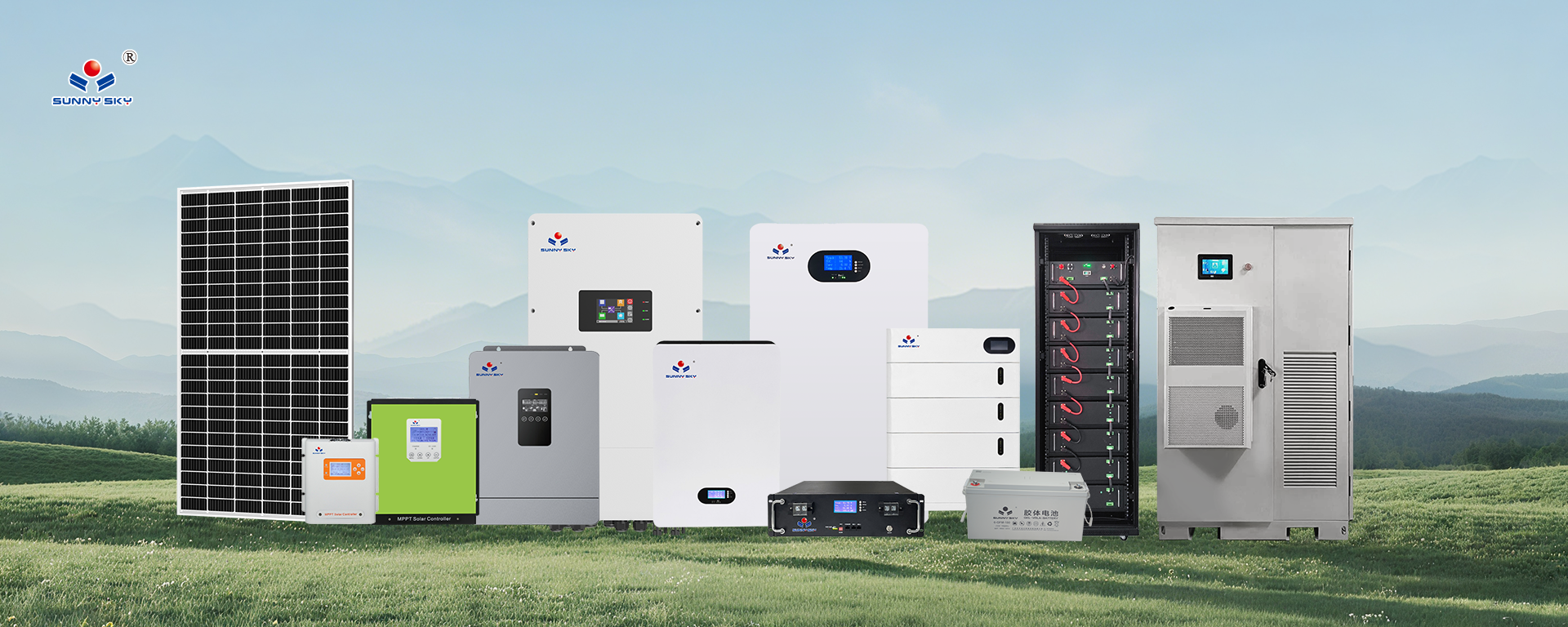
In the evolving landscape of renewable energy, the hybrid solar inverter stands as a cornerstone technology, seamlessly integrating solar power with grid electricity to optimize energy usage. As a leading solar inverter manufacturer, Guangzhou Tianyuan Solar Equipment CO.,LTD, under the SUNNYSKY brand, excels in producing these advanced devices that cater to both residential and commercial needs. This article delves into the technical intricacies of hybrid solar inverters, exploring their design, functionality, and the pivotal role they play in solar energy solutions.
Core Principles and Technical Design of Hybrid Solar Inverters
A hybrid solar inverter operates by converting direct current (DC) from solar panels into alternating current (AC) for household or grid use, while also managing battery storage for off-grid capabilities. Unlike traditional inverters, the hybrid model incorporates a multi-mode operation: it can function in grid-tied mode to feed excess power back to the utility, off-grid mode for standalone systems, or a hybrid mode that switches seamlessly during outages. Key to its efficiency is the inclusion of a built-in charge controller, which regulates voltage and current to prevent overcharging batteries, typically using Maximum Power Point Tracking (MPPT) algorithms for up to 98% conversion efficiency.
From a manufacturing perspective, as a premier hybrid inverter supplier based in a China solar factory, SUNNYSKY employs patented technologies in inverter production. Their 12KW hybrid solar inverter, for instance, features a robust topology with insulated gate bipolar transistors (IGBTs) for high-frequency switching, minimizing harmonic distortion to below 3%. The elegant LCD display provides real-time telemetry, including photovoltaic input voltage (up to 500V DC), output power factor (0.8 leading to 0.8 lagging), and battery state-of-charge (SOC) metrics, all accessible via intuitive touch controls. This design not only enhances user interaction but also integrates smart grid communication protocols like Modbus for remote monitoring.
Advanced Features in SUNNYSKY's Solar Power Inverters
SUNNYSKY's renewable energy inverters, such as the 6KW model, exemplify cutting-edge solar technology factory standards. These units boast a compact, IP65-rated enclosure that withstands environmental stressors like dust and moisture, ensuring a lifespan exceeding 10 years under normal conditions. The hybrid functionality is powered by a dual DSP (Digital Signal Processor) architecture, enabling precise synchronization with grid frequencies (50/60Hz) and anti-islanding protection to comply with international standards like IEC 62109.
In terms of performance, the 12KW variant supports parallel operation up to 6 units, scaling to 72KW for commercial solar energy solutions, with programmable output priorities that favor solar over grid power. Efficiency peaks at 95% in European mode, thanks to transformerless design that reduces weight to under 30kg while maintaining surge capacity for motor starts. As a China renewable energy leader, SUNNYSKY invests heavily in R&D, incorporating AI-driven predictive maintenance to forecast component failures based on thermal imaging and vibration data, thus minimizing downtime.
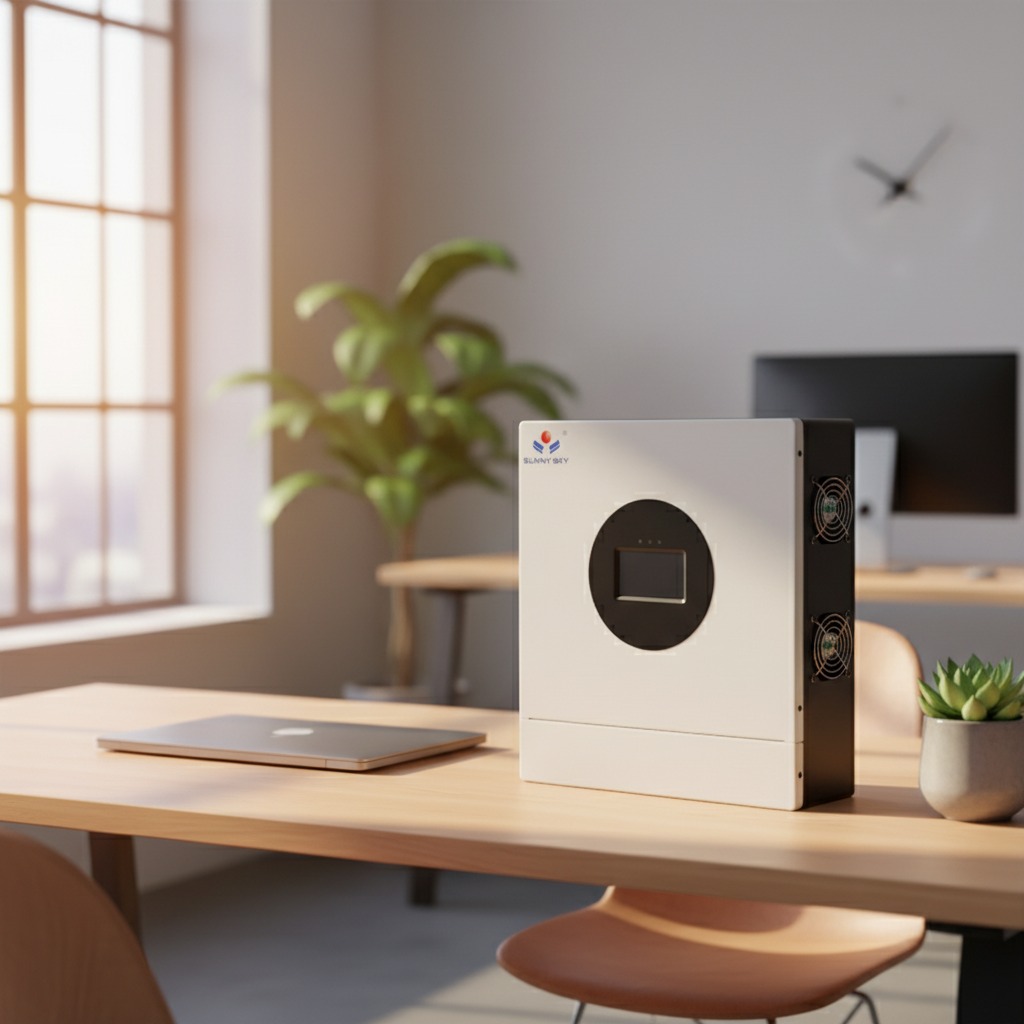
The 6KW solar power inverter, with its sleek white finish and digital interface, offers similar sophistication in smaller setups. It handles input currents up to 120A per MPPT tracker, supporting diverse panel configurations, and includes programmable relay outputs for load shedding during low battery states. This technical prowess aligns with SUNNYSKY's mission to deliver reliable green energy, reducing carbon emissions by optimizing self-consumption rates to over 80% in hybrid setups.
Applications and Future Prospects in Solar Inverter Production
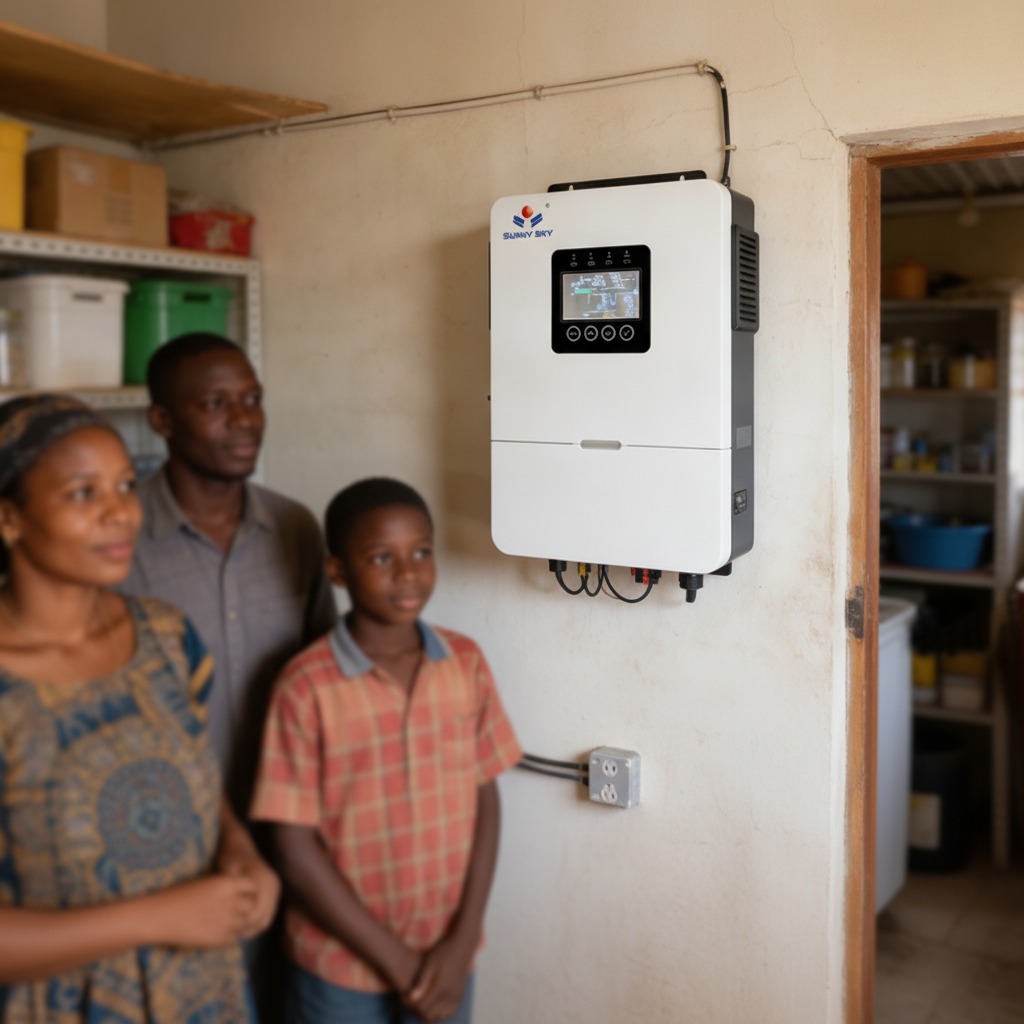
Deploying a hybrid solar inverter in solar energy solutions transforms energy management. For residential users, it enables energy independence by storing surplus daytime generation for nighttime use, potentially cutting electricity bills by 50-70%. In commercial scenarios, as provided by this solar inverter manufacturer, the scalability supports microgrids, where multiple inverters synchronize via CAN bus for balanced load distribution.
Looking ahead, advancements in wide-bandgap semiconductors like SiC (Silicon Carbide) promise even higher efficiencies, up to 99%, in future iterations from China solar factories. SUNNYSKY's commitment to innovation, backed by exports to over 50 countries, positions them as a trusted hybrid inverter supplier. Their factory, conveniently located 20 minutes from Guangzhou Baiyun International Airport, welcomes global partners for tours, complete with complimentary pickups, to witness solar inverter production firsthand.
By choosing SUNNYSKY's renewable energy inverter, users gain not just a product but a comprehensive ecosystem that enhances sustainability. This technical integration of solar technology factory excellence ensures long-term value, driving the global shift toward cleaner energy infrastructures.