Understanding the Hybrid Solar Inverter: A Technical Overview
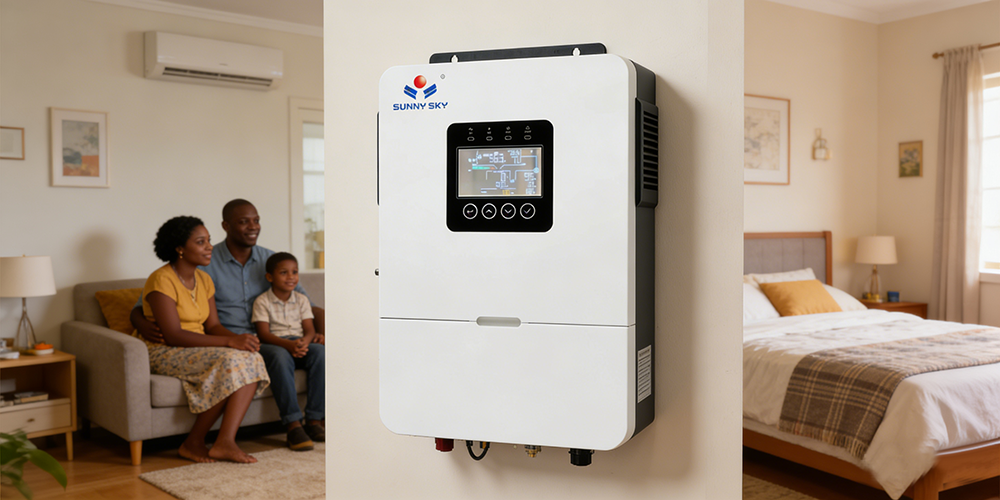
In the evolving landscape of renewable energy systems, the hybrid solar inverter stands as a pivotal technology, enabling seamless integration of solar power, battery storage, and grid connectivity. This device is essential for optimizing energy use in residential and commercial settings, allowing users to maximize solar generation while ensuring reliable power supply. At Guangzhou Tianyuan Solar Equipment CO.,LTD, our SUNNYSKY brand exemplifies this innovation with the 12KW hybrid solar inverter, designed for high-performance applications that demand both efficiency and versatility.
Key Benefits of Hybrid Inverter Technology
Hybrid inverter technology represents a significant advancement over traditional systems, offering multifaceted benefits that enhance energy management. Unlike standard inverters, a hybrid inverter benefits from its ability to operate in multiple modes—grid-tied, off-grid, or hybrid—automatically switching based on energy availability. This flexibility reduces dependency on the utility grid, lowers electricity bills through peak shaving, and provides backup power during outages. For instance, our SUNNYSKY 12KW model intelligently prioritizes solar input for battery charging and load supply, achieving up to 98% efficiency in power conversion. The hybrid inverter benefits also include extended battery life via smart charging algorithms that prevent over-discharge and optimize cycles. In technical terms, this involves MPPT (Maximum Power Point Tracking) controllers that dynamically adjust to varying solar conditions, ensuring maximum harvest from photovoltaic arrays. Environmentally, these inverters contribute to reduced carbon emissions by promoting self-consumption of clean energy, aligning with global sustainability goals. Guangzhou Tianyuan Solar Equipment CO.,LTD invests heavily in R&D to refine these features, delivering products that not only perform reliably but also integrate patented technologies for superior stability across diverse climates.
Comparing Hybrid Inverter vs. Solar Inverter
A common query in solar adoption is the distinction between a hybrid inverter vs. solar inverter, which boils down to functionality and application scope. A traditional solar inverter, or grid-tie inverter, converts DC power from panels to AC for immediate grid export, lacking native support for battery integration. In contrast, the hybrid solar inverter incorporates an built-in charge controller and battery management system, enabling storage and off-grid operation. This makes the hybrid model ideal for areas with unreliable grids or for users seeking energy independence. Technically, hybrid systems use advanced power electronics, such as IGBT (Insulated Gate Bipolar Transistor) modules, to handle bidirectional power flow—importing from the grid when needed and exporting excess solar energy. Our SUNNYSKY 12KW hybrid solar inverter exemplifies this by supporting up to 48V battery banks and AC coupling for retrofitting existing setups. Performance metrics show hybrids outperforming pure solar inverters in blackout scenarios, with seamless UPS-like switching in under 10 milliseconds. For installations in villas or small offices, the hybrid approach yields higher ROI through net metering and demand response capabilities, a focus of our company's commitment to innovative green energy solutions.
Exploring the Best Hybrid Solar Inverter Options
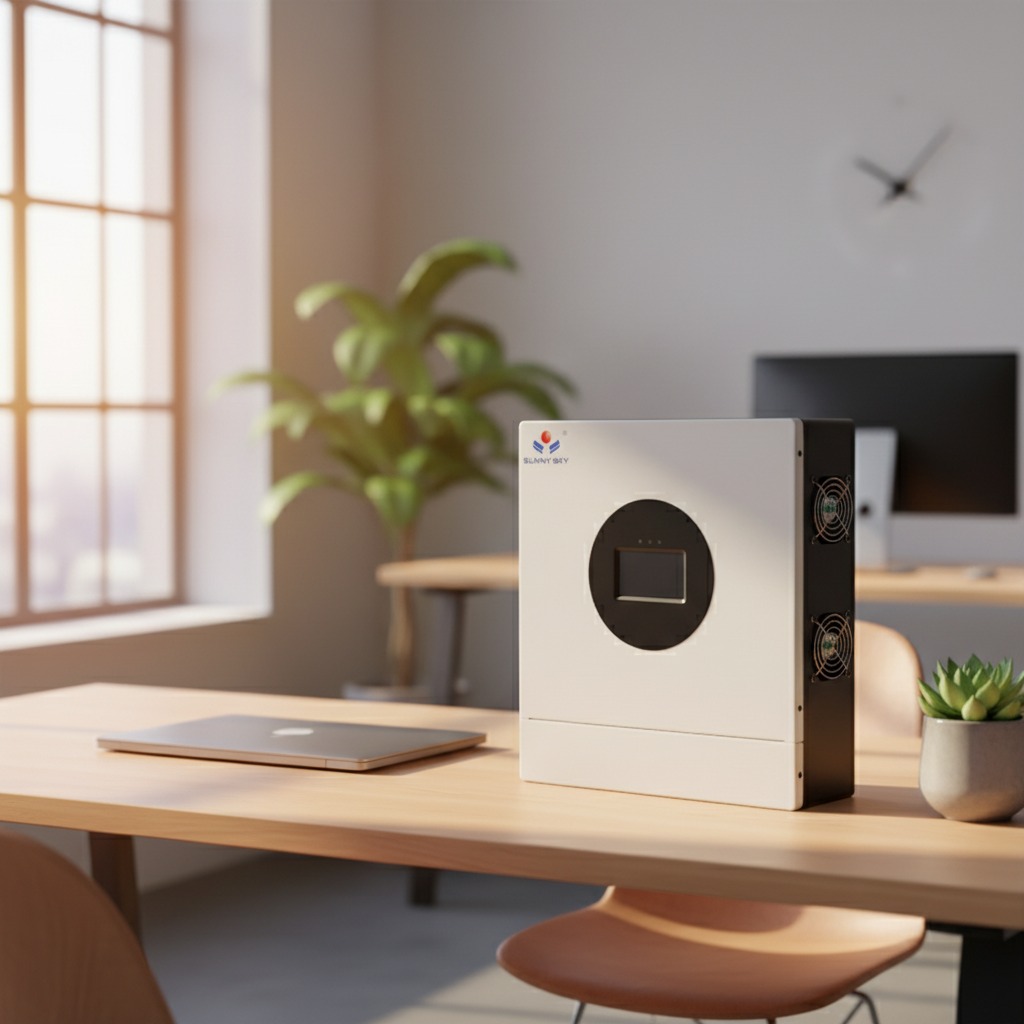
When selecting the best hybrid solar inverter, factors like capacity, efficiency, and compatibility are crucial. Top-rated hybrid solar inverters, such as our SUNNYSKY 12KW unit, feature a robust 12KW output suitable for loads up to 120A, with dual MPPT trackers for multi-array configurations. User reviews highlight the intuitive LCD interface, which displays real-time data on voltage, current, and state-of-charge (SOC) with precision. Hybrid solar inverter reviews often praise models with IP65-rated enclosures for dust and water resistance, ensuring longevity in outdoor installations. From a technical standpoint, the best hybrid solar inverter incorporates galvanic isolation for safety and anti-islanding protection to comply with grid standards like IEEE 1547. Our product stands out with its matte white housing and side ventilation for optimal thermal dissipation, maintaining efficiency even at full load in ambient temperatures up to 60°C. Guangzhou Tianyuan Solar Equipment CO.,LTD's reach to over 50 countries underscores the global trust in our designs, which blend industrial aesthetics with cutting-edge firmware for remote monitoring via apps.
Hybrid Solar Inverter Price and Value Analysis
The hybrid solar inverter price varies based on specifications, but investing in quality yields long-term savings. Entry-level units start around $1,000, while high-capacity models like the SUNNYSKY 12KW range from $2,500 to $3,500, reflecting advanced features such as programmable relays and expandable scalability. This pricing is competitive given the inverter's 10-year warranty and low failure rate below 1%. Technically, the cost-benefit is evident in reduced total harmonic distortion (THD) under 3%, minimizing interference with sensitive electronics. For businesses, the hybrid solar inverter price justifies itself through incentives like tax credits and faster payback periods—often 5-7 years in sunny regions. Our company's dedication to R&D ensures that every unit delivers premium value, with complimentary factory visits near Guangzhou Baiyun International Airport to showcase manufacturing excellence.
Installing a Hybrid Solar Inverter: Technical Guidelines
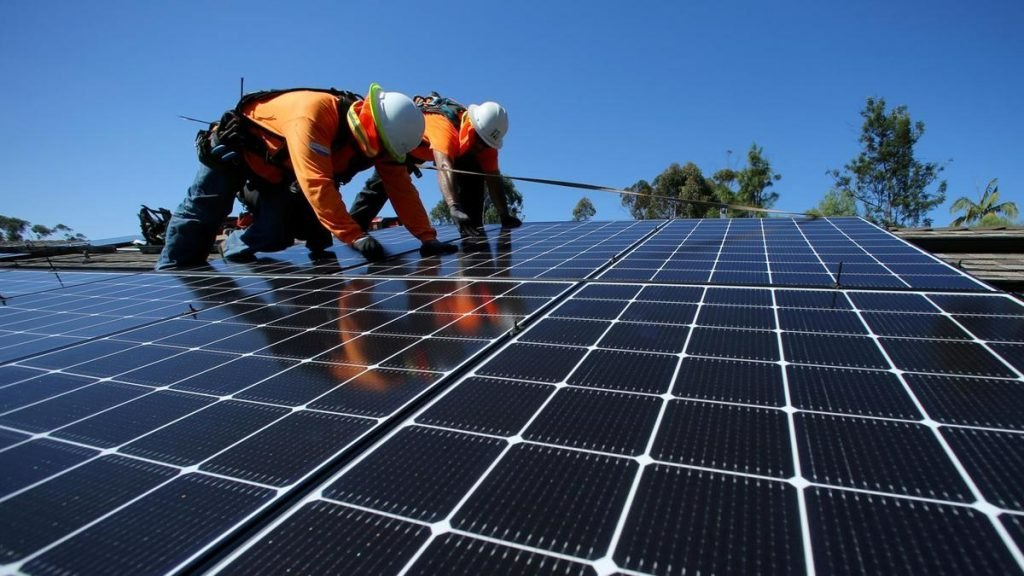
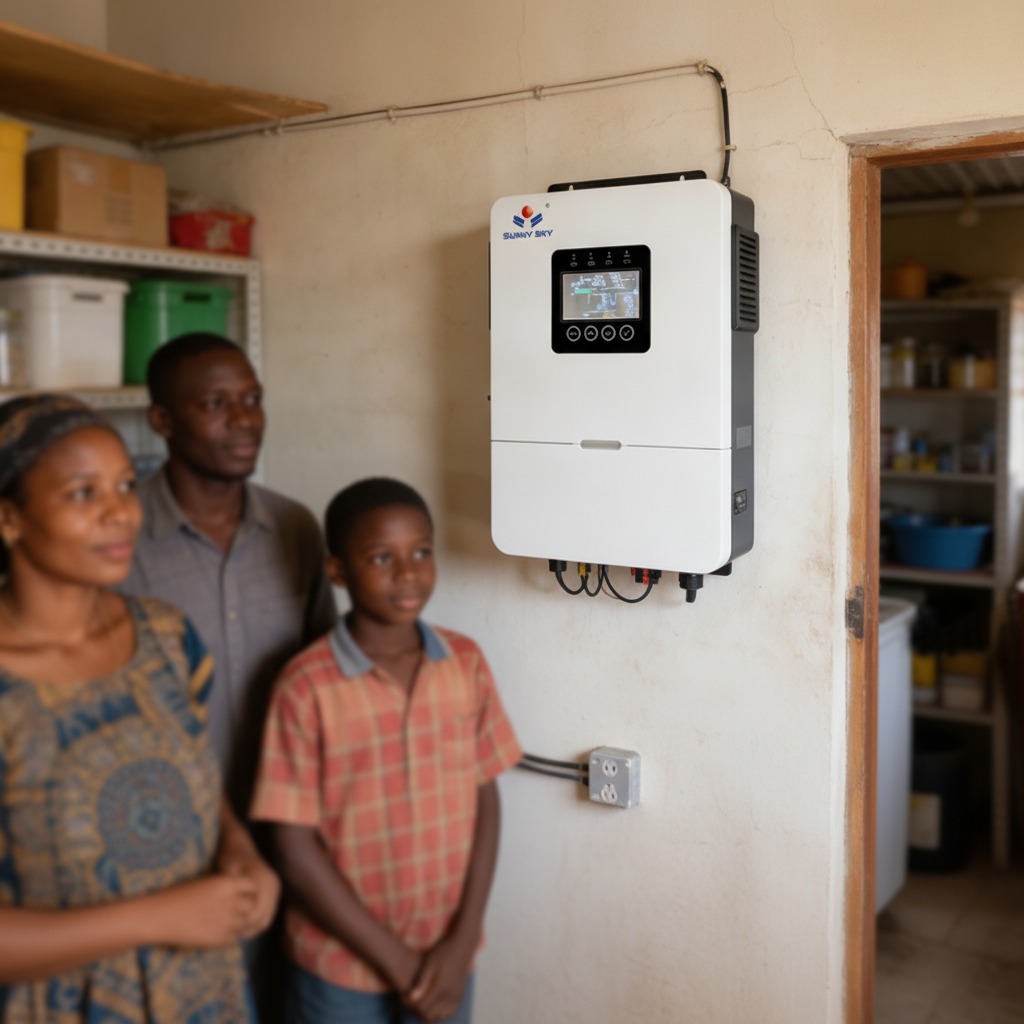
Installing a hybrid solar inverter requires careful planning to ensure safety and peak performance. Begin with site assessment for adequate ventilation and proximity to the main panel, adhering to NEC (National Electrical Code) guidelines. For the SUNNYSKY 12KW model, mounting involves wall brackets spaced 40cm apart, with cabling sized for minimal voltage drop—typically 4AWG for DC inputs. The process includes connecting PV arrays to MPPT ports, battery terminals with torque specs of 2-3 Nm, and AC outputs via breakers rated at 63A. Commissioning involves firmware updates and parameter settings via the LCD, such as setting battery type (lithium or lead-acid) and grid voltage thresholds. Professional installation is recommended to handle grounding and surge protection, preventing issues like ground faults. Post-installation, the solar energy hybrid inverter monitors system health, alerting on anomalies via LED indicators. Guangzhou Tianyuan Solar Equipment CO.,LTD provides detailed manuals and support, empowering users with reliable setups that reduce energy consumption and emissions.
Top Rated Hybrid Solar Inverters and Future Trends
Among top rated hybrid solar inverters, the SUNNYSKY series leads with its blend of power and design, earning accolades for user-friendly interfaces and robust build. Future trends point toward AI-enhanced controls for predictive load balancing and V2G (Vehicle-to-Grid) integration, further elevating hybrid inverter technology. As solar adoption grows, these inverters will play a central role in smart grids, optimizing energy flow with IoT connectivity. Our commitment at Guangzhou Tianyuan Solar Equipment CO.,LTD to innovation ensures customers receive forward-thinking solutions that deliver lasting value in the green energy revolution.