Foreword
"With a week of rainy weather forecast, will my solar power system still work properly?"
This is one of the biggest concerns for many solar energy users. Especially during the rainy season, the autumn-winter transition, or periods of continuous rainy weather, the power generation of solar panels drops significantly, leading users to worry: Is the electricity generated enough? Will the batteries run out? Will we have to go back to relying on buying electricity to get by?
This concern is understandable. Solar power systems are essentially dependent on weather conditions; a decrease in power generation is inevitable during periods of continuous cloudy or rainy weather. However, this doesn't mean solar systems are unusable on cloudy or rainy days—the key lies in the system's configuration and the user's preparedness. This article will analyze in detail the extent of the impact of continuous cloudy or rainy days on solar systems and how to ensure the system's continuous and stable operation through appropriate energy storage configurations.
I. How significant is the impact of rainy days on solar energy systems?
Before discussing coping strategies, we need to clarify the question of "how much power generation decreases on rainy days".
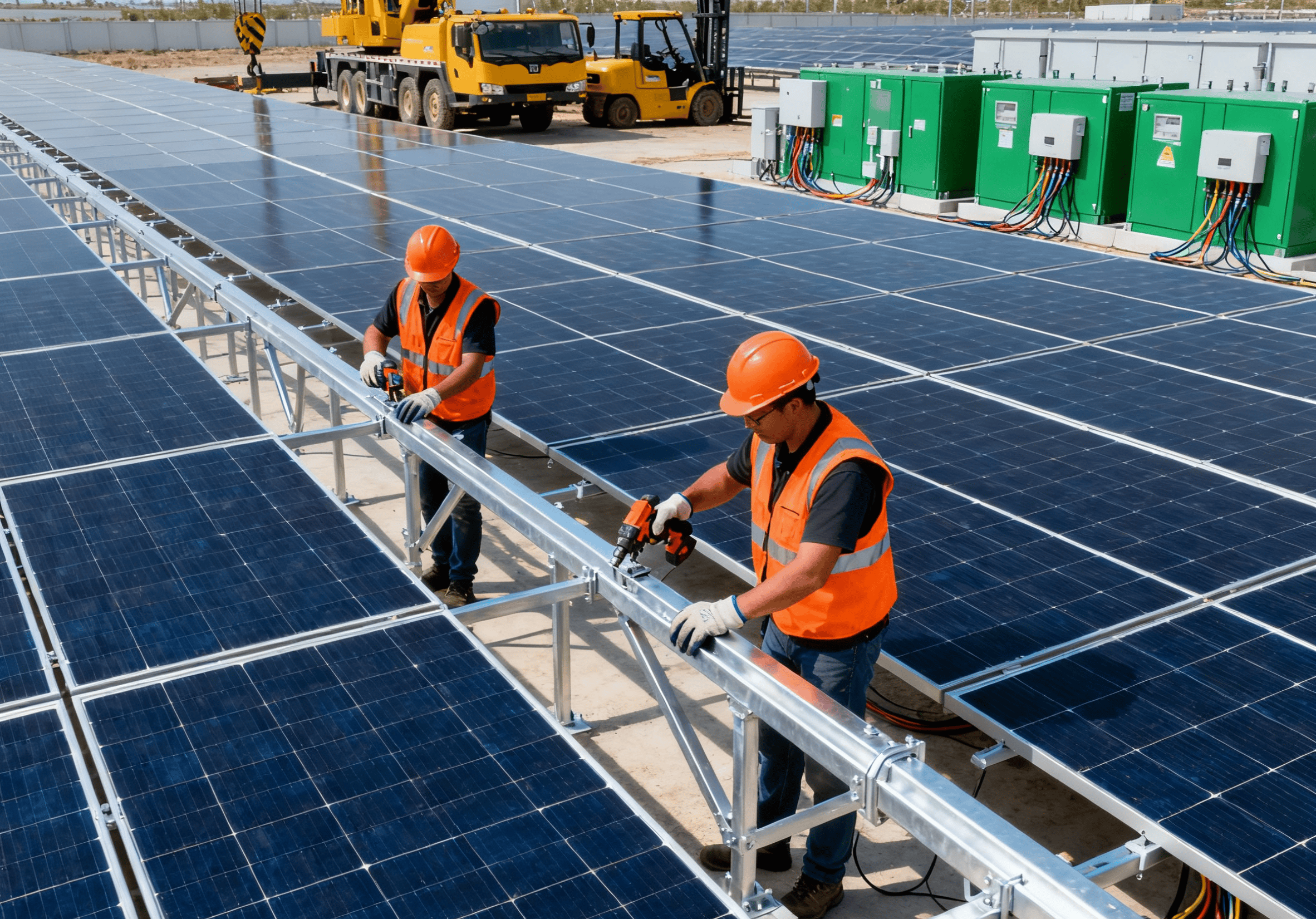
Solar panels generate electricity based on the photovoltaic effect, which essentially involves photons exciting electrons to produce an electric current. On cloudy days, sunlight penetrates thick clouds, significantly reducing the number of photons; the intensity of sunlight reaching the solar panels is only 10% to 30% of that on a sunny day. The exact reduction depends on the thickness and type of cloud cover. On a cloudy day with thin clouds, the power generation may be 30% to 50% of that on a sunny day; on a cloudy day with thick, dense clouds, the power generation may only be 10% to 20% of that on a sunny day.
To illustrate this more clearly, let's look at some specific figures. In East China, a 5kW system can generate 20 to 25 kWh of electricity per day on a sunny day; on a slightly cloudy day, the output might drop to 8 to 12 kWh; and during a continuous period of rainy days, the output might only be 3 to 6 kWh. If there is a week of continuous rainy days, the output for that week might be only one-fifth of that on a sunny day, or even less.
However, the impact of cloudy and rainy days isn't just limited to reduced power generation; there's another easily overlooked issue—temperature. Many people know that the power generation efficiency of solar panels decreases as temperature rises. Conversely, low temperatures also affect the efficiency of solar panels, but this effect is positive—power generation efficiency is actually higher at lower temperatures. Therefore, although cloudy and rainy days reduce sunlight, the efficiency gains from lower temperatures cannot compensate for the loss of sunlight, and overall power generation still decreases.
In addition, after a series of rainy days, dust and dirt may accumulate on the surface of solar panels. Once the weather clears up, the panels' power generation efficiency may decrease by another 10% to 15%. This is another hidden impact of rainy weather on solar energy systems.
In summary, the impact of continuous rainy days on solar energy systems is mainly reflected in three aspects: power generation drops to 10% to 30% of that on sunny days, dust accumulation on the panels may affect power generation efficiency after sunny days, and users will become more conservative in their electricity consumption.
II. How energy storage systems function on rainy days
On cloudy or rainy days, solar power generation decreases, but household appliances still need to be used and charged. Who will fill this gap? The answer is energy storage batteries.
The role of energy storage systems in rainy weather can be understood in three stages.
The first stage is during the daytime on cloudy or rainy days. The solar panels are still generating electricity, but less than on sunny days. At this time, the batteries are in a "charge-discharge" state—the electricity generated by the panels is prioritized for household use; if there is any surplus, it charges the batteries; if the panels' output is insufficient, the batteries discharge to supplement it. This is a dynamic equilibrium process. The battery's charge-discharge state on cloudy or rainy days mainly depends on two factors: the battery's remaining charge (SOC) and the household's current electrical load.
The second phase is during cloudy or rainy nights. The solar panels stop generating electricity, and all power consumption relies on batteries. If the battery capacity is large enough, it can support the basic load at night—refrigerator, router, lighting, and some electrical outlets. The key to this phase is the concept of "basic load." Not all appliances need to run at night; rather, it's important to consciously adjust electricity usage times, scheduling the use of high-power appliances during the daytime as much as possible.
The third stage is the later part of a continuous rainy period. If the rainy weather lasts for many days, the battery may gradually be depleted. At this time, there are several possible ways to deal with it: First, reduce the use of non-essential electrical appliances to reduce the electrical load; second, start the backup power source, such as a diesel generator (if it is a hybrid system); third, temporarily resume purchasing electricity from the grid, and switch back to energy storage mode after the battery is fully charged when the weather clears up.
Once you understand these three stages, you'll know the value of energy storage systems on cloudy or rainy days—it acts as a "buffer," smoothing out fluctuations in solar power generation and allowing users to use the electricity generated by solar systems normally on cloudy or rainy days, instead of relying entirely on the grid.
III. How many days can energy storage batteries of different capacities last?
This is the question everyone is most concerned about: "How many rainy days will my battery last?"
To answer this question, we first need to figure out two numbers: how much electricity is needed each day on rainy days, and how much net electricity the battery consumes each day.
Taking a typical family of three as an example, their basic nighttime electricity consumption (refrigerator, router, lighting, phone charging, etc.) is about 1 to 2 kWh. If the solar panels generate just enough electricity for the family during the day and don't charge the battery, then a 10 kWh battery will have 8 kWh remaining after consuming 2 kWh at night. If the panels only generate 5 kWh the next day (on a cloudy day), and the family uses 2 kWh, there's a net charge of 3 kWh, bringing the battery back to 11 kWh. Therefore, in this scenario, a 10 kWh battery can sustain the family for several consecutive cloudy or rainy days.
However, for households with much higher electricity consumption, or those that need to run high-power appliances such as air conditioners and water heaters at night, the battery will be consumed much faster. A household with central air conditioning may consume 5 to 8 kilowatt-hours of electricity for cooling at night in the summer, so a 10-kilowatt-hour battery may only last for one to two days.
Below is a reference for the "battery life" of different battery capacities under different electrical loads:
10 kWh battery configuration: Basic load (1-2 kWh/night) can support 5-7 days; Medium load (3-4 kWh/night) can support 2-3 days; High load (5-8 kWh/night) can support 1-2 days.
20 kWh battery configuration: Basic load can support 10-14 days; Medium load can support 5-7 days; High load can support 2-4 days.
30 kWh battery configuration: Basic load can support 15-21 days; Medium load can support 7-10 days; High load can support 3-5 days.
These figures are calculated under the assumption of "no charging during the day." In reality, even on cloudy or rainy days, solar panels will generate some electricity (10%-30% on sunny days), so the actual lifespan will be longer than the theoretical value. Additionally, if you have a slow charging station for your electric vehicle at home, charging the car with the battery at night will deplete the battery much faster.
IV. Practical Suggestions for Energy Storage Configuration on Rainy Days
Now that we've covered the theory, let's get practical—how should energy storage systems be configured and used during rainy weather?
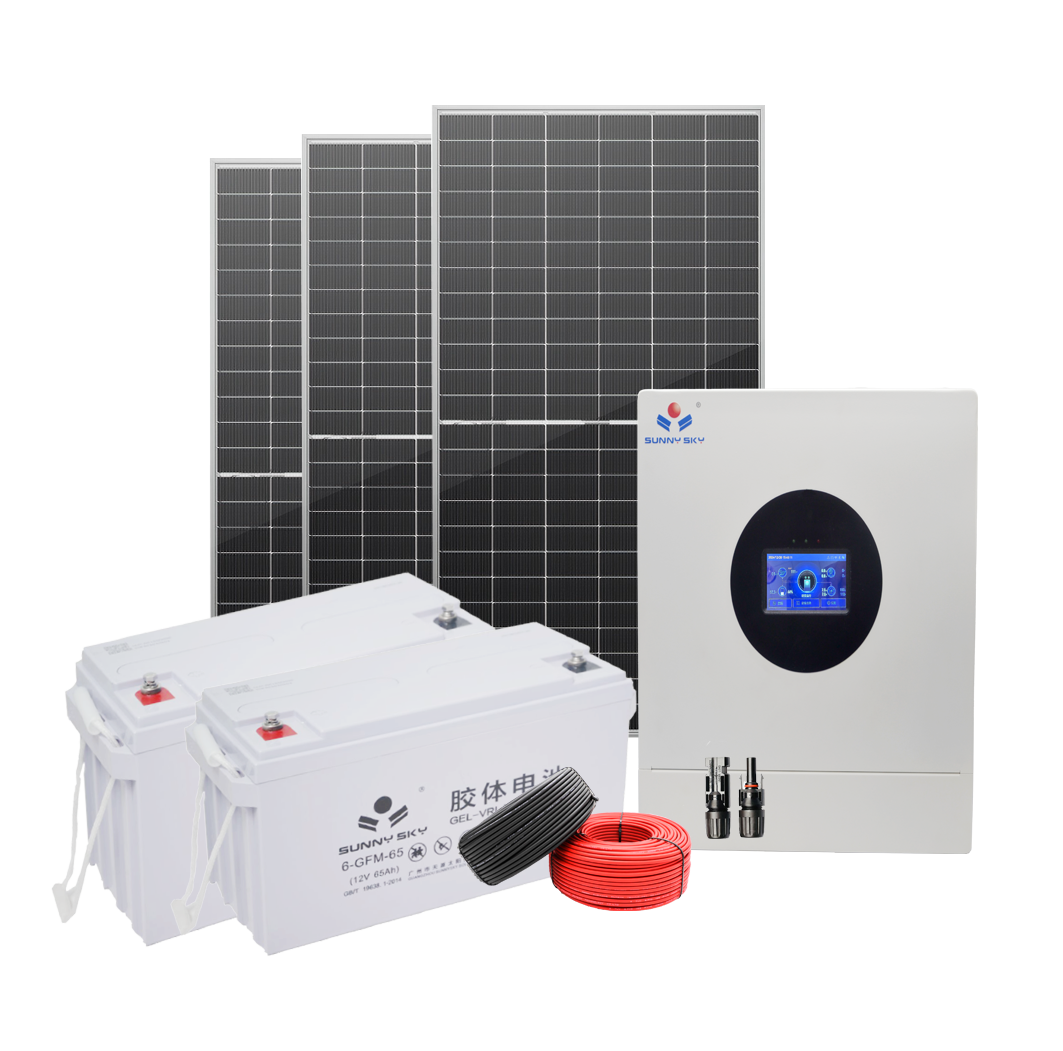
First, I recommend designing the battery capacity to last at least three days. This is my core suggestion. For most families, three consecutive rainy days is a reasonable baseline. If there is a lot of rain in your area, or if there is severe smog and very little sunshine in winter, you can design it to last four to five days. A 10 kWh battery is generally sufficient for the basic load of an average family of three; for families with central air conditioning or high-power appliances, I recommend at least a 20 kWh battery.
Secondly, the capacity of the photovoltaic panels and the battery must be matched. Some people think that as long as the battery capacity is sufficient, the panels don't matter. In fact, the configuration of the photovoltaic panels is equally important—the power generation on cloudy or rainy days is already low. If the panel configuration is insufficient, the battery will be in a state of "only consuming power and not fully charging" every day, and the range will become shorter and shorter. It is recommended that the power configuration of the photovoltaic panels be slightly larger than that of the inverter. This way, although the power generated by the panels is less on cloudy or rainy days, it can at least supplement the battery capacity.
Third, try to schedule the use of high-power appliances during the daytime. Although solar panels generate less electricity during the day on cloudy or rainy days, they still generate electricity as long as there is sunlight. Using high-power appliances such as washing machines, dryers, and dishwashers during the day can reduce battery consumption at night and extend battery life.
Fourth, pay attention to the weather forecast and plan your electricity usage in advance. This is a useful tip that many people overlook. Nowadays, weather forecasts on mobile phones can show the weather conditions for the next week or even longer. If you see that the next few days will be cloudy and rainy, you can intentionally fully charge your battery on sunny days and use more electrical appliances during the day to store up electricity in advance.
Fifth, consider configuring a hybrid diesel backup power system. For users who prioritize uninterrupted power supply, a hybrid solution combining solar power, energy storage, and a diesel generator can be considered. The diesel generator can serve as a backup power source when the battery is depleted and there are prolonged cloudy days, either charging the battery or providing direct power. This configuration is more expensive but can handle extreme situations.
Sixth, clean the solar panels regularly. After a series of cloudy or rainy days, dust, leaves, bird droppings, and other debris may accumulate on the panels. This dirt can block sunlight and reduce power generation efficiency. Cleaning the panels promptly after the weather clears can restore power generation efficiency. In dry areas with little rain, it is recommended to clean them once a month; in areas with frequent smog or heavy dust, the cleaning frequency can be increased appropriately.
Conclusion
Consecutive rainy days do have an impact on solar energy systems, but it doesn't mean they're "unusable," but rather that they "don't perform as well as usual." Power generation will drop to 10% to 30% of that on sunny days, requiring energy storage batteries to make up the shortfall.
The key to solving this problem lies in a reasonable energy storage configuration. The core principles are: the battery capacity should be large enough to last at least three days; the photovoltaic panel configuration should have a margin to ensure that the battery can be supplemented with some power even on cloudy or rainy days; and electricity usage habits should be coordinated, with the use of high-power appliances scheduled for daytime as much as possible.
Finally, let's talk about mindset. After installing a solar system, many people become overly concerned about every single unit of electricity generated. They get anxious when the power output is low, and nervous when the battery level drops. This mindset is understandable, but unnecessary. Solar systems are designed to be weather-dependent; a few cloudy or rainy days are normal. With a properly configured system, sufficient battery capacity, and a relaxed mindset, even cloudy or rainy days can be managed smoothly.
After all, the sky will always clear up.
Please contact Simon immediately to discuss your project:
WeChat: TY530643572
Telephone: +86 137 1166 0041