Foreword
In today's increasingly competitive solar energy industry, characterized by severe product homogenization and escalating price wars, how to stand out from the fierce market competition has become a crucial question for every solar energy company. However, simply copying standardized solutions from mature European and American markets when expanding into emerging markets often leads to products failing to adapt, decreased customer satisfaction, and damaged market reputation due to neglecting local specific needs. Customized solution design capabilities are becoming a core competitive advantage for solar energy companies going global.
This article will systematically explain the basic principles of customized solar system design for emerging markets, starting with practical case studies. First, it delves into the underlying logic of customer needs; then, it grasps the core principles of customized design; next, it compares and analyzes current mainstream configuration schemes; and finally, it provides customized recommendations tailored to the characteristics of different markets. This article aims to help solar energy companies establish systematic customized service capabilities, gaining a competitive edge in emerging markets.
I. Understanding Customer Needs
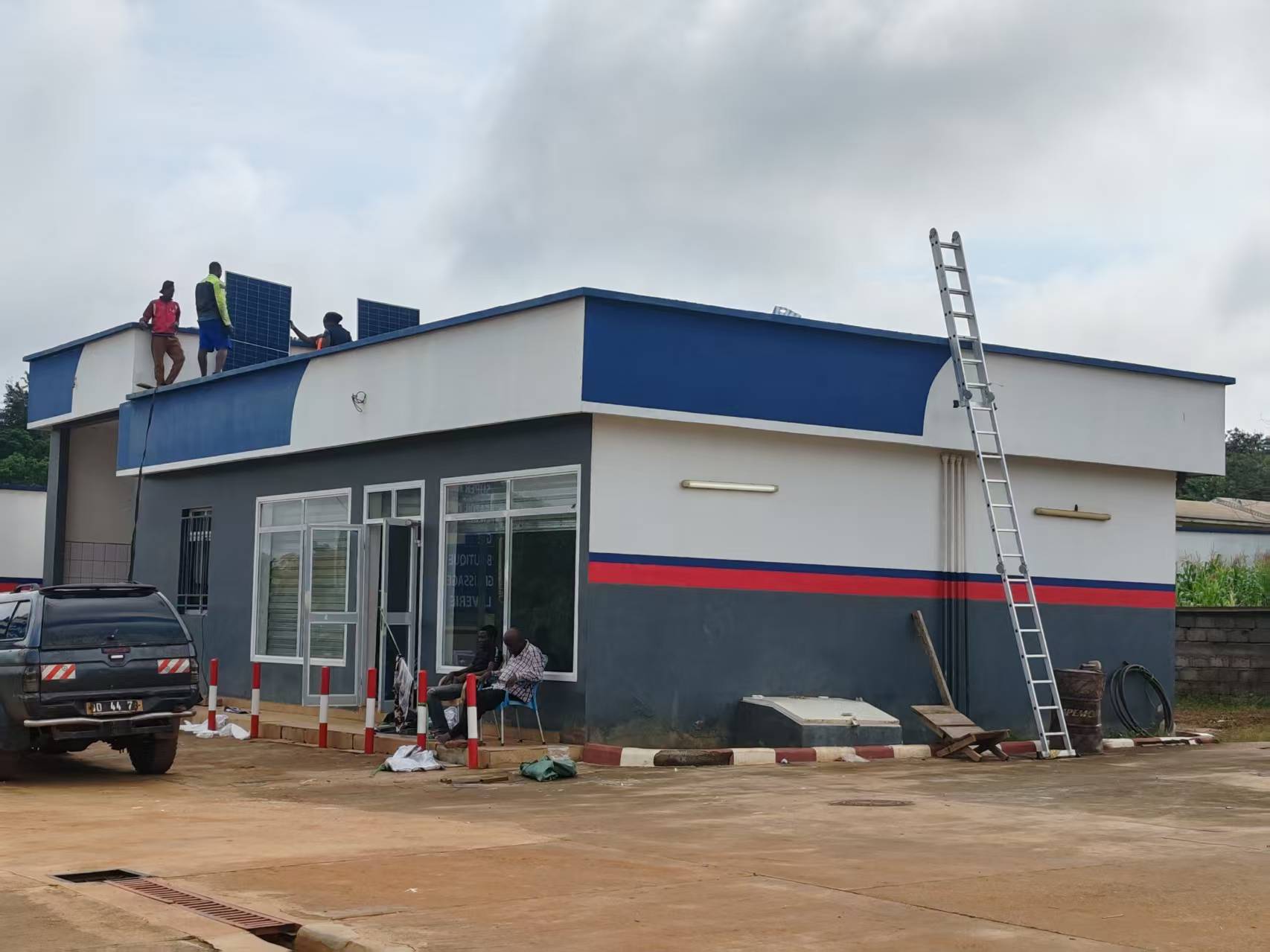
The underlying logic of customer needs typically encompasses four levels. The first level is basic electricity demand, which is the customer's most direct request: What will the solar system be used for? Which appliances will it support? How much electricity will be needed daily? How long will it support the system during a power outage? These questions seem simple, but the answers from different customers vary greatly. For example, a village in Africa might only need to support lighting and mobile phone charging, requiring only two or three kilowatt-hours per day; while a villa in the Middle East might need to support high-power equipment such as central air conditioning, swimming pool pumps, and electric vehicle charging stations, potentially requiring thirty to fifty kilowatt-hours per day. Only by accurately grasping this basic need can the system's most basic power and capacity configuration be determined.
The second level is the challenge of the usage environment, namely the specific climate and geographical conditions of the customer's location. Tropical Africa requires high-temperature resistance, coastal Southeast Asia requires salt spray resistance, and the highlands of South America require UV resistance and freeze protection. These environmental factors directly affect product selection: What materials and surface treatments are needed for the mounting bracket? What protection level does the inverter need? What kind of temperature control system does the battery need? Ignoring these environmental factors, even if the product performance indicators are excellent, it may experience rapid aging, efficiency decline, or even frequent failures after two or three years of use.
The third level is affordability, which refers to how much the client is willing to pay for the system. This relates not only to the size of the system but also to the design of the entire business model. For extremely price-sensitive clients, the most cost-effective basic configuration might be recommended; for clients willing to pay a premium for quality and service, a more feature-rich and higher-quality mid-to-high-end configuration can be recommended; for business clients with expected return on investment, it's necessary to help them calculate the payback period and long-term benefits. Discussing customization without considering affordability is simply building castles in the air.
The fourth level is long-term development expectations, which refers to the customer's plans for future business growth. A startup solar energy distributor might only need a small-batch trial order, but if they plan for rapid expansion, the solution design must consider the ease of future capacity expansion. A distributor planning to become a local leader within three years may need to plan strategic layouts from the outset, including brand customization, channel construction, and after-sales service networks. Understanding this level is crucial for establishing long-term strategic partnerships with customers, rather than just one-off sales relationships.
Common methods for demand research include: questionnaire surveys, using structured questionnaires to collect basic customer information, electricity usage, budget range, and special requirements; in-depth interviews, conducting one-on-one communication with decision-makers to understand their true thoughts and potential concerns; on-site visits, if possible, personally visiting the customer's location to examine the actual environment and obtain firsthand information; competitor analysis, understanding which products the customer has previously used or is familiar with, and what aspects they are satisfied with or dissatisfied with; and peer exchanges, communicating with other local practitioners to understand the overall market characteristics and common customer needs. Only by cross-validating multiple methods can a true comprehensive understanding of customer needs be grasped.
II. Core Principles of Customized Design
The first principle is to be demand-driven, not technology-driven. A common mistake many salespeople with technical backgrounds make is focusing too much on technical specifications while neglecting the customer's actual usage scenario. For example, a customer might only need 10 kWh of electricity per day for lighting and a refrigerator, but the salesperson recommends a large 30 kWh system that technically meets the requirement, only to be rejected by the customer due to the high price. A good customized solution should first solve the core problem in the simplest way, and then consider adding extra features if the budget allows. Remember, customers are buying the electricity experience, not just specifications.
The second principle is moderate foresight rather than excessive anticipation. Customer needs change, technology develops, and the market evolves. Customized solutions require a certain degree of foresight, but not excessive anticipation. For example, a customer who currently only needs a 5kW system might expect to increase it to 10kW in two or three years. In this case, the design should allow for expansion capacity, such as selecting inverters that can be connected in parallel, reserving extra space in the battery compartment, and appropriately increasing the cable specifications. However, if the customer is unlikely to expand within five years, then excessively advanced design is wasteful. Moderate foresight can avoid redundant investment, while excessive anticipation will increase unnecessary costs.
The third principle is localization rather than globalization. This is the core principle of customization for emerging markets. Every market has its own characteristics: different power grid voltage and frequency, different climate conditions, different consumer habits, different channel structures, and different policy environments. Simply taking a product that sells well in Europe and America to Africa may lead to setbacks; directly replicating successful experiences in Southeast Asia to Latin America may also result in incompatibility. Localization includes localizing product parameters (such as voltage, frequency, and plug type), certification standards, packaging design, user manuals, and after-sales service, among other dimensions. Only through deep localization can one truly win in the market.
The fourth principle is overall optimization, not individual component optimization. A solar system is a complex integrated system, including multiple components such as solar panels, inverters, batteries, mounting systems, cables, and monitoring systems. A good customized solution does not aim for every single component to be top-of-the-line, but rather for the overall optimization of the entire system within the constraints of the customer's budget and needs. Sometimes, using slightly lower-end solar panels paired with a more efficient inverter may result in higher overall power generation; sometimes, using smaller-capacity but higher-quality batteries may result in a longer overall lifespan. Overall optimization requires comprehensive consideration of the matching and synergy between the various components of the system.
The fifth principle is sustainable service, not a one-off sale. Customized solutions must consider not only pre-sales and sales, but also after-sales service. Are spare parts readily available? Is repair convenient? Are upgrades possible? These all affect the customer's long-term user experience and willingness to repurchase. Good customized solutions consider service convenience: choosing brands with local service networks, maintaining a certain inventory of spare parts, training local service personnel, and establishing remote diagnostic and upgrade capabilities. Customization that's a one-off sale may be more profitable in the short term, but in the long run, it will damage reputation and repeat purchases.
III. Comparison of Mainstream Configuration Schemes
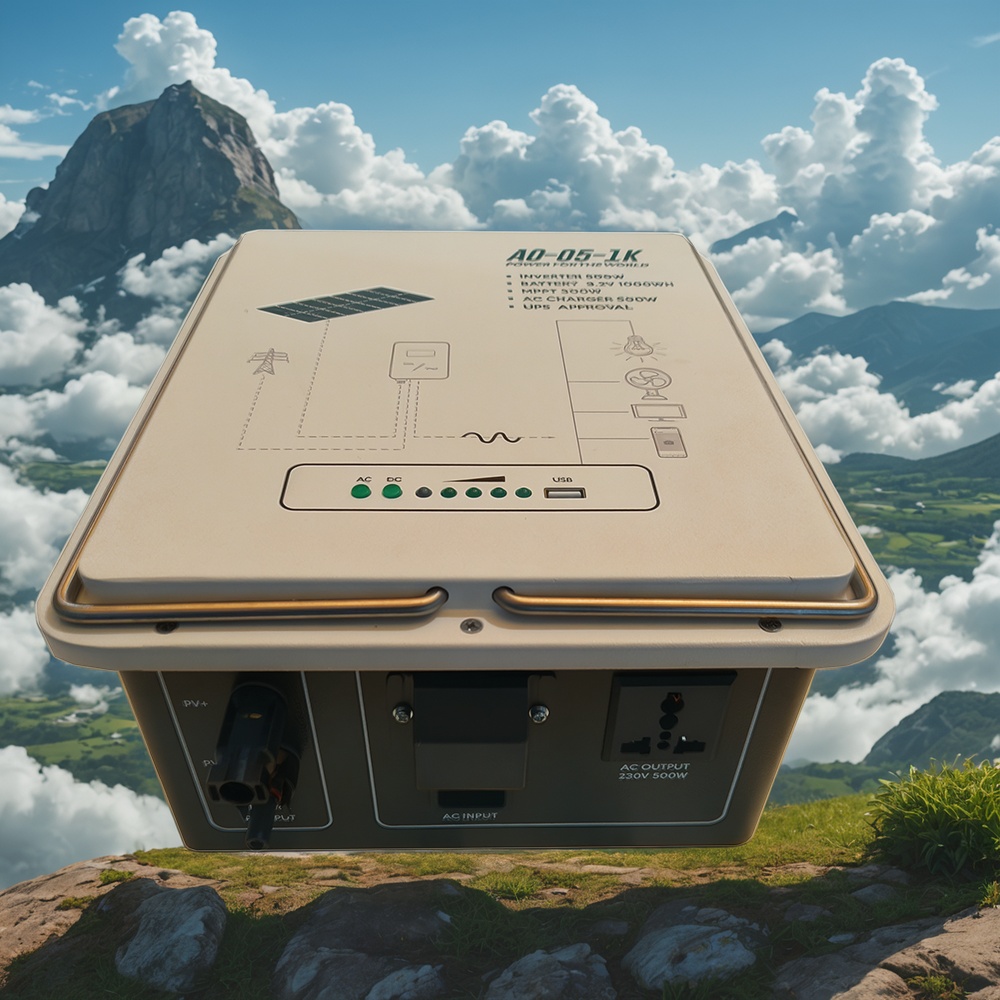
The first category is the basic economy configuration. The core idea of this configuration is to solve the most basic electricity needs with the least budget. Solar panels are typically affordable monocrystalline silicon panels, with a power output between 150W and 400W. The conversion efficiency is moderate but sufficient for daily use. Inverters are chosen as pure sine wave modified versions or entry-level pure sine wave products, with a power output between 1kW and 3kW. Their functions are relatively simple but stable and reliable. Batteries are typically lead-acid batteries or entry-level lithium iron phosphate batteries, with capacity configured according to actual needs, usually within 5kWh. The advantage of this configuration is its highly competitive price, suitable for customers who are extremely price-sensitive and do not have high quality requirements. The disadvantage is a relatively short lifespan, typically only three to five years, requiring regular maintenance, and in the long run, its cost-effectiveness may not be the highest. Typical application scenarios include off-grid systems for rural African homes, backup power for communication base stations in remote areas, and temporary power for emergency disaster relief.
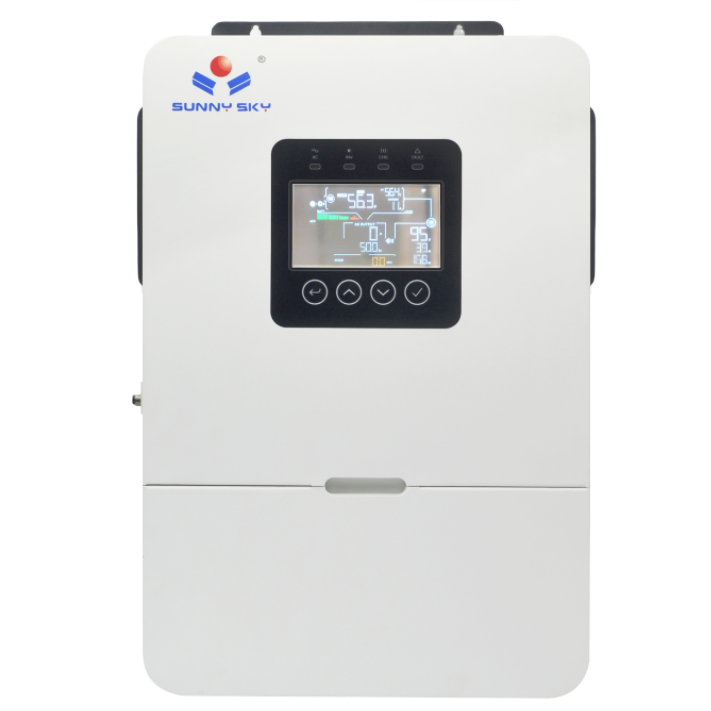
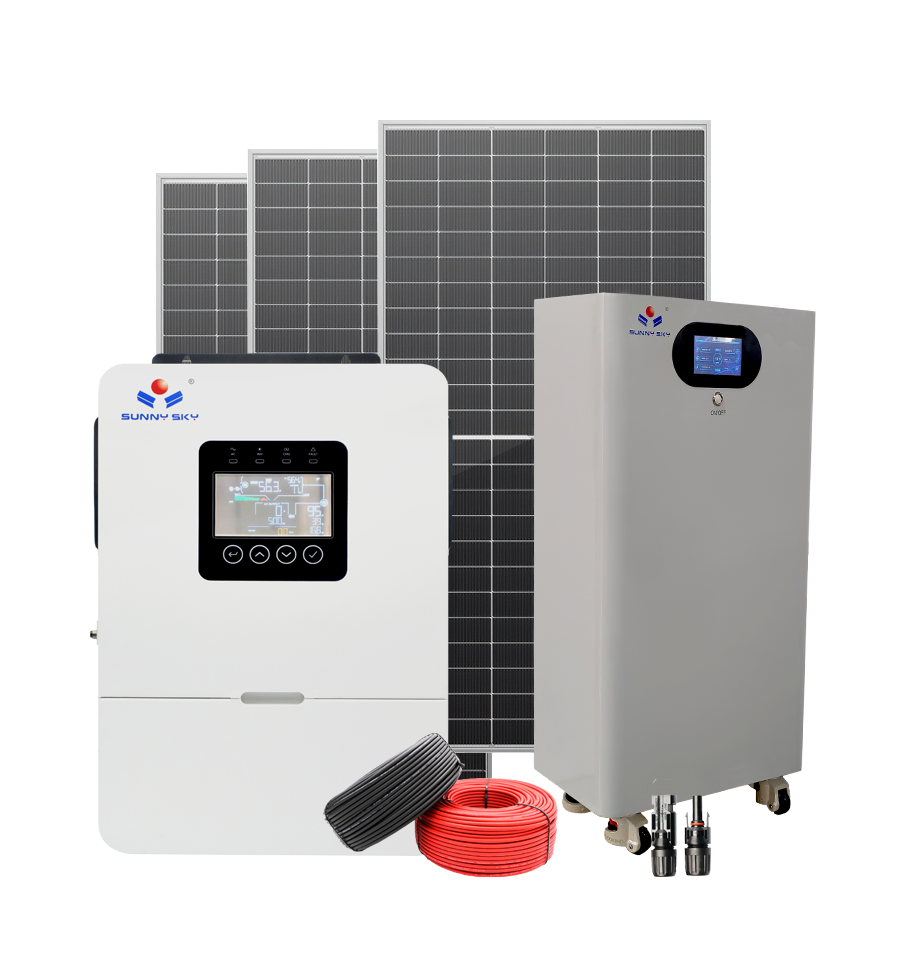
The second category is the standard practical configuration. This type of configuration aims for a balance between cost-effectiveness and reliability, and is currently the most mainstream choice in emerging markets. The solar panels are upgraded to high-efficiency monocrystalline silicon panels with a power output between 400W and 550W, a conversion efficiency exceeding 21%, and reasonable size and weight control. The inverter is a reliable, fully functional pure sine wave product from a reputable brand, with a power output between 3kW and 10kW, typically equipped with an MPPT controller and a basic battery management system, supporting pure sine wave output. The battery is upgraded to a lithium iron phosphate battery with a capacity between 5kWh and 15kWh, a cycle life exceeding 3,000 cycles, and a depth of discharge reaching 80%. The advantages of this configuration are reliable quality, moderate price, and long lifespan, typically lasting eight to ten years, offering the best overall cost-effectiveness; the disadvantage is a slightly higher initial investment compared to the basic configuration. Typical application scenarios include ordinary household electricity use, industrial and commercial backup power, and small off-grid systems.
The third category is high-end intelligent configurations. These configurations prioritize higher efficiency, smarter functions, and a better user experience. Solar panels utilize high-efficiency technologies such as TOPCon or HJT, with power outputs between 550W and 750W, conversion efficiencies exceeding 22%, and excellent low-light performance. Inverters are high-end hybrid or three-phase inverters from reputable brands, with power outputs between 5kW and 20kW, featuring multi-MPPT, intelligent energy management, remote monitoring, generator interfaces, and support for grid-connected and off-grid switching, achieving efficiencies exceeding 98%. Batteries are high-quality lithium iron phosphate or high-energy-density ternary lithium batteries, with capacities between 10kWh and 50kWh, cycle lives exceeding 5,000 cycles, and equipped with an intelligent BMS system. The advantages of this configuration are superior performance, rich functionality, high intelligence, and the ability to interact with the grid or be used with a generator; the disadvantage is a higher initial investment, typically two to three times that of the standard configuration. Typical application scenarios include high-end residences and villas, industrial and commercial users with high electricity consumption who wish to profit from peak-valley arbitrage, locations requiring high power supply stability, and new energy demonstration projects.
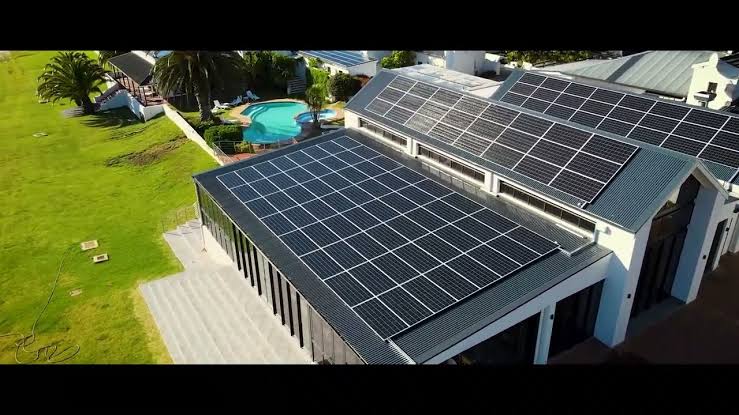
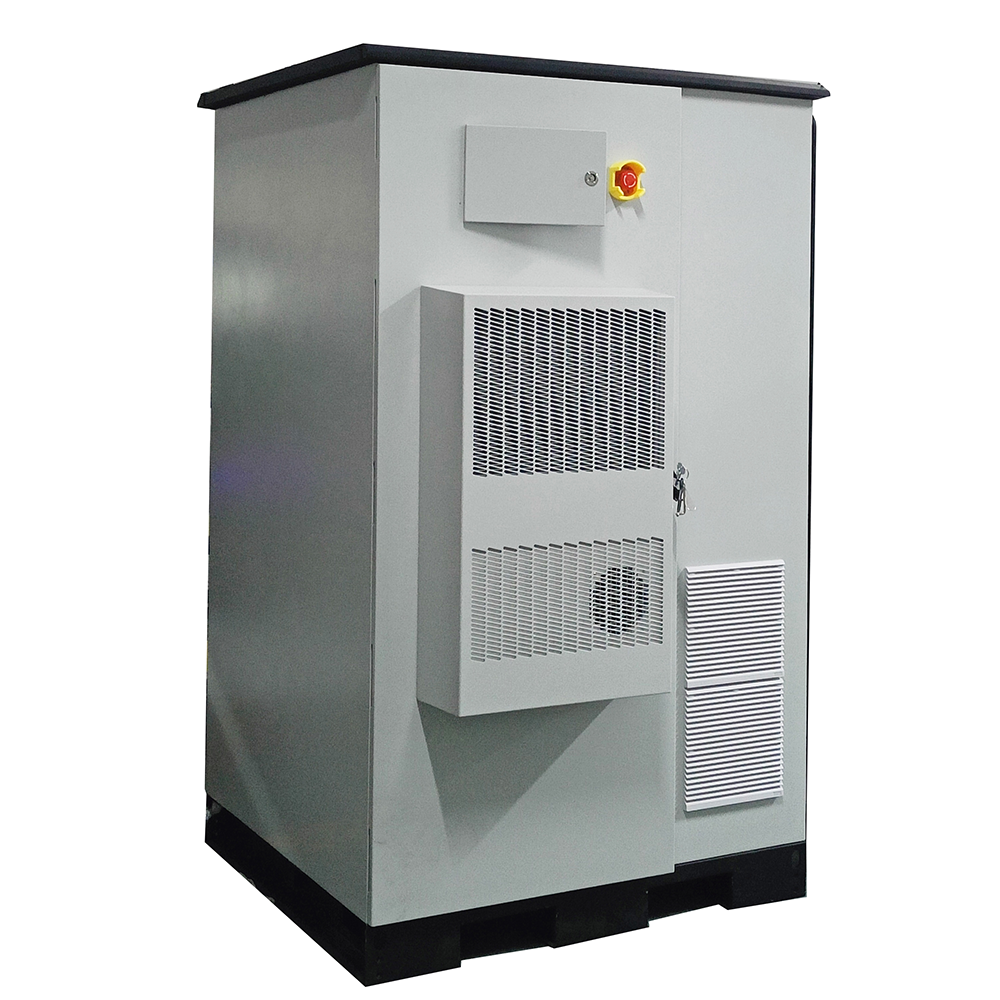
The fourth category is large-scale system configurations. These configurations are geared towards large-scale commercial and industrial projects and ground-mounted power station scenarios. They move beyond simple component assembly to complete system solutions. Solar panels utilize high-efficiency modules, connected in series to large string inverters or centralized inverters, with single-unit power ranging from 30kW to 500kW. The inverters possess advanced MPPT algorithms, grid support capabilities, and power quality optimization capabilities, requiring stringent grid access certification. Battery systems are deployed in containers or station-style configurations, with capacities ranging from 100kWh to hundreds of MWh, equipped with complete BMS, temperature control, and fire protection systems. These configurations involve complex system integration and engineering design, requiring specialized teams for project development, construction, and operation and maintenance. Typical application scenarios include large-scale ground-mounted power stations, commercial and industrial rooftop photovoltaics, commercial and industrial energy storage, microgrids, and island power projects.
The fifth type is modular and scalable configuration. This is a design concept rather than a specific product form. Its core feature is reserving expansion space, supporting phased construction and smooth upgrades. When installing solar panels, brackets and installation locations are reserved; inverters are selected that can be connected in parallel; additional storage space is reserved in the battery compartment; and cable specifications are appropriately enlarged. Customers can install one phase to meet their current needs, and add components when the budget allows or demand increases. This configuration is particularly suitable for growing customers in developing countries and commercial customers expecting significant growth. The advantages are controllable initial investment and flexible future expansion; the disadvantage is that if the reserved design is not reasonable, it may lead to some waste.
Choosing the right configuration requires considering various factors, including the client's needs, usage environment, budget constraints, and long-term plans. A good customization service provider doesn't simply sell a fixed solution; instead, they help clients analyze the pros and cons of different options based on their specific circumstances, ultimately determining the most suitable configuration. In this process, professional needs analysis capabilities, a rich product portfolio, and flexible configuration combinations are all indispensable.
IV. Recommendations for Customized Design Practices
Establish a standardized requirements analysis process. Although each client's needs are different, the framework for requirements analysis can be standardized. A requirements survey form can be designed, including sections such as basic information, electricity usage, budget range, environmental conditions, and special requirements. This information should be systematically collected each time a client inquiries are received, forming a complete requirements file. This not only improves the accuracy of understanding requirements but also facilitates subsequent solution comparison and experience accumulation.
A robust product portfolio is essential. Customization requires a sufficient product range. Establishing a product matrix covering different power levels, price segments, and brand positioning ensures the ability to quickly create the most suitable solution based on customer needs. Simultaneously, maintaining stable partnerships with multiple suppliers ensures consistent product supply and competitive pricing.
Develop a professional technical support team. Customized solution design requires multi-skilled personnel who understand both the products and their applications. These personnel need to understand the technological development trends in the photovoltaic industry, be familiar with the characteristics and applicable scenarios of various products, and be able to design and optimize solutions based on customer needs. Regular internal training and external learning sessions can be organized to continuously improve the team's professional capabilities.
Establish a rapid response service system. Customer needs are often time-sensitive, especially in a highly competitive market environment. Establishing a rapid response mechanism from needs confirmation to solution delivery, providing professional solutions within the promised timeframe, is a crucial factor in winning customer trust. CRM systems can be used to manage inquiries and follow-up status, while templates and tools can improve solution delivery efficiency.
Continuously accumulate project case studies and experience. Every successfully delivered project is a valuable asset. Establish a project case study library, recording basic information, requirements, solution design, configuration selection, delivery process, and client feedback for each project. Regularly review and summarize these experiences to continuously optimize customization capabilities. Project case studies are also a powerful tool for persuading new clients.
Growing together with clients and building long-term partnerships. A good customized service provider goes beyond simply offering products; it grows alongside its clients. Through project collaboration, they gain a deep understanding of their clients' markets and customers, helping them succeed, which in turn generates more business opportunities and positive word-of-mouth recommendations.
Conclusion
The process from demand to solution is a journey from understanding to creation. Solar energy customization in emerging markets is not simply about product transfer or unlimited custom processing; rather, it involves deeply understanding customer needs, adhering to the core principles of customized design, and finding the most suitable solution for the customer within various practical constraints.
Customization capabilities will become a core weapon for solar energy companies to compete in emerging markets. Key paths to enhancing customization capabilities include establishing standardized demand analysis processes, building a comprehensive product portfolio, cultivating a professional technical support team, establishing a rapid-response service system, continuously accumulating project case studies and experience, and fostering long-term partnerships with customers.
It is hoped that the ideas and suggestions provided in this article can help solar energy companies avoid detours in exploring emerging markets, establish differentiated competitive advantages more quickly, and win a place in the wave of clean energy globalization.
Please contact Simon immediately to discuss your project:
• WeChat: TY530643572
• Telephone: +86 137 1166 0041