Foreword
Over the past three decades, lithium-ion batteries have evolved from a laboratory technology into a critical infrastructure supporting modern society. From consumer electronics like smartphones and laptops to electric vehicles, urban public transportation, solar energy storage systems, and grid peak shaving, lithium-ion batteries are ubiquitous. Especially in the field of solar energy storage, lithium-ion batteries have become the dominant force in residential and commercial energy storage systems. This article will provide you with a comprehensive understanding of lithium-ion batteries—from basic principles to type comparisons, from key selection points to future trends—helping you quickly become a lithium-ion battery expert.
I. What is a lithium battery? What are its core advantages?
A lithium-ion battery, also known as a lithium-ion battery, is a rechargeable battery that uses the movement of lithium ions between the positive and negative electrodes to achieve charging and discharging. During charging, lithium ions move from the positive electrode to the negative electrode and are stored; during discharging, lithium ions return from the negative electrode to the positive electrode, releasing electrons to generate current for external devices. A complete lithium-ion battery consists of core components such as the positive electrode, negative electrode, electrolyte, separator, and battery management system (BMS), with the positive electrode material determining the battery's main performance. The reason lithium-ion batteries have been able to move from laboratories to homes in just thirty years is due to their many outstanding advantages. First, their ultra-high energy density—compared to traditional lead-acid batteries (energy density approximately 30-50 Wh/kg), lithium iron phosphate batteries can achieve an energy density of 100-160 Wh/kg, and ternary lithium batteries even reach 150-250 Wh/kg, meaning that a lithium-ion battery of the same weight can store more electrical energy. Second, ultra-long cycle life – mainstream lithium iron phosphate batteries can achieve a cycle life of 3,000-6,000 cycles, with some high-quality products even exceeding 8,000 cycles, lasting for ten or even twenty years. From a total life-cycle cost perspective, although lithium batteries have a higher initial investment, their long-term operating cost is more than 40% lower than lead-acid batteries. Third, low self-discharge rate – lithium batteries typically have a monthly self-discharge rate of less than 5%, while lead-acid batteries have a rate as high as 15-30%, which is particularly important for solar energy storage systems that rely on battery power for extended periods during cloudy or winter weather. Fourth, flexible scalability – lithium battery systems adopt a modular design, allowing users to flexibly configure capacity as needed, from a 5kWh home system to a large-scale 100MWh energy storage project, all achievable by adding or removing battery modules. Fifth, excellent safety performance – the thermal runaway temperature of lithium iron phosphate can reach over 800℃, far exceeding the 200-300℃ of ternary materials, making it less prone to combustion or explosion under extreme conditions such as high temperature, overcharge, and short circuit. Sixth, green and environmentally friendly – lithium batteries do not contain toxic heavy metals such as lead, cadmium, and mercury, and the recycling rate can reach over 95%, forming a virtuous cycle economy.
II. What are the main types of lithium batteries?
Depending on the cathode material, lithium batteries are mainly divided into several types, such as lithium iron phosphate, ternary materials, lithium cobalt oxide, lithium manganese oxide, and lithium titanate, each with its own characteristics and applicable scenarios.
Lithium iron phosphate (LiFePO4, LFP) is the mainstream choice for solar energy storage systems. Its main advantages include extremely high safety, ultra-long cycle life, good high-temperature performance, and relatively low cost. Its energy density is approximately 100-160 Wh/kg, and its cycle life can reach 3000-6000 cycles. Lithium iron phosphate is widely used in solar energy storage systems, UPS uninterruptible power supplies, communication base station energy storage, and electric buses. In the residential energy storage market, lithium iron phosphate has become the absolute mainstream choice due to its high safety and long lifespan. Representative products include BYD's blade battery, CATL's lithium iron phosphate energy storage cells, and Pylontech's LFP energy storage batteries.
Ternary lithium-ion batteries (NCM/NCA) boast the highest energy density, making them the preferred choice for electric vehicles, with energy densities reaching 150-250 Wh/kg. Ternary materials are further categorized into various specifications such as NCM523, NCM622, and NCM811, depending on the proportions of nickel, cobalt, and manganese. Higher nickel content results in higher energy density, but may lead to a decrease in safety and cycle life. Ternary materials are primarily used in electric vehicles (especially long-range models), consumer electronics, and high-end power tools. Representative products include CATL's NCM811 cells and LG Chem's NCMA cells.
Lithium cobalt oxide (LCO) is the most commonly used battery type in consumer electronics, boasting high energy density but relatively poor safety, short cycle life, and high cost. It is primarily used in small electronic devices such as smartphones, tablets, and laptops. Lithium manganese oxide (LMO) is a lower-cost and relatively safer technology, with energy density between lithium iron phosphate and ternary materials, but its cycle life is relatively short. It is mainly used in electric bicycles, low-speed electric vehicles, and power tools. Lithium titanate (LTO) is a relatively niche but unique technology, offering extremely fast charging speeds (above 10C), ultra-long cycle life (over 10,000 cycles), and a very wide operating temperature range (-30℃ to 60℃). However, its energy density is very low (approximately 70-90Wh/kg), and its cost is high. It is mainly used in electric buses, port machinery, and as backup power for rail transit.
III. How to choose the right lithium battery?
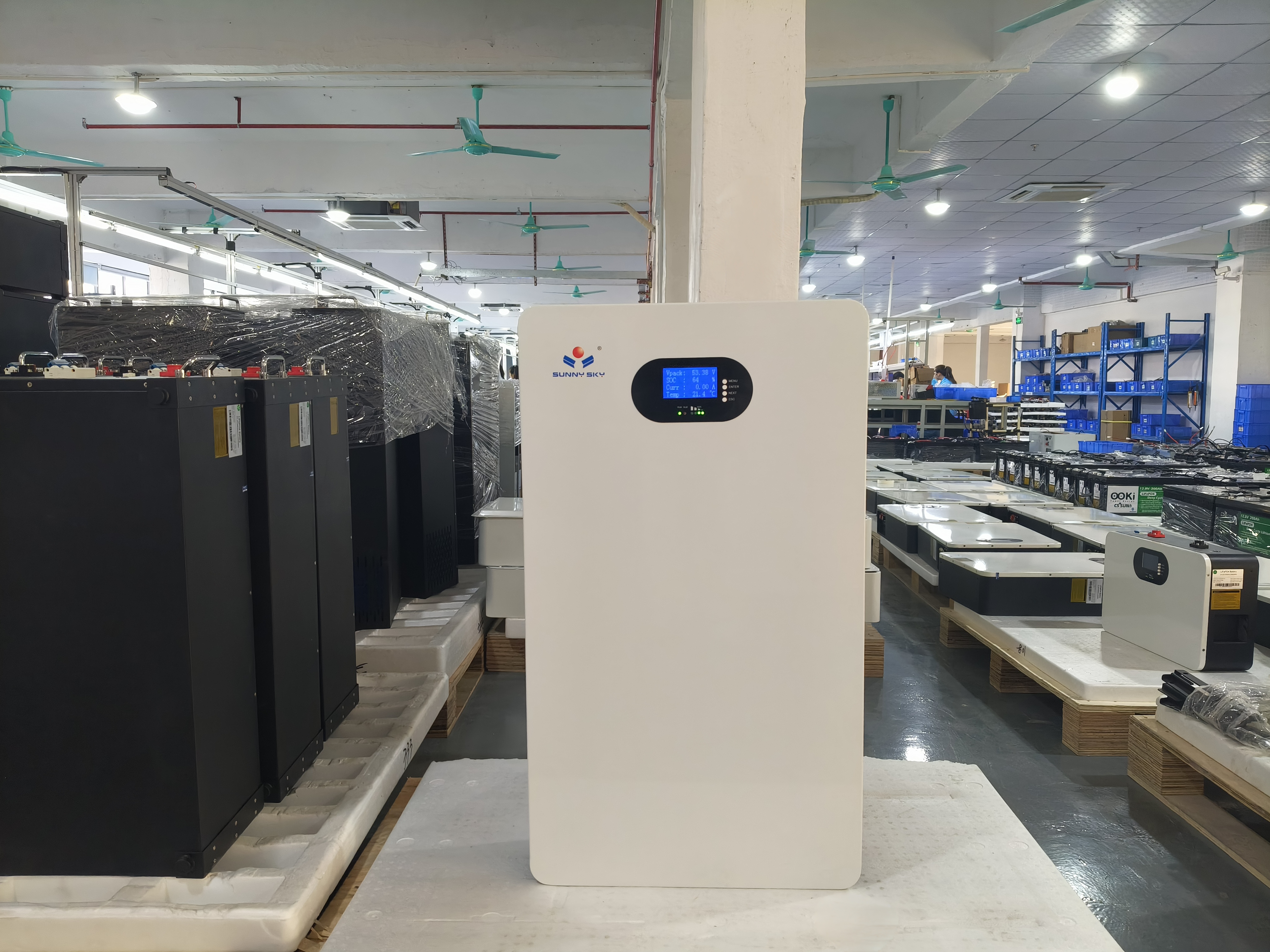
For ordinary households, choosing a suitable lithium battery energy storage product is a crucial issue that requires comprehensive consideration from multiple dimensions. Battery capacity is the primary consideration. Battery capacity is usually measured in kWh (kilowatt-hours) and determines how long the system can sustain operation during power outages or overnight. For example, a typical family of three uses about 15-20 kWh of electricity per day. If they want the system to last all day without solar power, a capacity of 15-20 kWh or more is recommended. If they only need to power critical loads such as lighting, refrigerators, and routers, 5-10 kWh is usually sufficient. It is important to note that lithium batteries should not be fully discharged; a 10-20% safety margin should be maintained. The voltage level needs to match the inverter. 48V is a common choice for household users because it offers higher safety levels and is compatible with most home hybrid inverters. For larger systems (e.g., 10 kWh or more), 96V or higher voltage levels can be considered to improve system efficiency.
Cycle life directly impacts return on investment, so key considerations should be given to cycle life testing conditions (some manufacturers specify 100% depth of discharge, others 80%), cycle life testing standards (typically IEC 62660 or equivalent), and warranty terms (some manufacturers offer 10- or 15-year warranties). For solar energy storage applications, products with a cycle life exceeding 3000 cycles are recommended. Safety certifications are crucial for product quality; ensure the product possesses core certifications such as UN38.3 (transport safety), IEC 62619 (industrial lithium battery safety), UL 1973 (North American market), CE (EU), and RoHS (environmental protection). Brand selection affects long-term user experience; prioritize brands with cell production capabilities, extensive project experience, and comprehensive after-sales service networks, such as CATL, BYD, EVE Energy, and Pylontech. In terms of price, the cost of mainstream lithium iron phosphate batteries in 2024 was about 0.6-0.8 yuan/Wh, and a 10kWh battery system cost about 6,000-8,000 yuan (excluding inverter and installation costs). This is more than 50% lower than three years ago. We should not simply pursue low prices, but should comprehensively consider performance, quality and after-sales service.
IV. Use, Maintenance, and Future Trends of Lithium Batteries
Proper use and maintenance can extend lithium battery life and ensure safe system operation. For charging management, use a matching charger or inverter and avoid using incompatible equipment. Charge the battery promptly when its charge level drops below 20%, and maintain it at around 50% for long-term storage. The optimal charging temperature is 10-35℃; avoid charging below 0℃ or above 45℃. For discharging management, avoid prolonged periods of high depth of discharge; it is recommended to keep the depth of discharge below 80%. This can be achieved by setting the inverter's depth of discharge limit parameters. Some high-end energy storage systems support intelligent scheduling functions, automatically optimizing charging and discharging strategies based on weather forecasts and electricity consumption predictions. For temperature management, the optimal operating temperature for lithium batteries is 15-35℃. High temperatures accelerate aging, while low temperatures reduce capacity. Choose a well-ventilated location, avoiding direct sunlight. In cold regions, choose lithium batteries with heating functions or install them indoors. For regular inspections, regularly check the connection cables, casing, and monitoring system data for normal operation; a professional inspection is recommended every 1-2 years. In terms of safety, ensure that the battery installation location is away from flammable and explosive materials, and provide a dry powder or CO2 fire extinguisher. Do not disassemble or modify the battery without authorization. In case of smoke or fire, evacuate immediately and call the fire department. Lithium battery technology is undergoing rapid innovation, and its future development presents several clear directions. Continuous improvement in energy density is a constant theme—through improvements in cathode materials (such as high-nickel ternary and lithium manganese iron phosphate), optimization of anode materials (such as silicon-carbon composite), and the development of solid-state batteries, energy density is constantly approaching its theoretical limit. Solid-state batteries are considered the next generation of revolutionary technology, with energy densities reaching 400-500Wh/kg, while significantly improving safety. Commercialization is expected to begin gradually between 2027 and 2030. Continued cost reduction is the main theme of the industry. The cost of lithium battery modules has decreased from approximately 3 yuan/Wh in 2010 to approximately 0.6-0.8 yuan/Wh in 2024, and is expected to further decrease to 0.3-0.4 yuan/Wh by 2030. The recycling system is rapidly improving, with recovery rates of over 95% achieved through hydrometallurgy and pyrometallurgy. Secondary utilization will also become an important method. The level of intelligence is continuously improving; future lithium battery systems will possess self-diagnosis, self-optimization, and self-adaptation capabilities, using big data analysis and machine learning to assess battery status in real time, predict lifespan, and optimize charging and discharging strategies.
Conclusion
Lithium-ion batteries, as the core energy storage medium in the era of clean energy, are profoundly changing the way humanity obtains and uses energy. From electric vehicles to solar energy storage, from consumer electronics to grid peak shaving, the applications of lithium-ion batteries are ubiquitous. They enable the widespread use of renewable energy and make energy use cleaner, more efficient, and sustainable. Choosing a suitable lithium-ion battery product is not just choosing a piece of hardware, but also choosing a future-oriented lifestyle and an environmental commitment.
Please contact Simon immediately to discuss your project:
• WeChat: TY530643572
• Telephone: +86 137 1166 0041