Foreword
With the escalating global energy crisis and the continued decline in the cost of photovoltaic technology, more and more families are considering installing solar energy systems. However, the first question many face when preparing for installation is: How large a system do I need? How many solar panels should I install? What power inverter should I choose? What battery capacity do I need? These questions seem complex, but with a grasp of basic calculation methods, even ordinary people can make a preliminary plan. Installing a solar energy system is a significant investment, ranging from tens of thousands to hundreds of thousands of yuan. Over-configuration leads to unnecessary waste; under-configuration fails to meet electricity demands. Scientific and reasonable configuration calculations not only avoid investment waste but also ensure stable system operation under various conditions. This article will provide ordinary families with a complete and easy-to-understand method for solar energy system configuration calculations, from electricity demand analysis and system component configuration calculations to cost estimation and investment payback period analysis. Even without any electrical or photovoltaic background, with patient reading, you can master the basic ability to tailor a solar energy system plan for your own home.
I. Electricity Demand Analysis
Before setting up a solar system, you must first understand a fundamental question: How much electricity does your home need each day? This question seems simple, but it actually requires analysis from multiple perspectives.
The first step is to calculate the power consumption and estimated usage time of the appliances in your home. Every household has a variety of appliances, but the frequency and duration of use vary greatly. Let's start with a list of common appliances for a typical family of three: Lighting equipment typically has a power consumption between 50W and 150W, is used for about 4 to 6 hours a day, and consumes about 0.2 to 0.9 kWh per day; a television has a power consumption of about 100W to 200W, is watched for about 3 to 5 hours a day, and consumes about 0.3 to 1 kWh per day; a refrigerator is an appliance that runs 24 hours a day, with a power consumption of about 150W to 300W, and consumes about 1 to 2 kWh per day; a washing machine has a power consumption of about 300W to 500W, and is used for about 1 hour each time. When used for showering, the daily electricity consumption is about 0.3 to 0.5 kWh; electric water heaters have a higher power, about 1500W to 3000W, and if used for showering for about 0.5 to 1 hour each time, the daily electricity consumption is about 1 to 3 kWh; air conditioners are the biggest electricity consumers, with a power of about 1000W to 3000W when cooling and even higher when heating. If they run for about 8 hours a day, the daily electricity consumption is about 8 to 24 kWh; kitchen appliances, including rice cookers, microwave ovens, induction cookers, etc., have a combined power of about 1000W to 3000W and consume about 2 to 5 kWh per day.
By adding up the daily power consumption of all appliances, we get a preliminary estimate of average daily power consumption. For a typical family of three, excluding air conditioning, the average daily power consumption is about 10 to 15 kWh; considering air conditioning use in summer or winter, the average daily power consumption may reach 20 to 40 kWh or even higher. Of course, this is just a rough estimate. A more accurate method is to check the monthly power consumption on the electricity bill and then divide it by the number of days to get the average daily power consumption. If you can obtain the electricity bills for the past 12 months and calculate the average monthly power consumption and the power consumption of the highest month, you can get more accurate data. It is recommended to use the average daily power consumption of the highest month as a benchmark for system configuration to ensure that the system can fully cover peak power consumption periods.
Next, we need to consider the temporal distribution of electricity consumption. Solar power generation has a strong temporal regularity: it generates electricity during the day and not at night, with peak generation typically occurring between noon and 2 PM. This means that if your household is more active and uses more electricity during the day, the utilization rate of solar energy will be higher; if most of your household members are out working during the day and only use a lot of electricity at night, the utilization rate of solar energy will be relatively lower. For households with high daytime electricity consumption, a smaller installed capacity system can be chosen, or energy storage batteries can be installed to store the electricity generated during the day for nighttime use; for households with low daytime electricity consumption, a larger capacity system can be considered to sell excess electricity back to the grid.
It's also crucial to consider the potential for future electricity demand growth. Electric vehicle charging stations, air-cooled heat pump heating, and electrification of hot water systems are all directions for home electrification upgrades. If you plan to purchase an electric vehicle soon, you should reserve sufficient capacity when configuring your solar energy system. A 60 kWh electric vehicle requires approximately 40 kWh to charge from 20% to 100% using a home charging station. If you charge it daily, this translates to an extra 40 kWh per day, a significant increase. Considering electricity demand growth over the next three to five years during system design can prevent the awkward situation of needing to expand capacity in the short term.
II. System Configuration Calculation
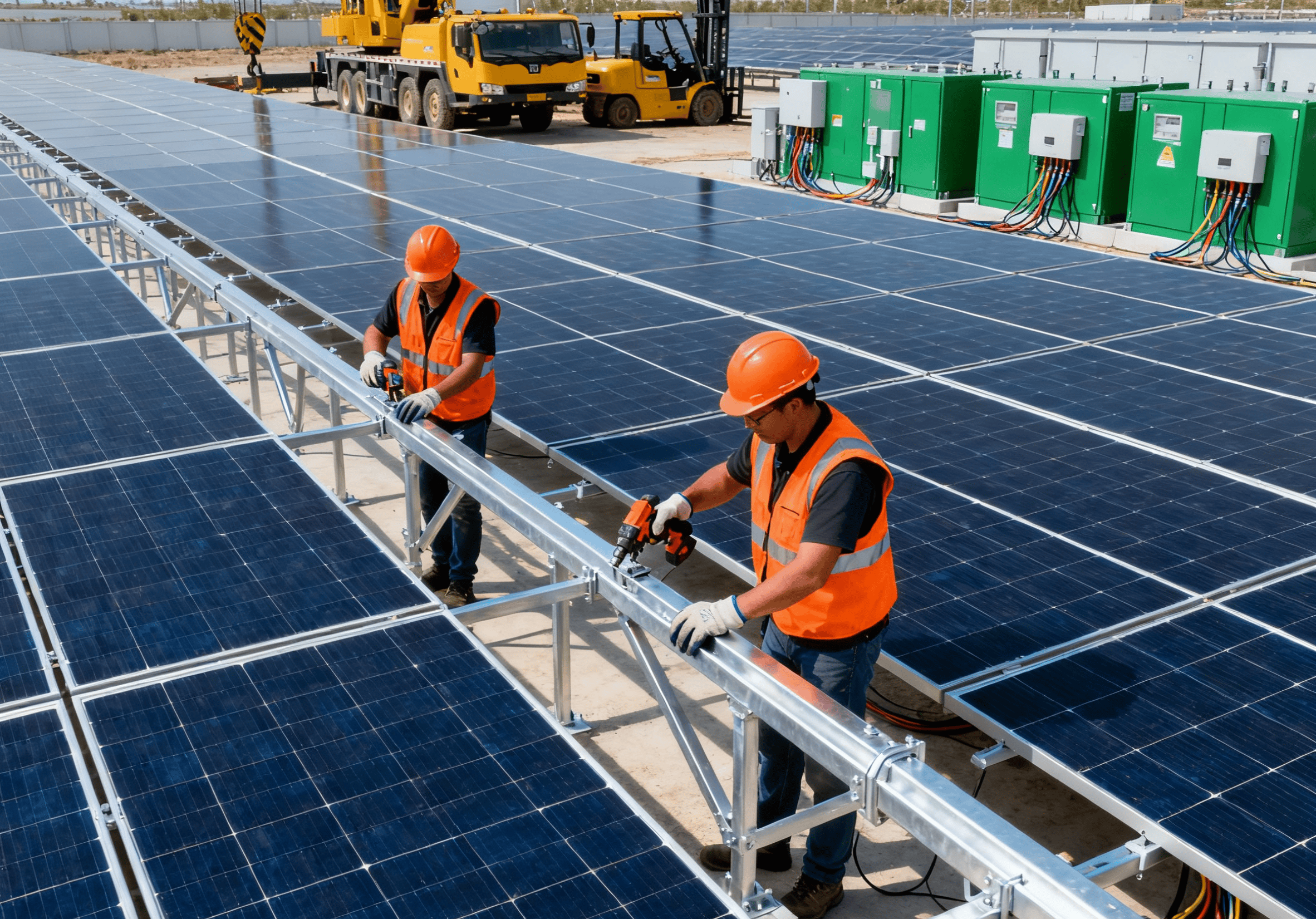
A residential solar energy system mainly consists of solar panels, an inverter, energy storage batteries (if it is a grid-connected energy storage system), mounting brackets, and cables. Let's calculate the configuration parameters of each component one by one.
First, let's calculate the solar panel capacity. The unit for solar panel capacity is peak watt (WP), which represents the maximum output power of the panel under standard testing conditions. The installed capacity of the solar panels determines how much electricity the system can generate per day. Taking most parts of China as an example, the average annual sunshine duration is about 2000 to 3000 hours, and each watt of solar panel can generate an average of 1 to 1.5 kWh of electricity per year. Assuming your household's average daily electricity consumption is 20 kWh, the required installed solar panel capacity is approximately 20 kWh divided by 5 hours (assuming effective power generation for about 5 hours per day), which equals 4 kilowatts, or 4000 WP. However, in actual configurations, the solar panel capacity is usually slightly larger than the inverter power, because the actual output of solar panels rarely reaches the nominal power; leaving a certain margin is a reasonable practice.
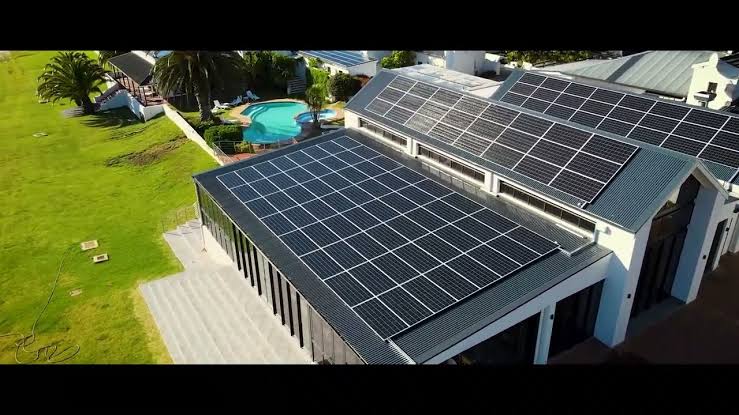
Let's illustrate the configuration calculation process with a concrete example. Assume a typical family of three, consuming approximately 20 kWh of electricity per day, and wishing to install a grid-connected solar system. The solar panel capacity can be configured to 5 kW, or 5000WP. This would require approximately 8 to 12 solar panels ranging from 400W to 550W, depending on the power output of each panel. Considering roof space and installation angle, the actual number of panels that can be installed may be limited. If roof space is ample, 550W panels can be prioritized to reduce the number of panels and bracket costs; if roof space is limited, a larger number of lower-power panels may be necessary. The conversion efficiency of the solar panels is also a crucial parameter. Currently, the efficiency of mainstream products is between 21% and 23%. Higher-efficiency panels require smaller areas, making them suitable for space-constrained scenarios.
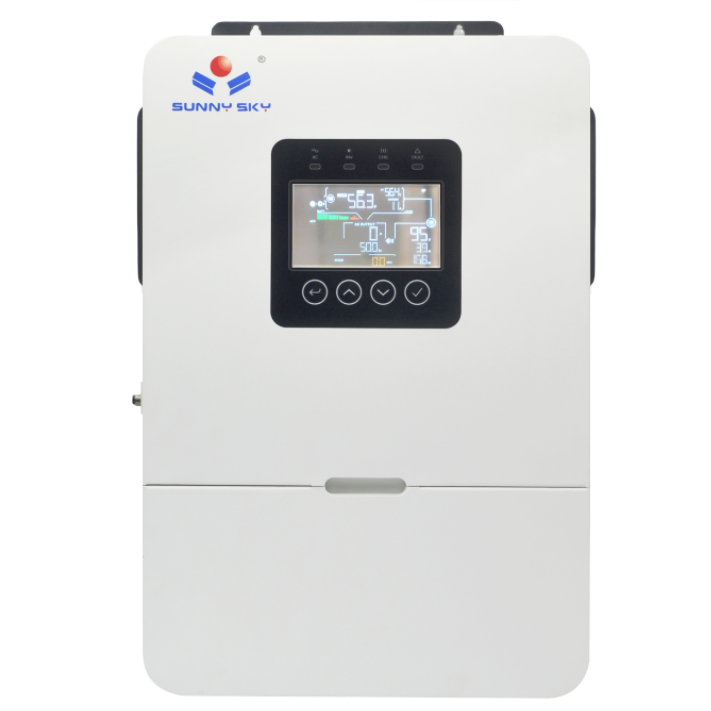
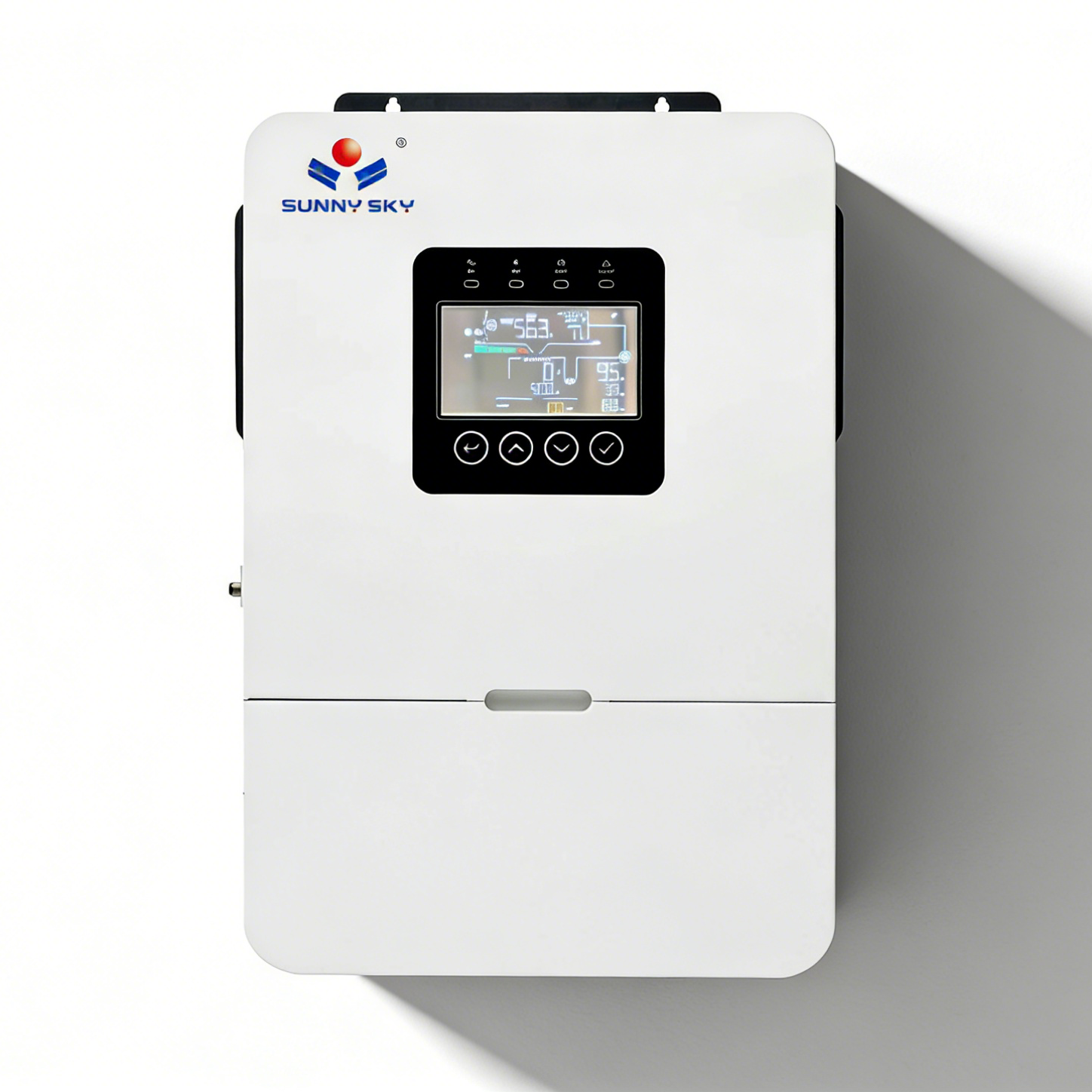
Next is the selection of inverter power. The inverter power should match the installed capacity of the solar panels, typically 80% to 100% of the panel's power. Continuing the example above, for a 5000WP solar panel, a 4kW to 5kW inverter can be chosen. Choosing a 4kW inverter allows for a certain degree of over-configuration, enabling near-full load operation even under moderate sunlight conditions; choosing a 5kW inverter implies a more conservative configuration, potentially failing to fully utilize all generated electricity under excellent sunlight conditions. Both choices have their advantages and disadvantages, depending on local sunlight conditions and electricity consumption characteristics. For grid-connected systems, an inverter power slightly less than the installed capacity of the solar panels can improve overall system efficiency, as inverters are most efficient near full load. For hybrid systems, because the power requirements for battery charging and discharging also need to be considered, a higher inverter power may be required.
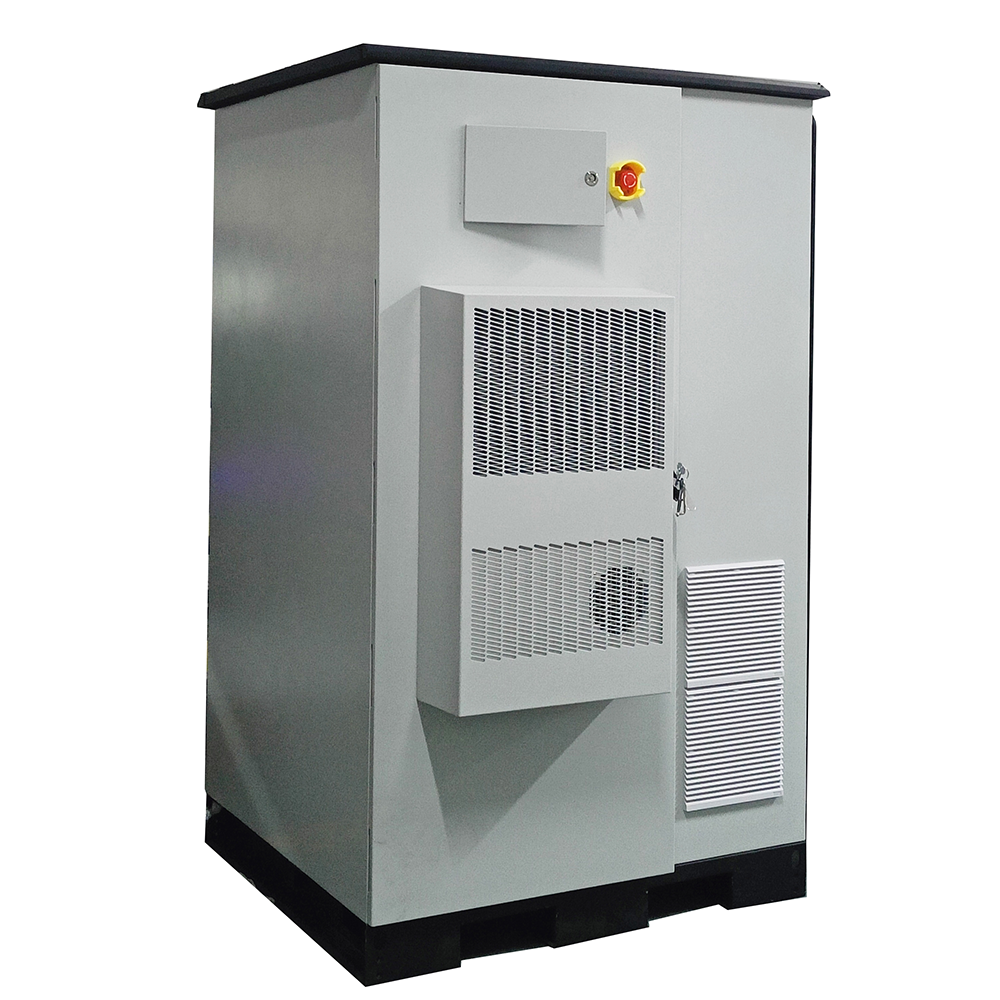
Battery capacity calculation depends on whether energy storage is required and the desired backup time. If it's a grid-connected system without batteries, the system can only generate and consume electricity when there is sunlight; it still needs to purchase electricity from the grid at night and on cloudy days. In this case, battery capacity calculation is unnecessary, but the system's functionality will be limited. If batteries are required, the first step is to determine how long you want the system to support power in the event of a complete power outage. For a typical household, supporting basic electricity needs overnight is a common requirement, such as supporting basic loads like lighting, refrigerators, routers, and televisions, which consumes approximately 3 to 5 kWh. If you want to support power for a longer period, such as during consecutive rainy days, the battery capacity needs to be increased accordingly. It's generally recommended to maintain a 20% margin of usable battery capacity; it should not be completely discharged. Therefore, a battery rated at 10 kWh may actually provide about 8 kWh of usable capacity. Regarding battery type, lithium iron phosphate batteries are the mainstream choice for home energy storage due to their long cycle life, high safety, and suitability for daily charging and discharging scenarios.
While cable and support configurations don't involve complex calculations, they still need to be selected appropriately based on system specifications. The cable cross-sectional area needs to be calculated based on the current and laying distance; the higher the current and the longer the distance, the larger the required cable cross-sectional area is needed to reduce voltage drop and overheating risk. Supports need to be selected based on the roof material (tiles, metal roof, flat concrete, etc.) and local weather conditions such as wind and snow pressure to ensure sufficient strength and durability.
III. Cost Estimation and Investment Recovery Analysis
After completing the system configuration calculations, the next step is cost estimation and return on investment analysis. This part is crucial in helping users make installation decisions.
The cost of a solar energy system mainly consists of the following components. First, the solar panels, accounting for approximately 30% to 40% of the total system cost. For example, a 5 kW system would cost approximately 15,000 to 20,000 yuan for the solar panels, depending on the brand and efficiency. Second, the inverter, accounting for approximately 15% to 25% of the total system cost. A 5 kW branded inverter costs approximately 5,000 to 10,000 yuan, with imported brands potentially being more expensive. Third, the batteries (if it's an energy storage system), accounting for approximately 30% to 40% of the total system cost. A 10 kWh lithium iron phosphate battery pack costs approximately 20,000 to 30,000 yuan. Fourth, the mounting structure and installation materials, accounting for approximately 5% to 10% of the total cost. Fifth, installation labor and transportation costs, accounting for approximately 10% to 15% of the total cost. In summary, a standard 5 kW grid-connected system costs approximately 40,000 to 60,000 yuan; a 5 kW grid-connected energy storage system with a 10 kWh battery costs approximately 60,000 to 100,000 yuan.
Calculating the payback period is a primary concern for many users. Grid-connected systems primarily rely on electricity cost savings: assuming an average daily power generation of 20 kWh and an annual power generation of approximately 7000 kWh, annual electricity cost savings are around 3500 yuan (at 0.5 yuan/kWh). If the system cost is 50,000 yuan, and maintenance costs and power generation degradation are not considered, the static payback period is approximately 14 years. However, if an annual electricity price increase of 5% is taken into account, the actual payback period may be shortened to 10 to 12 years. In areas with peak-valley electricity pricing, the returns can be even higher if off-peak electricity is used for charging and peak-valley electricity for discharging.
The payback period calculation for grid-connected energy storage systems is more complex. Taking a 5 kW system with a 10 kWh battery as an example, assuming 10 kWh of daily self-consumption comes from solar power and 10 kWh from battery discharge (nighttime use), the daily electricity cost savings are approximately 10 yuan (for self-consumption). Adding the savings of approximately 5 yuan through peak-valley arbitrage (battery charging/discharging price difference), the total daily savings are about 15 yuan, and the annual savings are about 5,500 yuan. If the system cost is 80,000 yuan, the static payback period is approximately 14 to 15 years. However, the value of energy storage systems is not only reflected in direct economic benefits, but also includes the backup value during grid outages, the flexibility of charging at low prices at night and using it at higher prices during the day, and other benefits that are difficult to quantify but are undeniably real.
Many factors influence the return on investment. Sunlight conditions are paramount. Southern China receives approximately 2000 to 2500 hours of sunshine annually, while northern China can reach 2500 to 3000 hours or even more. Regions with better sunlight have shorter payback periods. Electricity prices also directly impact returns; regions with higher electricity prices have greater substitution value for solar power. The self-consumption ratio is equally important; the more electricity generated and used, the more profitable it is. Selling most of it to the grid will reduce returns. System price is another key factor. In recent years, the prices of photovoltaic modules and cells have continued to decline. The same configuration that might have cost tens or hundreds of thousands of yuan five or six years ago now only costs tens of thousands. Finally, system maintenance costs and power generation degradation must be considered. Systems from reputable brands typically degrade slowly, around 0.5% annually in the first few years, then around 0.3% to 0.4% annually, and can still maintain over 80% of their power generation capacity after 25 years.
IV. Practical Suggestions and Frequently Asked Questions
After completing the configuration calculations and cost estimates, there are some practical suggestions and common questions to understand, which can help you better complete the entire planning process.
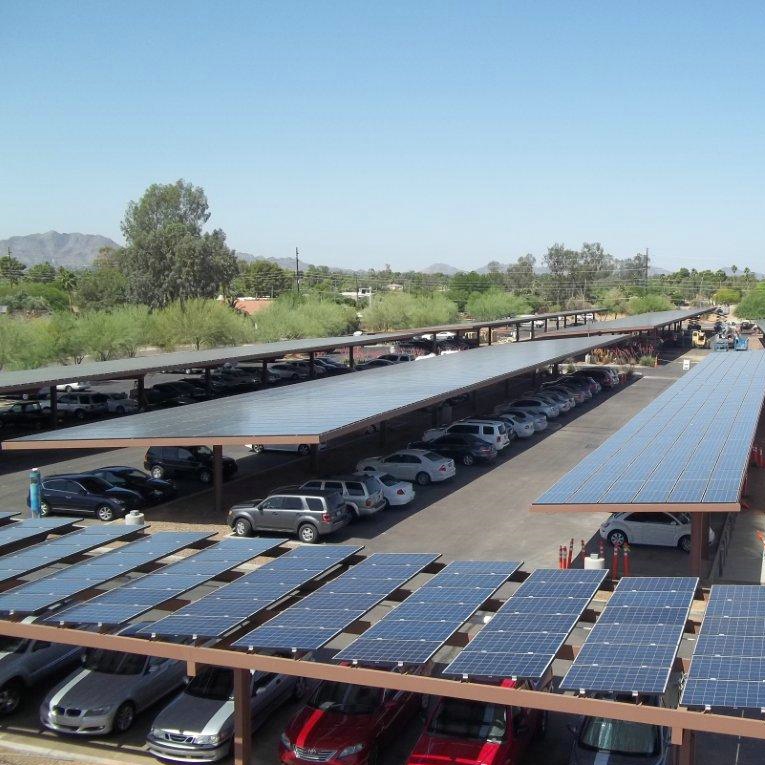
To determine if your roof is suitable for solar power installation, you can use a few simple methods. Regarding roof orientation, China is located in the Northern Hemisphere, so the optimal orientation is due south. A deviation of up to 30 degrees east or west has little impact, but a deviation exceeding 60 degrees will significantly reduce power generation. As for roof angle, an angle close to the local latitude is ideal. For example, Shanghai's latitude is approximately 31 degrees, and a roof angle of around 30 degrees is ideal. If there's a mix of tilted and flat installations, greater precision isn't necessary. Obstruction is a crucial factor. Trees, chimneys, or buildings above the roof will severely impact power generation, so these locations should be avoided. Regarding roof load-bearing capacity, solar panels and supports weigh approximately 15 to 20 kilograms per square meter. Flat roofs need to consider their load-bearing capacity, while pitched roofs generally don't have this problem. In terms of space, a 5-kilowatt system requires approximately 30 to 40 square meters of installation space, while a 10-kilowatt system requires approximately 60 to 80 square meters.
Regarding grid connection applications and subsidy policies, the following points should be understood. Since 2019, the national-level subsidy per kilowatt-hour for newly built photovoltaic projects in China has been abolished, but some regions still have local subsidy policies; specific details should be obtained from your local power supply bureau. The grid connection application process for residential distributed photovoltaic systems has been greatly simplified; as long as the system capacity does not exceed 25% of the transformer capacity, grid connection can usually be achieved smoothly. Choosing an installer is crucial; a qualified and reputable professional installer should be selected. They are responsible not only for equipment installation but also for handling the grid connection application. The speed and capability of after-sales service are critical during the system's long lifespan of two to three decades.
System maintenance and lifespan are also concerns for many users. Solar panels themselves require almost no maintenance; rainwater is sufficient for cleaning. However, if the location is dusty or near industrial areas, they can be washed annually to maintain power generation efficiency. Inverters typically have a lifespan of about 10 years and need to be replaced upon reaching this age. Batteries have a cycle life of approximately 3,000 to 6,000 cycles; high-quality lithium iron phosphate batteries can last 8 to 15 years with daily charge-discharge cycles. The lifespan of the mounting brackets and cables is generally comparable to that of the building itself; with proper anti-corrosion treatment during installation, they can last for over 25 years. Regularly check the system's power generation data. If a sudden and significant drop in power generation is observed on a particular day, it should be promptly checked for obstructions or malfunctions.
Finally, here are a few common misconceptions to remember. First, don't overemphasize the importance of a larger installed system capacity. Selling excess electricity to the grid beyond your needs at a much lower price per unit is not economically viable. Second, don't choose low-quality products based solely on initial price. Solar systems are meant to last 20-30 years or more; quality and after-sales service are far more important than price differences. Third, don't overlook the importance of a well-structured system. Solar panels, inverters, batteries, and mounting systems all need to be properly matched; a weakness in any one component will affect the overall performance. Fourth, don't neglect installation quality. Even with the same equipment, different installers can produce vastly different results; choosing an experienced installer is crucial.
Conclusion
While calculating the configuration of a residential solar system involves some technical parameters and formulas, the core logic is not complex. In summary: first, understand your home's electricity needs; then, determine the system size based on sunlight conditions and budget; match the inverter power to the solar panel capacity; configure the batteries according to backup needs; and finally, calculate the payback period to assess whether the investment is worthwhile.
A solar energy system is a long-term investment that not only saves on electricity bills and generates returns, but also reflects environmental responsibility and a lifestyle. Mastering basic configuration calculation methods will give you more confidence when communicating with suppliers and help you avoid being over-sold or misled. Hopefully, this article has given you the ability to plan a basic solar energy system for your home. If you find the calculations too complex or have more personalized needs, you can consult a professional solar energy system supplier who will provide more detailed solution designs and investment analyses.
Please contact Simon immediately to discuss your project:
• WeChat: TY530643572
• Telephone: +86 137 1166 0041