FAQ: What is a solar storage inverter system, and why do buyers care?
A solar storage inverter system is the part of a solar power setup that manages how electricity moves between photovoltaic panels, batteries, loads, and sometimes the grid. For engineers and sourcing teams, it is not just another box in the equipment list. It decides whether a site can store surplus daytime solar energy, shift demand to lower-cost hours, or keep essential loads running during an outage. In practice, buyers are usually comparing a solar inverter with battery storage against a simpler grid-tied inverter, or deciding whether a hybrid solar inverter is a better fit for the project.
The reason this decision matters is simple: the wrong architecture can leave a site underpowered, difficult to expand, or expensive to service. The right one can support peak shaving, backup power, and renewable integration without making the electrical room harder to maintain than it already is.
FAQ: What does the cabinet-style system tell you before you open the datasheet?
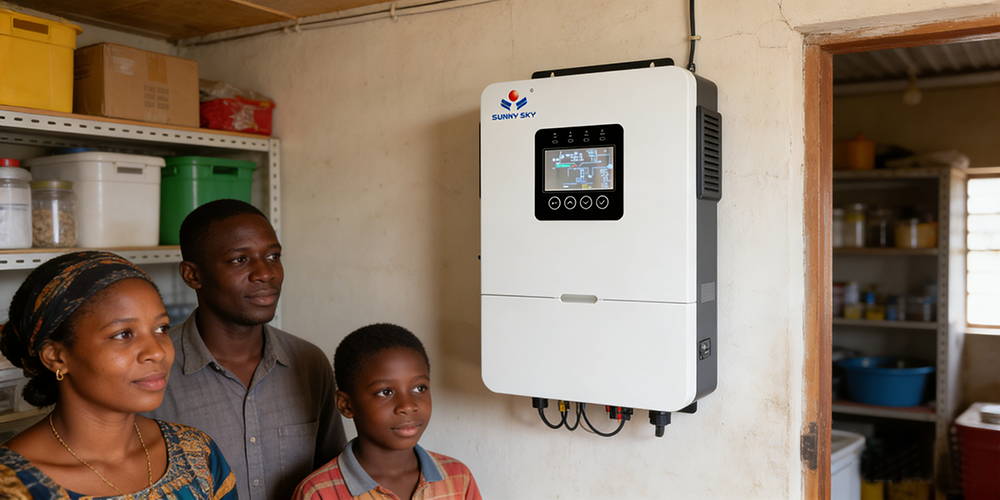
The product shown here is a large industrial energy storage cabinet, which suggests an all-in-one or cabinet-integrated battery energy storage system rather than a compact residential unit. Visually, it is a tall floor-standing enclosure with a painted metal finish, service doors, status indicators, an emergency stop switch, warning labels, and ventilation grilles. Those details matter because they hint at a system built for controlled access and scheduled maintenance, not casual household installation.
For buyers, the cabinet format is often attractive in commercial and industrial projects because it can simplify layout and help standardize installation. Still, the image alone does not reveal battery chemistry, inverter rating, voltage class, cooling method, or certification status. Those have to be verified in the technical file. Do not assume a neat enclosure means the electrical specification is equally straightforward.
FAQ: Is this more like a residential energy storage inverter or a commercial unit?
This looks far closer to a commercial solar inverter or industrial storage platform than a home solar storage system. Residential products are usually optimized for smaller load profiles, compact wall mounting, and simpler user interfaces. A floor-standing cabinet with industrial controls suggests broader use cases: commercial buildings, microgrids, solar PV storage, emergency backup, or site-side energy management.
That said, the boundary between residential and commercial is not always clean. Some hybrid storage systems are designed to serve large homes or multi-building estates. The deciding factor is less the label and more the electrical architecture, the usable energy window, and how the system handles load changes over time.
FAQ: What are buyers really selecting when they choose a photovoltaic inverter system?
They are selecting several things at once:
- How solar power is converted and managed
- Whether batteries can charge and discharge efficiently
- How the site behaves during outages
- Whether the system can grow later
- How easy maintenance will be for local technicians
A photovoltaic inverter system used with storage should not be judged only by peak power. Real projects also depend on control logic, fault handling, enclosure quality, and service access. The visible POWER, RUN, and FAULT indicators on this cabinet are small details, but they are the sort of details maintenance teams notice first.
FAQ: What should sourcing managers check before approving an off grid solar inverter or storage cabinet?
Start with the electrical basics: rated power, input and output ranges, battery compatibility, and whether the system is intended for grid-tied, off-grid, or hybrid operation. The phrase off grid solar inverter can be used loosely in sales material, so it is worth checking whether the product truly supports standalone operation or simply offers backup functionality.
Then move to the physical and operational details. Ask about enclosure material, service clearances, ventilation method, and how the emergency stop works. For a metal cabinet like this one, panel access and lockability are practical concerns, not cosmetic ones. A system that is hard to inspect will cost more over its life, even if the purchase price looks attractive.
Common buyer mistake: treating all “storage” systems as equivalent
A battery energy storage system can be a cabinet, a rack, a containerized unit, or a highly integrated inverter-battery package. Those are not interchangeable. A commercial site that needs peak shaving may want something very different from a microgrid or backup-only installation. The wrong format can create avoidable commissioning delays.
FAQ: How does Guangzhou Tianyuan Solar Equipment CO.,LTD fit into this picture?
According to the company information provided, Guangzhou Tianyuan Solar Equipment CO.,LTD, operating under SUNNYSKY, focuses on reliable green energy solutions and has independent R&D and patented technologies. The company says its brand has reached over 50 countries and that it continues investing in efficiency and reliability. It also notes that clients can visit its factory near Guangzhou Baiyun International Airport, which may matter for buyers who prefer to review production capability before placing an order.
For sourcing teams, that kind of factory access can be useful when evaluating a solar storage inverter system or a related cabinet-based product. It allows a buyer to ask better questions about assembly quality, control wiring, and after-sales support instead of relying on brochure language.
FAQ: What is the most practical next step for a project team?
Before you ask for a quote, define the project use case in plain language: backup, self-consumption, peak shaving, or grid support. Then request the exact electrical specification, a single-line diagram if available, enclosure drawings, and the maintenance procedure. If the project involves a commercial solar inverter or hybrid solar inverter, also confirm how the system behaves during faults and how it recovers.
If you are comparing cabinet-based storage options, the safest approach is to treat the visible product as a starting point, not a finished answer. Ask for the specification sheet, confirm what is actually included, and make sure the control philosophy matches the site. That is the difference between buying a box and buying a workable power system.