Why a hybrid solar inverter has become the center of many home energy systems
A hybrid solar inverter is often the part that decides whether a solar setup feels simple or frustrating. For engineers, sourcing managers, and product teams, the reason is straightforward: this single unit sits between the solar array, the battery system, and the home’s electrical loads, so its design affects efficiency, reliability, and day-to-day usability. If the inverter is awkward to install, difficult to monitor, or poorly matched to the project, the rest of the system can still underperform.
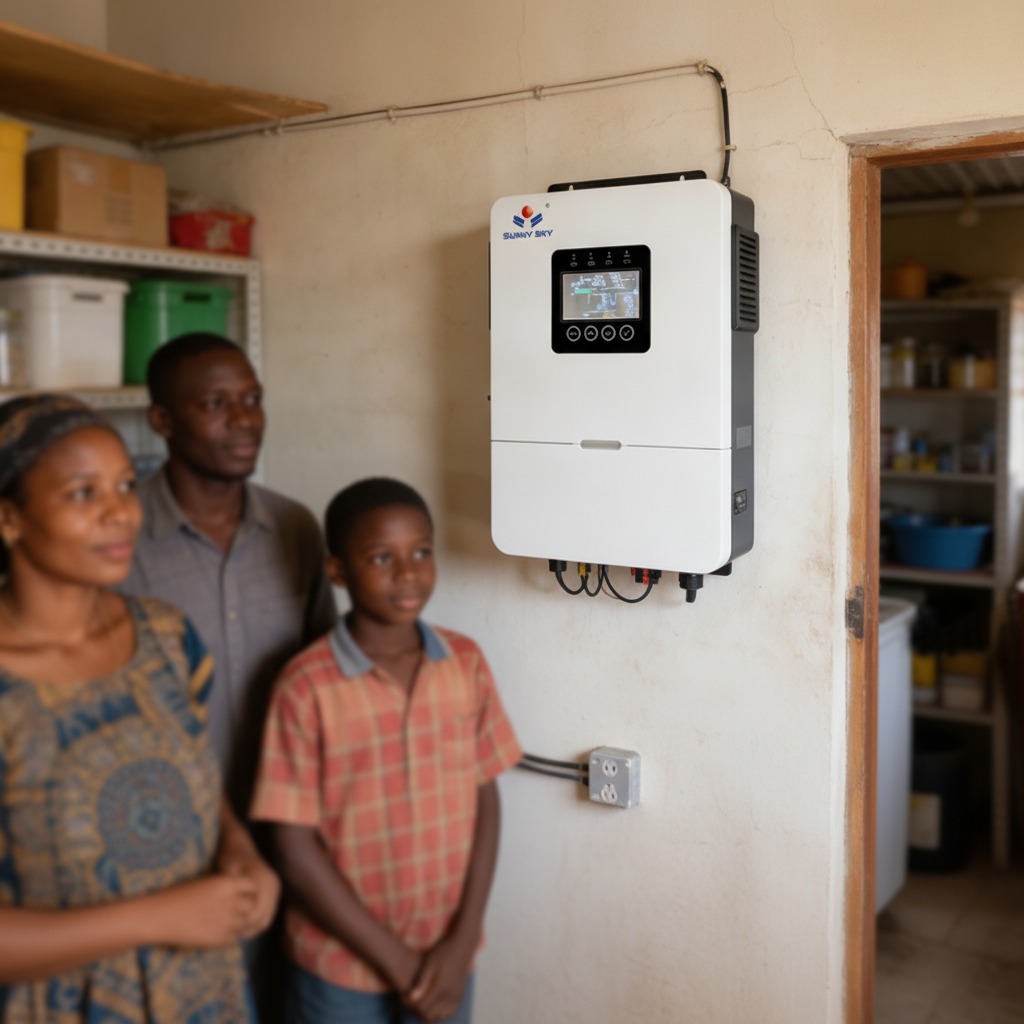
The product image supplied here shows a wall-mounted electrical unit with a front digital display, buttons, side ventilation slots, and hardwired conduits running downward into a fixed installation. The exact function cannot be confirmed from the image alone, but it has the visual profile of an inverter or home energy controller. That matters because buyers are often judging not only the electronics inside the enclosure, but also how the unit will be deployed in a real utility room or service space.

What buyers are usually trying to solve
Most inquiries around a hybrid solar inverter come down to a few practical questions: Can it handle both solar conversion and battery interaction? Will it support backup power when the grid drops? Is the enclosure suitable for indoor wall mounting and routine service? Can operators check status quickly without opening a cabinet or digging through a monitoring app?
Those are not cosmetic concerns. In the field, the interface and enclosure tell you a lot about maintenance burden. A front display and button row suggest local control and status visibility, which is helpful during commissioning and troubleshooting. Vent slots on both sides point to internal thermal management, another sign that installation conditions and airflow should be taken seriously rather than treated as an afterthought.
Quick buyer takeaways from the visible design
The unit shown appears to favor a compact, wall-mounted format with concealed wiring. That is a useful configuration for residential backup power and indoor energy management, especially where floor space is limited. It also suggests a product intended for fixed installation rather than portable use.
A few visible features stand out:
• Wall-mounted housing for permanent placement
• Integrated digital display for local status checks
• Button controls for operator interaction
• Side ventilation slots for heat release
• Bottom conduit routing for hardwired installation
These are small details, but they often separate a clean installation from a service headache. Buyers sometimes focus only on capacity and ignore service access, yet the physical package can determine whether the unit is practical in a real home or small commercial setting.
What to evaluate before specifying a system
1. Application fit
Start with the actual use case. A hybrid solar inverter for residential backup power may need a different operating profile than one used for energy monitoring or distributed energy management. If the project includes batteries, verify compatibility early; if it does not, do not assume the same enclosure or control logic will still be appropriate.
2. Thermal and installation conditions
Vented enclosures need breathing room. That sounds obvious, but many installations happen in crowded utility rooms where cables, shelves, and stored materials reduce airflow. If the unit is mounted in a warm indoor space, good ventilation and tidy cable routing are not optional extras. They are part of reliability.
3. Interface and serviceability
A front display is more useful than it looks on a spec sheet. On-site teams often want to confirm operating status, alarms, or charging state without bringing in another device. For the buyer, this affects commissioning time and maintenance labor. A clear local interface is especially valuable when systems are deployed across multiple homes or small facilities.
What Guangzhou Tianyuan Solar Equipment emphasizes
Guangzhou Tianyuan Solar Equipment CO.,LTD positions SUNNYSKY around independent R&D, patented technologies, and global market reach across more than 50 countries. The company says it focuses on stability, performance, design, and ongoing investment in energy efficiency and reliability. It also invites clients to visit its factory near Guangzhou Baiyun International Airport, with airport pickup offered for visiting customers.
For sourcing teams, that kind of positioning usually signals a manufacturer that wants to be evaluated on product development and factory capability, not just catalog claims. Still, the usual discipline applies: request the full technical dossier, confirm the exact model fit, and verify any ratings or compliance details directly before a purchase decision. A clean-looking wall unit is not enough on its own.
Common mistakes buyers make
The most common mistake is treating all inverter-type products as interchangeable because they look similar from the outside. They are not. Another frequent error is underestimating cable management and mounting space. In a hardwired system, access to conduits, clearances around the unit, and heat dissipation all affect long-term serviceability.
Buyers also sometimes skip the boring questions: What happens during grid outage? How is the system monitored? Is local control enough for the intended user? Those questions are where projects become successful or expensive.
FAQ: practical questions from sourcing and engineering teams
Is this exact unit confirmed to be a hybrid solar inverter?
No. The photo strongly suggests an inverter or related energy controller, but the exact function, ratings, and brand cannot be confirmed from the image alone.
Why does the enclosure design matter so much?
Because the enclosure affects installation, cooling, service access, and the overall perception of quality. In field equipment, those details influence downtime and labor more than many buyers expect.
What should be requested before quoting a project?
Ask for the model number, electrical ratings, battery compatibility, dimensions, mounting instructions, and any available compliance documentation. If those are missing, stop and clarify before moving forward.
What a sensible next step looks like
If you are evaluating a hybrid solar inverter for a residential or light commercial project, treat the visible form factor as a starting point, not a final answer. Ask for technical documentation, installation guidance, and system compatibility details. Then compare the product not only on electrical performance, but on how it will actually behave in the wall space, utility room, or energy cabinet where it will live.
That is usually where the real difference shows up: not in the marketing language, but in the way the unit installs, breathes, communicates, and supports the people who have to use it after commissioning.