Why a hybrid solar inverter matters in a modern home energy setup
A hybrid solar inverter sits at the center of a system that has to do several jobs at once: convert solar power, manage battery charging, coordinate backup supply, and keep the home’s electrical load stable when the grid is unreliable. For engineers, sourcing managers, and product teams, the real question is not whether the unit looks compact on the wall. The question is whether the system architecture fits the household’s energy pattern, the installation space, and the owner’s expectation for backup power.
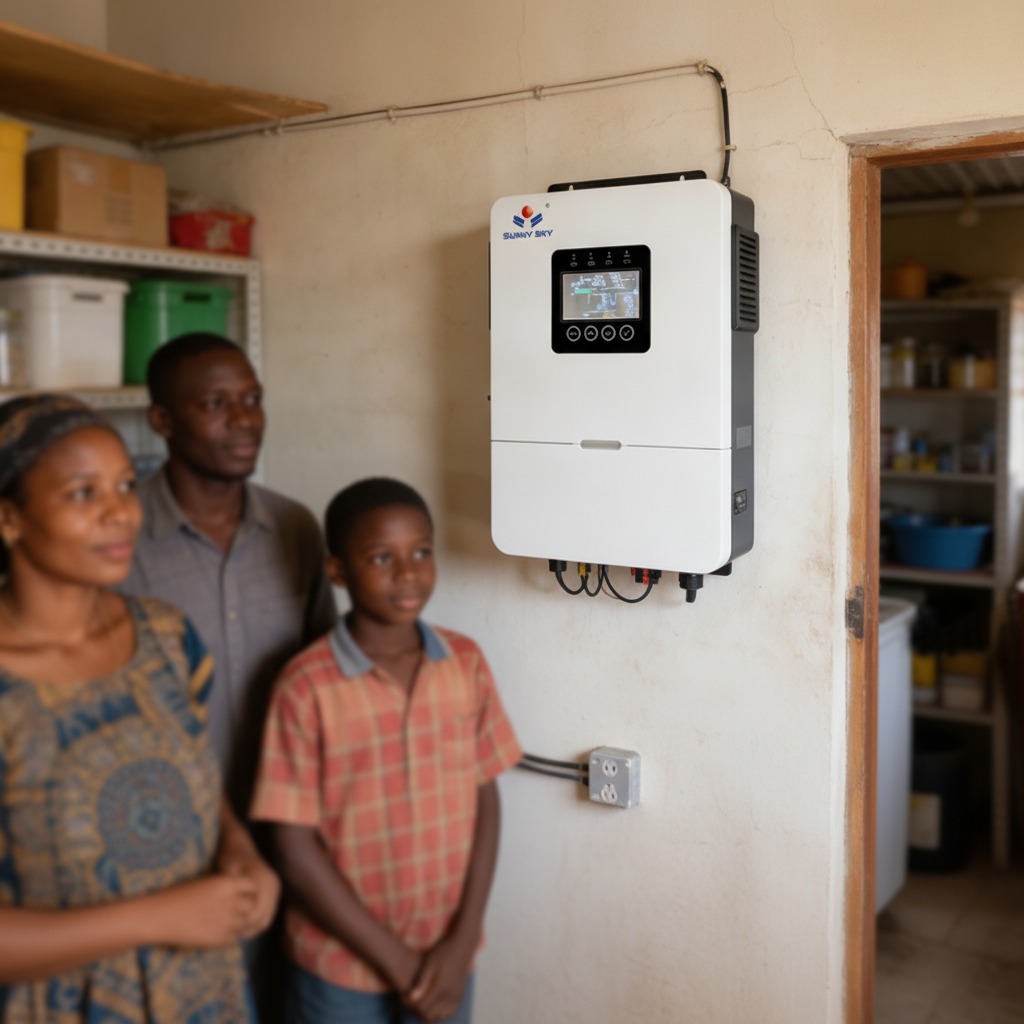
That is why the physical form matters more than many buyers first assume. A wall-mounted unit with a small digital display, control buttons, and enclosed cabling suggests a practical approach to residential power management. It is tidy, accessible, and easier to inspect during service. In a pantry or utility room, those details help keep the installation organized and reduce the visual clutter that often turns an otherwise good system into a hard sell.

What buyers should look for before they compare models
When teams evaluate a hybrid solar inverter, the first mistake is treating it like a single-purpose inverter. It is usually part of a broader energy flow, and that changes how the buyer should judge it. You are not only buying conversion efficiency or a display panel. You are buying control logic, battery interaction, installation practicality, and the confidence that the unit will behave predictably during load shifts.
From the product details provided, the visible selling points are straightforward: wall-mounted installation, compact footprint, a digital status display, and a clean cabling layout. Those are not flashy features, but they matter in the field. A compact enclosure can be easier to place in a residential utility area, and a clear display helps a homeowner or technician verify operating status without opening the system.
Key takeaways for procurement teams
If you are sourcing this type of equipment, it helps to separate appearance from function. A neat exterior is useful, but it should support serviceability rather than hide it. Side ventilation slots, front-facing indicators, and accessible controls are small details that can make maintenance simpler. At the same time, buyers should avoid making assumptions about internal components, electrical ratings, battery capacity, or solar connectivity unless those details are explicitly provided by the manufacturer.
That caution is important. Residential energy equipment is often discussed in broad terms, but a system that works well in one application may be a poor fit in another. Backup loads, battery chemistry, and installation environment all influence the final choice.
How the enclosure and installation style affect real-world use
The image description points to a rectangular white enclosure with rounded corners and a smooth painted or powder-coated housing. That kind of finish is common in home energy equipment because it supports a cleaner interior installation and is usually easier to wipe down in a utility room. It is a practical design choice, not just an aesthetic one.
Wall mounting also has a direct operational benefit. It keeps the unit off the floor, which matters in storage or pantry spaces where dust, accidental contact, or moisture concerns may come into play. The visible vertical cable run suggests an installation intended to be orderly and contained. Buyers often underestimate how much this improves the end-user experience. A tidy installation is easier to support later, and service calls tend to go more smoothly when the wiring is predictable.
Where this style is especially useful
This type of unit is well suited to residential backup power areas, home energy storage rooms, and other interior locations where space is limited. It can also fit projects that need a visible status display without a large cabinet or separate monitoring device. For installers, that can reduce complexity. For homeowners, it can reduce intimidation, which matters more than it sounds when a system is expected to be checked regularly.
Choosing between hybrid and more basic inverter options
Some buyers start with a simple inverter and later discover they need battery coordination or smarter power management. That usually leads to avoidable retrofit cost. A hybrid solar inverter is worth considering when the project needs flexibility: solar input, battery backup, and managed power delivery in one package. If the site only needs one function, a simpler device may be the better commercial choice. But if resilience and future expansion matter, hybrid architecture is often the safer long-term bet.
Guangzhou Tianyuan Solar Equipment CO.,LTD, under the SUNNYSKY brand, positions its work around independent R&D, patented technologies, and energy solutions aimed at stability and reliability. The company also notes a presence in more than 50 countries and welcomes visitors to its Guangzhou factory. For B2B buyers, that combination usually signals a manufacturer that understands both product development and export-facing support. As always, the final evaluation should still come down to the exact specification sheet and application fit.
Common buyer mistakes to avoid
The biggest mistake is over-specifying on paper and under-specifying in practice. A unit may look suitable until the installation team has to route cables awkwardly, or the user finds the display hard to read in a dim utility room. Another common error is assuming all backup systems behave the same during outages. They do not. The control strategy, load handling, and battery integration can vary significantly.
It is also wise not to let the enclosure style distract from the basics. Ask for the electrical data, the intended operating mode, and the installation requirements. If solar connection is part of the project, confirm that explicitly rather than inferring it from the product category.
Practical next step for sourcing and project teams
If you are evaluating a hybrid solar inverter for a residential backup or energy storage project, start with the use case, then match the device layout, service access, and monitoring needs to that use case. A compact wall-mounted unit with a display can be a good fit, but only when the hidden engineering aligns with the site requirements.
For teams that want a supplier discussion rather than a generic catalog exchange, Guangzhou Tianyuan Solar Equipment CO.,LTD invites global clients to visit its factory in Guangzhou. That kind of direct review is often the fastest way to check whether the product, installation style, and support approach are aligned with your project reality.