Understanding Hybrid Solar Inverters: A Game-Changer in Solar Energy
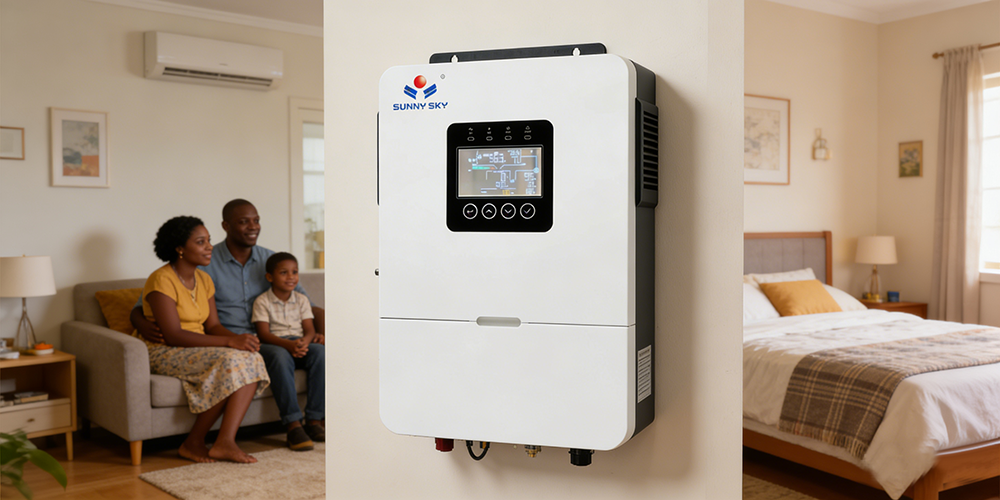
In the evolving landscape of renewable energy, the hybrid solar inverter stands out as a versatile powerhouse, blending solar power with grid electricity for uninterrupted performance. Unlike traditional inverters that rely solely on solar input, a hybrid solar inverter intelligently manages multiple sources, ensuring homes stay powered even during cloudy days or outages. At Guangzhou Tianyuan Solar Equipment CO.,LTD, our SUNNYSKY Hybrid Inverter exemplifies this technology, offering households in regions like Guangzhou a seamless path to energy independence. This article contrasts hybrid models with conventional options, highlighting why the best hybrid solar inverter from China could transform your solar setup.
Hybrid Solar Inverters vs. Traditional Inverters: Key Differences in Functionality
Traditional solar inverters, often grid-tied, convert DC from panels to AC but falter without sunlight or grid support, leading to blackouts in off-grid scenarios. In contrast, a hybrid solar inverter integrates battery storage and grid compatibility, automatically switching modes to prioritize solar, then batteries, and finally the grid. This flexibility is evident in hybrid inverter technology, where advanced MPPT algorithms optimize energy harvest by up to 30% more than standard inverters. For instance, our SUNNYSKY model from China solar inverter manufacturers features real-time monitoring via an intuitive LCD, allowing users to track production and consumption—capabilities absent in basic inverters that lack smart switching. While traditional units are cheaper upfront, hybrids like the best hybrid solar inverter China offers reduce long-term costs through energy savings and backup power, making them ideal for Guangzhou solar power systems where grid instability is common.
Efficiency and Design: Comparing High-Efficiency Solar Inverters
When evaluating high efficiency solar inverters, the contrast between hybrid and non-hybrid becomes stark in performance metrics. Conventional inverters typically achieve 95-97% efficiency but waste excess solar energy without storage, whereas hybrid inverter technology in products like ours reaches 98% efficiency by storing surplus for nighttime use. Solar power inverter China leaders, including Guangzhou inverter companies, prioritize robust builds; our wall-mounted SUNNYSKY unit contrasts with bulkier traditional designs by fitting sleekly into modern homes. Solar inverter suppliers Guangzhou provide options that handle varying loads better—hybrids support peak shaving to avoid high tariffs, unlike grid-tied models that can't. In solar energy solutions China, this means hybrids lower carbon footprints more effectively, with our patented tech enabling seamless integration for diverse climates.
Why Choose China Solar Inverter Manufacturers for Your Needs
China solar inverter manufacturers like Guangzhou Tianyuan Solar Equipment CO.,LTD outshine global competitors in innovation and accessibility. While Western brands focus on premium pricing, our solar inverter suppliers Guangzhou emphasize affordability without compromising quality—our hybrid solar inverter costs 20-30% less than equivalents yet delivers superior stability, backed by independent R&D reaching over 50 countries. Contrasting with fragmented suppliers, we offer end-to-end solar power inverter China solutions, from factory visits just 20 minutes from Guangzhou Baiyun International Airport to complimentary pickups for clients. For those seeking the best hybrid solar inverter China produces, SUNNYSKY's advanced software contrasts basic inverters by maximizing savings and reliability, empowering sustainable living. Ultimately, opting for high efficiency solar inverters from Guangzhou inverter companies means investing in proven, eco-friendly tech that aligns with global green goals.
In summary, the hybrid solar inverter's multifaceted approach surpasses traditional inverters in versatility, efficiency, and cost-effectiveness, positioning it as the superior choice for modern solar energy solutions China provides.