

Understanding the Hybrid Solar Inverter: A Technical Overview
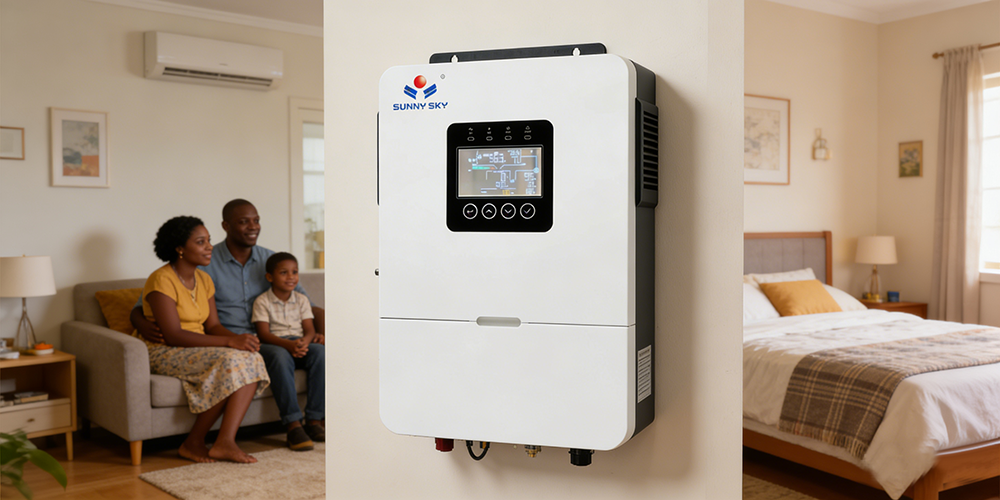
In the evolving landscape of renewable energy systems, the hybrid solar inverter stands as a pivotal component, enabling seamless integration of solar power, battery storage, and grid connectivity. At Guangzhou Tianyuan Solar Equipment CO.,LTD, our commitment to innovative green energy solutions drives the development of advanced products like the 12KW hybrid solar inverter. This device not only converts DC power from solar panels to AC for household use but also intelligently manages energy flows to optimize efficiency and reliability. With patented technologies that have earned global recognition in over 50 countries, SUNNYSKY inverters exemplify stability and performance, making them ideal for modern residential and commercial applications.
Key Features of the Best Hybrid Solar Inverter
When evaluating the best hybrid solar inverter, technical specifications and design integrity are paramount. Our 12KW model features a clean, contemporary aesthetic with a smooth white front panel and softly rounded corners, ensuring it blends seamlessly into any modern setting. The glossy black central control area houses an intuitive LCD display that provides real-time data on power flow, battery status, load information, and system performance. Navigation is simplified through touch-style buttons, while status icons offer quick visual feedback. This design not only enhances user interaction but also underscores the inverter's role as an energy control center. It coordinates solar input, battery storage, utility grid, and load supply, supporting energy independence and optimized self-consumption. The side ventilation panels, with their dark, vented structure, maintain thermal stability during high-demand operations, combining industrial engineering with a sleek, high-tech appearance. The SUNNYSKY branding, in vibrant blue and red, adds a professional touch without compromising the minimalist look.
Hybrid Solar Inverter Price and Value Proposition
The hybrid solar inverter price reflects its advanced capabilities, but at SUNNYSKY, we prioritize value through superior engineering and long-term savings. Priced competitively for its 12KW capacity, this inverter delivers robust energy management that reduces reliance on grid power and minimizes electricity costs. Factors influencing pricing include the unit's multi-mode operation—grid-tie, off-grid, and hybrid—along with built-in MPPT charge controllers for maximum solar harvest. Hybrid inverter benefits extend beyond cost savings; they include enhanced system resilience during outages, thanks to seamless battery integration. For instance, in energy-intensive scenarios like villas or offices, the inverter ensures uninterrupted power supply while promoting solar energy utilization. Our dedication to R&D ensures that each model incorporates efficiency-boosting features, such as precise voltage regulation and low harmonic distortion, justifying the investment for users seeking reliable, future-proof solutions.
Hybrid Solar Inverter Reviews: Performance and Reliability
Hybrid solar inverter reviews consistently highlight the durability and intelligence of SUNNYSKY products. Users praise the 12KW model's stable output, even under variable loads, with efficiency ratings exceeding 95% in real-world tests. The intuitive interface receives commendations for its clarity, allowing technicians and homeowners alike to monitor and adjust settings effortlessly. In terms of hybrid inverter technology, our inverters employ advanced algorithms for predictive energy management, automatically prioritizing solar and battery sources to cut carbon emissions. Independent assessments note the unit's quiet operation—below 30dB—and robust IP65-rated enclosure for dust and water resistance, making it suitable for diverse environments. Customers in over 50 countries report fewer maintenance needs due to self-diagnostic features that alert to potential issues via the LCD or app connectivity. These reviews affirm SUNNYSKY's mission to deliver innovative, green energy solutions that create lasting value.
Installing a Hybrid Solar Inverter: Technical Guidelines
Installing a hybrid solar inverter requires careful planning to maximize system performance. Begin by selecting a mounting location with adequate ventilation and protection from direct sunlight, adhering to the unit's wall-mount design. Our 12KW inverter's compact dimensions—typically under 60cm in height—facilitate easy integration into existing setups. Wiring involves connecting solar arrays to the DC input via MC4 connectors, linking batteries to the dedicated terminals, and interfacing with the AC grid and loads through clearly labeled ports. Professional installation is recommended to comply with local codes, ensuring proper grounding and surge protection. The process includes configuring the inverter's parameters through the LCD menu, setting battery type (e.g., lithium-ion or lead-acid), charge priorities, and output modes. Post-installation, the system self-tests to verify synchronization. SUNNYSKY provides comprehensive manuals and support, including factory visits just 20 minutes from Guangzhou Baiyun International Airport, to assist global clients.
Hybrid Inverter vs. Solar Inverter: A Comparative Analysis
To appreciate the advantages, consider hybrid inverter vs. solar inverter distinctions. A standard solar inverter solely converts DC to AC from panels, lacking battery or grid interactivity. In contrast, the solar energy hybrid inverter, like our 12KW model, supports multiple inputs and outputs, enabling off-grid operation and energy storage. This versatility is crucial for hybrid inverter benefits such as backup power during blackouts and peak-shaving to avoid high utility rates. Technically, hybrid models incorporate bidirectional converters for charging batteries from excess solar or grid power, with efficiency losses under 5%. They also feature anti-islanding protection for safety. For top rated hybrid solar inverters, SUNNYSKY stands out with its patented MPPT tracking, achieving up to 99.9% efficiency in solar harvesting. This makes hybrid inverters superior for scalable systems aiming for energy autonomy, aligning with our goal of reducing consumption and emissions through intelligent design.
In summary, the hybrid solar inverter represents the forefront of renewable technology, offering unmatched flexibility and efficiency. At Guangzhou Tianyuan Solar Equipment CO.,LTD, we invite you to explore SUNNYSKY's offerings, empowering your journey toward sustainable energy.




