Foreword
When Russia is mentioned, most people first think of natural gas, oil, and a cold climate.
What you may not know is that Russia is actually one of the countries with the richest solar energy resources in the world. The Volgograd, Krasnodar, and Stavropol regions in southern Russia have an average of 2,000 to 2,500 hours of sunshine per year, comparable to major European photovoltaic powerhouses like Germany and France.
In recent years, Russia's development in the renewable energy sector has exceeded many people's expectations. Although fossil fuels remain the mainstay, solar energy, as a supplementary and alternative energy source, is developing rapidly. For Chinese solar energy companies, Russia represents a promising emerging market worth paying attention to.
This article provides a detailed analysis of the Russian solar energy market, including its current status, policy environment, demand characteristics, opportunities and challenges, and development recommendations.
I. Current Status of Russia's Energy Situation: The Urgent Need for Transformation
To understand the development of the Russian solar energy market, one must first understand the country's current energy situation.
Russia is a global energy powerhouse, ranking among the world's top producers and holders of fossil fuel reserves. Natural gas, oil, and coal are the pillars of the Russian economy and its primary sources of electricity. In Russia's power structure, natural gas power generation accounts for over 60%, nuclear power for about 20%, hydropower for about 15%, while renewable energy (including solar and wind power) accounts for a relatively low percentage.
However, Russia faces several pressing needs to drive its energy transition.
First, Russia's economy suffers from a single-source economic structure. Over-reliance on energy exports makes the Russian economy vulnerable to fluctuations in international energy prices. Developing renewable energy and diversifying its energy mix are strategic needs for the Russian economy.
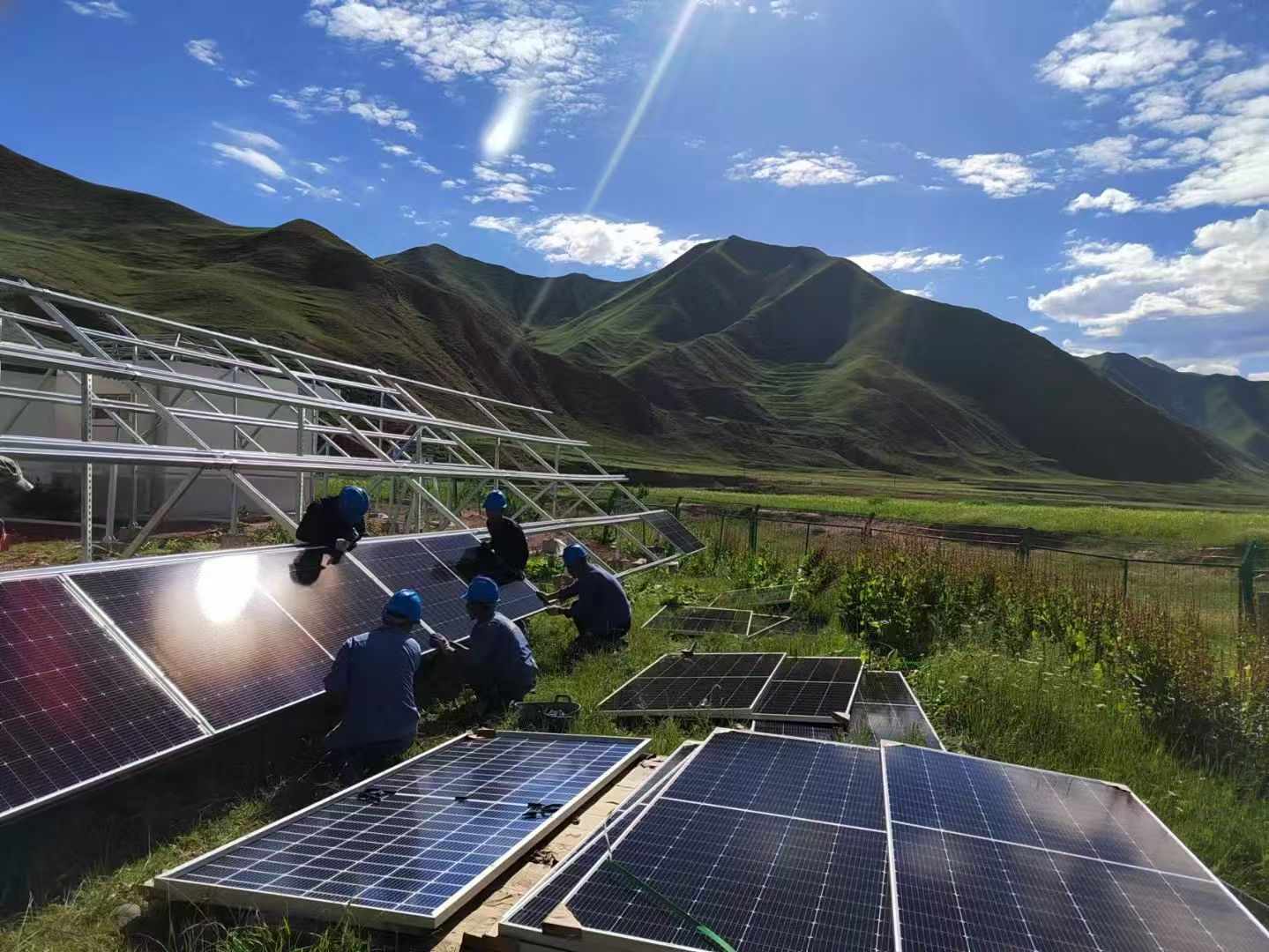
Secondly, there's the issue of power supply in remote areas. Russia is a vast country, and many remote areas lack grid coverage. In regions like Siberia, the Far East, and the Arctic Circle, extending the power grid is extremely costly, making diesel generators the primary source of electricity. However, diesel generators are expensive and difficult to transport, making solar energy an important option for solving the power supply problem in remote areas.
Thirdly, there are international commitments. Russia is a signatory to the Paris Agreement and has pledged to reduce greenhouse gas emissions by 30% from 1990 levels by 2030. While the extent of implementation remains controversial, it has indeed spurred the development of renewable energy policies.
Fourthly, there are geopolitical implications. Following the Russia-Ukraine conflict, Europe imposed sanctions on Russian energy, leading to a significant reduction in Russian natural gas exports to Europe. Having lost the European market, Russia needs to explore new energy export markets while also developing its domestic market. Energy transition has thus become, to some extent, one of the strategies to cope with sanctions.
It is against this backdrop that Russia has accelerated the development of renewable energy. Solar energy, as one of the important renewable energy sources, has received increasing policy support.
II. Current Status of the Russian Solar Energy Market
The development of the Russian solar energy market can be divided into several stages.
In the early stages, applications were primarily off-grid in remote areas. In remote regions such as Siberia and the Far East, diesel power generation is expensive (costing 5 to 10 rubles or even more per kilowatt-hour), and fuel transportation is difficult. Solar energy has become an important alternative in these regions. Since the 2000s, Russia has promoted solar energy systems in remote areas through various projects, particularly providing electricity to indigenous communities, weather stations, and communication base stations.
By the mid-2010s, Russia began developing grid-connected solar power projects. In 2013, Russia adopted the "National Support Policy for the Development of Renewable Energy," providing feed-in tariffs for renewable energy projects. This policy spurred the construction of large-scale solar power plants, and CIS countries such as Ukraine and Kazakhstan also began developing solar energy during this period.
In recent years, the Russian solar energy market has entered a period of rapid development. Although some international cooperation projects have been hampered by geopolitical factors and Western sanctions, domestic demand remains strong. Since 2015, Russia's cumulative installed solar capacity has continued to grow, with annual new installations increasing from tens of megawatts to hundreds of megawatts. In 2023, Russia added approximately 800 megawatts of new solar energy capacity, bringing its cumulative installed capacity to over 2,500 megawatts.
Geographically, Russia's solar power installations are mainly concentrated in the southern regions. Krasnodar Krai, Stavropol Krai, Volgograd Oblast, and Orenburg Oblast are the main areas of distribution. These regions have abundant sunshine and land resources, making them suitable for building large-scale ground-mounted power plants.
In terms of application type, Russia currently focuses on large-scale ground-mounted power plants, with industrial and commercial rooftop projects also increasing, but accounting for a relatively small proportion. Residential rooftop solar power is developing slowly in Russia, mainly due to the prevalence of apartment buildings, relatively low grid electricity prices, and limited policy support.
In terms of global market position, Russia's current installed solar capacity is relatively small, ranking outside the top 20. However, its growth rate is rapid and its potential is great, making it considered one of the important growth drivers in the global solar market in the coming years.
III. Opportunities in the Russian Solar Energy Market: Reasons for Attention
The Russian solar energy market presents several clear opportunities for both suppliers and buyers.
First, the market potential is enormous. Russia, with a land area of over 17 million square kilometers, is the world's largest country. This vast territory signifies immense development potential. Although its current installed solar power capacity accounts for a small percentage of the global total, the room for growth is huge. Market forecasts predict that Russia's installed solar power capacity will double or triple in the next decade.
Secondly, there is strong policy support. The Russian government has made renewable energy development a strategic priority, introducing a number of support policies such as feed-in tariff subsidies, tax breaks, and land incentives. Although the subsidy policy was adjusted after 2015, the overall direction remains to support the development of renewable energy.
Thirdly, Russia boasts superior geographical conditions. Southern Russia is rich in sunshine, averaging 2,000 to 2,500 hours of sunshine annually, comparable to major European photovoltaic powerhouses like Germany and Poland. Its abundant land resources and sparse population make it ideal for constructing large-scale ground-mounted power plants.
Fourthly, there is a rigid demand for replacing diesel power generation. In remote areas such as Siberia and the Far East, diesel power generation is costly, making solar energy a very economical alternative. With diesel prices continuing to rise, the payback period for off-grid solar systems is becoming increasingly shorter.
Fifth is the geographical advantage. Russia and China are geographically close, resulting in relatively low logistics costs. Logistics from China to Russia can be achieved via land transport (ports such as Manzhouli and Erenhot) or sea transport (ports such as St. Petersburg and Vladivostok), with controllable transportation time.
Sixth, Russia's domestic manufacturing capacity is limited. The country's domestic solar energy manufacturing industry is weak, and core equipment such as solar panels, inverters, and batteries mainly rely on imports. This provides a vast market opportunity for Chinese solar energy companies.

IV. Challenges in the Russian Market: Problems That Must Be Faced
Beyond the opportunities, the Russian market also presents some challenges that suppliers and buyers need to be aware of.
First, there are geopolitical risks. Following the Russia-Ukraine conflict, Russia faces Western sanctions, hindering some international cooperation. Some Western solar energy companies have withdrawn from the Russian market, impacting the local supply chain. Simultaneously, international sanctions have put pressure on some Chinese companies to decide whether to continue cooperating with Russia. While the Russian market offers numerous opportunities, the political risks of cooperating with Russia need to be assessed.
Secondly, there are payment and settlement risks. The Russian ruble's exchange rate fluctuates significantly; after the Russia-Ukraine conflict in 2022, the ruble experienced a sharp depreciation followed by a sharp appreciation, resulting in significant exchange rate risk. Regarding foreign exchange payments, some international settlement channels are limited, requiring transactions to be completed through Chinese banks or other alternative channels.
Thirdly, there are certification requirements. Russia has certification requirements for imported solar energy products, including EAC certification (Eurasian Economic Union certification). Some products also need to comply with Russian national technical specifications (GOST standards). Suppliers need to understand the certification requirements in advance and prepare the relevant documents.
Fourth is the climate challenge. Most of Russia experiences long, cold winters, with temperatures in some areas dropping below -50 degrees Celsius. Low temperatures affect the performance of solar energy systems, particularly lithium-ion batteries, whose efficiency decreases significantly at low temperatures. Suppliers need to provide product solutions adapted to cold climates.
Fifth is the language and cultural barrier. Russian business culture has its own characteristics, and Russian is the primary business language. Although some business professionals know English, their fluency is limited. Russian translation of contracts, documents, and technical materials is a crucial step.
The sixth challenge is after-sales service. Russia is a vast country with long logistics and delivery times, making it difficult to build an after-sales service network. Suppliers need to establish local service networks or collaborate with local partners to provide services.
V. Characteristics of Russian Customer Needs
Having understood the overall market situation, let's take a look at the specific needs of Russian customers for solar energy products.
In terms of power output, Russian customers have a demand for small and medium power systems, especially off-grid systems in remote areas. However, large-scale ground-mounted power plant projects also account for a significant proportion, which is consistent with Russia's geographical conditions and market characteristics.
In terms of product type, Russian customers are particularly concerned about low-temperature performance. In cold climates, the power generation efficiency of solar panels decreases (although not as significantly as with temperature-sensitive products), lithium battery efficiency drops markedly, and components such as cables and connectors also require low-temperature resistant materials. Suppliers need to provide product solutions specifically designed for cold climates.
In terms of certification requirements, EAC certification is a basic requirement for entering the Russian market. Some projects also require GOST-R certification, IEC standards, etc. Products with complete certifications are more likely to gain customer trust.
In terms of payment preferences, Russian customers are price-sensitive but also value quality at a reasonable price. Following the ruble's devaluation, the price of imported equipment has increased, leading some customers to seek products with "high cost-performance." Chinese products, with their price advantage and improved quality, are becoming increasingly popular in the Russian market.
In terms of service needs, Russian customers value after-sales support. Due to the difficulties in building logistics and service networks, suppliers who can provide remote technical support and timely spare parts supply are more popular.
VI. Recommendations for Developing the Russian Market
Here are some suggestions for solar energy suppliers looking to enter the Russian market.
First, assess political risks. Before deciding to enter the Russian market, a thorough assessment of geopolitical risks is essential. Consider factors such as the client's country, cooperative relationships, and political background, and avoid sensitive business that may involve sanctions. Simultaneously, it's crucial to assess whether the cooperation complies with the company's compliance requirements.
Secondly, choose suitable products. The Russian market has its own unique requirements, with low-temperature performance being crucial. It is recommended to select product solutions adapted to cold climates, especially components such as batteries, connectors, and cables, which must meet local Russian low-temperature requirements.
Third, prepare for localization. Product materials should ideally be available in Russian, including product specifications, user manuals, and installation guides. Russian is the primary language of business in Russia, and localization is the foundation for building trust.
Fourth, establish local partnerships. The Russian market has its own business rules and cultural characteristics. Finding reliable local partners can make all the difference. Local partners can provide support in many areas, including marketing, customer liaison, after-sales service, and technical support.
Fifth, pay attention to payment security. The ruble exchange rate fluctuates greatly, so it is recommended to use USD or RMB for settlement. Payment methods can be relatively secure, such as T/T (telegraphic transfer) or L/C (letter of credit). For new customers, it is recommended to use a prepayment + final payment method to control risk.
Sixth, pay attention to compliance requirements. Understand Russia's import policies, certification requirements, and tax regulations. Prepare the necessary documents and qualifications to avoid problems during customs clearance and sales.
Conclusion
The Russian solar energy market is a market with potential but also risks.
The potential lies in: a large market size, policy support, abundant solar resources, the rigid demand for replacing diesel power generation, and limited domestic manufacturing capabilities. The risks lie in: geopolitics, payment settlement, certification requirements, climate challenges, language and cultural differences, and after-sales service.
For suppliers willing to invest, patient, and capable of managing risk, the Russian market represents a potential market for in-depth development. While it may be affected by geopolitics in the short term, in the long run, energy transition is an inevitable choice for Russia, and solar energy, as an important renewable energy source, will continue to grow.
China and Russia are close neighbors, and energy cooperation is a traditional area of strength for both countries. In the solar energy sector, Chinese products and technologies are highly compatible with Russia's market demands. It is hoped that more Chinese solar energy companies can find opportunities in the Russian market and achieve mutual benefit and win-win results.
Please contact Simon immediately to discuss your project:
• WeChat: TY530643572
• Telephone: +86 137 1166 0041