In Africa, power is an "intermittent service"
A guest switches on the AC — the lights flicker twice — and the whole building goes dark. In Africa, the question isn't whether you have power, but *when*.
Frequent Blackouts
An unstable grid is the norm. Outages at the worst moments break the guest experience and trigger complaints and bad reviews.
Diesel Burns Cash
When the grid fails, generators take over. Fuel, oil, and maintenance double the cost per kWh — and the bill only rises with oil prices.
Endless Complaints
Dead AC, dropped Wi-Fi, black TV screens drive up bad reviews and cut repeat bookings. The hidden loss far exceeds the power bill.
One kit. A small solar power station.
Covers the hotel's full 100 kWh/day load with 2-day cloudy-weather autonomy. Designed for Africa's high insolation (5.5 peak sun hours).
| Component | Specification | Qty | Total |
|---|---|---|---|
| Solar Panels | 600W / panel, monocrystalline | 40 | 24 kWp |
| Inverters | 12 kW hybrid inverter | 3 | 36 kW |
| LiFePO4 Battery | 16 kWh / unit | 4 | 64 kWh |
| Mounting & Accessories | Aluminum racks / cables / distribution | Full kit | — |
| Total System Cost | ~ $10,000 | ||
Output check: 24kWp × 5.5h × 0.8 (losses) ≈ 106 kWh/day, covering the 100 kWh/day load. The 64 kWh battery sustains ~15 hours at full load — enough for a typical cloudy day.
Three power options, one clear winner
Based on 100 kWh/day, grid at $0.21/kWh (CNY 1.5), diesel at ~$0.36/kWh (CNY 2.5, incl. fuel + maintenance).
Option 3 includes minimal diesel top-up on extreme cloudy days (~2–3 kWh/day) and amortized 10-year battery replacement (~$171/yr).
Fast payback. Long-term profit.
$10,000 once. Every dollar saved on power is pure profit.
Payback vs Grid Only
Saves $5,964/yr (~CNY 41,750)
Payback vs Real-World (diesel)
Saves $7,529/yr (~CNY 52,700)
10-Year Net Gain
After battery replacement: $50k–75k profit
More than just power bills
Stable Experience
Uninterrupted AC, no dropped Wi-Fi — review scores and repeat bookings quietly climb.
Peace of Mind
No monitoring the generator, no midnight refuel runs. Operational stress drops to zero.
Oil-Price Immunity
When oil prices rise, generator costs rise too. Solar's marginal cost is always zero.
Marketing Edge
"Solar-powered, reliable electricity" is itself a competitive hook that attracts guests.
- 24kWp solar panels (40 units)
- 36kW inverters (3 units)
- 64kWh storage battery
- Mounting + full accessories
What if it's cloudy or the outage is long?
The 64 kWh battery sustains ~15 hours at full load. Only in prolonged extreme weather, when the battery is depleted, does the diesel generator top up ~2–3 kWh/day — barely affecting the cost advantage.
How long do the batteries last? Expensive to replace?
LiFePO4 batteries last ~10 years. Replacing 4 units of 16 kWh costs about CNY 12,000 (~$1,700), amortized to just ~$171/year — already deducted in the ROI figures.
Is installation and maintenance complicated?
The kit includes racks and full accessories with a standardized structure. Daily maintenance is minimal — mainly panel cleaning and periodic checks. No dedicated operator required.
My hotel isn't 10 rooms. Can this work?
Configuration scales to your actual load. For every ~10 kWh/day added, add ~2.4kWp solar and ~6.4kWh storage. We provide a custom survey-based plan.
Case Study: Solar Power Systems for Hotels as a Practical Route to Lower Operating Costs
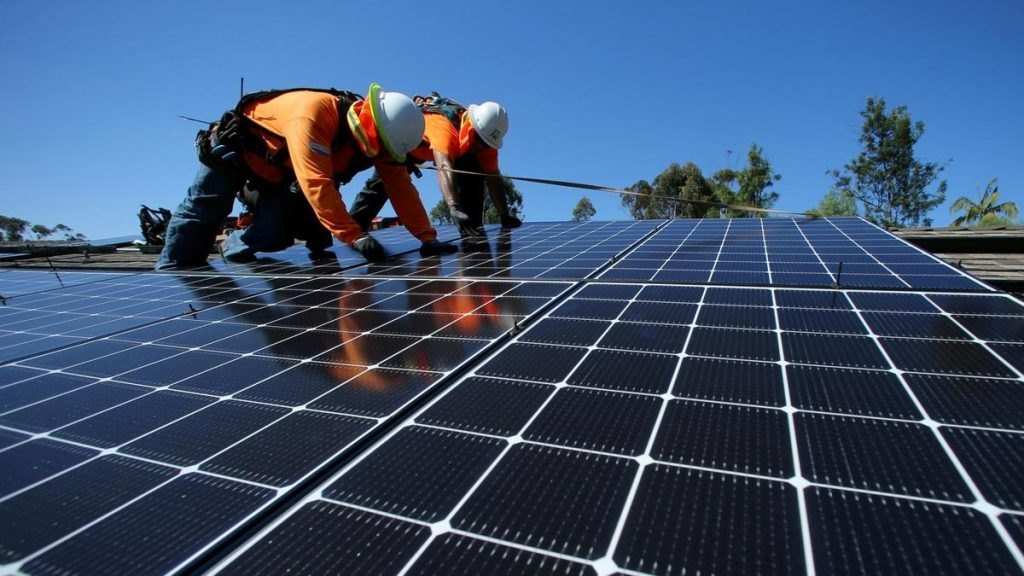
For hotel operators, electricity is not a background expense; it affects room comfort, laundry, kitchen equipment, lighting, elevators, and air conditioning every day. In this case-style analysis, solar power systems for hotels are best understood as a way to reduce grid dependence while turning unused roof space into productive energy infrastructure. The visible project example shows a roof-mounted photovoltaic array covering multiple roof planes, which is the type of layout often used when a property needs steady on-site power generation without sacrificing ground space.
Project Overview
The visible installation is a rooftop solar PV system arranged across a light-colored building with several roof sections. Dark blue or black rectangular modules are mounted in closely aligned rows, following the roof pitch and covering a broad area. That kind of layout is especially relevant for hospitality properties with large roof surfaces, because hotels usually need a solution that blends into the building envelope and can support self-consumption during daytime operations.
Although the exact system rating is not visible, the arrangement is consistent with a commercial rooftop project that aims to offset a meaningful portion of building electricity use. In hotel planning, this is where a hotel solar power system becomes a facilities decision rather than just an energy purchase. The objective is to convert sunlight into electricity for immediate use and reduce the amount drawn from the utility.
What the System Solves for Hotel Buyers
Hotels face a predictable challenge: high and continuous power demand. Guest rooms, common areas, laundry rooms, ventilation, refrigeration, and back-of-house systems create a load profile that does not disappear after business hours. Solar energy for hotels helps address this by supplying daytime power when many hotel loads are active, especially cooling, lighting, reception, and water heating support systems.
For properties under pressure from rising utility costs, commercial solar power for hotels can also improve energy planning. It gives facility managers a visible asset on the roof, a clearer path to long-term energy budgeting, and a practical way to support sustainability targets without changing guest experience.
Key System Characteristics Visible in the Project
Rooftop coverage and layout
The panels are installed on several roof planes, including a main lower roof and upper slopes. This matters because hotel rooftops are often segmented by architectural design, mechanical equipment, or structural changes. A successful installation uses that available area efficiently.
Mounted photovoltaic modules
The modules appear to be standard flat rectangular PV panels with a regular grid pattern. They are mounted with racking or rails fixed to the roof structure. The system is visually integrated with the building rather than standing as a separate ground array.
On-site electricity generation
The visible function is straightforward: the modules convert sunlight into electricity and feed that power into the building’s electrical system. In a hotel setting, this can support direct self-consumption and reduce daytime grid draw.
Reference Capacity Considerations
Many hotel buyers search by system size, and a 36kW solar power system is often discussed as a practical reference point for smaller hospitality properties, guesthouses, or auxiliary building loads. A 36 kW solar system can be sized to match available roof area, daily load profile, and local solar conditions. Some buyers also compare a 36kw solar panel system when reviewing roof space and expected energy offset.
However, the exact capacity of the visible project is not provided, so it should not be assumed to be 36 kW. For procurement, the right question is not only the nominal size but how much daytime hotel demand the system can cover.
Materials and Finish Options
In commercial rooftop projects, modules are usually supplied with weather-resistant glass surfaces, aluminum frames, and corrosion-resistant mounting hardware. The visible panels have a dark finish, which is common for rooftops where a cleaner visual profile is preferred. Hotel buyers often ask for finish consistency, edge alignment, and low-profile mounting so the installation looks orderly from nearby buildings or guest-facing views.
Manufacturing and Installation Process
From a project-delivery standpoint, the process usually includes roof assessment, structural review, array layout, mounting rail installation, module placement, electrical connection, and system commissioning. Guangzhou Tianyuan Solar Equipment CO.,LTD emphasizes independent R&D, patented technologies, and long-term energy efficiency improvement, which is important when a hotel owner is selecting a supplier for a rooftop energy project. The company also states that it serves customers in more than 50 countries and invites global clients to visit its factory near Guangzhou Baiyun International Airport.
For hotel projects, careful installation is especially important because roof penetrations, drainage paths, and maintenance access must be handled cleanly. A well-planned array should leave space for service personnel and avoid blocking HVAC units or other rooftop equipment.
Application Scenarios in Hospitality
Solar power systems for hotels are commonly used for rooftop self-generation in urban hotels, resort buildings, boutique properties, staff accommodation blocks, and ancillary service buildings. They are also relevant where a hotel wants to reduce visible emissions, stabilize daytime operating cost, or prepare for future battery integration. The visible roof-mounted design fits properties that have usable roof area and want to turn that area into a working energy asset.
Quality Control and Buyer Decision Factors
When evaluating a project like this, hotel buyers should look at roof structure compatibility, shading, waterproofing details, inverter selection, maintenance access, and electrical interconnection requirements. Because exact brand, wattage, certification, and output are not shown in the image, those items must be confirmed during technical review rather than inferred from appearance.
For procurement teams, the main buying factors are simple: how much roof space is available, how much daytime power the hotel uses, whether the utility connection allows grid export or self-consumption only, and whether the system can be expanded later.
Customization Guidance
Every hospitality project needs a tailored layout. Module count, string design, mounting angle, and inverter configuration should be matched to the roof geometry and the hotel’s load profile. If you are comparing a hotel solar power system against a utility bill baseline, request a site survey, shading analysis, and an electrical single-line plan before ordering hardware.
Next Step for Hotel Buyers
If you are planning solar energy for hotels and want a rooftop solution that supports reliable daytime self-use, a detailed engineering review is the right starting point. Share your roof drawings, utility consumption data, and target system size so the design can be matched to your property. Guangzhou Tianyuan Solar Equipment CO.,LTD welcomes factory visits and can support project discussions for commercial solar power for hotels.