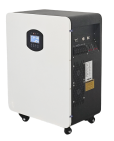
Understanding Hybrid Solar Inverters: The Core of Modern Solar Systems
The hybrid solar inverter stands as a pivotal component in contemporary renewable energy setups, seamlessly integrating solar power, battery storage, and grid electricity. At Guangzhou Tianyuan Solar Equipment CO.,LTD, our SUNNYSKY 12KW hybrid solar inverter exemplifies this technology, offering users a robust solution for energy management. This device not only converts DC power from solar panels into usable AC power but also manages energy flow from multiple sources, ensuring optimal efficiency and reliability in residential and light commercial applications.
Key Features and Technology in Our 12KW Hybrid Solar Inverter
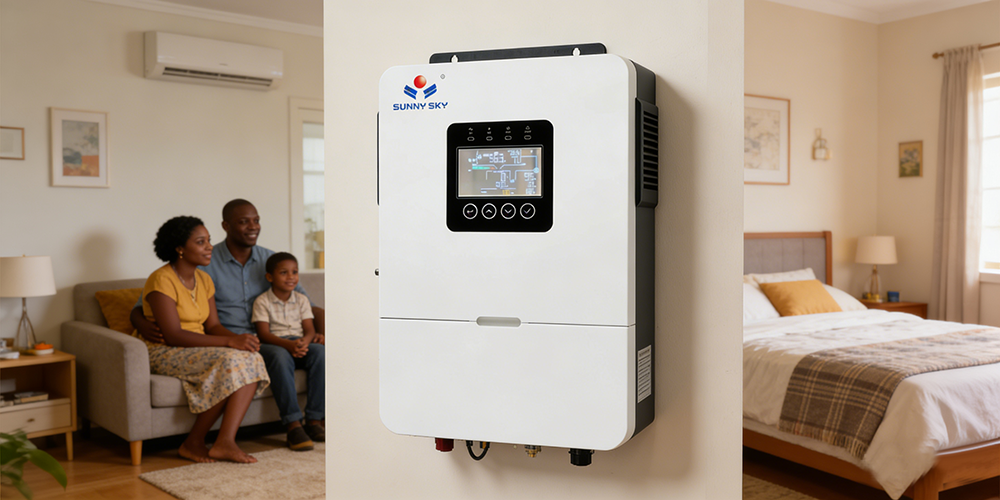
Delving into the technical specifications, the hybrid solar inverter from SUNNYSKY features a clean, architectural design with a minimalist white exterior and soft rounded corners. The central black control panel houses an integrated digital LCD interface, providing real-time visibility into battery status, load conditions, input/output performance, and system flow. This graphical, intuitive layout simplifies energy monitoring, while the simplified button arrangement allows for straightforward setup, parameter adjustments, and operational checks.
Engineered for high-performance applications, this 12KW model coordinates solar, battery, and grid inputs efficiently. It supports self-consumption optimization, backup power readiness, and flexible energy scheduling, enabling users to prioritize solar usage, store excess energy, and draw from the grid only when necessary. The side-mounted cooling vents ensure superior thermal management, crucial for maintaining stability under heavy loads and promoting long-term reliability. With patented technologies from our independent R&D, SUNNYSKY inverters deliver enhanced efficiency, reducing energy losses and operational costs.
Benefits of Hybrid Inverters: Why Choose SUNNYSKY?
The hybrid inverter benefits are multifaceted, particularly in promoting energy independence and cost savings. Unlike traditional systems, a hybrid solar inverter allows for intelligent energy management, such as peak shaving and load shifting, which can significantly lower electricity bills. For instance, during high solar production, the inverter directs power to batteries or loads, minimizing grid reliance. In off-grid scenarios, it provides seamless backup, ensuring uninterrupted power supply.
Our commitment at Guangzhou Tianyuan Solar Equipment CO.,LTD to "delivering reliable, innovative green energy" is reflected in these benefits. SUNNYSKY products have reached over 50 countries, earning praise for their stability and performance. By investing in R&D, we enhance features like multi-source coordination, making our inverters ideal for reducing carbon emissions and creating lasting value for users worldwide.
Comparing Hybrid vs. Solar Inverters: Technical Insights
A key distinction lies in hybrid inverter vs. solar inverter comparisons. While a standard solar inverter focuses solely on converting solar DC to AC and feeding it to the grid or loads, a hybrid solar inverter incorporates battery management and grid interactivity. This dual functionality enables features like zero-export control and islanding modes, where the system operates independently during outages.
Technically, the hybrid inverter technology in our 12KW model uses advanced MPPT (Maximum Power Point Tracking) algorithms to maximize solar harvest, achieving up to 98% efficiency. It supports various battery types, including lithium-ion and lead-acid, with programmable charging profiles to extend battery life. In contrast, pure solar inverters lack this versatility, making hybrids more adaptable for evolving energy needs.
Selecting the Best Hybrid Solar Inverter: Reviews and Pricing
When evaluating the best hybrid solar inverter, factors like power capacity, efficiency, and user interface are paramount. Hybrid solar inverter reviews often highlight SUNNYSKY's 12KW model for its sleek, wall-mounted design that integrates seamlessly into modern spaces, combining aesthetics with functionality. The premium build quality, including robust heat dissipation, ensures dependable operation even in demanding environments.
Regarding hybrid solar inverter price, our offering provides exceptional value, balancing high-end features with affordability. Priced competitively for its 12KW capacity, it includes comprehensive warranties and support, making it a top-rated hybrid solar inverter among professionals. Users appreciate the ease of monitoring via the LCD, which displays metrics like voltage, current, and energy yield with precision.
Installing a Hybrid Solar Inverter: Best Practices
Installing hybrid solar inverter systems requires careful planning to ensure safety and performance. Begin by assessing site conditions, such as sunlight exposure and electrical load requirements. The wall-mounted form factor of SUNNYSKY's unit facilitates neat installation in utility rooms or exteriors, with the smooth front surface minimizing dust accumulation.
Professional installation involves connecting solar arrays, batteries, and grid ties per local codes, followed by configuring the inverter's parameters via its intuitive controls. Our team at Guangzhou Tianyuan Solar Equipment CO.,LTD, located just 20 minutes from Guangzhou Baiyun International Airport, offers guidance and invites global clients for factory visits with complimentary pickup. Proper setup maximizes solar energy hybrid inverter potential, enabling features like time-of-use optimization for cost-effective energy use.
Top Rated Hybrid Solar Inverters and Future Outlook
Among top rated hybrid solar inverters, SUNNYSKY's 12KW model stands out for its innovative design and technical prowess. It represents the future of solar energy hybrid inverter technology, with ongoing R&D focusing on AI-driven energy forecasting and enhanced grid compatibility. As renewable adoption grows, these inverters will play a crucial role in sustainable energy ecosystems, empowering users to achieve greater efficiency and resilience.