FAQ: What a solar storage inverter system is really doing
A solar storage inverter system is often described as the bridge between solar generation, battery storage, and usable AC power. In practice, that means it has to do more than “invert” power. It needs to manage charging, discharging, load support, and the handoff between grid, PV, and battery without making the site operator babysit the equipment. For engineers and sourcing teams, the real question is not whether the system can store energy, but whether the package fits the project’s operating profile, safety needs, and service expectations.
The confusion usually starts because buyers search for a solar inverter with battery storage or a hybrid solar inverter and end up comparing very different products. A home solar storage system, an off grid solar inverter, and a commercial solar inverter can share the same language in brochures while serving very different electrical and mechanical requirements. That is where cabinet construction, integration quality, and protection features start to matter just as much as nameplate power.
FAQ 1: What does this type of system include?
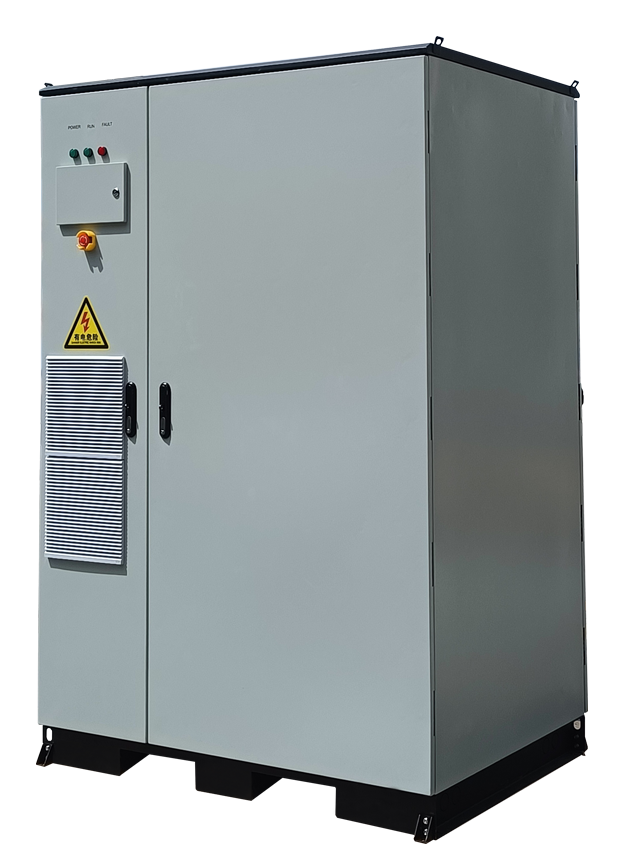
At a practical level, a battery energy storage system tied to solar usually combines battery modules, a control layer, power conversion equipment, and an enclosure that keeps the whole assembly serviceable and safer to operate. The visible product here is a large industrial energy storage cabinet: a floor-standing metal enclosure with access doors, status indicators, a main disconnect or emergency stop style button, ventilation at the lower front, and high-voltage warning labeling.
That may sound basic, but buyers should not underestimate the cabinet itself. A solar power storage inverter or photovoltaic inverter system is only as manageable as the housing around it. If the enclosure is awkward to service, poorly ventilated, or unclear on fault indication, downtime gets expensive quickly.
FAQ 2: How is an industrial storage cabinet different from a residential system?
A residential energy storage inverter is often designed for compact installation, simpler monitoring, and lower total capacity. Commercial and industrial units, by contrast, are expected to handle more demanding duty cycles, heavier cabling, and site-level energy management.
That difference shows up in the hardware. Industrial cabinets tend to use metal sheet enclosures, lockable access doors, clearer status lamps, and more obvious safety controls. The cabinet described here uses a light gray painted finish with black structural trim, which is typical of industrial electrical gear. It also has a lower ventilation grille, a useful clue that thermal management is part of the design conversation, even if the exact cooling method is not visible.
Common buyer takeaway
If your project is tied to peak shaving, load shifting, backup power, or renewable-energy buffering, a packaged cabinet is usually easier to deploy than piecing together multiple field-mounted components. That said, integration quality varies a lot. Two units can look similar from the outside and behave very differently once the site starts cycling every day.
FAQ 3: What should sourcing teams look at first?
Start with the operating model, not the brochure language. Ask whether the system will support:
Commercial solar inverter functions for grid-tied sites
Hybrid operation with PV and battery interaction
Off-grid or backup duty during outages
Peak shaving or demand management for industrial loads
The next step is to check the cabinet itself. Look for the following:
Clear status indication, such as POWER, RUN, and FAULT lamps
Accessible disconnect or emergency stop controls
Lockable doors for maintenance control
Ventilation paths that make sense for the load profile
Safety labels that are visible and practical, not buried behind a cover
These sound like small points until you have to troubleshoot a fault on a hot afternoon. Then they are not small at all.
FAQ 4: What are common mistakes when buying?
The first mistake is treating every solar inverter with battery storage as interchangeable. They are not. A product that works well for a home solar storage system may be a poor fit for industrial cycling, and an off grid solar inverter can be the wrong tool for a grid-connected commercial site.
The second mistake is focusing only on capacity and ignoring enclosure details. Thermal design, service access, indicator layout, and wiring organization all affect uptime. A battery energy storage system can perform well electrically but still cause headaches if technicians cannot service it efficiently.
A third mistake is assuming the same cabinet will suit indoor and outdoor duty without confirmation. The image suggests a robust industrial enclosure, but the exact IP rating, cooling strategy, and environmental limits are not visible, so those should be verified before procurement.
FAQ 5: How should buyers evaluate a supplier?
For buyers looking at a solar storage inverter system for commercial deployment, supplier confidence matters. Guangzhou Tianyuan Solar Equipment CO.,LTD says it operates with independent R&D and patented technologies, serves customers in more than 50 countries, and focuses on stability, performance, and design. It also positions SUNNYSKY around reliable, innovative green energy and offers factory visits near Guangzhou Baiyun International Airport.
That does not replace technical due diligence, of course. But it does suggest a manufacturer that understands both product development and export-oriented service. For project teams, that can matter as much as the cabinet itself.
FAQ 6: What should you ask before placing an order?
Keep the questions concrete:
Is the system intended for commercial solar inverter use, backup power, or a full battery energy storage system role?
What parts of the package are integrated inside the cabinet?
How is ventilation handled under continuous load?
What maintenance access is required?
What communications, protections, and alarms are included?
Can the supplier support the application if the project grows later?
A good answer usually comes with diagrams, not adjectives.
FAQ 7: What is the next step for a project team?
If your application is moving from concept to procurement, ask for a full system layout, cabinet dimensions, electrical architecture, and service documentation before you lock the specification. For solar storage inverter system projects, the fastest way to avoid a mismatch is to compare the intended duty cycle against the actual integration design, not just the headline power figure.
For buyers who want to evaluate industrial solar storage equipment in person, a factory discussion can be useful. The real value is seeing how the enclosure is built, how access is managed, and whether the supplier can explain the system plainly without hand-waving.