FAQ: What is a solar storage inverter system, and when does it make sense?
A solar storage inverter system sits at the center of a modern solar-plus-storage project. In plain terms, it helps solar energy flow into a battery for later use, then converts that stored power back into usable AC when the site needs it. That sounds straightforward, but the buying decision is not. Engineers, sourcing managers, and project teams have to decide whether they need a solar inverter with battery storage for a home solar storage system, a commercial solar inverter for a factory roof, or a larger battery energy storage system that supports peak shaving and backup power.
For many buyers, the real question is not “Should we add storage?” but “What type of system architecture matches the load profile, budget, and operating risk?” That is where the details matter.
Why storage changes the economics of solar
Without storage, a photovoltaic inverter system only works when the sun is available and the load is ready to consume it. That is fine for predictable daytime demand, but it leaves value on the table in facilities with evening peaks, unstable grid supply, or a need for emergency backup. A solar power storage inverter can shift energy use from low-value moments to high-value moments. In some cases, it also reduces demand charges or helps smooth intermittent output from distributed solar arrays.
For industrial sites, this is often less about “green image” and more about control. A battery-backed system can stabilize operations, support sensitive loads, and improve resilience when the grid is weak or outages are a concern. In a commercial setting, that can mean fewer interruptions to refrigeration, IT equipment, production lines, or security systems.
Quick guide: common system types
Hybrid solar inverter
A hybrid solar inverter combines solar conversion and battery interaction in one architecture. It is often chosen when the site wants solar generation, storage, and grid interaction in a compact configuration. For many projects, it is the most practical starting point.
Off grid solar inverter
An off grid solar inverter is designed for sites that cannot depend on utility supply. It is typically paired with batteries and sometimes generators. This approach demands careful load planning. Oversizing is expensive; undersizing is risky. There is not much room for guesswork.
Commercial solar inverter
A commercial solar inverter is usually selected for larger rooftops, campuses, or factories where operational continuity and energy management matter more than simple self-consumption. The inverter may be one part of a broader control strategy that includes storage, metering, and site monitoring.
What the visible battery cabinet tells a buyer
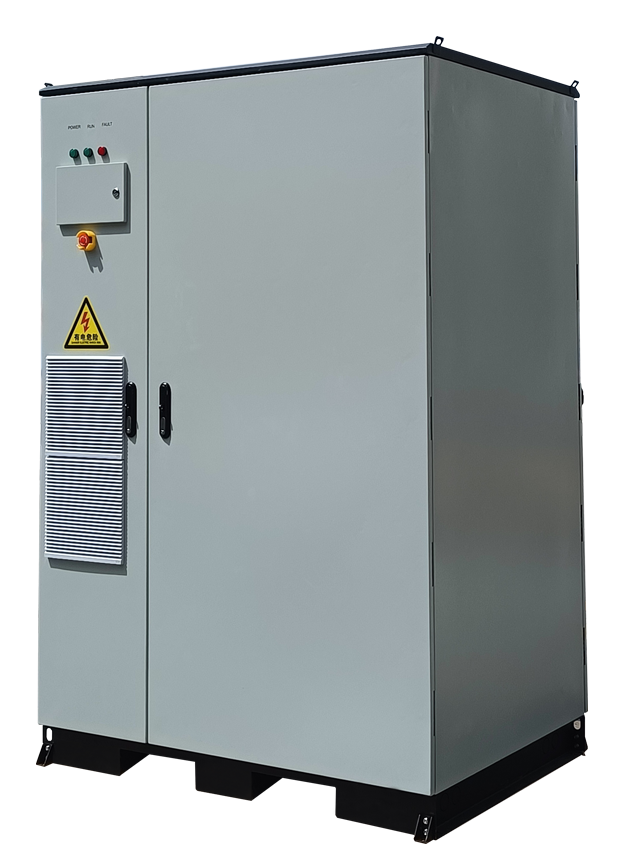
The product information points to a large industrial energy storage cabinet: a floor-standing metal enclosure with a front access door, side service door, ventilation grille, indicator lights, and an emergency stop or disconnect device. That layout suggests a serious stationary application, likely for commercial or industrial energy support.
Visible features matter. Sheet-metal enclosure quality, access design, locking handles, ventilation openings, and safety labeling all influence maintenance access and day-to-day usability. The cabinet appears built for integration rather than casual installation. It may house battery modules, protection hardware, a BMS, and related controls, but the internal architecture is not visible, so it would be unwise to assume the inverter is inside the same cabinet.
Selection criteria buyers should not skip
Start with load profile. If the site needs short backup events, long-duration shifting, or both, the system design changes. Then look at integration: does the project need a separate inverter, or a full solar inverter with battery storage package? Next comes service access. A neatly arranged cabinet is useful only if technicians can inspect it without fighting the enclosure.
Thermal management is another practical concern. The visible venting suggests cooling was considered, but that is not the same as proving a specific cooling method. Buyers should ask how heat is managed under expected ambient conditions and whether the system is suitable for the installation environment. For industrial users, this is not a minor detail; it affects uptime and battery life.
Common mistakes in storage projects
The most common mistake is treating every battery energy storage system as interchangeable. They are not. A home solar storage system, a factory peak-shaving cabinet, and a microgrid asset have different duty cycles, protection needs, and service expectations. Another mistake is focusing on inverter size alone while ignoring enclosure access, alarms, and shutdown behavior.
One more buyer-facing warning: do not finalize specifications until you confirm what is actually included. Some vendors supply only the battery cabinet; others provide a full solar power storage inverter package. That distinction affects wiring, controls, commissioning, and responsibility during troubleshooting.
Why work with a manufacturer that can support integration
Guangzhou Tianyuan Solar Equipment CO.,LTD says it has independent R&D, patented technologies, and experience serving customers in more than 50 countries. The company also emphasizes reliable green energy solutions and invites global clients to visit its factory near Guangzhou Baiyun International Airport, with airport pickup available. For buyers, that kind of factory access can be useful when evaluating cabinet build quality, assembly discipline, and the fit between engineering claims and the actual product line.
When sourcing a residential energy storage inverter or a larger industrial cabinet, that factory conversation often matters as much as the brochure. Ask for the system boundary, the included components, and the intended application before you compare pricing.
FAQ
Is a solar storage inverter system the same as a battery cabinet?
Not always. A battery cabinet stores energy, while the inverter converts and manages power flow. Some products combine both functions; others separate them.
Can one system serve both backup and peak shaving?
Yes, if the controls and capacity are designed for it. The load profile should be reviewed carefully so the system does not look adequate on paper but fail during real operations.
What should I ask before buying?
Ask what is included, how the cabinet is cooled, how service access works, and whether the system is designed for residential, commercial, or industrial use. If the supplier cannot answer those plainly, keep digging.
Next step for buyers
If you are comparing options for a solar storage inverter system, start with the application, not the catalog. Define the load, the backup requirement, and whether you need a hybrid solar inverter, an off grid solar inverter, or a cabinet-based battery energy storage system. Then ask the supplier for a clear system boundary and a layout that matches your site. That is the fastest way to avoid expensive redesign later.