The modern world presents a dual challenge for energy consumers: rising electricity costs and the growing unreliability of the grid. Homeowners and businesses are increasingly searching for a sustainable way to gain control over their power supply, reduce their carbon footprint, and protect themselves from unexpected outages. The solution lies not just in generating your own solar power, but in intelligently managing it. This is where a state-of-the-art hybrid inverter becomes the crucial centerpiece of a truly independent and efficient energy system, offering a seamless bridge between solar generation, battery storage, and the grid.
A common problem with traditional solar setups is that they are either grid-tied, shutting down during an outage, or completely off-grid, lacking the flexibility of grid power. Hybrid inverter systems solve this by combining the best of both worlds. A hybrid solar inverter acts as the intelligent director of your home’s energy flow. It converts the DC electricity from your solar panels into AC electricity for your home, charges a battery bank with excess solar power, and can draw from or send power to the grid when needed. This capability is what makes it a superior choice, ensuring you use every kilowatt of solar energy you generate, either immediately, by storing it for later, or even by selling it back to the utility company.
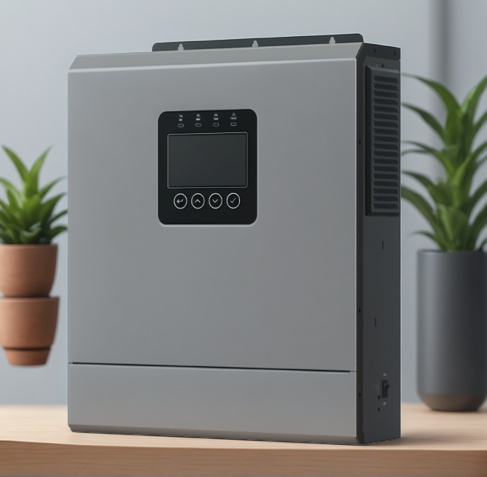
To truly unlock these benefits, you need a device built on the latest hybrid inverter technology. Consider the advanced 6KW Hybrid Inverter, a unit designed for maximum efficiency and user control. Its sophisticated matte grey finish and compact form allow it to integrate seamlessly into any environment, while its high-efficiency construction minimizes noise and heat. At its core is a smart digital LCD display, which provides a clear, intuitive interface for monitoring power generation, consumption, and system status in real-time. This level of control empowers users to switch between operational modes effortlessly, tailoring their energy management strategy to their specific needs. This device harmonizes power from solar panels and batteries, optimizing energy usage by intelligently switching between stored solar energy and grid power, making it a contender for the best hybrid inverter on the market.
A major challenge in managing a personal power plant is the lack of visibility. The 6KW solar hybrid inverter addresses this with smart connectivity options. Through Wi-Fi or mobile networks, you can access real-time data monitoring from anywhere in the world. This allows you to track your energy consumption, monitor savings, and receive system updates directly on your smartphone. This remote access is invaluable for prompt troubleshooting and ensures your system is always performing optimally. Furthermore, positive hybrid inverter reviews often hinge on durability. This unit is engineered to withstand demanding climates, with advanced thermal and electrical protections that guarantee longevity and sustained performance, making it a resilient choice for both residential and commercial installations.
The prospect of a complex setup can deter many from upgrading their energy systems. However, leading hybrid inverter manufacturers are focused on creating products that are as practical as they are powerful. The compact design and intuitive interface of the 6KW model streamline the hybrid inverter installation process. Its adaptability makes it suitable for a wide range of applications, from a suburban home looking for backup power to a remote property aiming for an off grid hybrid inverter solution. This flexibility ensures that you can build a system perfectly suited to your energy goals, providing a reliable and future-proof investment in your energy independence.
The Brains Behind Smart Energy Management
A common problem with traditional solar setups is that they are either grid-tied, shutting down during an outage, or completely off-grid, lacking the flexibility of grid power. Hybrid inverter systems solve this by combining the best of both worlds. A hybrid solar inverter acts as the intelligent director of your home’s energy flow. It converts the DC electricity from your solar panels into AC electricity for your home, charges a battery bank with excess solar power, and can draw from or send power to the grid when needed. This capability is what makes it a superior choice, ensuring you use every kilowatt of solar energy you generate, either immediately, by storing it for later, or even by selling it back to the utility company.
Discovering the Best Hybrid Inverter Technology
To truly unlock these benefits, you need a device built on the latest hybrid inverter technology. Consider the advanced 6KW Hybrid Inverter, a unit designed for maximum efficiency and user control. Its sophisticated matte grey finish and compact form allow it to integrate seamlessly into any environment, while its high-efficiency construction minimizes noise and heat. At its core is a smart digital LCD display, which provides a clear, intuitive interface for monitoring power generation, consumption, and system status in real-time. This level of control empowers users to switch between operational modes effortlessly, tailoring their energy management strategy to their specific needs. This device harmonizes power from solar panels and batteries, optimizing energy usage by intelligently switching between stored solar energy and grid power, making it a contender for the best hybrid inverter on the market.
Advanced Connectivity and Unmatched Durability
A major challenge in managing a personal power plant is the lack of visibility. The 6KW solar hybrid inverter addresses this with smart connectivity options. Through Wi-Fi or mobile networks, you can access real-time data monitoring from anywhere in the world. This allows you to track your energy consumption, monitor savings, and receive system updates directly on your smartphone. This remote access is invaluable for prompt troubleshooting and ensures your system is always performing optimally. Furthermore, positive hybrid inverter reviews often hinge on durability. This unit is engineered to withstand demanding climates, with advanced thermal and electrical protections that guarantee longevity and sustained performance, making it a resilient choice for both residential and commercial installations.
Simplifying Hybrid Inverter Installation and Use
The prospect of a complex setup can deter many from upgrading their energy systems. However, leading hybrid inverter manufacturers are focused on creating products that are as practical as they are powerful. The compact design and intuitive interface of the 6KW model streamline the hybrid inverter installation process. Its adaptability makes it suitable for a wide range of applications, from a suburban home looking for backup power to a remote property aiming for an off grid hybrid inverter solution. This flexibility ensures that you can build a system perfectly suited to your energy goals, providing a reliable and future-proof investment in your energy independence.