tianyuansolar@gmail.com

Mastering Solar Efficiency with MPPT Solar Charge Controller

  • Learning center
Posted by SUNNYSKY On Aug 29 2025

The landscape of renewable energy is constantly evolving, with consumers and industries alike seeking greater efficiency and smarter system management. At the core of this evolution for solar power is the MPPT solar charge controller, a device that has fundamentally changed how we harness energy from the sun. As solar installations become more common, the trend is shifting from simply generating power to optimizing every single watt. This focus on maximization is driving innovation and setting new standards for what users expect from their solar energy systems.
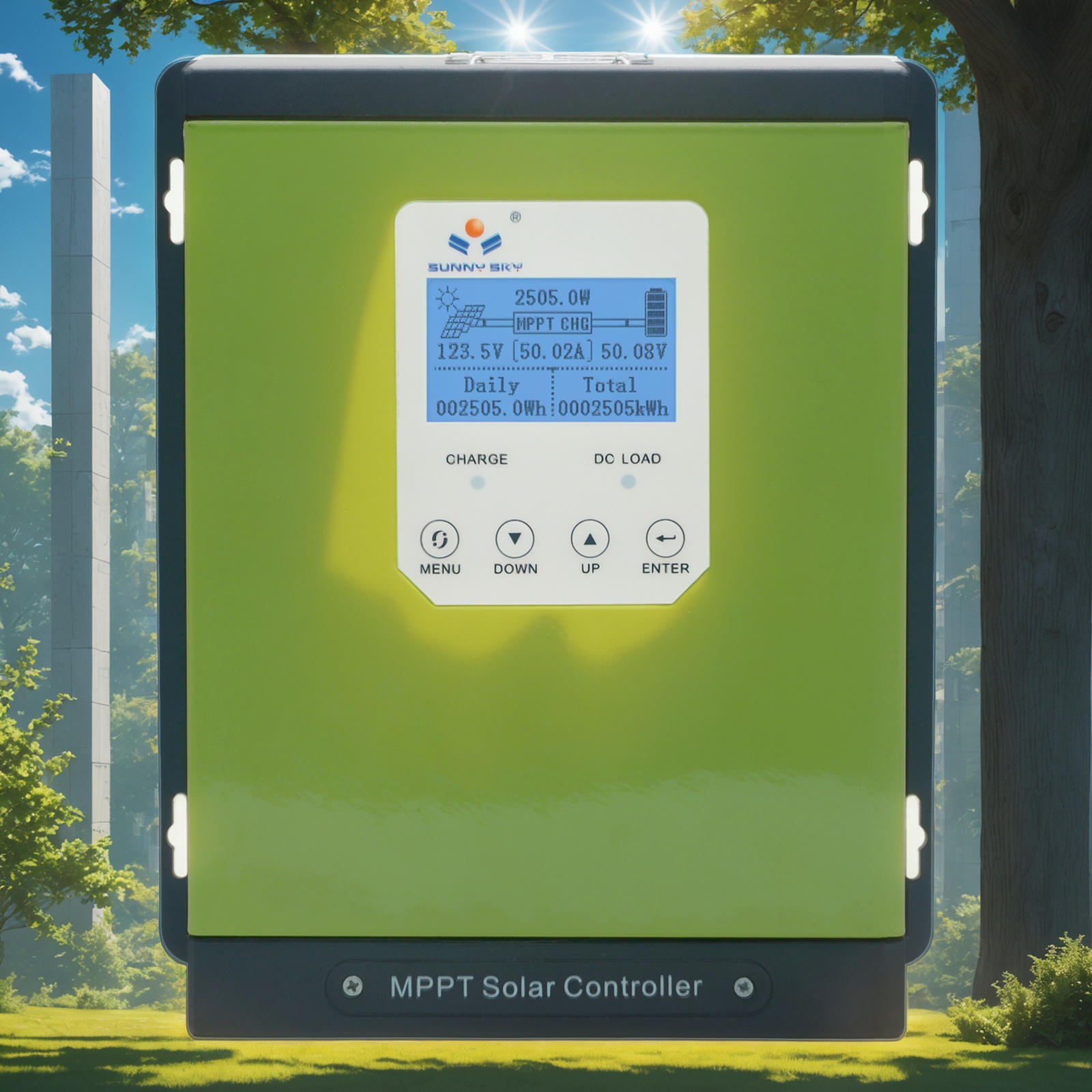
MPPT solar charge controller, Maximum Power Point Tracking, solar charge controller reviews, best MPPT solar controllers

The Evolution of Solar Efficiency: Why MPPT is Leading the Charge


One of the most significant trends in solar technology is the widespread adoption of Maximum Power Point Tracking (MPPT). This intelligent technology represents a major leap forward from older PWM controllers, dramatically increasing solar charge controller efficiency. By continuously monitoring the voltage and current of your solar panels, an MPPT controller adjusts its internal parameters to harvest the maximum possible power, often resulting in a 20-30% energy gain, especially in cooler weather or when battery voltage is low. This trend is fueled by a growing demand for a higher return on investment, as maximizing energy yield means faster payback periods and more usable power from the same number of panels.

Current Trends: What Defines the Best MPPT Solar Controllers Today?


When browsing solar charge controller reviews, it's clear that today’s market demands more than just efficiency. The rise of smart solar charge controllers is a dominant trend, with users expecting features like Bluetooth connectivity and dedicated mobile apps for real-time monitoring and configuration. Another critical trend is compatibility with modern battery chemistries. The demand for a dedicated solar charge controller for lithium batteries has surged, as these batteries require precise charging profiles to ensure safety and longevity. A leading example of these trends is the Sunny Sky MPPT Solar Controller. It combines advanced MPPT technology with a user-friendly, crystal-clear backlit LCD display, allowing users to effortlessly track performance and settings. This blend of high efficiency and intuitive operation is exactly what defines the best MPPT solar controllers on the market today.

Future-Proofing Your System: Installation and Advanced Configurations


As technology advances, so do system designs. The trend in solar charge controller installation is leaning towards more streamlined, user-friendly designs that cater to both DIY enthusiasts and professional installers. Products like the Sunny Sky controller are designed for easy integration into both new and existing systems, making upgrades simple. Looking ahead, we are seeing a growing interest in more complex solutions for challenging installations. The dual MPPT solar charge controller is an emerging trend for systems with panels facing different directions or experiencing partial shading. By having two independent tracking inputs, these controllers can optimize power from each string of panels separately, ensuring the entire system performs at its peak. This forward-thinking technology ensures that solar arrays can be designed with more flexibility and efficiency than ever before.

Making the Right Choice for Your Solar Future


Ultimately, the direction of solar technology is clear: smarter, more efficient, and more adaptable energy management. The modern MPPT solar charge controller is the brain of the solar system, crucial for maximizing power generation and protecting your battery investment. By staying informed about key trends like advanced Maximum Power Point Tracking, lithium battery compatibility, and smart monitoring capabilities, you can make an informed decision that will power your needs for years to come. Investing in a high-quality controller ensures your solar system is not just functional, but truly optimized for the future of energy.


Recommended Products

Featured Blogs

Tag:

  • Learning center
Share On
Featured Blogs
Solar System Acceptance Checklist: 10 Key Points for Beginners

Solar System Acceptance Checklist: 10 Key Points for Beginners

1. Visual Inspection: Flat board surface without cracks / Anti-corrosion treatment of bracket / Screws tightened without loosening. 2. DC Side: MC4 connector tightened and waterproof / Cables protected by conduit / Sufficient slack for easy maintenance. 3. AC Side: Independent circuit breaker + leakage protection / Bidirectional energy meter replaced / Terminal blocks tightened. 4. Grounding: Inverter casing / bracket / Grounding wire specification ≥ 4mm² continuous without joints. 5. Inverter: Normal grid connection and startup / Normal parameter display / Switching to off-grid mode within 20ms. 6. Monitoring: Successful APP binding / Data consistent with screen / Obstruction test alarm normal.

Can old and new batteries be mixed? Precautions for parallel expansion of energy storage systems (Introduction)

Can old and new batteries be mixed? Precautions for parallel expansion of energy storage systems (Introduction)

1. Risks of Mixed Use: Internal resistance mismatch leading to uneven current distribution, BMS protocol incompatibility, and wasted capacity. 2. Expansion Methods: New battery of the same model/BMS master-slave mode/Independent system/Complete replacement 3. Operation Steps: Confirm inverter support → Individual activation test of new battery → Power off and connect → Debugging and monitoring 4. Common Problems: New battery overheating/System alarm mismatch/Incomplete charging/Discharging/Efficiency reduction 5. Solutions: Reduce load, update firmware, recalibrate BMS, set new battery to charge-only mode 6. Conclusion: Mixed use is generally not recommended. The optimal solution is to expand capacity using the same model, with an independent system as the second choice.

Can a cracked solar panel still be used? A detailed explanation of four levels of damage.

Can a cracked solar panel still be used? A detailed explanation of four levels of damage.

1. Causes of cracks: Hail impact, thermal stress, installation pressure, handling bumps, aging. 2. Four-step assessment: Check crack location/shape/whether it is expanding/whether it affects power generation. 3. Level 1: Minor: Fine scratches/hairline cracks, impact <5%, no treatment required, continue use. 4. Level 2: Moderate: Obvious cracks that do not penetrate, impact 5%-15%, requires continuous observation. 5. Level 3: Severe: Through-crack/glass shattered, impact 15%-50%, must be replaced. 6. Level 4: Completely broken/frame detached, immediately disconnect power and replace.

Can solar energy systems still be used during consecutive rainy days? Energy storage configuration guide.

Can solar energy systems still be used during consecutive rainy days? Energy storage configuration guide.

1. Impact on power generation: Power generation drops to 10%-30% of sunny days on cloudy days, and only 1/5 of sunny days after a week of cloudy/rainy weather. 2. Three-stage effect: Daytime charging and discharging → Nighttime battery power supply → Battery depletion during continuous cloudy days. 3. Range reference: 10 kWh battery lasts 1-7 days, 20 kWh lasts 2-14 days, 30 kWh lasts 3-21 days. 4. Configuration recommendation: Designed to last at least three days, with a power rating slightly higher than the inverter. 5. Practical tips: Use high-power appliances during the day, pay attention to weather forecasts and plan ahead. 6. Extreme solution: A hybrid of photovoltaic + energy storage + diesel generation, suitable for "uninterrupted power" needs.

tianyuansolar@gmail.com
+86-13711660041
+8613711660041
WhatsApp :WhatsApp QR Code