Understanding Hybrid Solar Inverters: Technology and Applications
In the evolving landscape of renewable energy systems, the hybrid solar inverter stands as a pivotal technology for integrating solar power with energy storage and grid connectivity. Developed by innovators like Guangzhou Tianyuan Solar Equipment CO.,LTD, under the SUNNYSKY brand, this device enables seamless management of multiple power sources, optimizing efficiency in residential and commercial setups. With independent R&D and patented technologies, SUNNYSKY has extended its reach to over 50 countries, emphasizing stability, performance, and elegant design in products like their 12KW hybrid solar inverter.
Key Features of the Best Hybrid Solar Inverter
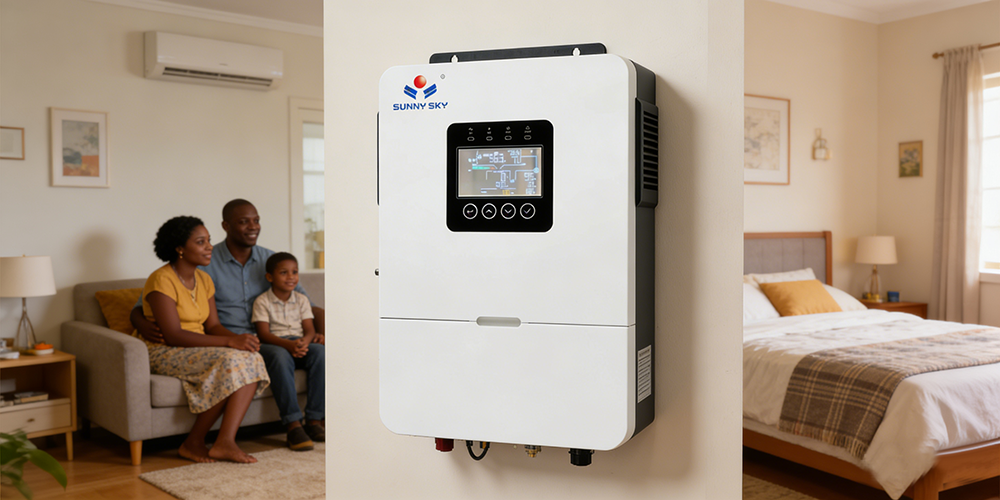
When evaluating the best hybrid solar inverter, factors such as power capacity, integration capabilities, and user interface come to the forefront. The SUNNYSKY 12KW model exemplifies these qualities with its clean, architectural design featuring a smooth white enclosure and a bold black control panel. Its integrated LCD display provides real-time insights into power flow, battery status, and load data, ensuring users can monitor and manage their systems effortlessly. This hybrid solar inverter is engineered as the central hub for solar generation, battery operations, and grid interactions, allowing intelligent balancing of energy sources to maximize self-consumption and minimize grid reliance. The side ventilation structure further enhances thermal management, promoting reliable performance under high loads.
Hybrid Solar Inverter Price and Value Proposition
The hybrid solar inverter price varies based on capacity and features, but premium options like the SUNNYSKY 12KW unit deliver exceptional value through long-term savings and durability. Priced competitively for its capabilities, this inverter supports scalable installations, making it suitable for homes and light commercial spaces. Its modern aesthetic, with softly rounded corners and a high-tech display, integrates seamlessly into contemporary environments, avoiding the industrial look of traditional units. By reducing energy consumption and carbon emissions, as per SUNNYSKY's commitment to innovative green energy, this device not only justifies its cost but also contributes to sustainable practices. Users benefit from patented technologies that ensure high efficiency and reliability, backed by the company's dedication to R&D.
Hybrid Solar Inverter Reviews and User Experiences
Hybrid solar inverter reviews often highlight ease of use and robust performance, with the SUNNYSKY model receiving praise for its intuitive interface and stable operation. Customers appreciate the tactile buttons for quick navigation and the clear layout of system values on the LCD screen. In real-world applications, this inverter has demonstrated superior backup capabilities during outages, thanks to its hybrid functionality that prioritizes solar and battery power. Reviews from global installations underscore its low maintenance needs and efficient heat dissipation, contributing to a lifespan that exceeds industry standards. As a top-rated hybrid solar inverters option, it aligns with SUNNYSKY's reputation for delivering reliable solutions that empower users worldwide.
Hybrid Inverter Benefits for Energy Management
The hybrid inverter benefits extend beyond basic conversion, offering advanced energy management that enhances overall system resilience. Unlike standalone inverters, a hybrid model like SUNNYSKY's can charge batteries from solar panels or the grid, discharge them strategically, and even feed excess power back to the utility. This flexibility reduces electricity bills, provides uninterrupted power, and supports off-grid scenarios. The technology promotes higher solar utilization rates, cutting down on fossil fuel dependency and environmental impact. With a focus on user-centric design, the 12KW unit's premium feel—combining functionality with a minimalist presence—makes it an ideal choice for tech-savvy homeowners and businesses aiming for energy independence.
Installing Hybrid Solar Inverter: Best Practices
Installing hybrid solar inverter requires careful planning to ensure optimal performance and safety. For the SUNNYSKY 12KW model, select a well-ventilated wall-mounted location that complements the unit's sleek design, ideally in a smart energy room. Professional installation is recommended, involving connections to solar arrays, batteries, and the grid, with adherence to local electrical codes. The inverter's integrated platform simplifies setup by handling multiple inputs without additional hardware. Post-installation, the LCD interface allows for straightforward configuration of settings like charge priorities and load management. SUNNYSKY's proximity to Guangzhou Baiyun International Airport facilitates easy access for international clients, offering factory visits with complimentary pickups to discuss customized installations.
Hybrid Inverter vs. Solar Inverter: A Technical Comparison
A key distinction in hybrid inverter vs. solar inverter lies in their versatility. Traditional solar inverters convert DC to AC solely from photovoltaic panels, lacking built-in battery support. In contrast, the solar energy hybrid inverter from SUNNYSKY integrates storage management, enabling hybrid operation that switches between sources dynamically. This hybrid inverter technology uses advanced algorithms for peak shaving, time-of-use optimization, and islanding modes during blackouts. Technically, it features higher efficiency ratings—often above 95%—and MPPT trackers for maximum solar harvest. For users seeking comprehensive solutions, the hybrid approach provides superior adaptability, making top rated hybrid solar inverters like this one preferable for modern energy ecosystems.
Advancements in Hybrid Inverter Technology
Hybrid inverter technology continues to advance, with innovations in power electronics and software driving smarter, more efficient systems. SUNNYSKY's 12KW hybrid solar inverter incorporates these trends through its robust enclosure and precise control mechanisms, ensuring seamless operation across diverse conditions. Future developments may include AI-driven predictive analytics for energy forecasting, further enhancing benefits like cost savings and reliability. As the market shifts toward refined, smart devices, products that balance technical prowess with aesthetic appeal, as offered by Guangzhou Tianyuan Solar Equipment CO.,LTD, position users at the forefront of sustainable energy adoption.