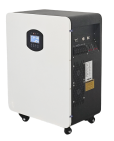
Exploring the Hybrid Solar Inverter: Revolutionizing Renewable Energy Systems

In the rapidly evolving landscape of renewable energy, the hybrid solar inverter stands as a pivotal technology, bridging the gap between solar power generation, battery storage, and grid integration. At Guangzhou Tianyuan Solar Equipment CO.,LTD, our SUNNYSKY brand exemplifies this innovation through products like the 12kW Hybrid Solar Inverter, designed to deliver reliable and efficient energy solutions worldwide.
Understanding Hybrid Solar Inverter Technology
Solar inverter technology forms the backbone of any photovoltaic system, converting direct current (DC) from solar panels into alternating current (AC) usable by household appliances and the electrical grid. A hybrid solar inverter elevates this functionality by incorporating advanced energy management capabilities. It seamlessly switches between grid-tied operation, off-grid mode, and battery charging/discharging, optimizing power flow in real-time. This is achieved through sophisticated power electronics, including maximum power point tracking (MPPT) algorithms that maximize energy harvest from varying solar conditions. For instance, our SUNNYSKY 12kW model employs multi-MPPT inputs, allowing it to handle inputs from diverse panel arrays, enhancing overall system efficiency up to 98%. The integration of built-in charge controllers further simplifies the setup, reducing the need for external components and minimizing points of failure.
Key Features of the Best Hybrid Solar Inverters
When evaluating the best hybrid solar inverters, factors such as power capacity, efficiency, and compatibility with energy storage solutions come to the forefront. The Sunny Sky 12kW Hybrid Solar Inverter excels with its high power output, supporting loads up to 12kW continuous and peak surges for demanding applications. It features advanced hybrid technology that prioritizes solar energy usage, diverts excess to battery storage, and draws from the grid only when necessary, thereby reducing electricity bills and enhancing self-consumption rates. User-friendly interfaces, including LCD displays and mobile app connectivity via Wi-Fi or Ethernet, provide real-time insights into system performance, battery status, and energy yields. Hybrid solar inverter reviews often highlight the importance of scalability; our unit supports parallel operation for up to 10 units, ideal for expanding solar power systems in commercial settings. Moreover, its IP65-rated enclosure ensures durability against dust and water, making it suitable for both indoor and outdoor installations.
Hybrid Solar Inverter Price and Value Proposition
The hybrid solar inverter price varies based on capacity and features, but investing in a premium model like ours from Guangzhou Tianyuan Solar Equipment CO.,LTD offers substantial long-term savings. Priced competitively for its 12kW output, it includes integrated energy storage solutions compatible with lithium-ion and lead-acid batteries, enabling users to store surplus solar energy for nighttime or cloudy days. This not only mitigates the intermittency of solar power but also provides backup during outages, functioning as an uninterruptible power supply (UPS). In off-grid solar solutions, the inverter's pure sine wave output ensures clean power for sensitive electronics, preventing damage from harmonics. Our commitment to R&D, with patented technologies reaching over 50 countries, underscores the reliability and performance that have earned us global recognition. Clients appreciate the reduced total cost of ownership, as the system's efficiency lowers operational expenses and accelerates return on investment.
Solar Inverter Installation and Integration
Solar inverter installation requires careful planning to ensure optimal performance and safety. For the hybrid solar inverter, site assessment involves evaluating solar irradiance, load profiles, and available space for battery integration. Our compact design facilitates wall-mounted or floor-standing setups, with plug-and-play connectors for swift deployment. Professional installers, certified in solar battery storage systems, can complete setup in a day for residential applications, integrating seamlessly with existing solar power systems. Post-installation, remote monitoring via cloud-based platforms allows for predictive maintenance, alerting users to potential issues like inverter overheating or battery degradation. In off-grid scenarios, the inverter's generator compatibility enables hybrid operation, automatically starting backup generators when battery levels are low. This versatility makes it a cornerstone for energy-independent setups in remote locations or areas prone to grid instability.
Benefits of Energy Storage Solutions in Hybrid Systems
Energy storage solutions amplify the advantages of a hybrid solar inverter, transforming intermittent solar energy into a dependable resource. By storing excess generation, these systems enable time-of-use optimization, discharging stored power during peak tariff hours to cut costs. The Sunny Sky model's battery management system (BMS) compatibility ensures safe charging cycles, extending battery lifespan through algorithms that prevent overcharge or deep discharge. Hybrid solar inverter reviews frequently praise this feature for its role in achieving energy independence, particularly in solar battery storage applications where grid access is limited. Environmentally, these systems reduce reliance on fossil fuels, lowering carbon emissions in line with our mission at SUNNYSKY to deliver innovative green energy. For commercial users, the scalability supports microgrid formations, fostering sustainable operations across industries.
In summary, the hybrid solar inverter represents a technical leap in solar power systems, offering unmatched efficiency, reliability, and flexibility. With Guangzhou Tianyuan Solar Equipment CO.,LTD's dedication to quality—evident in our factory just 20 minutes from Guangzhou Baiyun International Airport—we invite global partners to explore our solutions and experience complimentary pickups for visits. Embrace the future of energy with SUNNYSKY, where stability meets innovation for a greener tomorrow.