Exploring the Hybrid Solar Inverter: Powering the Future of Renewable Energy
In the evolving landscape of renewable energy, the hybrid solar inverter stands as a pivotal technology that bridges traditional power grids with sustainable solar sources. This innovative device not only converts solar energy into usable electricity but also integrates seamlessly with battery storage and grid systems, ensuring uninterrupted power supply. At Guangzhou Tianyuan Solar Equipment CO.,LTD, our commitment to delivering reliable, innovative green energy drives us to develop products like the SUNNYSKY series, which exemplify stability and performance.
Understanding Hybrid Solar Inverter Technology
Solar inverter technology forms the backbone of any solar power system, transforming direct current (DC) from photovoltaic panels into alternating current (AC) for household or commercial use. A hybrid solar inverter elevates this process by incorporating multiple input sources, including solar panels, the utility grid, and energy storage solutions like batteries. This multifunctionality allows for intelligent energy management, where excess solar power can be stored in solar battery storage units during the day and dispatched during peak evening hours or outages.
The core of solar inverter technology in hybrid models lies in its advanced power electronics, such as maximum power point tracking (MPPT) algorithms that optimize energy harvest under varying sunlight conditions. For instance, our SUNNYSKY 12KW Hybrid Solar Inverter employs patented MPPT technology to achieve up to 99% efficiency, minimizing energy losses. This is particularly crucial in off-grid solar solutions, where reliability is paramount without grid backup. By supporting both on-grid and off-grid modes, hybrid inverters reduce dependency on fossil fuels, aligning with global efforts to lower carbon emissions.
Key Features of the Best Hybrid Solar Inverters
When selecting the best hybrid solar inverters, factors like power capacity, efficiency, and integration capabilities are essential. The SUNNYSKY 12KW Hybrid Solar Inverter, developed by Guangzhou Tianyuan Solar Equipment CO.,LTD, boasts a robust 12KW output, suitable for residential setups powering multiple appliances or commercial applications demanding higher loads. Its hybrid functionality enables seamless switching between solar, grid, and battery power, ensuring continuous operation even during blackouts.
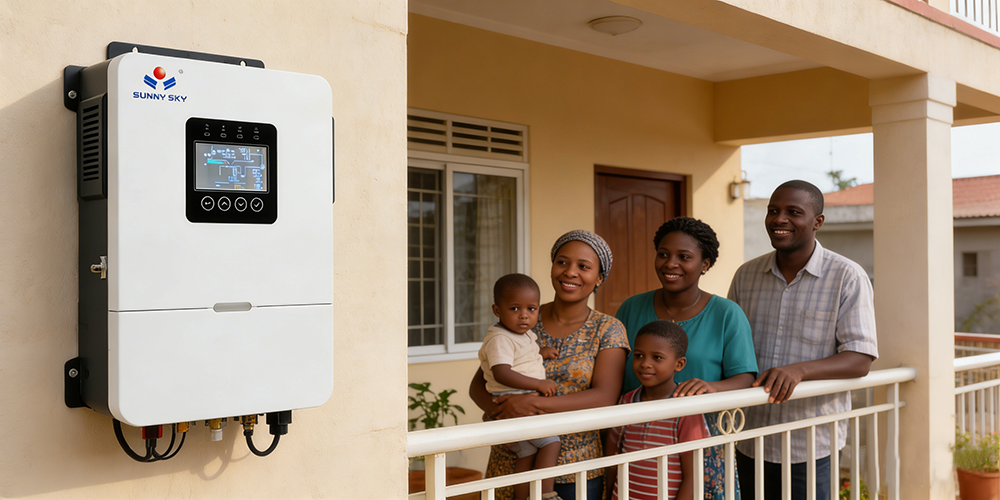
Equipped with a modern LCD display, users can monitor real-time metrics such as voltage, current, and energy yield, facilitating proactive maintenance. The inverter's sleek design, crafted from high-quality materials, ensures durability in diverse environments, complemented by advanced cooling systems that prevent overheating during prolonged use. User-friendly controls simplify configuration, making it accessible for both novices and experts. In terms of hybrid solar inverter price, our model offers premium features at a competitive rate, typically ranging from $2,500 to $3,500 depending on configurations, providing excellent value for long-term energy savings.
Hybrid Solar Inverter Reviews and Performance Insights
Hybrid solar inverter reviews from users across over 50 countries highlight the SUNNYSKY model's exceptional reliability and ease of integration. Customers praise its quiet operation and low maintenance needs, with many reporting a return on investment within 5-7 years through reduced electricity bills. Independent tests confirm its superior performance in energy storage solutions, where it efficiently charges and discharges batteries, extending their lifespan via smart battery management systems.
For off-grid solar solutions, the inverter's ability to handle variable loads without performance dips is a standout feature. Reviews often note its compatibility with various solar power systems, supporting panel arrays up to 15KW input. Guangzhou Tianyuan's dedication to R&D ensures ongoing improvements, such as firmware updates for enhanced grid interactivity, keeping pace with evolving solar inverter technology standards.
Solar Inverter Installation and Energy Storage Integration
Proper solar inverter installation is critical to maximizing system efficiency. For the SUNNYSKY 12KW Hybrid Solar Inverter, installation involves mounting in a well-ventilated area, connecting to solar panels via DC inputs, and linking to the AC grid or battery bank. Professional installers, ideally certified by bodies like NABCEP, should handle wiring to comply with local codes and ensure safety. Our team at Guangzhou Tianyuan offers comprehensive guides and support, including remote troubleshooting for global clients.
Integrating solar battery storage enhances the system's resilience, allowing users to store surplus energy for nighttime or cloudy days. This setup is ideal for energy storage solutions in regions with unreliable grids. The inverter's built-in charge controller safeguards batteries from overcharging or deep discharge, promoting longevity. In practice, a typical residential installation might pair the 12KW inverter with 10-20kWh of lithium-ion batteries, yielding a self-consumption rate exceeding 80%.
Why Choose SUNNYSKY for Your Solar Power Needs
As a leader in solar innovations, Guangzhou Tianyuan Solar Equipment CO.,LTD invites you to experience the SUNNYSKY difference. Located just 20 minutes from Guangzhou Baiyun International Airport, our facility welcomes visits with complimentary pickups, showcasing our state-of-the-art production and R&D processes. By choosing our hybrid solar inverter, you're investing in a product that not only meets but exceeds expectations in performance, design, and sustainability. Empower your home or business with clean energy today, reducing consumption and contributing to a greener planet.