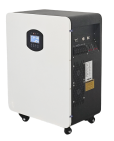
Exploring the Hybrid Solar Inverter: Revolutionizing Renewable Energy Systems

In the evolving landscape of renewable energy, the hybrid solar inverter stands as a pivotal technology, bridging the gap between solar power generation and grid integration. As a leading solar inverter manufacturer, Guangzhou Tianyuan Solar Equipment CO.,LTD, under the SUNNYSKY brand, excels in producing these advanced devices that optimize energy efficiency for both residential and commercial applications. This article delves into the technical intricacies of hybrid solar inverters, highlighting their role in solar energy solutions and the innovations driving the industry forward.
Understanding the Core Functionality of Hybrid Solar Inverters
A hybrid solar inverter is engineered to manage multiple energy sources simultaneously, including solar panels, batteries, and the utility grid. Unlike traditional inverters, which are limited to single-mode operations, the hybrid model employs sophisticated power conversion algorithms to synchronize DC power from photovoltaic arrays into usable AC power. This process involves maximum power point tracking (MPPT) technology, which dynamically adjusts the electrical operating point of the solar modules to extract the highest possible energy yield under varying environmental conditions. For instance, SUNNYSKY's 12KW Hybrid Solar Inverter features a high-efficiency MPPT controller that achieves up to 99% conversion efficiency, ensuring minimal energy loss during peak sunlight hours. The inverter's bidirectional capability allows it to charge batteries during surplus generation and discharge them during low production or outages, providing seamless backup power. Technically, this is facilitated by integrated charge controllers and grid-tie functionalities that comply with international standards like IEC 62109 for safety and performance. As a hybrid inverter supplier from our China solar factory, we prioritize robust semiconductor components, such as silicon carbide (SiC) MOSFETs, to enhance switching frequencies and reduce thermal dissipation, thereby extending the device's operational lifespan beyond 10 years.
Advanced Features in Modern Solar Power Inverters
The integration of smart technologies elevates the hybrid solar inverter's performance in solar inverter production environments. SUNNYSKY's 6KW Hybrid Solar Inverter, for example, incorporates an intelligent battery management system (BMS) that monitors cell voltage, temperature, and state-of-charge (SoC) in real-time. This system uses lithium-ion compatible protocols to prevent overcharging or deep discharging, optimizing battery health and cycle life. From a technical standpoint, the inverter supports parallel operation, allowing multiple units to be stacked for scalable power outputs up to 48KW, ideal for large-scale solar technology factory setups. Remote monitoring via Wi-Fi or Ethernet enables data logging and predictive maintenance, where algorithms analyze historical performance to forecast potential failures. In our China renewable energy initiatives, we leverage proprietary software that simulates energy flows using MATLAB-based models, ensuring that renewable energy inverters deliver consistent output even under fluctuating loads. The user interface, featuring an LCD display with customizable parameters, allows precise configuration of output priorities—such as prioritizing solar over grid—through embedded microcontrollers running real-time operating systems (RTOS).
SUNNYSKY's Commitment to Solar Energy Solutions and Innovation
As a premier hybrid inverter supplier, Guangzhou Tianyuan Solar Equipment CO.,LTD embodies excellence in solar power inverter design and manufacturing. Our independent R&D facilities, equipped with state-of-the-art testing labs, focus on patented technologies that enhance system reliability and reduce harmonic distortions to below 3% THD, meeting stringent grid codes. The SUNNYSKY brand has expanded to over 50 countries, driven by our dedication to delivering stable, high-performance products that minimize energy consumption and carbon emissions. Our solar inverter production processes adhere to ISO 9001 standards, incorporating automated assembly lines for precision and quality control. For clients interested in our solar technology factory, located just 20 minutes from Guangzhou Baiyun International Airport, we offer complimentary pickups to facilitate visits and demonstrations of our renewable energy inverter capabilities. By investing continuously in R&D, we ensure that our hybrid solar inverters not only meet current demands but also anticipate future advancements in photovoltaic integration, such as compatibility with emerging perovskite solar cells.
Applications and Future Prospects of Hybrid Solar Inverters
In practical deployments, hybrid solar inverters from our China solar factory power diverse applications, from off-grid rural electrification to hybrid microgrids in urban commercial complexes. Technically, their anti-islanding protection mechanisms detect grid failures within milliseconds, isolating the system to prevent backfeeding and ensure safety. Looking ahead, advancements in AI-driven optimization will further refine energy dispatch strategies, potentially increasing overall system efficiency by 15-20%. SUNNYSKY's vision aligns with global sustainability goals, providing solar energy solutions that empower users to transition seamlessly to renewable sources. Whether for homes or businesses, our renewable energy inverters represent a reliable pathway to energy independence, backed by our commitment to innovation and customer success.