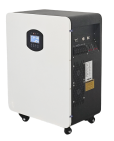
Understanding Hybrid Solar Inverters: The Future of Renewable Energy
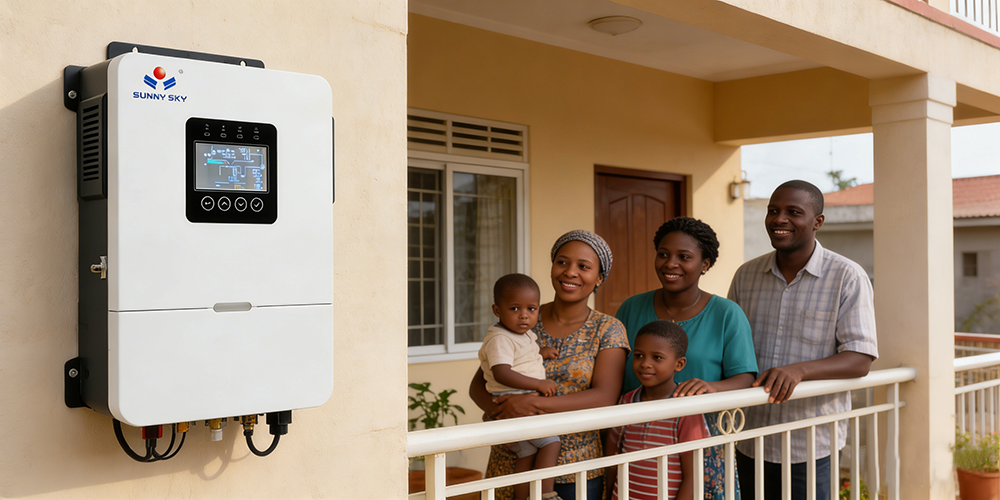
In the evolving landscape of renewable energy, the hybrid solar inverter stands as a pivotal technology for integrating solar power with grid and battery systems. As a leading solar inverter manufacturer based in China, Guangzhou Tianyuan Solar Equipment CO.,LTD, under the SUNNYSKY brand, excels in producing these advanced devices. This article delves into the technical intricacies of hybrid solar inverters, highlighting their role in solar energy solutions and the innovations driving the industry.
Core Functionality of Hybrid Solar Inverters
A hybrid solar inverter is engineered to manage multiple power sources simultaneously, including solar panels, batteries, and the utility grid. Unlike traditional inverters, it employs advanced power conversion algorithms to ensure seamless switching and optimal energy flow. For instance, our 12KW Hybrid Solar Inverter features a high-efficiency MPPT charge controller that tracks the maximum power point of solar arrays, achieving up to 99% efficiency in energy harvesting. This technical prowess allows for precise voltage and current regulation, minimizing losses during DC to AC conversion. In practical terms, it supports bidirectional power flow, enabling excess solar energy to charge batteries or feed back into the grid, which is crucial for off-grid or hybrid setups in residential and commercial applications.
The integration of smart monitoring systems further enhances its capabilities. Equipped with an intuitive LCD display and LED indicators, users can access real-time data on energy production, consumption, and battery status. From a technical standpoint, the inverter's firmware includes algorithms for load balancing and fault detection, ensuring system stability even under fluctuating solar irradiance or grid disturbances. As a hybrid inverter supplier, SUNNYSKY prioritizes these features to deliver reliable performance, backed by our independent R&D and patented technologies that have earned global recognition in over 50 countries.
Advancements in Solar Inverter Production
Solar inverter production, particularly in a China solar factory like ours, involves rigorous quality control and cutting-edge manufacturing processes. Our facilities, located just 20 minutes from Guangzhou Baiyun International Airport, utilize automated assembly lines to produce units like the Sunny Sky 6KW Hybrid Solar Inverter. This model incorporates wide input voltage ranges (up to 500V DC) and pure sine wave output, ensuring compatibility with diverse solar panel configurations and sensitive appliances. Technically, the inverter's topology employs IGBT-based switching for reduced harmonic distortion, typically below 3%, which complies with international standards like IEC 62109.
Moreover, as a key player in China renewable energy, we focus on scalability. The hybrid design supports parallel operation of multiple units, allowing systems to expand from 6KW to 12KW or beyond without compromising efficiency. Battery management is another highlight: an intelligent BMS optimizes charging cycles using lithium-ion or lead-acid profiles, extending lifespan by up to 30% through temperature-compensated algorithms. These innovations not only reduce energy consumption but also lower carbon emissions, aligning with our commitment to delivering reliable, innovative green energy solutions.
Applications and Benefits of Solar Power Inverters
Solar power inverters, especially hybrid variants, are indispensable for solar technology factories aiming to provide comprehensive renewable energy inverters. In smart homes, the 12KW model facilitates energy independence by prioritizing solar input during peak hours, storing surplus in batteries for nighttime use. Technically, its anti-islanding protection and surge suppression safeguard against grid faults, maintaining safe operation per UL 1741 standards. For commercial setups, the 6KW version offers modular scalability, integrating with SCADA systems for remote monitoring via RS485 or Wi-Fi interfaces.
The benefits extend to cost savings and environmental impact. By maximizing self-consumption rates—often exceeding 80%—users significantly cut electricity bills. Our solar energy solutions emphasize durability, with IP65-rated enclosures for outdoor resilience against dust and moisture. As a dedicated hybrid inverter supplier, SUNNYSKY invests continuously in R&D to enhance these features, ensuring our products outperform in efficiency and reliability. Whether for urban rooftops or remote installations, these inverters empower sustainable projects worldwide.
Why Choose SUNNYSKY for Your Solar Needs
Guangzhou Tianyuan Solar Equipment CO.,LTD stands out as a premier solar inverter manufacturer, offering complimentary airport pickups for factory visits to showcase our state-of-the-art China solar factory. Our renewable energy inverter lineup, including the 12KW and 6KW hybrid models, is designed for versatility, supporting global voltage standards (120V/240V or 230V/400V). Technically, we incorporate gallium nitride (GaN) components for higher switching frequencies, reducing size and heat dissipation while boosting overall system efficiency.
In conclusion, the hybrid solar inverter represents a cornerstone of modern solar technology factory outputs, driving the transition to clean energy. With SUNNYSKY's expertise in solar inverter production, clients gain access to premium products that foster energy efficiency and innovation. We invite you to explore our solar energy solutions and join us in building a greener future.