Understanding the Hybrid Solar Inverter: A Technical Overview
In the evolving landscape of renewable energy systems, the hybrid solar inverter stands as a pivotal technology for integrating solar power with diverse energy sources. This device serves as the intelligent core of modern solar setups, enabling seamless coordination between photovoltaic panels, battery storage, and grid electricity. At Guangzhou Tianyuan Solar Equipment CO.,LTD, our SUNNYSKY brand exemplifies this innovation through products like the 12KW hybrid solar inverter, designed for superior efficiency and reliability. As we delve into this technology, we'll explore its functionalities and why it's essential for sustainable energy management.
Key Features of the Best Hybrid Solar Inverter
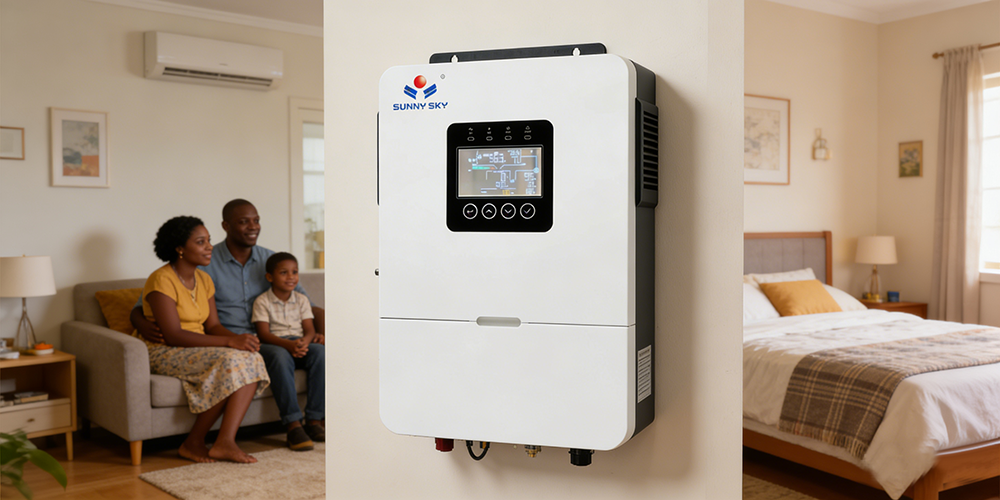
The best hybrid solar inverter, such as our 12KW model from SUNNYSKY, combines high-capacity power conversion with advanced hybrid capabilities. Engineered with independent R&D and patented technologies, it handles up to 12 kilowatts of output, making it suitable for residential and commercial applications. The unit features a refined matte white front panel with a bold black control interface, providing a modern aesthetic that integrates seamlessly into contemporary spaces. At its heart is a large integrated LCD display that offers real-time insights into power flow, battery status, load performance, and system indicators. This data-driven interface, paired with intuitive touch-style buttons, ensures user-friendly operation while reflecting the sophisticated intelligence of the system.
From a technical standpoint, the hybrid solar inverter excels in multi-source energy management. It converts DC power from solar panels into AC power for household use, while also charging batteries during peak solar production. When solar input is insufficient, it draws from stored battery energy or the grid, prioritizing self-consumption to minimize utility costs. Our SUNNYSKY inverter's hybrid architecture supports both on-grid and off-grid modes, delivering stable output even during outages. The slim side ventilation structure enhances thermal efficiency, preventing overheating in high-demand scenarios and ensuring long-term durability. With recognition in over 50 countries for stability and performance, this inverter embodies our commitment to innovative green energy solutions that reduce carbon emissions and energy consumption.
Hybrid Solar Inverter Price and Value Proposition
When evaluating the hybrid solar inverter price, it's crucial to consider the long-term value rather than upfront costs. The SUNNYSKY 12KW hybrid solar inverter is priced competitively, reflecting its premium build and advanced features without compromising affordability. Factors influencing price include power rating, efficiency ratings (typically 95-98% for top models), and integrated smart functionalities like MPPT charge controllers for optimal solar harvesting. Our model, with its patented technologies, offers a return on investment through maximized energy savings—users can expect to offset costs via reduced grid dependency and potential net metering benefits.
Installation plays a key role in realizing this value. The wall-mounted design of our inverter ensures space-efficient setup, with side cooling vents promoting natural airflow to maintain operational temperatures below 50°C. Professional installation, recommended for compliance with local electrical codes, typically involves connecting to solar arrays, batteries (compatible with lithium-ion or lead-acid), and the main panel. At Guangzhou Tianyuan Solar Equipment CO.,LTD, located just 20 minutes from Guangzhou Baiyun International Airport, we facilitate global partnerships and offer factory visits with complimentary pickups to discuss tailored solutions.
Hybrid Solar Inverter Reviews and Benefits
Hybrid solar inverter reviews consistently highlight the hybrid inverter benefits, including enhanced energy independence and resilience against power disruptions. Users praise the technology's ability to store excess solar energy, providing backup during evenings or cloudy days, which can extend runtime for critical loads by hours. In technical terms, the inverter's pure sine wave output safeguards sensitive electronics, while its anti-islanding protection ensures safety by disconnecting from the grid during faults.
Comparing hybrid inverter vs. solar inverter reveals distinct advantages: while traditional solar inverters focus solely on PV-to-AC conversion, the hybrid model integrates battery management, eliminating the need for separate charge controllers. This consolidation reduces system complexity and points of failure. For the solar energy hybrid inverter, efficiency is paramount—our SUNNYSKY unit achieves up to 98% conversion efficiency, minimizing losses and supporting scalable expansions for growing energy needs.
Installing a Hybrid Solar Inverter: Best Practices
Installing a hybrid solar inverter requires meticulous planning to leverage its full potential. Begin with a site assessment to ensure adequate sunlight exposure and proximity to the electrical panel, ideally within 10-15 meters to limit cabling losses. The process involves mounting the unit on a sturdy wall, wiring the DC inputs from solar panels via fuses, and connecting AC outputs to the load center. Battery integration follows, with the inverter's built-in BMS (Battery Management System) monitoring charge levels to prevent over-discharge.
Among top rated hybrid solar inverters, our 12KW SUNNYSKY model stands out for its plug-and-play compatibility and remote monitoring via app, allowing users to track performance in real-time. Hybrid inverter technology continues to advance, incorporating AI-driven optimization for predictive load balancing and firmware updates for enhanced cybersecurity. This forward-thinking approach aligns with our mission at SUNNYSKY to deliver reliable, innovative green energy that empowers clients worldwide.
In summary, the hybrid solar inverter represents a cornerstone of modern solar technology, offering versatility, efficiency, and future-proof design. Whether for homes seeking energy autonomy or businesses aiming for sustainability, solutions like our SUNNYSKY 12KW inverter provide the technical excellence needed to thrive in a renewable-powered world.