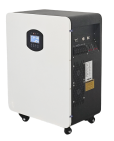
Understanding the Hybrid Solar Inverter
A hybrid solar inverter represents a pivotal advancement in renewable energy systems, seamlessly integrating solar power generation, battery storage, and grid connectivity into a single unit. At Guangzhou Tianyuan Solar Equipment CO.,LTD, our 12KW hybrid solar inverter exemplifies this technology, designed with cutting-edge features for optimal energy management. This device not only converts DC power from solar panels to AC for household use but also manages energy flow from batteries and the utility grid, ensuring uninterrupted power supply even during outages.
The core functionality of a hybrid solar inverter lies in its intelligent power routing algorithms. It prioritizes solar energy for immediate loads, diverts excess to battery charging, and supplements with grid power only when necessary. This reduces reliance on fossil fuels and lowers electricity bills. Our model, under the SUNNYSKY brand, incorporates patented technologies for enhanced efficiency, achieving up to 98% conversion rates, which is crucial for maximizing return on investment in solar setups.
Key Benefits of Hybrid Inverter Technology
Hybrid inverter benefits extend beyond basic energy conversion, offering robust backup capabilities and scalability. One primary advantage is energy independence; during blackouts, the inverter switches to battery mode in milliseconds, powering essential appliances without interruption. This is particularly valuable in regions with unreliable grids. Additionally, hybrid inverter technology optimizes self-consumption by storing surplus solar energy, preventing waste and enabling usage at night or on cloudy days.
From an environmental perspective, these inverters support sustainable practices by minimizing carbon emissions. Guangzhou Tianyuan Solar Equipment CO.,LTD invests heavily in R&D to refine hybrid inverter technology, ensuring our products meet global standards for reliability and performance. Users benefit from reduced energy costs—often by 50% or more—while contributing to a greener planet. The system's modularity allows for future expansions, such as adding more panels or batteries, making it a long-term solution for evolving energy needs.
Design and Features of the 12KW Hybrid Solar Inverter
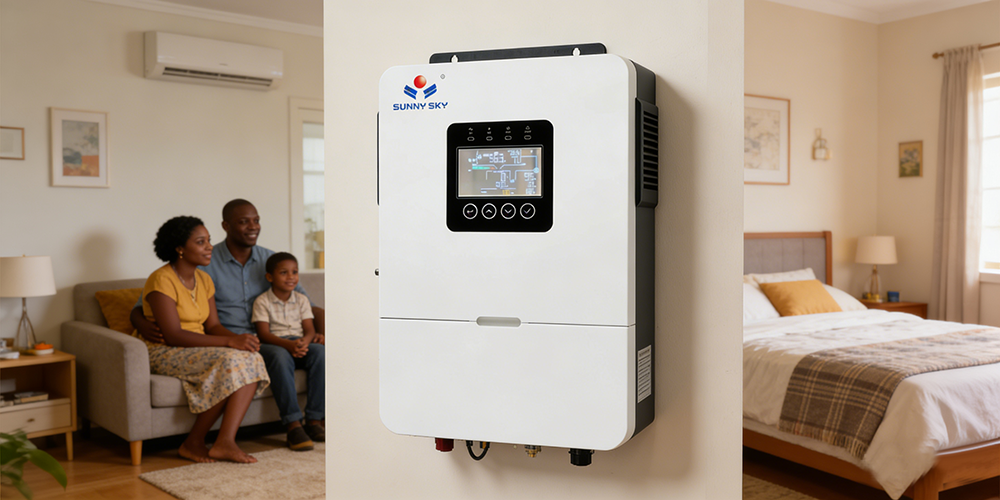
The 12KW hybrid solar inverter from SUNNYSKY features a sleek, minimalist white enclosure with rounded corners, blending seamlessly into modern interiors. Its black-glass-style LCD display provides real-time insights into system status, battery levels, and power flows, accessible via intuitive circular control buttons. Side vents ensure efficient thermal management, critical for sustained high-output performance in demanding environments.
This solar energy hybrid inverter supports multiple inputs, including MPPT charge controllers for up to four solar strings, enhancing compatibility with diverse panel configurations. Safety features like anti-islanding protection and surge safeguards comply with international certifications, guaranteeing safe operation. As a product of our independent R&D, it embodies stability that has earned recognition in over 50 countries, reflecting our commitment to innovative green energy solutions.
Hybrid Inverter vs. Solar Inverter: A Technical Comparison
When evaluating hybrid inverter vs. solar inverter, the differences become evident in functionality and versatility. A traditional solar inverter solely converts solar DC to AC and relies on the grid for backups, lacking integrated battery support. In contrast, a hybrid solar inverter acts as an all-in-one solution, incorporating a built-in charge controller and inverter for seamless battery integration.
Technically, hybrids offer superior grid interactivity, allowing zero-export modes to comply with regulations or peak-shaving to avoid high tariffs. Our 12KW model outperforms standard solar inverters in efficiency during off-grid scenarios, with programmable settings for load prioritization. This makes it ideal for residential, commercial, or off-grid applications where reliability is paramount.
Selecting the Best Hybrid Solar Inverter
Choosing the best hybrid solar inverter involves assessing power capacity, efficiency, and warranty. Top rated hybrid solar inverters, like our SUNNYSKY 12KW unit, score high in hybrid solar inverter reviews for their user-friendly interfaces and durable construction. Factors such as expandable battery compatibility and remote monitoring via apps further enhance usability.
Hybrid solar inverter price varies by features, but our model offers premium value with a competitive cost structure, backed by a 5-10 year warranty. Reviews highlight its quiet operation (under 30dB) and ease of integration, making it a top choice for professionals. At Guangzhou Tianyuan Solar Equipment CO.,LTD, we prioritize designs that balance aesthetics and performance, ensuring the inverter not only functions flawlessly but also elevates the visual appeal of installations.
Installing a Hybrid Solar Inverter
Installing hybrid solar inverter requires careful planning to ensure safety and efficiency. Begin with site assessment for optimal solar exposure and ventilation, followed by mounting the unit on a sturdy wall using provided brackets. Electrical connections involve wiring solar panels to the DC inputs, batteries to the storage ports, and loads to the AC outputs, all while adhering to local codes.
Professional installation is recommended, and our team at SUNNYSKY provides comprehensive guides and support. Post-installation, commissioning involves firmware updates and system testing to verify hybrid operations. With our product's plug-and-play design, setup is streamlined, minimizing downtime. Located near Guangzhou Baiyun International Airport, we welcome clients for factory visits to witness our quality processes firsthand.
In summary, the hybrid solar inverter is transforming how we harness renewable energy, offering unmatched flexibility and efficiency. Guangzhou Tianyuan Solar Equipment CO.,LTD's SUNNYSKY 12KW model stands out for its innovative design and proven reliability, empowering users worldwide to achieve sustainable energy goals.