Understanding Hybrid Solar Inverters: Powering the Future of Energy Management
In the evolving landscape of renewable energy, the hybrid solar inverter stands as a pivotal technology for integrating solar power with traditional grid systems and battery storage. This device not only converts DC power from solar panels into usable AC power but also manages energy flow from multiple sources, ensuring optimal efficiency and reliability. As energy demands grow and sustainability becomes a priority, understanding the hybrid solar inverter is essential for homeowners and businesses alike seeking to harness solar energy effectively.
Key Features of the Hybrid Solar Inverter
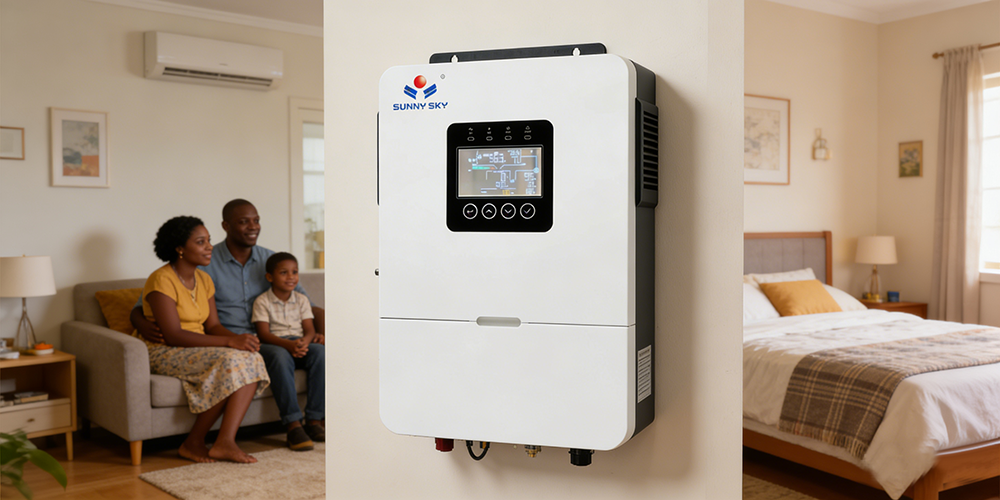
A hybrid solar inverter, like the 12KW model from SUNNYSKY by Guangzhou Tianyuan Solar Equipment CO.,LTD, exemplifies advanced engineering designed for modern energy needs. This unit features a clean, architectural design with a matte white front panel and high-contrast black control interface, blending premium aesthetics with functionality. At its core, the integrated LCD display provides real-time visibility into system performance, showing voltage, load, battery status, and power flow through an intuitive icon-based interface. The circular touch-style buttons enhance user interaction, making it accessible yet professional.
Technically, the hybrid solar inverter coordinates solar input, battery storage, grid power, and load demands intelligently. With a 12KW capacity, it supports high-performance energy management, maximizing self-consumption and providing backup during outages. Side ventilation ensures efficient thermal management, crucial for sustained operation in demanding environments. This design not only promotes durability but also fits seamlessly into residential or light commercial spaces, reflecting SUNNYSKY's commitment to innovative, reliable green energy solutions backed by independent R&D and patented technologies.
Hybrid Inverter Benefits and Technology Insights
The hybrid inverter benefits are multifaceted, offering superior flexibility compared to traditional setups. One primary advantage is its ability to switch seamlessly between grid-tied and off-grid modes, ensuring uninterrupted power supply. For instance, during peak solar production, it prioritizes self-consumption to reduce utility bills, while excess energy charges batteries for later use. This technology minimizes energy waste and enhances overall system efficiency, aligning with global efforts to reduce carbon emissions.
Delving into hybrid inverter technology, these devices incorporate MPPT (Maximum Power Point Tracking) algorithms to optimize solar panel output under varying conditions, such as shading or weather changes. Advanced models like SUNNYSKY's 12KW hybrid solar inverter include built-in inverters for battery integration, supporting lithium-ion or lead-acid types with precise charge control to extend battery life. The system's firmware enables remote monitoring via apps, allowing users to track performance and receive alerts, a feature that underscores the brand's focus on user-centric innovation. With exports to over 50 countries, SUNNYSKY demonstrates stability and performance through rigorous testing and continuous R&D investment.
Comparing Hybrid Inverter vs. Solar Inverter
When evaluating hybrid inverter vs. solar inverter, the distinction lies in versatility. A standard solar inverter, or grid-tie inverter, solely converts solar DC to AC for grid feed-in and lacks battery compatibility, limiting it to daytime use. In contrast, the hybrid solar inverter integrates storage, enabling energy independence and backup power—critical in areas with unreliable grids.
This comparison highlights why hybrid models are increasingly preferred. For example, in off-grid scenarios, a hybrid unit can draw from batteries during low solar periods, whereas a pure solar inverter would fail. SUNNYSKY's offering excels here with its slim, wall-mounted profile and rounded edges, ensuring easy installation without sacrificing space. The hybrid inverter technology also supports scalability, allowing users to expand systems as needs grow, a benefit amplified by the company's dedication to empowering clients with efficient solar solutions.
Best Hybrid Solar Inverter: Reviews and Top Rated Options
Among top rated hybrid solar inverters, SUNNYSKY's 12KW model garners praise in hybrid solar inverter reviews for its robust build and intelligent features. Users appreciate the clear LCD interface and responsive controls, which simplify monitoring without requiring technical expertise. Performance-wise, it delivers reliable power management, with efficiencies often exceeding 95%, making it a standout in the best hybrid solar inverter category.
Reviews consistently note its value, especially considering hybrid solar inverter price points that balance cost with capability. Priced competitively for its 12KW output, it offers long-term savings through reduced energy bills and minimal maintenance. Compared to competitors, its thermal design prevents overheating, ensuring longevity in hot climates. As a solar energy hybrid inverter, it embodies future-ready tech, with branding that conveys confidence and quality—hallmarks of Guangzhou Tianyuan Solar Equipment CO.,LTD's global reputation.
Installing Hybrid Solar Inverter: A Step-by-Step Guide
Installing hybrid solar inverter requires careful planning to maximize its benefits. Begin by assessing site suitability: ensure proximity to solar panels, batteries, and the main electrical panel for minimal wiring losses. The process involves mounting the unit on a sturdy wall, connecting DC inputs from panels via MC4 connectors, and linking AC outputs to loads or the grid.
Professional installation is recommended to comply with local codes and ensure safety. For SUNNYSKY's model, the intuitive layout facilitates quick setup, with ventilation positioned for optimal airflow. Post-installation, configure battery parameters and test grid synchronization. This step not only activates hybrid inverter benefits like automatic failover but also leverages the device's smart diagnostics for ongoing reliability. Located near Guangzhou Baiyun International Airport, SUNNYSKY invites clients for factory visits, providing insights into their quality assurance processes.
In summary, the hybrid solar inverter represents a cornerstone of sustainable energy systems, offering unmatched integration and efficiency. Whether exploring hybrid solar inverter price, reviews, or installation, options like SUNNYSKY's 12KW unit deliver proven performance, helping users achieve energy independence while contributing to a greener planet.