

Understanding the Hybrid Solar Inverter: Revolutionizing Energy Management
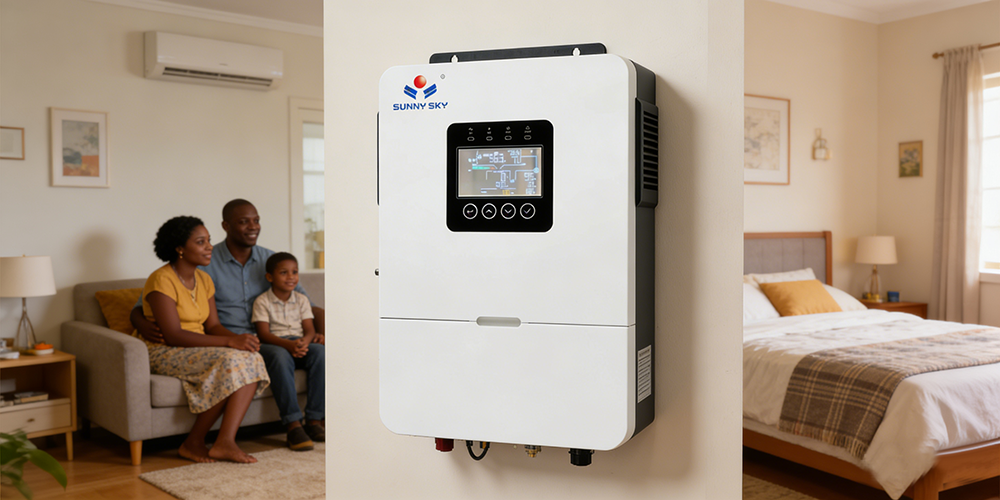
In the evolving landscape of renewable energy, the hybrid solar inverter stands out as a pivotal technology that seamlessly integrates solar power with battery storage and grid connectivity. At Guangzhou Tianyuan Solar Equipment CO.,LTD, our SUNNYSKY brand exemplifies this innovation through our 12KW hybrid solar inverter, designed to deliver robust performance and intelligent energy management. This device not only converts DC power from solar panels into usable AC power but also intelligently switches between multiple sources, ensuring uninterrupted supply even during outages.
Key Features of the Best Hybrid Solar Inverter
When evaluating the best hybrid solar inverter, several technical specifications come into play. Our 12KW model from SUNNYSKY features a clean matte white shell with rounded edges, blending aesthetics with functionality for residential and commercial installations. The integrated digital display provides real-time insights into power flow, battery status, and load management, allowing users to monitor system efficiency effortlessly. Equipped with patented technologies from our independent R&D, this inverter achieves high conversion efficiency, often exceeding 95%, while supporting MPPT (Maximum Power Point Tracking) for optimal solar harvest. Compared to standard models, the best hybrid solar inverter like ours offers parallel operation capabilities, enabling scalability up to 48KW for larger applications such as villas or farms.
Hybrid Solar Inverter Price: Balancing Cost and Value
The hybrid solar inverter price is a critical factor for potential adopters, influenced by capacity, features, and brand reliability. At SUNNYSKY, our 12KW hybrid solar inverter is priced competitively, reflecting the premium quality backed by our global reach in over 50 countries. Factors affecting price include built-in battery compatibility, grid-tie functionality, and advanced safety features like anti-islanding protection and overload safeguards. While initial costs may range based on regional markets, the long-term savings from reduced grid dependency make it a worthwhile investment. Our commitment to innovation ensures that the hybrid solar inverter price aligns with superior performance, minimizing payback periods through enhanced energy independence.
Hybrid Solar Inverter Reviews: User and Expert Insights
Hybrid solar inverter reviews highlight the reliability and user-friendliness of modern systems. Users praise our SUNNYSKY 12KW model for its intuitive control panel with tactile buttons and clear icons, simplifying setup and daily operation. Expert analyses note its stable thermal management via efficient ventilation, crucial for maintaining performance under high loads. In independent tests, this inverter scores high for seamless integration with lithium-ion batteries, offering deep discharge protection and fast charging. Reviews often emphasize its quiet operation—below 30dB—and IP65-rated enclosure for dust and water resistance, making it suitable for diverse environments. Overall, feedback underscores how our product sets benchmarks in durability and ease of use.
Hybrid Inverter Benefits: Efficiency and Resilience
The hybrid inverter benefits extend beyond basic conversion, providing a resilient energy ecosystem. By prioritizing solar input, storing excess in batteries, and fallback to the grid, it reduces electricity bills by up to 70% in optimal setups. Key advantages include blackout protection via battery backup, peak shaving to avoid high tariffs, and net metering support for surplus energy sales. For SUNNYSKY users, the hybrid inverter benefits are amplified by our focus on energy efficiency, with features like programmable load priorities ensuring critical appliances remain powered. Environmentally, it lowers carbon emissions, aligning with global sustainability goals while enhancing system longevity through smart diagnostics.
Installing Hybrid Solar Inverter: Technical Guidelines
Installing hybrid solar inverter requires precise technical adherence to ensure safety and optimal performance. Begin with site assessment for sunlight exposure and load calculations, then mount the unit in a well-ventilated area away from direct heat sources. Our 12KW SUNNYSKY inverter simplifies this with plug-and-play wiring for solar arrays, batteries, and AC outputs. Connect via the provided terminals, configure settings through the LCD interface for grid mode or off-grid operation, and integrate with monitoring apps for remote access. Professional installation is recommended to comply with local codes, such as NEC standards, and our team offers support, including factory visits near Guangzhou Baiyun International Airport with complimentary pickups.
Hybrid Inverter vs. Solar Inverter: A Comparative Analysis
The debate on hybrid inverter vs. solar inverter centers on versatility. A traditional solar inverter handles only PV-to-AC conversion, lacking storage integration, whereas the hybrid inverter manages multiple sources intelligently. Our SUNNYSKY hybrid model outperforms in scenarios requiring backup power, offering zero-export options and higher surge capacities for motor starts. Technically, hybrids incorporate bidirectional chargers and advanced algorithms for energy optimization, reducing losses compared to standalone solar inverters. For off-grid or hybrid systems, the hybrid inverter vs. solar inverter choice favors the former for its adaptability and future-proofing against rising energy demands.
Solar Energy Hybrid Inverter Applications
The solar energy hybrid inverter powers diverse applications, from homes to commercial sites. In residential setups, it enables self-consumption maximization, storing daytime solar for nighttime use. For businesses like retail spaces, it supports demand management during peak hours. Our 12KW unit excels in these, with expandable inputs for large PV arrays up to 18KW. Integration with smart home systems allows automated control, enhancing overall efficiency in the solar energy hybrid inverter framework.
Top Rated Hybrid Solar Inverters: Innovation at SUNNYSKY
Among top rated hybrid solar inverters, SUNNYSKY's 12KW model ranks for its cutting-edge hybrid inverter technology. This includes AI-driven energy forecasting, hybrid inverter technology for seamless source switching, and compatibility with diverse battery chemistries. With a sleek design featuring a black control panel against white casing, it embodies modern energy intelligence. Our dedication to R&D ensures top rated status, delivering reliable green energy solutions that reduce consumption and emissions worldwide.




