Frequently Asked Questions About Hybrid Solar Inverters
Are you exploring ways to harness renewable energy for your home or business? A hybrid solar inverter is a versatile device that integrates solar power with grid electricity, making it an essential component for efficient energy management. At Guangzhou Tianyuan Solar Equipment CO.,LTD, our SUNNYSKY brand offers the powerful 12KW Hybrid Solar Inverter, designed with patented technologies to deliver stability and performance across over 50 countries. This guide addresses common questions about hybrid solar inverters, solar inverter systems, and related technologies to help you make informed decisions.
What Is a Hybrid Solar Inverter and How Does It Work?
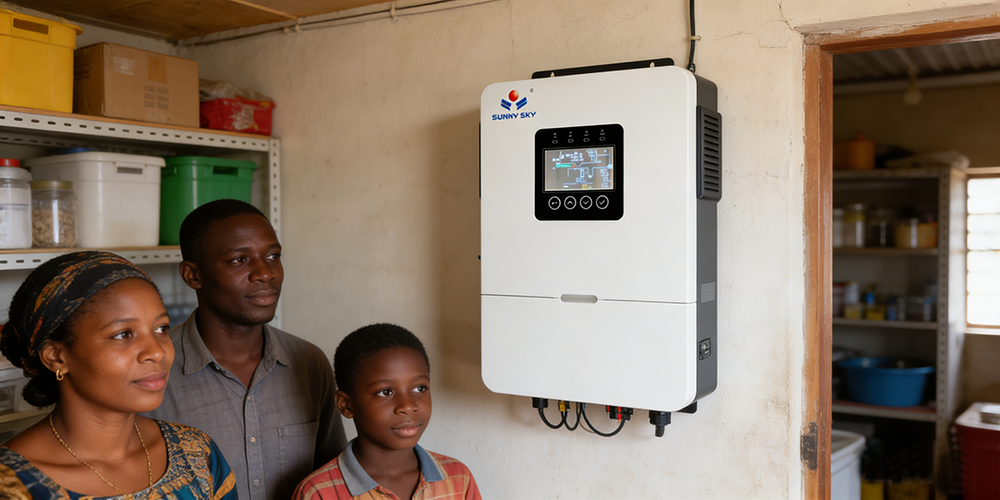
A hybrid solar inverter combines the functions of a traditional solar power inverter and a battery inverter, allowing seamless switching between solar, battery, and grid power sources. Unlike standard solar inverters, a hybrid model optimizes energy use by prioritizing solar input during the day and drawing from batteries or the grid at night or during peak demand. Our 12KW Hybrid Solar Inverter exemplifies this hybrid inverter technology with its robust capacity to handle medium to large setups, featuring a user-friendly LCD display for real-time monitoring of solar input, battery status, and output loads.
This technology ensures uninterrupted power supply, making it ideal for residential homes seeking energy independence or businesses aiming to reduce electricity costs. With advanced cooling mechanisms and a sleek white-and-black wall-mounted design, it operates efficiently while minimizing energy waste, aligning with our commitment at SUNNYSKY to innovative green energy solutions.
What Are the Advantages of a Hybrid Solar Inverter?
One of the key hybrid inverter advantages is its flexibility in off-grid and grid-tied applications. A grid-tied hybrid solar inverter like ours integrates solar energy with utility power, providing backup during outages and enabling excess solar production to be fed back to the grid for potential credits. This reduces reliance on fossil fuels, lowers carbon emissions, and cuts long-term energy bills—perfect for eco-conscious users.
Compared to pure off-grid solar inverters, hybrid models offer greater reliability without needing oversized battery banks. Our product supports multiple output options, powering diverse appliances while being compatible with various solar panels and backup batteries. With efficiency rates optimized through our independent R&D, the 12KW model not only enhances performance but also promotes sustainability, helping clients in remote areas or commercial spaces achieve reliable power backup.
How Do I Choose the Best Hybrid Solar Inverter for My Needs?
Selecting the best hybrid solar inverter depends on your energy requirements, such as home size, daily consumption, and whether you need off-grid capabilities. For medium to large residential or industrial use, our 12KW Hybrid Solar Inverter stands out for its high capacity and seamless hybrid operation. Consider factors like efficiency, durability, and compatibility with renewable energy inverters in your solar inverter systems.
At Guangzhou Tianyuan Solar Equipment CO.,LTD, we prioritize stability and design, with products reaching global markets thanks to patented innovations. If you're in a grid-tied setup, look for models that support net metering; for off-grid, ensure robust battery integration. Our inverter's multiple features, including real-time data monitoring and environmental friendliness, make it a top choice for reducing energy consumption while maintaining high performance.
What Should I Know About Solar Inverter Installation?
Solar inverter installation requires professional handling to ensure safety and optimal performance. For a hybrid solar inverter, placement in a well-ventilated area is crucial—our wall-mounted design facilitates easy setup in utility spaces. Begin by assessing your solar panel array and battery system compatibility, then connect to the grid if applicable.
Hire certified installers familiar with hybrid inverter technology to handle wiring, grounding, and commissioning. Post-installation, regular maintenance like cleaning the LCD display and checking ventilation ensures longevity. Located just 20 minutes from Guangzhou Baiyun International Airport, we at SUNNYSKY welcome global clients to visit our factory for demonstrations, offering complimentary pickup to explore our solar power inverter solutions firsthand.
Are Hybrid Solar Inverters Worth the Investment for Renewable Energy?
Absolutely—hybrid solar inverters represent a smart investment in renewable energy inverters, offering long-term savings and energy independence. With rising utility costs, the ability to store and use solar power efficiently pays off quickly. Our 12KW model, with its advanced features, not only powers your needs reliably but also contributes to a greener planet by decreasing carbon footprints.
As pioneers in solar inverter systems, Guangzhou Tianyuan Solar Equipment CO.,LTD continuously invests in R&D to enhance efficiency and reliability. Whether for residential, commercial, or remote applications, embracing hybrid technology through products like ours delivers lasting value, aligning with our mission to provide first-class solar solutions worldwide.