

Understanding Hybrid Solar Inverters: Technology, Benefits, and Installation
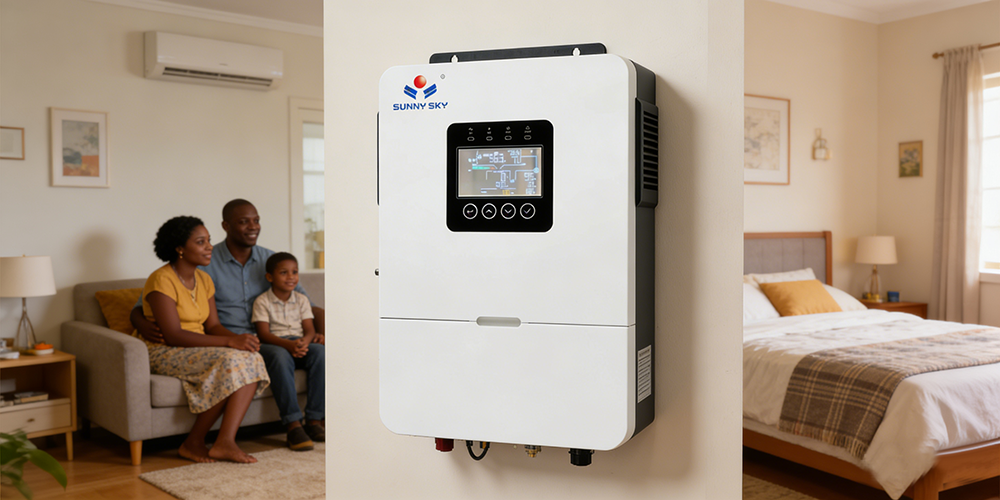
In the evolving landscape of renewable energy, the hybrid solar inverter stands out as a pivotal technology for integrating solar power with grid and battery systems. This versatile device combines the functions of a traditional solar inverter and a battery inverter, enabling efficient energy management in modern homes and businesses. At Guangzhou Tianyuan Solar Equipment CO.,LTD, our commitment to innovation drives the development of such advanced solutions, ensuring reliability and performance that empower users worldwide.
Key Features of the Hybrid Solar Inverter
A hybrid solar inverter, like our 12KW model from SUNNYSKY, is engineered for high-performance energy conversion. It intelligently coordinates solar input from photovoltaic panels, battery storage, utility grid power, and load demands. This architecture maximizes solar self-consumption by prioritizing renewable sources, while seamlessly switching to battery or grid power during outages or low solar yield. The unit features a minimalist white enclosure with rounded edges and a contrasting black central control panel, blending technical sophistication with aesthetic appeal. Its integrated LCD display provides real-time insights into system status, power flow, battery health, and performance metrics, all accessible via an intuitive touch-button interface. With patented technologies from our R&D team, this inverter supports stable operation through side ventilation for optimal thermal management, making it suitable for demanding residential and light commercial environments.
Hybrid Inverter Benefits and Technology Advancements
The hybrid inverter benefits are multifaceted, particularly in enhancing energy independence and efficiency. Unlike conventional systems, it reduces reliance on the grid by storing excess solar energy in batteries for later use, potentially lowering electricity bills and providing backup during blackouts. Our hybrid inverter technology incorporates advanced MPPT (Maximum Power Point Tracking) algorithms to optimize solar harvesting, achieving up to 98% efficiency in energy conversion. This not only minimizes energy loss but also extends battery lifespan through smart charging protocols. For users seeking the best hybrid solar inverter, factors like scalability, compatibility with various battery types (lithium-ion or lead-acid), and remote monitoring via apps are crucial. SUNNYSKY's dedication to green energy innovation ensures our products help reduce carbon emissions, aligning with global sustainability goals. As a top-rated option, it outperforms in stability, having earned recognition in over 50 countries.
Hybrid Solar Inverter Price, Reviews, and Comparison
When evaluating hybrid solar inverter price, consider the long-term value over initial costs. Our 12KW model offers competitive pricing, balancing premium features with affordability for mid-sized installations. Hybrid solar inverter reviews from users highlight its quiet operation, ease of integration, and robust performance under variable conditions. Compared to a standard solar inverter, the hybrid version adds battery management and grid-tie capabilities, making it ideal for off-grid or hybrid setups. In hybrid inverter vs. solar inverter debates, the former excels in versatility—handling AC/DC coupling without additional hardware—while the latter is limited to PV-to-AC conversion. Top rated hybrid solar inverters, including ours, feature surge protection, anti-islanding safeguards, and expandable inputs for future-proofing. Professional feedback praises the clean design and user-friendly interface, positioning it as a smart investment for energy-conscious consumers.
Installing a Hybrid Solar Inverter: Best Practices
Installing hybrid solar inverter requires careful planning to ensure safety and optimal performance. Begin by assessing site conditions: choose a well-ventilated, shaded wall-mount location away from direct sunlight or moisture. Our compact 12KW unit measures efficiently for utility rooms or garages, with straightforward cabling for solar arrays, batteries, and loads. Professional installation is recommended to comply with local codes, involving grounding, AC/DC wiring, and firmware updates. During setup, configure the system for your specific needs—such as peak shaving or zero-export modes—using the onboard controls. Post-installation, monitor via the LCD or connected apps to fine-tune operations. For solar energy hybrid inverter applications, integrating with existing PV systems is seamless, thanks to parallel operation capabilities. Guangzhou Tianyuan Solar Equipment CO.,LTD supports global clients with comprehensive guides and factory visits, just 20 minutes from Guangzhou Baiyun International Airport, complete with complimentary pickup. This ensures a smooth transition to reliable, innovative green energy solutions.
In summary, the hybrid solar inverter represents the future of efficient, resilient power systems. By choosing SUNNYSKY products, users gain access to cutting-edge technology that delivers lasting value, reduced energy costs, and environmental benefits.




