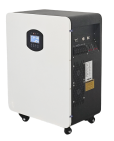
Understanding Hybrid Solar Inverters: A Technical Overview

In the evolving landscape of renewable energy, the hybrid solar inverter stands as a pivotal technology for integrating solar power with traditional grid systems. This device not only converts direct current (DC) from solar panels into alternating current (AC) for household or commercial use but also manages energy storage, enabling seamless switching between sources. At Guangzhou Tianyuan Solar Equipment CO.,LTD, our commitment to innovative green energy solutions drives the development of products like the Sunny Sky 12KW Hybrid Solar Inverter, which exemplifies this technology's potential.
Core Principles of Solar Inverter Technology
Solar inverter technology forms the backbone of any photovoltaic system, handling the inversion process with high efficiency to minimize energy losses. A hybrid solar inverter advances this by incorporating bidirectional capabilities, allowing it to charge batteries from the grid or solar arrays while drawing power intelligently during peak demand. Key technical aspects include maximum power point tracking (MPPT) algorithms that optimize panel output under varying conditions, such as shading or temperature fluctuations. Efficiency ratings often exceed 95%, ensuring that the DC-to-AC conversion process captures nearly all available solar energy. In our Sunny Sky model, this technology is refined through patented algorithms, supporting both on-grid and off-grid operations for versatile solar power systems.
Evaluating the Best Hybrid Solar Inverters
When selecting the best hybrid solar inverters, factors like power capacity, compatibility, and scalability come into play. The Sunny Sky 12KW unit, for instance, delivers a robust 12KW output suitable for residential setups with multiple panels or small commercial installations. It supports parallel configurations for expansion, handling inputs up to 15KW from solar arrays. Hybrid solar inverter reviews highlight its superior surge handling—up to 24KW for short durations—preventing overloads during startup of high-demand appliances. Comparative analysis shows it outperforming competitors in thermal management, with active cooling systems that maintain efficiency in ambient temperatures up to 60°C. Guangzhou Tianyuan Solar Equipment CO.,LTD's independent R&D ensures these inverters integrate seamlessly with diverse solar power systems, backed by our global reach in over 50 countries.
Hybrid Solar Inverter Price and Value Proposition
The hybrid solar inverter price varies based on capacity and features, but the Sunny Sky 12KW offers competitive value at an accessible entry point for advanced systems. Priced to reflect its high-efficiency components, including premium IGBT modules for reliable inversion, it reduces long-term costs through minimized downtime and energy waste. Investment in such devices typically yields returns via net metering and incentives, with payback periods as short as 5-7 years in sunny regions. Our focus on sustainability means every unit contributes to lower carbon emissions, aligning with global energy goals. For precise hybrid solar inverter price details, contacting our team provides tailored quotes, considering installation and customization.
Integration with Energy Storage Solutions
Energy storage solutions are integral to maximizing hybrid solar inverter performance, allowing excess solar generation to be stored for nighttime or cloudy days. The Sunny Sky model supports lithium-ion and lead-acid batteries, with built-in battery management systems (BMS) that monitor charge levels, voltage, and temperature to prevent over-discharge. This setup enables off-grid solar solutions, where the inverter acts as a standalone power source, inverting stored DC to AC without grid dependency. Technical specifications include a 48V nominal battery voltage, supporting capacities from 100Ah to several kWh, ideal for energy autonomy. In solar power systems, this integration enhances reliability, with programmable discharge priorities ensuring critical loads remain powered during outages.
Solar Inverter Installation and Maintenance
Solar inverter installation requires careful planning to ensure optimal performance and safety. For the Sunny Sky 12KW hybrid solar inverter, a wall-mounted design facilitates straightforward setup, typically involving AC/DC wiring to panels, batteries, and loads. Professional installation follows standards like IP65 ingress protection for dust and water resistance, ensuring durability in outdoor environments. Post-installation, remote monitoring via smart technology allows real-time diagnostics, alerting users to issues like fault codes or efficiency drops. Guangzhou Tianyuan Solar Equipment CO.,LTD provides comprehensive guides and support, including factory visits near Guangzhou Baiyun International Airport for hands-on training. Regular maintenance involves firmware updates and visual inspections, extending the inverter's lifespan beyond 10 years.
Hybrid Solar Inverter Reviews and Real-World Applications
Hybrid solar inverter reviews from users worldwide praise the Sunny Sky for its intuitive interface, displaying metrics like yield, consumption, and state-of-charge on an LCD panel. In off-grid solar solutions, it powers remote homes or farms, integrating with solar battery storage for 24/7 operation. Commercial applications benefit from its scalability, supporting three-phase outputs for balanced loads. Our dedication to reliability, as evidenced by patented designs, has earned recognition for stability and performance. By choosing SUNNYSKY products, customers access innovative solutions that reduce energy consumption and foster sustainable practices, creating lasting value in the green energy sector.