

Foreword
"My home originally had a 10 kWh battery, and now I want to add another 10 kWh. Can we connect them directly in parallel?"
This is a common problem for many solar energy users. As electricity consumption increases, or with the need to charge electric vehicles, many households will increase the battery capacity of their existing energy storage systems. But can old and new batteries be used interchangeably? What are the consequences of direct parallel connection? What precautions should be taken when expanding capacity? These questions cannot be answered simply by searching online.
Mixing old and new batteries is not a simple question of "can it be done?", but involves multiple technical issues such as battery type, capacity, brand, degradation level, and internal resistance consistency. Improper handling can range from affecting system efficiency to potentially causing safety accidents. This article will clearly explain the precautions for parallel expansion of energy storage systems, letting you know what to pay attention to and what to avoid before expanding capacity.
Why can't new and old batteries be mixed at will?
To understand why new and old batteries cannot be mixed at will, you must first understand the basic principle of parallel battery connection.
The essence of parallel battery connection is to allow multiple batteries to share the load. Ideally, the current carried by each battery is distributed proportionally to its capacity. For example, if two 10 kWh batteries are connected in parallel, when the load is 20 kWh, each battery will contribute 10 kWh. However, this "proportional distribution" is based on the premise that the parameters of the two batteries are exactly the same.
In reality, the parameters of new and old batteries cannot be exactly the same. The two most significant differences are internal resistance and the degree of degradation.
Let's start with internal resistance. During charging and discharging, current encounters resistance as it flows through the battery's interior; this is called internal resistance. The higher the internal resistance, the more significant the voltage drop during discharge, and the lower the efficiency. New batteries typically have low and uniform internal resistance; older batteries, due to prolonged use, experience decreased internal chemical activity, a thickened SEI film, and increased contact resistance, resulting in a significant increase in internal resistance. If new and old batteries with vastly different internal resistances are connected in parallel, the current distribution will be severely uneven—the new battery with lower internal resistance will carry more current, while the old battery with higher internal resistance will only "work half-heartedly." The result is accelerated aging of the new battery and decreased system efficiency.
Let's talk about the degree of degradation. The different degrees of degradation between new and old batteries mean their usable capacity differs. Two batteries, both nominally rated at 10 kWh, might have a new battery with an actual usable capacity of 9.5 kWh, while an older battery with a 5% degradation might only have 9 kWh. If these two batteries are connected in parallel, the system will manage them based on the upper limit of the older battery's capacity—the new battery won't be able to discharge its charge effectively. Furthermore, the BMS (Battery Management System) typically sets the charge/discharge cutoff voltage based on the average of the total capacity, which could potentially "collaterally damage" the new battery—either preventing it from fully charging or discharging.
Another issue that is easily overlooked is that different battery brands may have different BMS protocols and management strategies. When connected in parallel, the two BMS systems need to communicate and coordinate. If the protocols are incompatible, a situation may arise where "two leaders are blowing their own horns," leading to a protective shutdown of the system or even causing overcharging and over-discharging hazards.
In summary, the core risks of mixing new and old batteries are: uneven current distribution due to internal resistance mismatch, management chaos due to BMS protocol incompatibility, and capacity waste and system efficiency degradation due to degradation differences. Each of these three issues is significant.
II. The Correct Way to Expand Energy Storage Systems
If we say that new and old batteries should not be mixed and matched, then what is the correct way to upgrade battery capacity?
The first method: Add new batteries of the same model and batch.
This is the ideal scenario. If you can buy batteries of the same model and batch as your existing batteries, with essentially the same internal resistance and degradation, there will be far fewer problems after parallel connection. However, in reality, products from the same batch may have been discontinued, or may be difficult to procure due to limited channels. If you can find them, this remains the most recommended method for capacity expansion.
The second approach: Let the old BMS manage the new batteries uniformly.
Some battery brands support a "master-slave" mode, where the existing BMS acts as the master and the newly added battery acts as the slave. Information from the slave batteries is reported to the master BMS for management. This method requires that the existing BMS supports this expansion mode, and the new battery must be of the same brand and model as the original battery; otherwise, the protocol will be incompatible. The operation involves first fully charging the new battery separately, allowing the BMS to identify and calibrate its capacity parameters, and then connecting them in parallel.
The third approach: Add a separate energy storage system.
This is the safest but most expensive approach. A separate battery and inverter system is added next to the existing energy storage system, with each system managed and metered separately. The advantage of this approach is that there is no issue of incompatibility between the old and new batteries, and the two systems do not interfere with each other. The disadvantages are increased cost and the need to consider whether the inverter has spare battery interfaces.
The fourth method: Replace all batteries
If the existing battery has severely degraded (e.g., used for more than 8 years, with a degradation of more than 30%), instead of patching it up, it's better to replace it entirely. Remove the old battery and sell it (some recyclers will buy it), then replace it with the new battery, giving the system a fresh new look. This method requires a larger initial investment, but it's more worry-free in the long run.
III. Specific Steps for Parallel Expansion of Energy Storage Systems
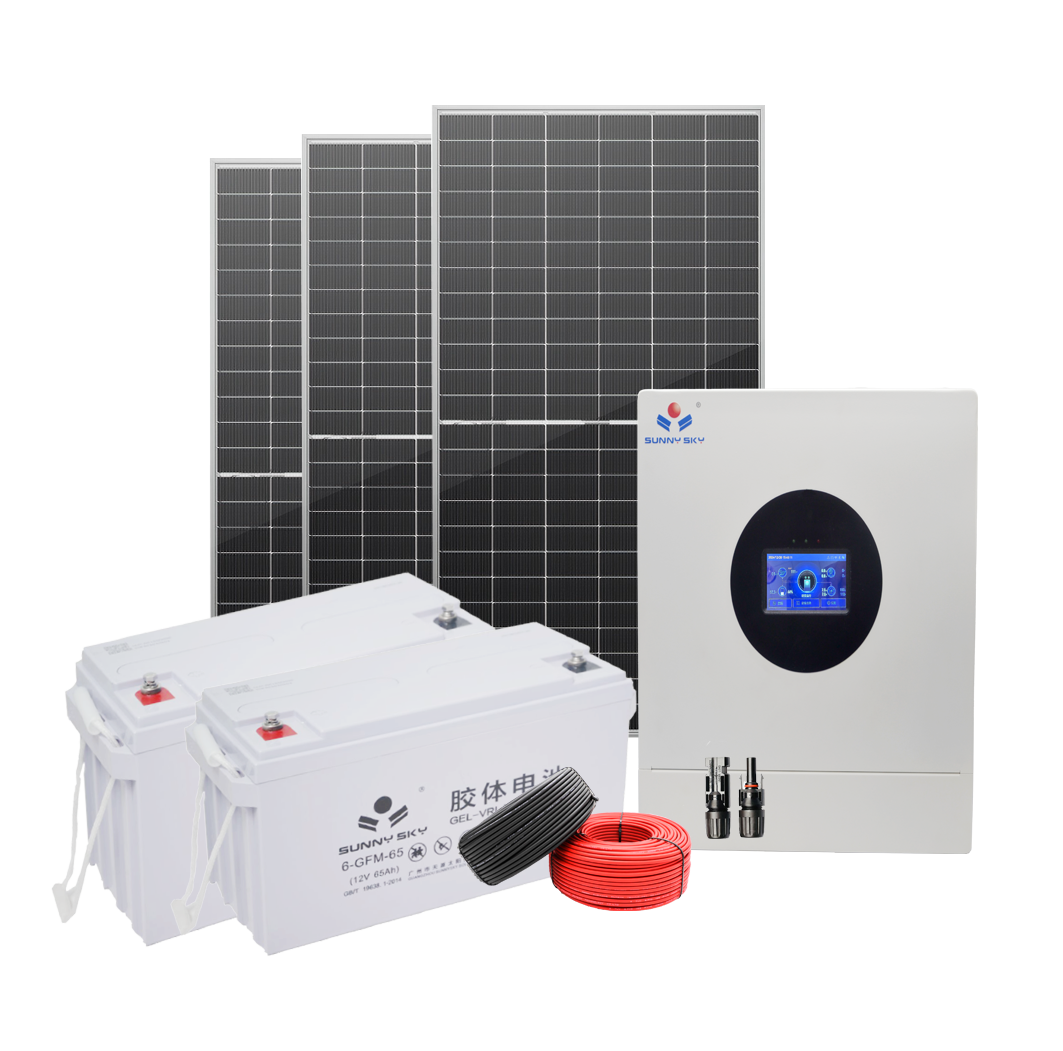
If you decide to add batteries to your existing energy storage system, regardless of the method, the following steps are essential to keep in mind.
The first step is to confirm whether the inverter and BMS support capacity expansion. Not all energy storage systems can be expanded. Some inverters or BMSs from smaller brands only support batteries of specific capacities and do not allow expansion; forcing expansion may lead to system incompatibility. Check the "maximum battery capacity" and "maximum number of parallel connections" parameters in the inverter's manual, or consult the manufacturer directly.
The second step is to activate and test the new battery separately. After receiving the new battery, do not connect it directly to the existing system. First, fully charge the new battery using a dedicated charger (or allow the inverter to recognize the new battery separately), and observe for any abnormalities during charging—whether the voltage is normal, the charging current is stable, and the battery temperature is normal. If any abnormalities are found, immediately stop charging and contact the supplier.
The third step is to disconnect the power to ensure safety. All operations involving battery connections must be performed with the power off. Turn off the inverter, disconnect the battery switch, and use a multimeter to confirm that there is no residual voltage. DC power does not have a neutral wire that can be turned off; the only safety measure is to confirm that the power supply is truly disconnected.
Fourth, correctly connect the communication and power lines. The communication line (CAN or RS485) for the parallel-connected batteries must be connected first so that the BMS can recognize the new battery before power is supplied. The parallel connection points for the power lines (positive and negative terminals) must be in the same location to ensure good contact and prevent loose connections from causing overheating and fire.
Step 5: Debugging and Monitoring. After parallel connection is completed, let the system run for a few days and continuously observe several key indicators: whether the charging and discharging currents of the new battery are balanced, whether the SOC (state of charge) of the new and old batteries are consistent, and whether the system has any abnormal alarms. If a serious current distribution is found (for example, the new battery discharges at 20A while the old battery only discharges at 5A), it indicates a serious internal resistance mismatch problem, which needs to be addressed promptly.
IV. Common Problems and Solutions During Capacity Expansion
In practice, connecting new and old batteries in parallel may encounter various problems. Here are some of the most common ones and their corresponding solutions.
Question 1: The new battery overheats significantly after being connected in parallel. Overheating indicates the new battery is carrying excessive current, possibly due to uneven current distribution caused by differences in internal resistance. The solution is to reduce the load or temporarily disconnect the new battery from the system for separate inspection. If the new battery still overheats significantly when running independently, it may have a quality issue and requires contacting the supplier for replacement.
Question 2: System alarm "Battery mismatch". This is a protective alarm triggered by the BMS detecting a significant difference in parameters between the old and new batteries. The solution is to enter the BMS settings menu and check if there is an option to disable "Battery compatibility detection" (supported by some brands). If not, try updating the BMS firmware to the latest version. If the problem persists, you may need to replace the old battery or use a separate system solution.
Question 3: The new battery cannot be fully charged or discharged. This is because the BMS has set the charge/discharge cutoff points based on the upper limit of the old battery's capacity. The solution is to have the BMS recalibrate the battery capacity—by completing a full charge/discharge cycle, the BMS can re-identify the actual capacity of the new battery. Some brands of BMS support manually setting the capacity parameters of each battery; you can manually enter the nominal capacity of the new battery.
Question 4: System efficiency drops significantly after parallel connection. If the overall system efficiency is lower than before after parallel connection, it indicates that the internal resistance mismatch between the old and new batteries has affected system performance. In this case, it may be necessary to set the new battery to "charge-only" mode, that is, the new battery only receives excess power and does not participate in the discharge load. Although this mode is not the optimal solution, it can prevent the new battery from being dragged down by the old battery.
Conclusion
Whether new and old batteries can be mixed is not a simple "yes" or "no," but rather "generally not recommended unless absolutely necessary."
If your energy storage system needs expansion, the best approach is to add batteries of the same model and batch, allowing the BMS to manage them uniformly. If the same model cannot be found, the next best option is to add a separate energy storage system. The least recommended approach is to arbitrarily mix old batteries of different brands, specifications, and degradation levels—saving a little on expansion costs may come at the cost of decreased system efficiency, shortened battery life, and even safety risks.
When it comes to expanding energy storage systems, it's always wise to be cautious. After all, the battery is the core of an energy storage system; if the core malfunctions, the value of the entire system will be diminished.
Hopefully, this article will help you figure out what to do before upgrading your inverter or battery capacity. If you still have specific questions, the safest approach is to consult your inverter or battery manufacturer, as they are most familiar with the compatibility and upgrade solutions for their products.
Please contact Simon immediately to discuss your project:
WeChat: TY530643572
Telephone: +86 137 1166 0041




