Foreword
If you follow energy data, you'll notice an interesting phenomenon: the installation of residential solar systems in sub-Saharan Africa has grown rapidly over the past five years. From Kenya in East Africa to Nigeria in West Africa, from Johannesburg in South Africa to rural Tanzania, more and more households are starting to use solar energy.
What are the reasons behind this? Is it because solar energy has suddenly become cheaper? Or is it because the power grid is too poor? Or is it because people have become more environmentally conscious?
The answer may be more complex and closer to everyday life than you think. This article will discuss in detail why solar energy is becoming a popular choice for African households.
1. The Troubles of Power Shortages: Areas Where the Power Grid Cannot Reach
To understand why African families choose solar energy, we must first understand the electricity challenges they face.
In sub-Saharan Africa, approximately 600 million people still lack access to electricity. You read that right, 600 million—more than the entire population of Europe. They are primarily located in remote rural areas, desert edges, and rainforest regions. In these areas, the power grid simply doesn't cover the land, and installing power poles and laying cables to every household is incredibly expensive. Given Africa's current level of economic development, simply extending the power grid to solve the electrification problem in these areas may take decades.
Even in urban areas, the state of the power grid is far from ideal. Many African cities have outdated power grids with severely aging equipment, and widespread electricity theft results in poor power quality. Major cities like Nairobi in Kenya, Lagos in Nigeria, and Cape Town in South Africa experience unplanned power outages every few days. Each outage lasts from a few hours to one or two days. For families with refrigerators, air conditioners, and televisions, a power outage means spoiled food, stopped air conditioning, and complete disruption to their lives.
Power outages are becoming more frequent each year. As urbanization accelerates in Africa, electricity demand continues to grow, but investment in power grid infrastructure is lagging behind. The power shortage is widening, and in some areas, power is even being rotated – one area has power today, another tomorrow. This kind of "planned power outage" has become commonplace in many African cities.
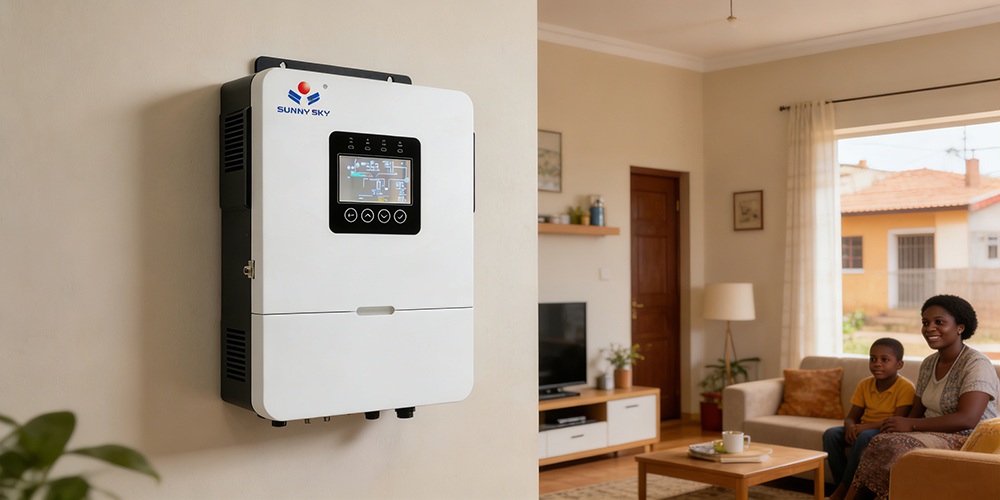
Faced with this dilemma, solar energy offers a solution that bypasses the power grid. As long as there's a roof and sunlight, electricity can be generated. There's no need to wait for grid upgrades, no need to pay hefty grid connection fees, and no need to worry about electricity theft causing voltage instability. Solar energy returns the control over electricity usage to every household.
II. Economic Analysis: Solar energy really saves money in Africa
Another important reason why solar energy has become so popular in Africa is that it is economically viable.
Let's do the math. For example, how much would a typical African family spend on electricity each month?
In Lagos, Nigeria, a middle-income family's monthly electricity bill is between 15,000 and 30,000 Naira (about $20 to $40). This is just for normal electricity usage—if you live in an area with frequent power outages, food in the refrigerator will spoil, and the air conditioner won't work, the actual losses could be much higher.
The installation cost of a 5 kWh home solar system is approximately between $2,000 and $4,000. The exact price depends on the brand, configuration, and whether batteries are included. At first glance, this number seems large, but if spread over five years, the average monthly cost is only $35 to $70, roughly the same as the electricity bill.
More importantly, solar power systems can last 20 to 25 years. After recouping the initial investment in the first five years, the remaining 15 to 20 years are essentially "free electricity." In contrast, grid electricity prices rise every year—in Nigeria, electricity prices have increased by more than 50% cumulatively over the past five years.
Another point that cannot be ignored is that for areas without any grid coverage, solar power is the only option. In those places, electricity is either generated by generators or by solar panels. A 5 kWh solar system generates approximately 15 to 20 kWh per day, enough to meet the basic electricity needs of an average household. In contrast, a diesel generator of the same capacity would cost $5 to $10 per day in fuel, amounting to nearly $2,000 per year. Over five years, that's $10,000, far exceeding the initial investment in a solar system.
A shop owner in Cameroon shared his experience. He owned a small grocery store that used to be powered by a generator, costing him about $100 a month in fuel. The generator was noisy and smelly, deterring customers from spending much time in the store. Later, he installed a small solar power system. Although it cost him $2,000 upfront, it has been running for three years with zero fuel costs. The store is quieter, and he has more customers; his investment has long been recouped.

III. Life Changes: More Than Just Lights On
The changes that solar energy has brought to African families are not just as simple as "having electricity".
The most direct change is in lighting. Families without electricity used to rely on candles and kerosene lamps at night. Kerosene lamps not only had limited brightness but also posed a safety hazard—fires caused by kerosene lamps were common in Africa every year. Solar systems paired with LED lights are dozens of times brighter than kerosene lamps and pose no fire risk. Children can read and do homework at night, while adults can mend clothes and do housework. A single lamp has transformed a family's nighttime life.
Television and mobile phones are another change. In the past, television was a luxury for families without electricity. Now, with the price of solar power systems falling, many families are starting to install televisions and satellite receivers in their homes. Scenes of the whole family sitting together in the evenings watching the news, sports, or TV dramas are becoming increasingly common in African households. Charging mobile phones has also become more convenient—before, if a phone ran out of battery, one had to walk several kilometers to a store to charge it; now, one can charge it at home.
The widespread adoption of refrigerators brings even more tangible changes. In tropical Africa, food preservation is a major problem. Meat, vegetables, and beverages spoil quickly. With a solar-powered refrigerator, housewives can buy more groceries at once, reducing the hassle of daily grocery shopping. For families running small businesses, freezers are indispensable—businesses selling popsicles and cold drinks rely entirely on freezers. Without electricity, these businesses cannot operate.
Education and access to information represent a deeper shift. UNICEF research shows that children in homes with electricity spend significantly more time completing their schoolwork and homework than those in homes without. Solar power systems provide a stable electricity supply, allowing children to read and use computers in the evenings. This has a profound impact on the development of the next generation.
Improvements in healthcare are also crucial. In areas without a stable power supply, vaccine storage and the operation of medical equipment are problematic. Some basic medical equipment—oxygen concentrators, suction devices, and cold chain equipment—all require electricity. Solar power systems allow these devices to be used at home, and while they cannot replace formal medical facilities, they can at least buy some time in emergencies.
IV. Solar energy solutions suitable for African families
Given how good solar energy is, what kind of solution should African families choose?
Depending on their electricity needs and budgets, solar energy solutions for African households can be broadly categorized into three types.
The first type is a basic lighting kit. This is the cheapest option, costing between $200 and $500. It includes several solar panels (total power 100 to 300 watts), a small-capacity battery (1 to 5 kWh), several LED lights, and a USB port for charging a mobile phone. This kit is suitable for basic lighting and mobile phone charging needs, and is ideal for families with lower incomes and simpler electricity requirements.
The second type is the standard home package. This solution, priced between $1,000 and $3,000, is currently the most popular. It includes solar panels (total power 1 to 3 kilowatts), batteries (5 to 15 kilowatt-hours), an inverter, LED lights, multiple outlets, and a refrigerator port. This solution can meet the basic electricity needs of an average family, including lighting, phone charging, television, refrigerator, and freezer.
The third type is the full-configuration package. This option is more expensive, ranging from approximately $3,000 to $8,000. It includes high-power solar panels (3 to 5 kilowatts), high-capacity batteries (15 kWh or more), and a high-power inverter that can support high-power appliances such as air conditioners, washing machines, and electric water heaters. This option is suitable for higher-income households with high electricity demands, as well as small shops and workplaces.
Several factors need to be considered when choosing a solution.
First, there's the budget. African families generally have low incomes, and the one-time expense of several thousand dollars for installing a solar system is a significant burden for many. Many solar companies have begun offering installment payment options, which alleviates the financial pressure to some extent. For example, in Kenya, some solar companies offer a "solar-as-a-service" model, where users pay a fixed monthly fee to use the solar system, without having to pay the full amount upfront.
Secondly, consider electricity demand. How many appliances a household has, how much electricity they use daily, and whether they use more electricity during the day or night—all these factors will influence the choice of electricity plan. With a limited budget, prioritize meeting the most essential electricity needs.
Secondly, consider maintenance capabilities. While solar systems don't require daily maintenance, they do need regular cleaning of the solar panels, wiring checks, and battery replacements (batteries typically need replacing every 5 to 7 years). When choosing a system, consider whether you have the capacity for basic maintenance or whether there is reliable after-sales service available in your area.
Finally, there's product quality. The quality of solar energy products on the market varies greatly, ranging from inexpensive products costing a few hundred dollars to branded products costing several thousand dollars. Price differences mainly reflect factors such as conversion efficiency, lifespan, and after-sales service. It's recommended to choose products with proper certifications and reliable quality; although they may be more expensive, they are more cost-effective in the long run.
V. Real-world challenges: Solar energy is not a panacea.
Having discussed so many of the benefits of solar energy, we should also objectively talk about the challenges it faces.
Rainy weather is the biggest problem. Solar power generation relies on sunlight, and continuous rainy days significantly reduce power generation. Although most parts of Africa are sunny, the rainy season still brings periods of continuous overcast skies. In West Africa, the rainy season often lasts for several months, during which time solar power generation may only be 20% to 30% of that on sunny days. The solution is to install sufficiently large batteries to store more electricity on sunny days. However, the larger the battery capacity, the higher the cost, which presents a dilemma for many households.
Equipment costs remain high. Although the price of solar systems has fallen significantly over the past decade, the installation cost of $1,000 to $3,000 is still a considerable expense for many African families. With Nigeria's per capita GDP at approximately $2,000, the price of a standard residential solar system is equivalent to half a year's income for one person. While installment payments can alleviate the pressure, interest and additional fees will increase the total cost.
Inadequate after-sales service is another problem. In many parts of Africa, especially in rural areas, professional solar energy installers and maintenance personnel are still scarce. When the system malfunctions, it's often difficult to find someone to repair it. Some minor issues, such as loose wiring or oxidized battery connectors, can lead to the entire system becoming unusable because no one knows how to fix them. This situation is not uncommon and is one of the reasons why many families are hesitant to adopt solar energy systems.
New problems arise from rising electricity demand. As household incomes increase, so does electricity consumption. Systems that initially only provide enough for lighting and phone charging may become insufficient in a couple of years. Users face two choices: either upgrade their solar panels and battery capacity, which requires additional investment, or reduce appliance usage, impacting their quality of life. This "upgrade anxiety" is widespread in practice.
Another easily overlooked issue is counterfeit and refurbished goods. Some unscrupulous vendors use low-quality products to impersonate legitimate brands, or sell used batteries as new. These products may seem cheap, but they often have numerous problems. Inflated battery capacities, inefficient inverters, and batteries failing within two years are not uncommon in the market. Choosing reliable sales channels is crucial.
Conclusion
African families choose solar energy not because it is the most advanced or environmentally friendly, but because it is the most practical.
For the 600 million people without access to the power grid, solar energy is the only option. For those in areas with unstable power grids and frequent power outages, solar energy is a reliable alternative. For budget-conscious households, the long-term cost of solar energy is lower than that of grid electricity.
Of course, solar energy is not a panacea. It has limitations, challenges, and cost barriers. But for non-European households considering their electricity options, solar energy is a serious option worth considering.
Life goes on, and the sun rises every day. When lights come on at night, they change not only the brightness of a room, but also the quality of life of a family, the learning conditions of a child, and the development opportunities of a community.
Please contact Simon immediately to discuss your project:
• WeChat: TY530643572
• Telephone: +86 137 1166 0041